As the days grow shorter and the vibrant hues of autumn fade into the muted greys of winter, many of us retreat indoors, resigning our gardens to a period of dormancy. It is easy to assume that the garden sleeps until spring, but nature has a way of surprising us even in the coldest months. For those seeking to keep their outdoor sanctuary alive with life and colour, there is a hidden gem that thrives just when everything else seems to slumber.
Meet Clematis ‘Winter Beauty’, a climber that defies the frost to deliver a spectacular display of lush foliage and delicate blooms.
While most clematis varieties are celebrated for their summer showmanship, ‘Winter Beauty’ is a specialist in winter cheer. It transforms bare walls and fences into vertical tapestries of green and white, proving that a winter garden can be just as enchanting as a summer one. Whether you are a seasoned horticulturist or simply looking to brighten a view from your kitchen window, this plant offers a rewarding experience that connects you to the rhythm of the seasons.
A Botanical Introduction
To truly appreciate this plant, it helps to understand its lineage. Known botanically as Clematis cirrhosa var. purpurascens ‘Winter Beauty’, this plant is a standout member of the Ranunculaceae family, also known as the buttercup family.
The name ‘Clematis’ comes from the Ancient Greek word klēmatis, meaning “a climbing plant”. The species name, cirrhosa, refers to the tendrils it uses to cling and climb, allowing it to scale structures with grace. Unlike the large-flowered hybrids often seen in hanging baskets during July, this variety is prized for its subtle elegance and, crucially, its flowering time.
In the world of gardening, it is classified as an evergreen climber. This distinction is vital; unlike deciduous counterparts that drop their leaves to reveal woody stems, ‘Winter Beauty’ retains its glossy foliage year-round, providing permanent structure and screening in the garden.
Origins and History
The Clematis cirrhosa species originates from the Mediterranean region and the Balearic Islands. In its native habitat, it scrambles over shrubs and rocky outcrops, basking in the winter sun while enduring dry, hot summers.
‘Winter Beauty’ is a specific selection noted for its superior flowering habit and richer foliage. Its introduction to British gardens has been a game-changer for winter planting schemes. By bringing a plant with Mediterranean heritage into our cooler climate, we bridge the gap between geographic landscapes. It serves as a reminder of nature’s adaptability, flourishing in our gardens provided we mimic the sheltered, sunny conditions of its southern home.
Describing the Beauty
So, what can you expect when you welcome this plant into your green space?
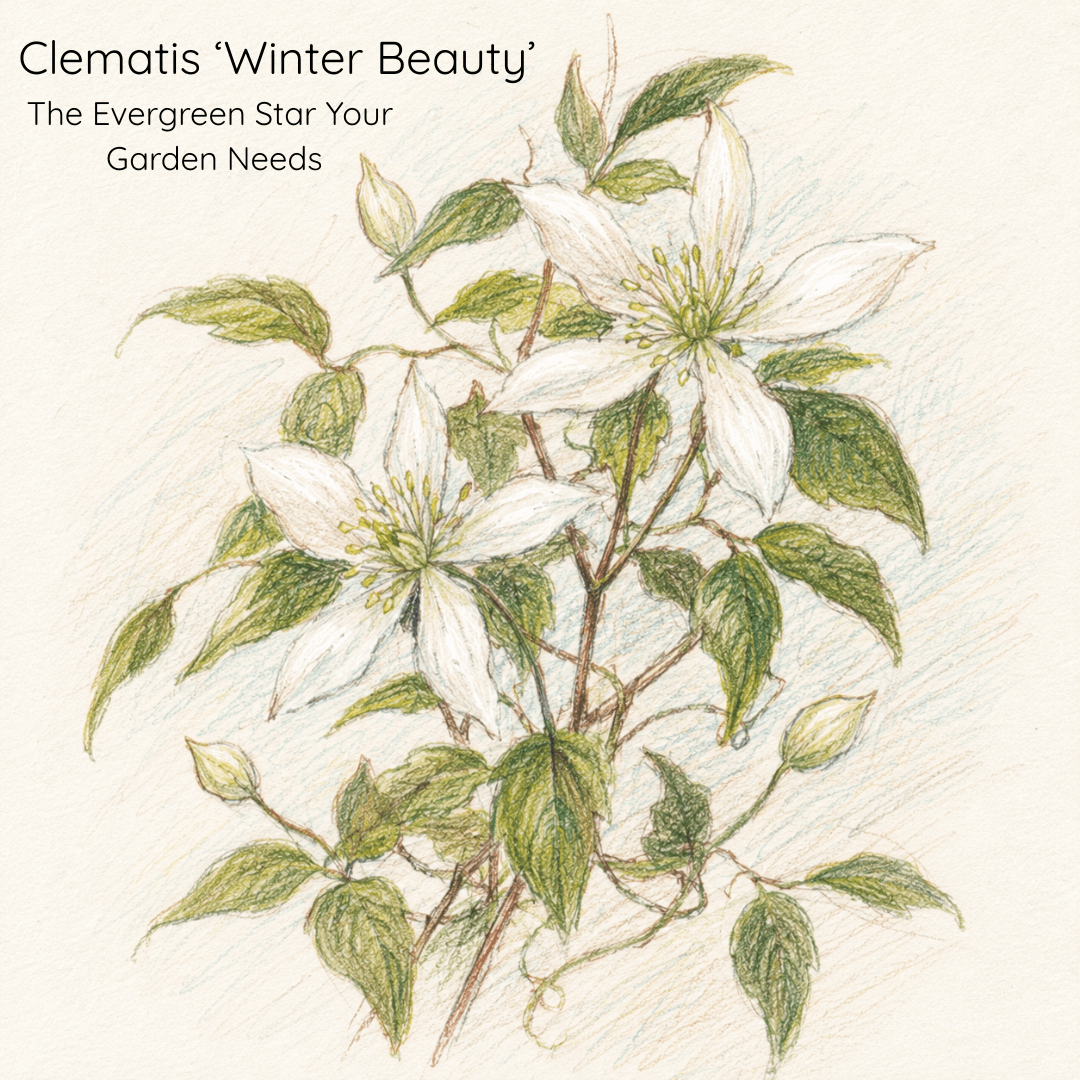
The most striking feature is undoubtedly the flowers. Appearing typically from December through to February—often the bleakest months of the year—the blooms are bell-shaped and hang delicately downwards. They are a creamy white, often possessing a waxy texture that helps them withstand winter dampness. If you look closely, or perhaps underneath the nodding bells, you may spot subtle freckles of maroon or purple inside the cup, adding a layer of intricate detail waiting to be discovered.
Surrounding these blooms is the foliage. The leaves are deeply lobed, glossy, and a rich dark green. They are abundant and dense, creating a lush backdrop that makes the creamy flowers pop. Even when the plant is not in flower, the foliage remains a handsome asset, covering unsightly boundaries or trellises with a cloak of green life.
The growth habit is vigorous but manageable. It typically reaches a height of 3 to 4 metres (10 to 13 feet), making it substantial enough to make an impact without becoming invasive or unmanageable for the average gardener.
Where to Plant Clematis ‘Winter Beauty’
Success with Clematis cirrhosa ‘Winter Beauty’ begins with choosing the right location. Because of its Mediterranean origins, it craves light and warmth.
The Ideal Spot
A south or south-west facing wall is the gold standard for this plant. These spots capture the most sunlight and, crucially, the wall retains heat, protecting the plant from the harshest frosts. It is not fully hardy in exposed, windy sites in northern UK regions, so think of it as a guest that prefers a seat by the fire. A sheltered courtyard, a sunny fence line protected from north winds, or a warm corner near the house are perfect locations.
Soil Requirements
Like most clematis, it prefers “cool feet and a hot head”. The soil should be fertile, humus-rich, and moist but—and this is critical—well-drained. Winter wet is often more damaging than winter cold. If your garden sits on heavy clay, incorporate plenty of grit and organic matter to improve drainage, or consider planting it in a large container where you can control the soil conditions entirely.
How to Care for Your Climber
Caring for ‘Winter Beauty’ is a lesson in observation and gentle maintenance. It does not demand the rigorous attention that some high-summer perennials do, but it rewards careful watchfulness.
Planting
When planting, dig a hole twice the width of the pot. Incorporate well-rotted manure or garden compost to help retain moisture and provide nutrients. Plant the clematis slightly deeper than it was in its original pot; covering the first few centimetres of the stems encourages new shoots to emerge from the base, making for a bushier, stronger plant.
Watering and Feeding
During its first season, ensure the plant is watered regularly to establish its root system. Once established, it is relatively drought-tolerant (a nod to its Mediterranean roots), but it will perform best if the soil is kept moist during dry spells.
Feed with a potassium-rich fertilizer (like rose or tomato food) in late autumn to encourage flower production. A general-purpose mulch in spring will help condition the soil and retain moisture for the coming year.
Pruning: The Group 1 Rule
Clematis pruning can often be a source of confusion, but ‘Winter Beauty’ keeps it simple. It falls into Pruning Group 1. These are early-flowering clematis that bloom on growth produced the previous year.
Therefore, you do not need to prune it hard. In fact, cutting it back in autumn or winter would remove all the flower buds. If pruning is necessary to restrict size or tidy up the plant, do it immediately after flowering has finished (usually mid-to-late spring). This gives the plant the entire summer and autumn to produce new growth that will ripen and carry the flowers for the following winter.
The Benefits of ‘Winter Beauty’
Why should you carve out space for this plant? The benefits are numerous for both the gardener and the local ecosystem.
1. Unrivalled Winter Colour
At a time when colour is scarce, this plant provides a display that lifts the spirits. It bridges the gap between the last of the autumn asters and the first of the spring bulbs.
2. Evergreen Screening
Privacy can be an issue in winter when deciduous hedges and creepers lose their leaves. The dense, evergreen habit of ‘Winter Beauty’ ensures your garden remains secluded and green throughout the year.
3. A Lifeline for Wildlife
For early-emerging pollinators, winter can be a desolate time. On milder winter days, bees and other insects will actively seek out forage. The nectar-rich bells of Clematis cirrhosa provide a vital food source when very little else is available, helping to sustain local biodiversity.
Potential Disadvantages
To garden successfully is to understand the limitations of your plants. ‘Winter Beauty’ is exceptional, but it has specific needs.
1. Hardiness
It is generally hardy to -5°C or -10°C, but prolonged freezing spells or biting winds can damage the foliage and buds. In very cold areas of the UK, it may require fleece protection during extreme weather or is best grown in a greenhouse or conservatory.
2. Summer Dormancy
In very hot, dry summers, Clematis cirrhosa can enter a state of semi-dormancy. It may drop some leaves to conserve water, looking a little sparse or “scruffy” during July and August. This is a natural survival mechanism, not a disease. Planting a late-flowering summer climber or shrub in front of it can mask this temporary bareness.
Summary: A Must-Have for the Year-Round Garden
Gardens are grand teachers, instructing us in patience and the cycles of nature. Clematis ‘Winter Beauty’ teaches us that beauty is not reserved for the warm months. It invites us to step outside in January, to look closer, and to find joy in the delicate sway of a white flower against a grey sky.
By offering shelter, evergreen structure, and a vital food source for pollinators, it earns its place in any thoughtful planting scheme. If you have a sunny, sheltered wall calling out for attention, this climber is the perfect candidate to transform that space into a year-round spectacle.
Whether you are looking to design a complete winter border or simply want a touch of life by your back door, UpTheGarden Company can help you realise that vision. We encourage you to explore the potential of your winter garden—because nature’s beauty never truly sleeps.
Further Reading: The Winter Garden: Winter Interest Shrubs, Winter Planning: Design Your Dream Border for Next Year
Inspiration: Follow Us on Instagram, Threads, BlueSky, Twitter, TikTok and Pinterest.