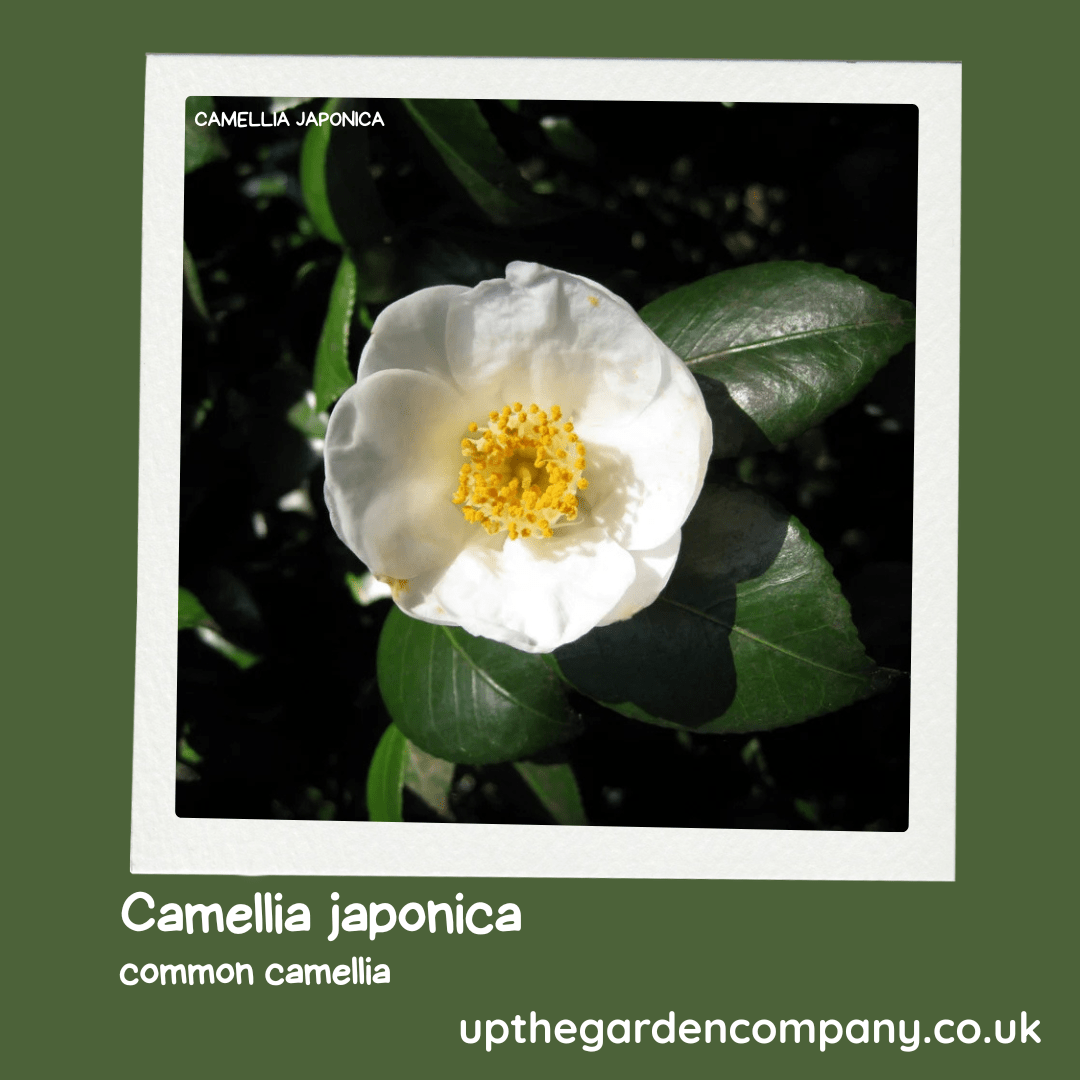
Winter in the garden doesn’t have to be grey and drab. While herbaceous borders sleep and deciduous trees stand bare, one shrub puts on a spectacular show that rivals even the finest summer blooms.
Enter Camellia japonica, often known as the common camellia or the Rose of Winter. With its glossy, evergreen foliage and exquisite flowers ranging from purest white to deepest crimson, it brings structure, colour, and elegance to the garden when we need it most. Whether you are a seasoned horticulturist or simply looking to brighten a shady corner, this plant offers a wealth of history and beauty to explore.
A Botanical Treasure
The plant we know and love is botanically named Camellia japonica. It belongs to the Theaceae family, which makes it a close relative of the tea plant, Camellia sinensis. While you can’t brew a morning cuppa from the leaves of the japonica, you can certainly admire its ornamental value.
Commonly referred to simply as ‘camellia’, this species is the most widely grown of the genus. Its flowers come in various forms—single, semi-double, anemone-form, peony-form, rose-form double, and formal double—meaning there is a style to suit every taste.
A Journey from East to West
The story of the camellia is one of travel, trade, and a little bit of deception. Native to the woodlands of China, Korea, and Japan, Camellia japonica has been cultivated in Asian gardens for centuries. In its native lands, it is revered not just for its beauty but for its symbolism of longevity and faithfulness.
The plant made its way to Europe in the 18th century. It was named by Linnaeus in honour of Georg Joseph Kamel, a Jesuit missionary and botanist, although Kamel likely never saw the plant himself.
Legend has it that early traders brought Camellia japonica to England thinking it was the tea plant, Camellia sinensis. The Chinese were understandably protective of their tea trade and may have swapped the plants to prevent the British from establishing their own tea plantations. While the British didn’t get their tea (at least, not from this specific plant), they gained a garden favourite that sparked a ‘camellia mania’ during the Victorian era.
Finding the Perfect Spot
To see your camellia flourish, you need to mimic its natural woodland habitat. These plants are surprisingly hardy, but they can be fussy if their basic needs aren’t met.
Climate and Position
Camellias are hardier than they look, but the blooms can be delicate. They prefer a position that is sheltered from strong winds and, crucially, protected from early morning sun.
Why avoid the morning sun? If the frost-covered buds are hit by rapid thawing from direct sunlight, they can be damaged, turning brown and failing to open. A west or north-facing wall is often ideal. Dappled shade, like that found under a canopy of deciduous trees, is the gold standard.
Soil Requirements
This is the deal-breaker for camellias: they are ericaceous plants. This means they absolutely require acidic soil. If your garden sits on chalk or lime, you will struggle to grow them in the ground. In alkaline conditions, the leaves will turn yellow (a condition called chlorosis) because the plant cannot absorb the iron it needs.
If you have neutral or acid soil, dig in plenty of organic matter—like leaf mould or ericaceous compost—to help retain moisture.
If you do have chalky soil, don’t despair! Camellias are excellent container plants. Simply plant them in a large pot using specialist ericaceous compost and water with rainwater whenever possible, as tap water can often be too hard (alkaline).
Folklore and Stories
The camellia is steeped in symbolism. In the Victorian language of flowers, Camellia japonica represented unpretending excellence.
One curious piece of folklore surrounds the samurai of Japan. It is said that samurai would not plant camellias in their gardens because the flower heads fall off whole when they die, rather than petal by petal. This sudden decapitation was considered far too reminiscent of a beheading for a warrior’s comfort!
In contrast, in Korea, the camellia is a symbol of faithfulness and longevity, often used in wedding ceremonies. The enduring evergreen leaves represent a love that does not fade, even in the harshness of winter.
Coco Chanel famously adopted the white camellia as her emblem. She reportedly loved the flower because it had no scent, meaning it would never clash with her iconic perfume, Chanel No. 5.
Benefits and Disadvantages
Like any garden guest, the Camellia japonica comes with its own set of pros and cons.
Benefits
- Winter Interest: Few plants work as hard in the off-season. They provide lush greenery year-round and spectacular colour from late winter to spring.
- Variety: With thousands of cultivars, you can find camellias in almost every shade of pink, red, white, and cream.
- Container Friendly: They are slow-growing and have compact root systems, making them perfect for pots on patios or balconies.
- Longevity: A happy camellia can outlive its gardener. Some specimens in the UK are over 200 years old.
Disadvantages
- Soil Fussiness: As mentioned, the need for acidic soil can be limiting for many gardeners.
- Bud Drop: If a camellia lacks water in late summer (when the buds are forming), the buds may drop off in winter before opening. Consistent watering is key.
- Frost Damage: While the shrub itself is hardy, the flowers are susceptible to frost damage, turning brown and mushy if caught by a hard freeze.
Uses in the Garden
The versatility of Camellia japonica allows it to play many roles in garden design.
The Specimen Shrub: A large, free-standing camellia makes a stunning focal point. Planted centrally in a lawn or at the back of a border, its glossy dark green leaves provide a perfect foil for other plants during the summer, before taking centre stage in winter.
Hedging and Screening: Because they are evergreen and respond well to light pruning, camellias make excellent informal hedges. They offer year-round privacy and a dense, sound-absorbing screen.
Cut Flowers: Floating a few camellia heads in a shallow bowl of water is a classic way to display them indoors. Because they lack long stems suitable for tall vases, this floating display showcases their intricate symmetry beautifully.
Woodland Gardens: If you have a shaded area with trees, underplanting with camellias creates a natural, layered look. Pair them with spring bulbs, ferns, and hellebores for a magical woodland effect.
Bringing Winter to Life
There is something deeply satisfying about seeing a splash of vibrant pink or red against a grey February sky. Camellia japonica rewards a little care with a lifetime of beauty, bridging the gap between the seasons and reminding us that nature never truly sleeps.
Whether you plant one in a pot by your back door or establish a hedge along a shady path, you are inviting a piece of history and botanical excellence into your home. So, check your soil, find a sheltered spot, and get planting. Your winter garden will thank you for it.
Further Reading: Helleborus niger: The Star Plant That Brightens the Winter Garden, The Winter Garden: Winter Interest Shrubs, Winter Planning: Design Your Dream Border for Next Year
Inspiration: Follow Us on Instagram, Threads, BlueSky, Twitter, TikTok and Pinterest.