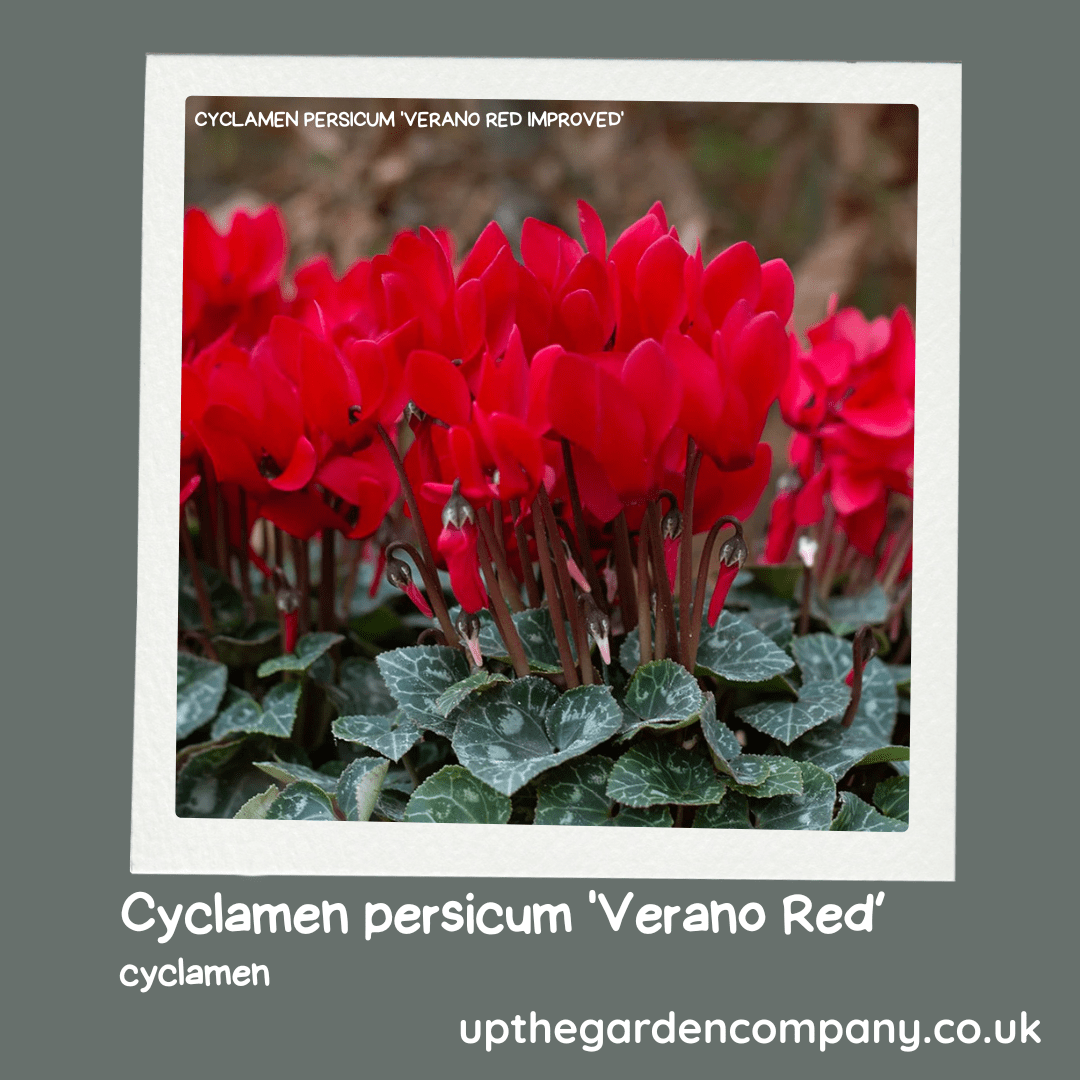
When the days grow shorter and the garden begins to slumber under a blanket of grey, we often find ourselves craving a splash of vibrancy. While spring bulbs are still a distant promise, there is one botanical treasure ready to paint your home and sheltered garden spots with intense colour. Enter Cyclamen persicum ‘Verano Red’, a plant that refuses to let winter be dull.
With its swept-back petals resembling butterflies in flight and its intricate, heart-shaped foliage, this variety is a masterclass in contrast. The deep, passionate red of the blooms stands out starkly against the silver-marbled green leaves, creating a display that is as elegant as it is energetic. Whether you are looking to brighten a cool windowsill or add life to a sheltered patio container, ‘Verano Red’ is an inviting companion for the cooler months.
Unearthing the Identity of ‘Verano Red’
To truly appreciate this plant, we must first understand its roots. Botanically, it is known as Cyclamen persicum, a species belonging to the Primulaceae (primrose) family. The specific cultivar, ‘Verano Red’, is part of the ‘Verano’ series, which has been expertly bred for a compact habit and early flowering capability.
While the botanical name might sound formal, you may know its relatives by more humble common names such as the Persian Violet or, more curiously, Sowbread. The latter name nods to the plant’s history in the wild rather than its delicate appearance today.
A Mediterranean Heritage
The ancestors of your ‘Verano Red’ hail from the rocky hillsides and shrublands of the Eastern Mediterranean, from North Africa to the Greek islands and Turkey. In their native habitat, these tubers tuck themselves into rocky crevices, surviving hot, dry summers by going dormant and bursting into life when the cooler, wetter weather arrives.
This history explains much about their modern needs. They are not creatures of the bog or the baking desert sun; they are resilient survivors of a specific seasonal rhythm. The modern ‘Verano’ series maintains this heritage but has been refined to offer a robust performance that brings the warmth of the Mediterranean to our British winters.
Finding the Perfect Home for Your Cyclamen
Success with Cyclamen persicum ‘Verano Red’ relies on mimicking those native conditions—cool, bright, and airy. It is not a plant that thrives on neglect, but with the right spot, it will reward you with months of continuous blooms.
Situation and Climate
It is vital to remember that Cyclamen persicum is frost-tender. Unlike its hardy cousin Cyclamen hederifolium, ‘Verano Red’ will not appreciate a hard frost. In the UK, it is best treated as a houseplant or a seasonal bedding plant for sheltered spots during milder autumn weather.
If growing outdoors, place them in a window box or patio container that sits in the lee of a house wall, offering protection from the harshest elements. If temperatures threaten to drop below freezing, be prepared to move them into a porch or greenhouse.
Position: Chasing the Light, Avoiding the Heat
Indoors, the biggest enemy of the Cyclamen is the central heating radiator. These plants detest dry, stifling heat, which sends them into premature dormancy—or worse, causes them to collapse.
Find a spot that is cool—ideally between 10°C and 15°C. An unheated east or north-facing room, a cool hallway, or a porch is perfect. They crave light to keep those red blooms coming, but direct midday sun can scorch their leaves. Think “bright but indirect,” filtering the light as if through the canopy of an olive tree.
Soil Requirements
Drainage is non-negotiable. In the wild, water runs quickly through the rocky soil. To replicate this, use a loam-based compost mixed with sharp grit or perlite. If planting in containers, ensure there are plenty of drainage holes. A soggy tuber is a doomed tuber.
A Tapestry of Folklore and History
Few plants are as steeped in myth and contradiction as the Cyclamen. Its history is a fascinating blend of the practical and the magical, stretching back centuries.
The unglamorous name “Sowbread” comes from the observation that wild pigs in Sicily and Southern Europe would root up and devour the tuberous roots. It is a testament to the pig’s constitution, as the tubers are actually toxic to humans if ingested raw—a potent purgative that ancient herbalists treated with extreme caution.
Tales of Love and Sorrow
In the language of flowers, the Cyclamen is complex. Because the flower stem bends the head downwards, looking somewhat shy or pensive, it has often been associated with resignation and goodbye. However, the leaves tell a different story. Their distinct heart shape has led to enduring associations with deep, lasting affection. It is said that Leonardo da Vinci favoured the Cyclamen, covering the margins of his manuscripts with sketches of its graceful form.
Old wives’ tales suggest that keeping a Cyclamen in the bedroom would protect the sleeper from bad dreams. Another whisper from folklore claims that wearing the dried flowers around one’s neck could mend a broken heart—though we recommend simply enjoying the living plant as a visual cure for the winter blues.
There is also a religious legend attached to the flower. It is said that the Cyclamen was once proud and held its head high, but bowed in humility when the Virgin Mary passed by, and it has remained with its head bowed ever since.
The Highs and Lows of Growing ‘Verano Red’
Like any relationship, living with a Cyclamen has its wonderful moments and its challenges. Knowing what to expect can help you navigate the season together.
Why You’ll Love It (Benefits)
- Vibrant Colour: ‘Verano Red’ offers a piercing, true red that is rare in the winter palette. It brings immediate energy to a room.
- Compact Beauty: This variety is bred to be neat and tidy. It won’t get leggy or untidy, making it perfect for small tables or crowded windowsills.
- Long Flowering Period: With proper deadheading, this plant can bloom continuously from late autumn right through to early spring.
- Decorative Foliage: Even when flowering slows, the silver-marbled leaves are architectural and stunning in their own right.
Things to Watch Out For (Disadvantages)
- Watering Woes: This is the most common stumbling block. Water poured directly into the crown of the plant (where the stems meet the tuber) can cause rot almost overnight. Instead, water from the bottom by sitting the pot in a saucer of water for 20 minutes, then letting it drain.
- Toxicity: As mentioned in the folklore, the tubers contain cyclamin. They are toxic to cats and dogs, potentially causing vomiting or more severe reactions if eaten in large quantities. Keep them out of reach of curious paws.
- Summer Dormancy: Many people throw their Cyclamen away in spring when the leaves yellow and die back, thinking they have killed it. In reality, the plant is just going to sleep for the summer.
How to Use ‘Verano Red’ in Your Space
The versatility of Cyclamen persicum ‘Verano Red’ allows for some creative styling in your home and garden.
The Solo Statement
A single ‘Verano Red’ in a simple terracotta or white ceramic pot makes a sophisticated table centrepiece. The simplicity of the pot allows the intricate patterns on the leaves and the bold flower colour to take centre stage.
Grouped for Impact
For a truly opulent display, group three or five plants together in a wide, shallow bowl. Cover the soil surface with moss or decorative pebbles to retain moisture around the pot (not the tuber!) and create a woodland floor aesthetic. This mass planting creates a sea of red butterflies that is sure to be a conversation starter.
The Winter Window Box
If you have a sheltered window ledge that stays frost-free, combine ‘Verano Red’ with trailing ivy (Hedera helix) and silver-leaved dusty miller (Jacobaea maritima). The red blooms will pop against the silver and dark green foliage, creating a classic, festive look that lasts far beyond December.
Bring the warmth of ‘Verano Red’ into your home
In the depth of winter, we all need a reminder that life and colour endure. Cyclamen persicum ‘Verano Red’ is more than just a houseplant; it is a living jewel that bridges the gap between the seasons. By understanding its Mediterranean roots and respecting its need for cool, fresh air, you can enjoy a display that defies the grey skies outside.
Why not brighten a corner of your home this week? Pick up a ‘Verano Red’, find it a cool, bright spot, and let its ruby blooms transform your winter days.
Further Reading: RHS Eranthis hyemalis – Winter Aconite, The Corylus – Witch Hazel, How to Protect Your Soil in Winter
Inspiration: Follow Us on Instagram, Threads, BlueSky, Twitter, TikTok and Pinterest.