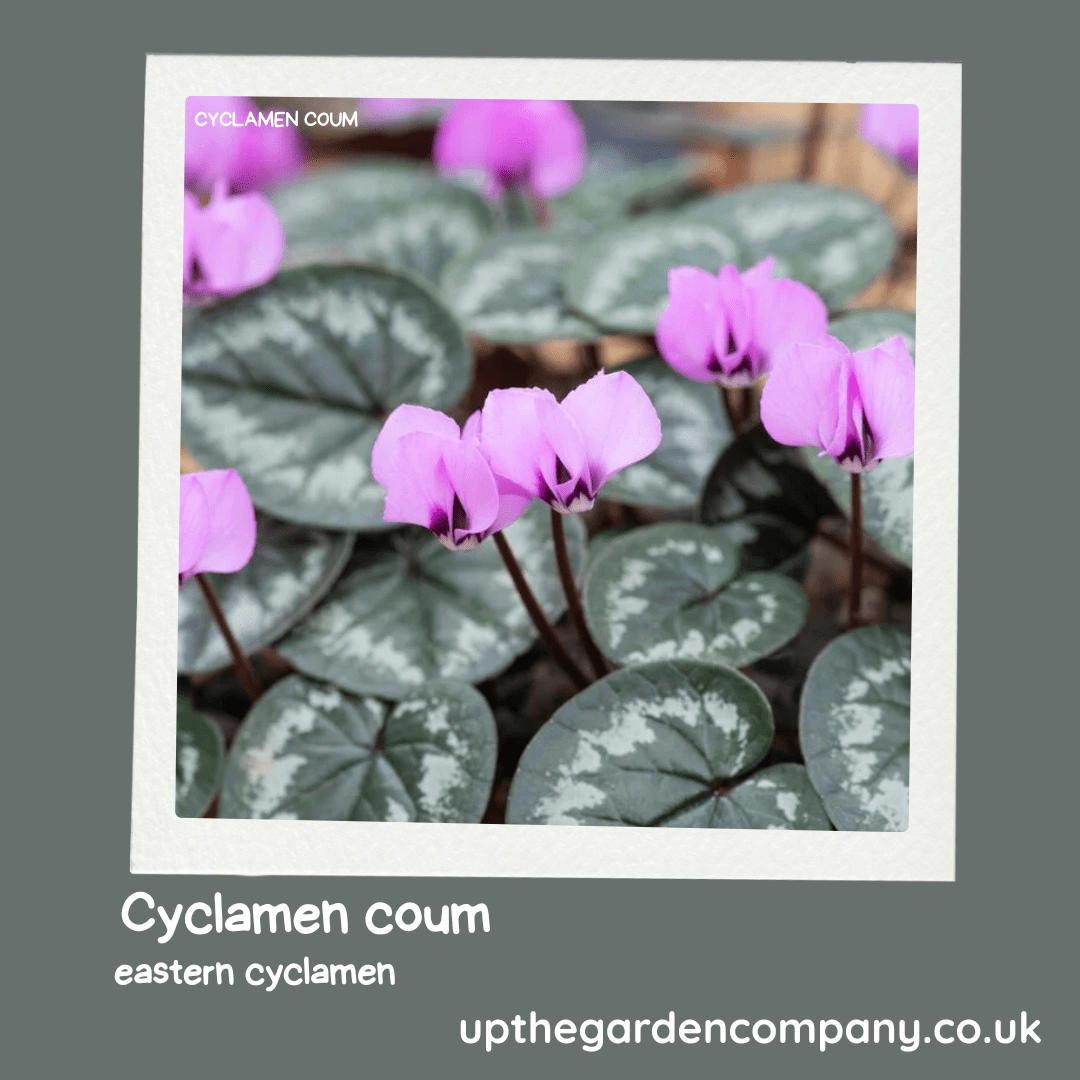
When the garden seems locked in a grey slumber and frost coats the ground, it takes a special kind of plant to brave the cold. While snowdrops often get the credit for heralding the end of winter, there is another contender that brings a splash of vibrancy when we need it most.
The Eastern Cyclamen is a hardy little survivor. It offers a burst of deep pinks, soft whites, and lush green foliage just as the rest of nature is hitting the snooze button. If you are looking to brighten up a shady corner or add interest to a woodland floor, this resilient tuber is an excellent choice.
A Rose by Any Other Name
To botanists and serious gardeners, this plant is known as Cyclamen coum. It belongs to the Primulaceae family, making it a distant cousin of the primrose. The name ‘Cyclamen’ comes from the Greek word kyklos, meaning ‘circle’, which likely refers to the round, coin-shaped tuber from which the stems grow, or perhaps the way the flower stem coils down towards the ground after pollination.
However, if you dig into old gardening books, you might find it referred to by a much earthier name: Eastern Sowbread. This rather unromantic moniker comes from the fact that pigs in the wild are partial to digging up and eating the tubers. While we wouldn’t recommend snacking on them yourself (more on that later), it certainly paints a vivid picture of the plant’s rugged history.
Roots in the East
As the name suggests, the Eastern Cyclamen hails from the regions surrounding the Black Sea. Its native range stretches across Bulgaria, Turkey, the Caucasus, and down into Lebanon and Israel.
It is a plant of the mountains and coastal woodlands, accustomed to cool, damp winters and hot, dry summers. This geographical heritage explains its growth cycle perfectly. It has evolved to come alive when moisture is plentiful and the tree canopy above is bare, allowing light to reach the forest floor. When the heat of summer arrives and the trees leaf out, blocking the sun, the cyclamen retreats underground, storing energy in its tuber until the rains return.
This adaptation makes it incredibly tough. It has survived for centuries in rocky, scrubby landscapes, meaning it is more than capable of handling a British winter.
Finding the Perfect Situation
One of the great joys of the Eastern Cyclamen is that it thrives in places where other plants struggle. It does not demand a prime spot in the borders or a heated greenhouse. Instead, it prefers the quiet, sheltered corners of the garden.
Climate and Environment
Cyclamen coum is fully hardy, often withstanding temperatures down to -15°C or lower. In fact, they often look their best poking through a dusting of snow. Their ideal environment mimics their natural woodland home. They love dappled shade, making them perfect for planting under deciduous trees or shrubs.
Because they do most of their growing in winter and early spring, they benefit from the light that filters through bare branches. In summer, the shade from the full canopy helps keep their dormant tubers cool and prevents them from baking in the sun.
Soil and Space
Drainage is the golden rule for cyclamen. While they like moisture during their growing season, they hate sitting in waterlogged soil, which can cause the tubers to rot. A soil rich in leaf mould is ideal, as it holds just enough moisture while allowing excess water to drain away.
When planting, space the tubers about 15cm apart. They are low-growing plants, rarely reaching more than 10cm in height, but they spread slowly over time to form glorious drifts. Give them room to naturalise, and do not plant them too deeply—the tuber should sit just below the surface of the soil.
Tales from the Tuber
With a history stretching back to antiquity, it is no surprise that the cyclamen has gathered its fair share of stories and superstitions.
In the language of flowers, the cyclamen has a dual meaning. It can symbolize resignation and goodbye, likely due to the way it bows its head. Yet, it also represents deep, lasting affection and sincerity. It was often planted near monasteries and churchyards, perhaps because the red markings on some varieties were said to represent the bleeding heart of the Virgin Mary.
Pliny the Elder, the Roman naturalist, wrote extensively about the plant. He believed that planting cyclamen around the home offered protection against bad spells and evil charms. He also noted that if a pregnant woman stepped over a cyclamen root, she might miscarry—a superstition that persisted in herbal lore for centuries.
There is also an old belief that wearing the flower helps to heal a broken heart. So, if winter has you feeling a little blue, perhaps a patch of Cyclamen coum is exactly the remedy you need.
The Highs and Lows of Growing Cyclamen
Every plant has its quirks. Before you rush out to fill your baskets, it is worth weighing up the pros and cons to see if they are the right fit for your green space.
The Advantages
- Early Colour: They bloom from January to March, filling the “hungry gap” in the garden when few other things are showing life.
- Low Maintenance: Once established, they require very little care. They don’t need pruning, staking, or deadheading.
- Naturalising: They self-seed readily. Over the years, ants will help spread the seeds (attracted by a sugary coating), expanding your colony for free.
- Foliage Interest: Even when not in flower, the leaves are beautiful. They are rounded and often patterned with silver markings, providing ground cover from autumn through to late spring.
The Disadvantages
- Summer Dormancy: This is the main drawback for some gardeners. By late spring, the leaves yellow and die back, leaving bare patches of earth until autumn. You need to plan your planting scheme carefully to ensure other plants take over the space in summer.
- Toxicity: The tubers contain saponins, which are toxic to cats, dogs, and humans if ingested in large quantities. While they taste terrible (which usually deters accidental eating), it is something to be mindful of.
- Slow Starters: Growing from seed requires patience. It can take several years for a seed-grown plant to reach flowering size. Buying established tubers or plants in the green is a faster, albeit more expensive, route.
Create Your Winter Wonderland
The Eastern Cyclamen is a small plant with a big impact. It asks for very little—just a shady spot and some well-drained soil—and in return, it gives you a stunning display of resilience and beauty in the depths of winter.
Whether you have a sprawling woodland garden or a few pots on a shady patio, there is space for this charming tuber. Why stare out at a bare garden this winter? Plant a few Cyclamen coum and watch them transform the cold earth into a tapestry of pink and silver.
Further Reading: RHS Eranthis hyemalis – Winter Aconite, The Corylus – Witch Hazel, How to Protect Your Soil in Winter, A Ruby Gem for Winter: Meeting Cyclamen persicum ‘Verano Red’
Inspiration: Follow Us on Instagram, Threads, BlueSky, Twitter, TikTok and Pinterest.