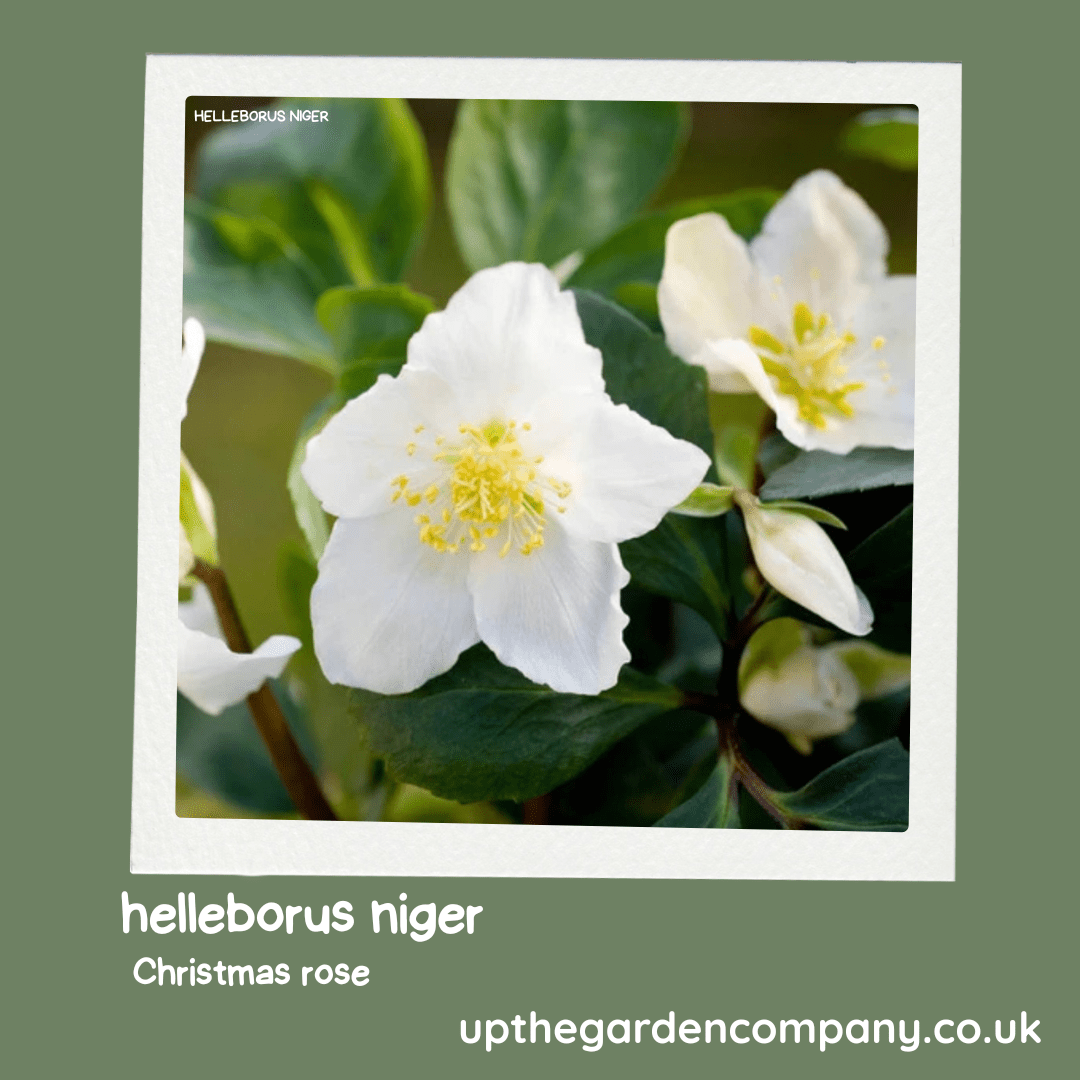
When the frost settles and the days grow short, most gardens retreat into a slumber of browns and greys. It is easy to assume that colour and life are reserved for the warmth of spring and summer. Yet, there is a quiet hero ready to defy the cold. Helleborus niger, commonly known as the Christmas Rose, is the star your winter garden has been waiting for.
While other plants wither in the chill, this evergreen perennial pushes through the frozen earth to reveal pristine white blooms. It offers a fresh, hopeful sight in the depths of winter, reminding us that nature never truly stops. If you are looking to add brightness to shady corners or create a focal point that sparkles against the snow, it is time to rediscover this classic winter beauty.
A flower of contradictions: History and origins
The Helleborus niger is a plant of fascinating contrasts. Its botanical name tells a story hidden beneath the soil. While its flowers are a brilliant, snowy white, the specific epithet niger means ‘black’, referring to the colour of its thick, dark roots.
Native to the mountainous regions of Central and Southern Europe—specifically the Alps, Carpathians, and Appennines—this plant is built for resilience. It thrives in alpine environments, which explains its remarkable ability to withstand freezing temperatures.
Historically, the name Helleborus derives from the Greek words elein (to injure) and bora (food). This is a stark warning from the ancients: despite its delicate beauty, the plant is toxic if ingested. For centuries, it has walked a fine line between a revered ornamental flower and a dangerous substance, captivating gardeners and herbalists alike.
Finding the perfect spot in your garden
To get the best out of your Christmas Rose, you must treat it to conditions that mimic its natural alpine home. Unlike some hardy perennials that can be scattered anywhere, Helleborus niger has specific preferences.
Ideally suited for shade
These plants flourish in partial shade. In the wild, you would find them nestled at the edge of woodlands or beneath the canopy of deciduous trees. They appreciate the dappled sunlight of winter when the trees are bare, but require protection from the harsh, direct sun of summer. A spot that is too dark will result in lush foliage but very few flowers, so aim for a balance.
Soil requirements
The Christmas Rose craves rich, well-drained soil. It struggles in heavy clay that sits wet in winter or sandy soil that dries out too quickly in summer. To keep it happy, incorporate plenty of organic matter—such as leaf mould or garden compost—before planting. They also have a preference for alkaline conditions, so if your soil is acidic, adding a little garden lime can work wonders.
A note on stability
Once you have chosen a spot, try to keep it there. Helleborus niger possesses a deep and extensive root system and resents being disturbed. Establish it well, and it will reward you with blooms for years to come.
Creating a winter tapestry: Companion plants
A single Hellebore is beautiful, but a drift of them amongst other winter gems is breathtaking. Pairing Helleborus niger with the right companions creates a layered, textural display that makes a winter garden feel complete.
Consider planting them alongside Snowdrops (Galanthus). The nodding white heads of snowdrops echo the purity of the Christmas Rose, creating a carpet of white that looks magical under low winter light.
Cyclamen coum is another excellent partner. With their swept-back pink or magenta petals and silver-patterned leaves, they provide a splash of vibrancy that contrasts beautifully with the Hellebore’s white petals.
For texture, look to Ferns. The evergreen fronds of the Hart’s Tongue Fern (Asplenium scolopendrium) provide a glossy, architectural backdrop that highlights the delicate structure of the Hellebore flowers.
Features that captivate
What makes Helleborus niger such a standout? It is the sheer elegance of the bloom.
The flowers are saucer-shaped, usually 4–8cm across, held on short, sturdy stems that rise just above the foliage. Unlike many other flowers, what appear to be petals are actually sepals. This biological quirk means the ‘petals’ do not fall off quickly; they remain on the plant for months, slowly fading from pure white to a soft, antique pink or even green as the seeds develop.
At the centre of each flower lies a crown of golden-yellow stamens, acting as a beacon for any pollinators brave enough to venture out in January or February.
The foliage is equally attractive. The leaves are leathery, dark green, and divided into leaflets like the fingers of a hand (pedate). Being evergreen, they provide ground cover and structure all year round, acting as a foil for summer-flowering plants before taking centre stage again when the frost returns.
Legends, myths, and old wives’ tales
Few plants are as steeped in folklore as the Christmas Rose. Its blooming time, coinciding with the festive season, has birthed many legends.
The Legend of Madelon
The most famous tale explains its common name. Legend has it that a young shepherdess named Madelon was tending her flock on a cold winter night when the Wise Men passed by with gifts for the newborn Jesus. Madelon wept because she had no gift to offer, and the ground was frozen, yielding no flowers. An angel, seeing her tears, brushed the snow aside and revealed the white Hellebore blooming beneath. Madelon gathered the flowers and offered them as a gift of love—the first Christmas Rose.
Warding off evil
In the Middle Ages, the plant was viewed with a mix of fear and reverence. It was widely believed to possess magical properties. People would plant Helleborus niger near their front doors, not just for decoration, but to prevent evil spirits and witches from entering the home. In some traditions, the powdered roots were sprinkled on the floor to make inhabitants invisible—though given the plant’s toxicity, this was likely a dangerous practice!
Weather forecasting
An old wives’ tale suggests the plant could predict the weather for the coming year. Country folk would cut twelve Hellebore flowers on Christmas Eve, placing them in water. Each flower represented a month of the coming year. If a flower opened fully and stayed fresh, the corresponding month would be fair; if it wilted, the month would be wet and stormy.
Benefits and uses beyond beauty
While we primarily value Helleborus niger for its ornamental value today, it has a long history of utility, albeit a risky one.
A warning on toxicity
It is crucial to remember that all parts of the plant are poisonous. In ancient herbal medicine, it was used as a powerful purgative and to treat worms, but the difference between a cure and a poison was often a matter of a few grains. Today, we leave the medicinal uses firmly in the history books. Always wear gloves when handling the plant, as the sap can sometimes irritate the skin.
A lifeline for pollinators
The true modern benefit of the Christmas Rose is ecological. In the depths of winter, food sources for insects are scarce. On mild January or February days, honeybees and bumblebees will emerge to forage. The open, accessible flowers of Helleborus niger, rich in pollen and nectar, provide a vital lifeline for these early flyers, helping to sustain local pollinator populations until spring properly arrives.
Bring the magic of winter home
There is something deeply satisfying about looking out of your window on a grey day and seeing a cluster of bright white flowers defying the elements. Helleborus niger is more than just a plant; it is a symbol of endurance and hope.
Whether you have a sprawling woodland garden or a shady courtyard container, there is space for a Christmas Rose. Why not visit your local nursery this weekend? Discover the varieties available and bring a little winter magic home.
Further Reading: Winter Flowering Shrubs, Winter Wildlife Garden, Why Witch Hazel ‘Jelena’ Is the Winter Wonder Your Garden Needs
Inspiration: Follow Us on Instagram, Threads, BlueSky, Twitter, TikTok and Pinterest.