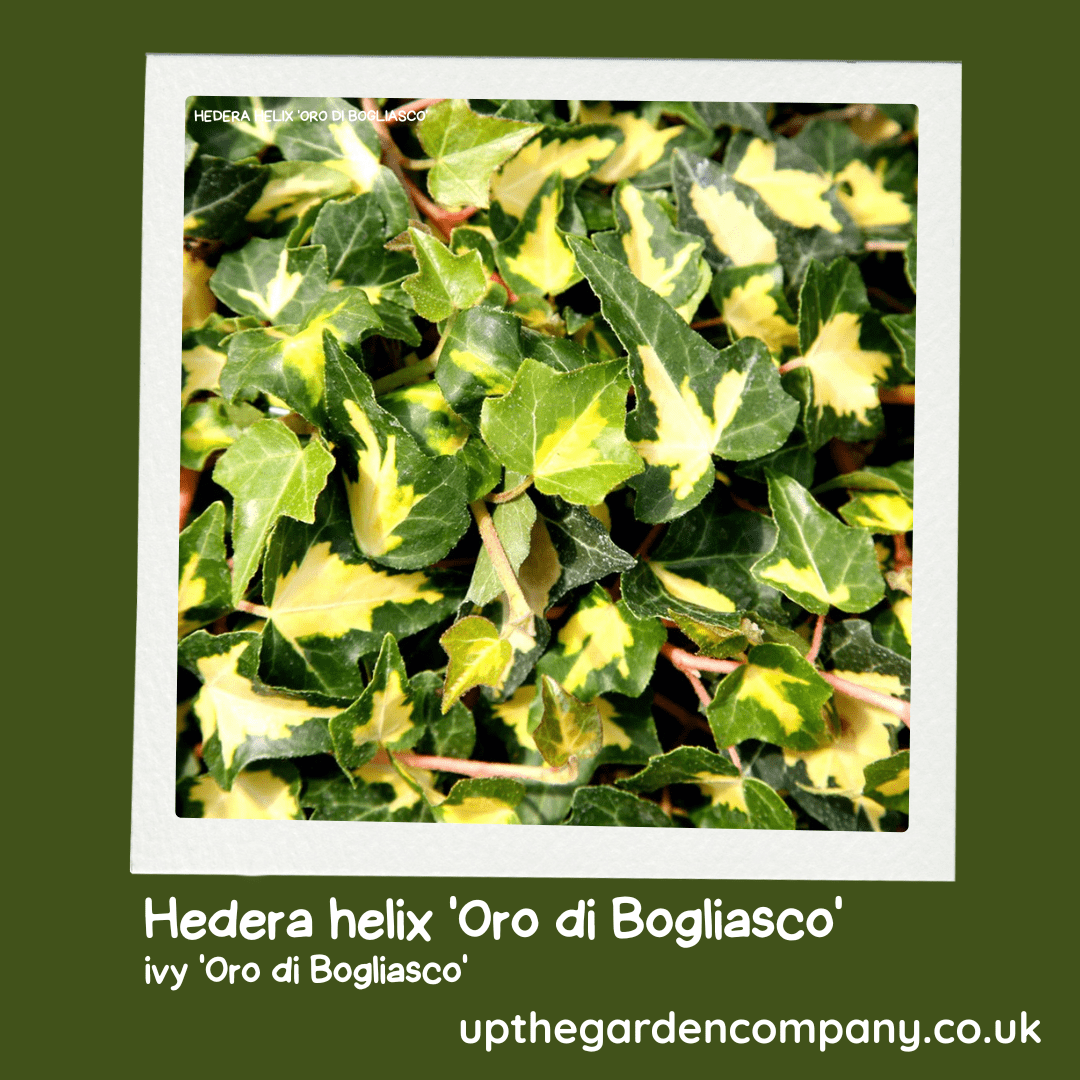
Picture a garden in the depths of January. The vibrant blooms of summer have long since faded, and the fiery reds of autumn leaves have fallen to the ground. The landscape often feels stripped back to bare branches and grey skies. Yet, even in the coldest months, there is a way to paint your garden with light. When flowers are scarce and the days are short, evergreen climbers become the backbone of our outdoor spaces. Among them, Hedera helix ‘Oro di Bogliasco’ stands out as a true beacon of warmth, ready to bring a splash of permanent sunshine to even the dullest walls.
This striking climber, often found in garden centres under the synonym ‘Goldheart’, is a variety of common ivy that punches well above its weight. With its glossy, dark green leaves centred with a dramatic splash of rich yellow, it offers a visual contrast that lifts the spirits instantly. It doesn’t just survive the winter; it creates a focal point that demands attention.
But why choose this specific variety over the dozens of others available? ‘Oro di Bogliasco’ is a genuine garden hero. It is a plant that marries beauty with utility, offering year-round interest while providing vital support for local wildlife. Whether you are looking to cloak a sprawling brick wall or add vertical interest to a compact courtyard, this ivy adapts to the space you give it. In this guide, we will explore the golden history of this Italian native, the perfect conditions it needs to thrive, and the fascinating folklore that has surrounded ivy for centuries.
A Golden Identity: History and Names
If you have ever stood in a nursery aisle confused by plant labels, you are not alone. Plant names can often be a tangle of synonyms and reclassifications. While botanically known as Hedera helix ‘Oro di Bogliasco’, you are just as likely to see this plant labelled as ‘Goldheart’. It is worth noting that these are the same plant. The name ‘Goldheart’ is simply a descriptive marketing name that caught on because it perfectly describes the leaf’s distinctive yellow centre.
Tracing the Roots
The botanical name, however, tells a much richer story. ‘Oro di Bogliasco’ translates from Italian to “Gold of Bogliasco.” This references a charming coastal village near Genoa in the Liguria region of Italy. It is believed that this specific variety either originated there or was popularised by gardeners in the region who recognised its unique beauty. By planting it, you are bringing a small piece of Italian coastal heritage into your own green space.
A Mark of Quality
You don’t just have to take our word for its performance. This variety holds the prestigious Royal Horticultural Society (RHS) Award of Garden Merit. This accolade is not given lightly; it signals to gardeners that the plant has been rigorously tested and proven to be reliable, stable, and generally free from pests and diseases. When you choose ‘Oro di Bogliasco’, you are choosing a plant with a proven track record of excellence.
Setting the Scene: Where to Plant
Like many plants with variegated foliage, ‘Oro di Bogliasco’ has a specific “Goldilocks” zone where it performs best. Understanding light and shade is crucial to getting that signature gold splash on the leaves.
Light and Shade
While common English ivy is famous for tolerating deep, dark shade, this variegated cousin needs a little more consideration.
- Too much shade: If planted in deep gloom, the plant may revert to all-green leaves in an attempt to absorb more light, losing its distinctive gold centre.
- Too much sun: Conversely, scorching midday sun in the height of summer can bleach or scorch the lighter parts of the leaves.
The ideal spot is somewhere that receives good light but is protected from the harshest rays—bright, dappled shade is perfect.
Soil and Climate requirements
This ivy is not particularly fussy, which adds to its charm. It thrives in:
- Soil: Moist but well-drained soil. It prefers alkaline to neutral conditions but will generally tolerate most garden soils as long as they aren’t waterlogged.
- Hardiness: It is fully hardy in the UK climate. However, the variegated leaves can be slightly more tender than solid green varieties. If you live in an exposed area, try to site it where it has some shelter from biting, cold winds to prevent winter damage.
Space and Structure
‘Oro di Bogliasco’ is a self-clinging climber. It uses aerial roots to attach itself firmly to surfaces. This makes it an exceptional choice for covering brick walls, sturdy wooden fences, or stone structures. However, remember to give it vertical space to stretch its legs. While it is not the fastest growing ivy, it will eventually cover a significant area, creating a lush, living tapestry.
The Highs and Lows: Pros and Cons
Every plant has its virtues and its vices. Being aware of both ensures you can enjoy the beauty of your ivy without becoming overwhelmed by maintenance.
The Highs (Advantages)
- Aesthetic Appeal: The primary reason to plant this ivy is visual impact. It brightens dark corners and provides evergreen cover that looks just as good in January as it does in July.
- Wildlife Haven: This plant is a lifeline for nature. The late-season flowers (appearing on mature plants) are a rich source of nectar for bees and hoverflies just as other sources are drying up. Following the flowers, the black berries provide essential high-calorie food for birds during the winter. [Read more about creating a wildlife-friendly garden here].
- Versatility: Have an unsightly concrete garage or a stark wire fence? This ivy is the perfect camouflage, softening hard architectural lines and blending them back into nature.
The Lows (Disadvantages)
- Vigorous Nature: While ‘Goldheart’ is less rampant than wild common ivy, it is still vigorous. Without a firm hand, it can smother delicate neighbouring plants or climb into gutters. Regular pruning is required to keep it within bounds.
- Structural Care: The aerial roots that allow the ivy to climb are incredibly strong. On sound masonry, this is rarely an issue. However, on older walls with crumbling mortar or loose rendering, the roots can penetrate cracks and cause damage. It is always wise to check the condition of your wall before encouraging ivy to climb it.
Whispers of the Past: Folklore and Quotes
Ivy is a plant steeped in history and myth, woven into the fabric of our culture for thousands of years. Its ability to stay green while the rest of the world turns brown has made it a powerful symbol of endurance.
Ancient Associations
In ancient times, ivy was closely associated with Bacchus, the Roman god of wine and revelry. It was believed that wearing a wreath of ivy could prevent intoxication—a handy belief for festival-goers! Tavern owners would hang an ivy bush outside their door to indicate that good wine was sold within.
Symbolism and Tradition
Because ivy clings tightly to its support and remains evergreen, it has long symbolized fidelity, friendship, and eternal life. In the language of flowers, it represents “fidelity in marriage,” often appearing in bridal bouquets.
Literature and song have also immortalised the plant. As Charles Dickens wrote in his poem The Ivy Green:
“Oh, a dainty plant is the Ivy green,
That creepeth o’er ruins old!
Of right choice food are his meals, I ween,
In his cell so lone and cold.”
And of course, no winter season is complete without the traditional carol, “The Holly and the Ivy,” reminding us of the plant’s central role in our winter celebrations and the continuity of life through the dark months.
Bring Gold to Your Garden
Hedera helix ‘Oro di Bogliasco’ offers a lasting harmony between beauty and utility. It brings light to shaded corners, food for hungry birds, and a sense of history to your home. Whether you call it ‘Goldheart’ or use its lyrical Italian name, the result is the same: a stunning, resilient backdrop that enhances your garden in every season.
Why not head to your local nursery this weekend? Find a spot that needs brightening and introduce this golden climber to your patch of earth.
Further Reading: RHS Eranthis hyemalis – Winter Aconite, The Corylus – Witch Hazel, How to Protect Your Soil in Winter, Meet the winter warrior: Erica x darleyensis ‘Furzey’, All About Heathers, Winter Wildlife Garden
Inspiration: Follow Us on Instagram, Threads, BlueSky, Twitter, TikTok and Pinterest.