
Winter in the garden is often characterised by bare branches and a muted palette of browns and greys. It is a time of dormancy, where nature holds its breath waiting for the warmth of spring. Yet, amidst this quiet slumber, one shrub offers a startling burst of colour that defies the season’s gloom. Salix gracilistyla ‘Mount Aso’, commonly known as the Japanese Pink Pussy Willow, is a plant that demands attention when little else does.
For gardeners seeking to extend visual interest into the earliest months of the year, this willow is an exceptional choice. Its fuzzy, gem-like catkins emerge long before the leaves, decorating the landscape with vibrant shades of pink and red. It transforms a stark winter view into a scene of warmth and promise, signalling that life is stirring just beneath the surface.
Beyond its obvious aesthetic appeal, ‘Mount Aso’ is a shrub steeped in botanical interest and relatively simple to maintain, provided you understand its love for moisture. Whether you are an experienced horticulturist or simply looking for a standout specimen to brighten a damp corner of your garden, this guide explores everything you need to know about this remarkable variety. From its volcanic origins to the specific care it requires to thrive, discover why this pink pussy willow deserves a place in your outdoor sanctuary.
A Botanical Introduction
To truly appreciate this shrub, it helps to understand where it fits within the plant kingdom. Salix gracilistyla ‘Mount Aso’ belongs to the Salicaceae family, a diverse group that includes poplars, aspens, and all willows. The genus Salix is vast, containing around 400 species primarily found in the moist soils of cold and temperate regions in the Northern Hemisphere.
The specific epithet, gracilistyla, refers to the slender style of the female flowers. While many willows are known for their silvery-grey catkins—the classic “pussy willow” look—’Mount Aso’ is a selected male clone revered specifically for the unique pigmentation of its flowers. It is a deciduous shrub, meaning it will lose its foliage in autumn, revealing an architectural framework of branches that becomes the stage for its spectacular winter performance.
Origins and History
The name ‘Mount Aso’ is not merely a fanciful marketing title; it points directly to the plant’s geographical roots. This variety was discovered growing on the slopes of Mount Aso, the largest active volcano in Japan. The mountain is located on the island of Kyushu and is surrounded by a vast caldera, creating a unique ecosystem where this specific mutation of Salix gracilistyla was found.
It was selected for cultivation because of its distinct coloration. While the species Salix gracilistyla is native to Japan, Korea, and China, the ‘Mount Aso’ cultivar is special. It captures the rugged beauty of its volcanic home while offering a softness and elegance that translates perfectly to the domestic garden. Since its introduction to the wider horticultural world, it has gained a reputation as one of the finest coloured catkin willows available today.
A Visual Spectacle
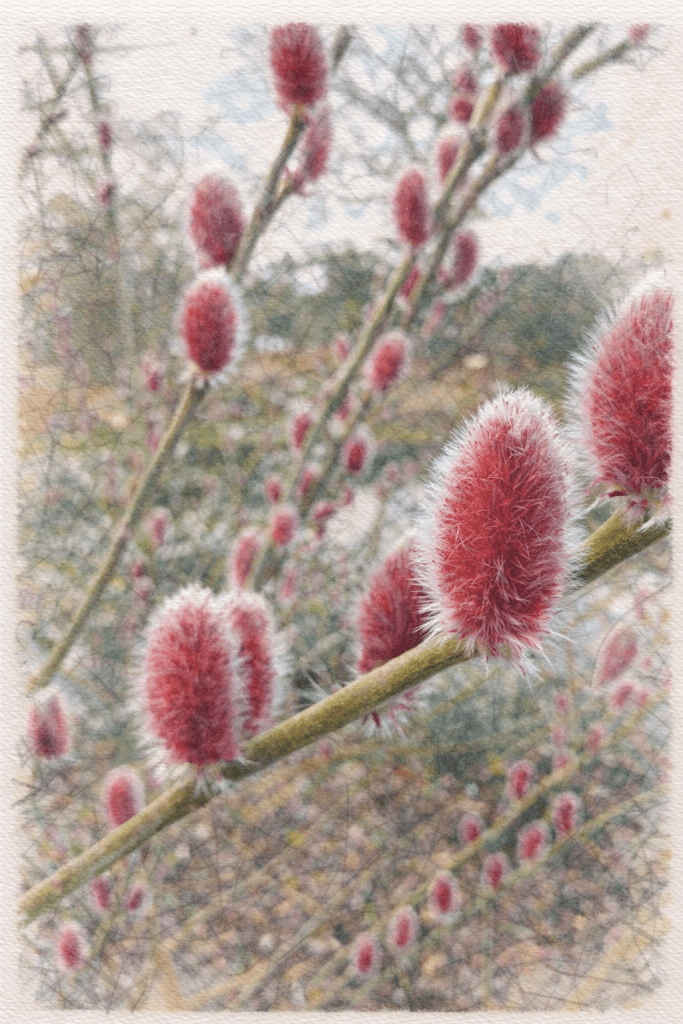
The primary reason gardeners seek out Salix gracilistyla ‘Mount Aso’ is, without doubt, the catkins. These fuzzy flower clusters appear in late winter or very early spring, often as early as February in milder regions. Unlike the traditional silver catkins of the common goat willow, the catkins of ‘Mount Aso’ emerge a deep, rosy pink to ruby red.
As they mature, these 2.5 to 3.5-centimetre catkins undergo a fascinating transformation. They begin as tight, vibrant buds. As they expand, the pink fur slowly gives way to silvery undertones. Finally, as the pollen develops, the catkins become dusted with golden yellow, creating a tri-colour effect that is truly captivating against a backdrop of winter frost or snow.
Following the floral display, the foliage emerges. The leaves are lance-shaped, growing up to 10 centimetres long. They possess a lovely blue-green hue on the upper surface and a silky, silvery-grey underside. This two-toned foliage provides a soft, shimmering texture throughout the summer months, ensuring the plant remains attractive even after the flowers have faded.
Finding the Perfect Spot
To get the best out of Salix gracilistyla ‘Mount Aso’, location is everything. Willows are inextricably linked with water, and this variety is no exception. It thrives in soil that is consistently moist. If you have a boggy area in your garden, a spot near a pond, or heavy clay soil that tends to stay damp, this plant will feel right at home.
Sunlight is the second crucial factor. For the most profuse production of catkins and the most vibrant colour, plant ‘Mount Aso’ in full sun. While it can tolerate partial shade, the flowering display may be less impressive, and the shrub can become leggy as it reaches for the light.
In terms of space, this is a shrub that likes to spread its elbows. It typically grows to a height and spread of roughly 2 to 3 metres (6 to 10 feet). It has a naturally bushy, spreading habit, so ensure it has enough room to grow without crowding its neighbours.
Caring for Your Pink Pussy Willow
While ‘Mount Aso’ is hardy and generally robust, a little specific care goes a long way in maintaining its health and appearance.
Watering
The golden rule for all willows is do not let them dry out. During the first year after planting, regular deep watering is essential to establish the root system. Even once established, this shrub will struggle in drought conditions. If you experience a particularly dry summer, be prepared to water it frequently. A thick layer of organic mulch around the base can help retain soil moisture and suppress weeds.
Pruning Techniques
Pruning is perhaps the most important maintenance task for Salix gracilistyla ‘Mount Aso’. Left to its own devices, the shrub can become tangled and woody, with flower production dwindling over time. The best catkins are produced on new wood—stems that have grown in the previous season.
To maximise the display, many gardeners employ a technique known as coppicing or stooling. This involves cutting the stems back hard—often to within 15-30 centimetres of the ground—every year or every two years. This should be done in early spring, immediately after the catkins have finished flowering but before the leaves fully unfurl.
This drastic pruning stimulates vigorous new growth, resulting in long, straight stems that will be covered in catkins the following winter. It also keeps the size of the shrub manageable, making it suitable for smaller gardens.
Weighing the Pros and Cons
Like any garden resident, ‘Mount Aso’ comes with its own set of characteristics that may be viewed as benefits or challenges depending on your gardening style.
The Benefits
- Early Season Colour: It provides vibrant colour when the garden is otherwise dormant.
- Wildlife Friendly: As an early flowering plant, it is an invaluable source of nectar and pollen for waking bees and other early pollinators.
- Cut Flowers: The stems are magnificent in floral arrangements. Cutting them for the vase is effectively a form of light pruning!
- Architectural Form: Even without leaves, the structure of the shrub adds interest to the winter landscape.
Potential Drawbacks
- Thirst: Its high water requirement means it is not suitable for dry, sandy soils or xeric (low water) gardens without significant irrigation.
- Pests and Diseases: Willows can be susceptible to aphids, caterpillars, and willow beetles. They can also suffer from fungal issues like rust or canker, although good air circulation and proper pruning can mitigate this.
- Root Systems: Like many willows, the roots seek water aggressively. It is generally advised to avoid planting them right next to drains or building foundations, although this shrub form is less risky than large tree willows.
Bringing Early Colour to Your Garden
Inviting Salix gracilistyla ‘Mount Aso’ into your garden is an act of anticipation. It is a promise that even in the depths of winter, nature has beauty to offer. This plant bridges the gap between the seasons, offering a vibrant spectacle that lifts the spirits during the greyest days.
Whether you plant it as a solitary specimen to admire from your kitchen window or use it to soften the edge of a stream, ‘Mount Aso’ offers a high reward for relatively modest effort. By providing it with the moisture it craves and the annual prune it requires, you ensure a spectacular display that will delight you and the local wildlife year after year.
Further Reading: The Winter Garden: Winter Interest Shrubs, Winter Planning: Design Your Dream Border for Next Year
Inspiration: Follow Us on Instagram, Threads, BlueSky, Twitter, TikTok and Pinterest.