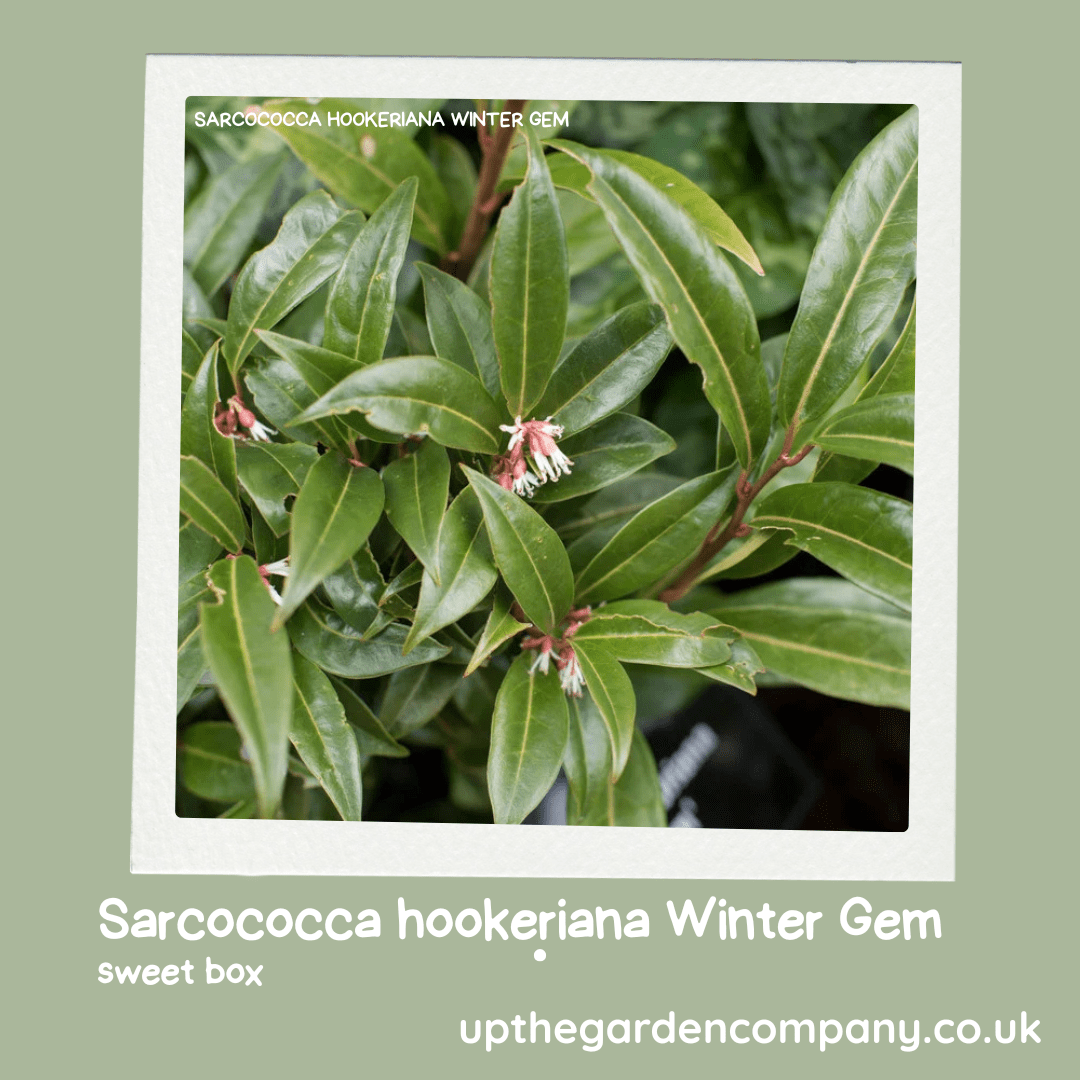
Winter is often viewed as a dormant season for the garden. We tend to think of bare branches, grey skies, and a distinct lack of colour. But if you take a stroll through a well-planned garden in January or February, you might be stopped in your tracks by a powerful, sugary scent drifting on the cold air. Look around, and you won’t see showy roses or vibrant tulips. Instead, you might find a modest, glossy green shrub with tiny, thread-like flowers.
This is the Sweet Box, or Sarcococca. It is the unsung hero of the winter garden, a plant that proves nature doesn’t sleep—even when the temperature drops.
If you are looking to bring life, greenery, and an incredible fragrance to the shadier corners of your outdoor space, Sweet Box is the perfect candidate. Let’s explore everything you need to know about this hardworking evergreen.
What is Sweet Box?
Before you rush to the garden centre, it helps to know exactly what you are looking for. The botanical name for this genus is Sarcococca (pronounced sar-ko-coke-ah). It belongs to the Buxaceae family, which makes it a close cousin of the common Box (Buxus sempervirens) often used for formal hedging.
The name itself gives a clue to its appearance. It comes from the Greek words sarkos (flesh) and kokkos (berry), referring to the fleshy fruits that appear after flowering.
While there are several varieties, the two you are most likely to encounter in British gardens are Sarcococca confusa and Sarcococca hookeriana. They are generally known by the common names Sweet Box or Christmas Box, the latter hinting at their blooming time which often coincides with the festive season.
A Traveller from the East
Sweet Box is not native to the British Isles. Its roots lie much further east. These shrubs originate from the damp, shaded woodlands of Eastern and South-Eastern Asia, particularly China and the Himalayas.
The plant was introduced to Western horticulture during the great age of plant hunting in the 19th and early 20th centuries. Victorian and Edwardian plant hunters scoured the mountains of Asia to bring back exotics that could withstand the European climate. Sarcococca was a triumph in this regard. It didn’t just survive; it thrived.
Because it evolved on forest floors, sheltered by the canopy of larger trees, it developed a resilience that makes it invaluable to modern gardeners. It learned to cope with low light and competition for water, traits that we cherish today.
Where to Plant Your Sweet Box
One of the greatest assets of Sarcococca is its versatility. It is a problem-solver for those tricky spots where nothing else seems to grow. However, to get the absolute best out of it, you should try to mimic its natural woodland home.
The Ideal Situation
Sweet Box is a shade-lover. It is one of the few plants that genuinely thrives in deep shade, making it perfect for north-facing walls or under the canopy of large deciduous trees. While it can tolerate a bit of morning sun, too much direct light—especially in summer—can scorch the leaves, turning them a sickly yellow.
Climate and Hardiness
These plants are generally fully hardy in the UK. They can withstand temperatures down to -15°C, meaning they will happily survive a harsh British winter without needing to be wrapped in fleece. They are also remarkably tolerant of urban pollution, making them an excellent choice for town gardens and city courtyards.
Soil Requirements
While Sweet Box prefers humus-rich, moist, and well-drained soil (think of that leafy forest floor), it is surprisingly unfussy. It is capable of growing in chalk, loam, clay, or sand.
Critically, Sarcococca is one of the few shrubs that can cope with “dry shade.” This is the holy grail for gardeners—finding a plant that can sit at the base of a thirsty tree or in the rain shadow of a wall and still look lush and green.
Positioning for Scent
Don’t just hide it away in the back border, though. The scent is the main event. Plant your Sweet Box near a path, a front door, or a gate. You want to be able to catch that vanilla-honey fragrance every time you step outside during winter.
Stories and Secrets of the Sweet Box
Unlike our native holly or ivy, Sarcococca is a relatively recent arrival, so it lacks the centuries of Celtic folklore or medieval superstition attached to our indigenous flora. However, it has carved out its own narrative in the gardening world.
In the language of flowers, evergreens generally represent resilience and immortality, and the Sweet Box fits this perfectly. It is often described by horticulturists as a “hidden treasure.” Because the flowers are small and lack petals—consisting mostly of creamy white stamens—they are easily missed by the eye. The story goes that the plant relies on its powerful scent to announce its presence, teaching us that true value isn’t always flashy or immediately visible.
There is also a practical “old wives’ tale” among florists that adding a sprig of Sarcococca foliage to a cut flower arrangement will make the other blooms last longer. While scientific evidence for this is thin, the glossy, dark green leaves certainly provide a stunning, long-lasting backdrop for winter bouquets.
Why You Should (and Shouldn’t) Plant It
Every plant has its pros and cons. Here is the balance sheet for Sarcococca.
The Benefits
- Intoxicating Fragrance: The scent is powerful, carrying notes of vanilla, honey, and jasmine. It provides sensory delight when the rest of the garden is odourless.
- Evergreen Structure: It keeps its glossy, dark green leaves year-round, providing crucial structure and screening in winter.
- Wildlife Friendly: The early flowers provide a vital nectar source for solitary bees and other pollinators that emerge during mild winter spells. Later, the black or red berries are eaten by birds.
- Low Maintenance: Once established, it requires very little pruning or feeding. It rarely succumbs to pests or diseases.
- Deer Resistant: For those in rural areas, Sweet Box is generally left alone by deer.
The Disadvantages
- Slow Growth: This is not a plant for instant gratification. It grows slowly, taking several years to reach its full height (usually around 1-1.5 metres). Patience is required.
- Suckering: Some varieties, particularly Sarcococca hookeriana, can spread via underground runners (suckers). While this makes good ground cover, it can invade neighbouring plants if not watched.
- Toxicity: Like its cousin the Box, all parts of the plant are mildly toxic if ingested. The berries may look appealing to children, so care should be taken.
How to Use Sweet Box in Your Design
Ready to plant? Here are three inspiring ways to incorporate Sarcococca into your garden design:
1. The Fragrant Welcome
Plant a pair of Sarcococca confusa in large pots on either side of your front door. They grow happily in containers as long as you keep them watered. Every time you come home on a dark winter evening, you will be greeted by that sweet, welcoming perfume.
2. The Low Hedge
Instead of the ubiquitous Box hedge (which is prone to blight and caterpillars), try a loose, informal hedge of Sweet Box. It creates a neat partition in a shady part of the garden and doesn’t require the constant clipping that Buxus does.
3. The Carpet of Green
Use the suckering varieties (Sarcococca hookeriana var. digyna) as ground cover under trees. Plant them in groups of three or five. Over time, they will knit together to form a weed-suppressing carpet of green that looks good 365 days a year.
Bring Winter to Life
The Sweet Box is a testament to nature’s ability to surprise us. It takes the darkest, coldest months of the year and fills them with perfume. It takes the darkest, driest corners of the garden and fills them with life.
If you have a shady spot that looks a little sad, or if you simply want to extend the interest in your garden beyond the summer months, this is the plant for you. Head to your local nursery this weekend and see if you can track down this fragrant wonder.
Further Reading: The Winter Garden: Winter Interest Shrubs, Winter Planning: Design Your Dream Border for Next Year
Inspiration: Follow Us on Instagram, Threads, BlueSky, Twitter, TikTok and Pinterest.