Winter in the garden is often characterised by dormancy. It is a time of bare branches, grey skies, and a distinct lack of vibrancy. Yet, for those who know where to look, nature provides spectacular exceptions to this rule. Among the slumbering plants, one shrub stands out not for its foliage, but for a scent so intoxicating it stops passers-by in their tracks.
That shrub is Chimonanthus praecox, better known as Wintersweet. Just as we retreat indoors to escape the chill, this remarkable plant wakes up, offering a sensory delight when we need it most. Its waxy, pendent blooms appear on bare wood, releasing a perfume that combines spicy vanilla with hints of daffodil—a promise that spring is on the horizon.
Adding Wintersweet to your garden is an act of optimism. It transforms a sterile winter landscape into a fragrant sanctuary. Whether you are an experienced horticulturist or simply someone who appreciates beauty in unexpected places, understanding this plant offers a new way to enjoy your outdoor space all year round.
Unlocking the Identity of Chimonanthus praecox
To truly appreciate this plant, it helps to understand its origins and its name. The botanical name, Chimonanthus, is derived from the Greek words cheimon, meaning winter, and anthos, meaning flower. The specific epithet, praecox, means ‘early’, referring to its habit of blooming long before the rest of the garden awakens.
A rich history
Although it has been a cherished feature of British gardens since its introduction in 1766, Wintersweet hails from China. In its native land, it has been cultivated for over a thousand years, celebrated in art and poetry for its ability to brave the frost. It belongs to the family Calycanthaceae, making it a distant relative of the equally aromatic Carolina Allspice.
While you may hear it referred to as Japanese Allspice, this is slightly misleading regarding its true origin, though it has long been naturalised and beloved in Japan as Rōbai.
What to expect from Wintersweet
If you plant Chimonanthus praecox, you are investing in a deciduous shrub that focuses its energy on a spectacular winter performance.
During the spring and summer, the plant is relatively unassuming. It features long, lance-shaped leaves that are rough to the touch and a fresh, bright green. It creates a pleasant, bushy backdrop for summer-flowering perennials, reaching heights of up to 4 metres (13 feet) and a spread of 3 metres (10 feet) if left unpruned.
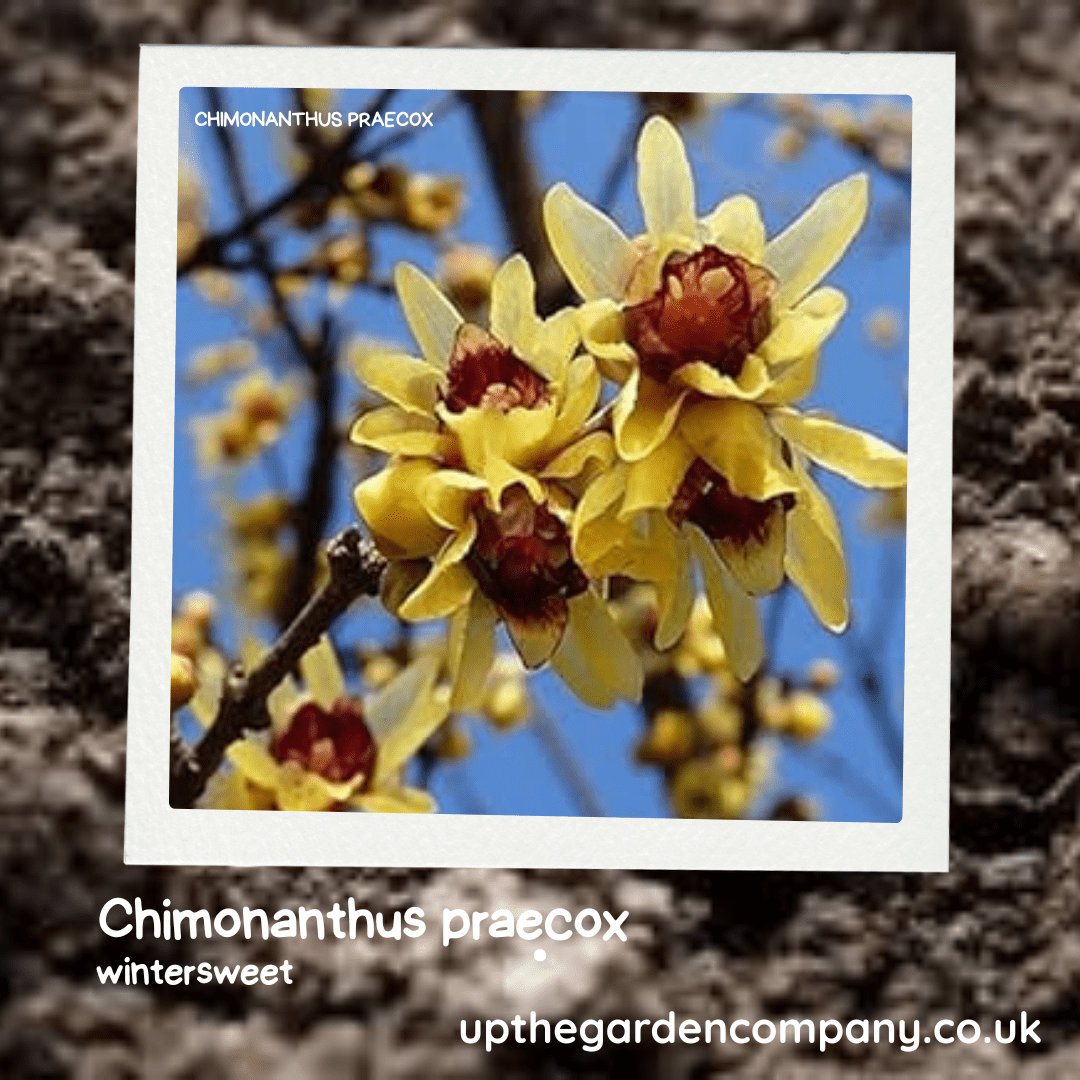
However, the magic happens between December and February. After the leaves have fallen, turning a buttery yellow before dropping, the bare branches reveal small, cup-shaped flowers. The outer tepals are a translucent, waxy yellow, while the inner tepals are stained with a deep purple or maroon.
While the flowers are visually delicate and unusual, it is the fragrance that defines them. The scent is powerful and carries well on the cool winter air. A few cut stems brought indoors can perfume an entire room for days.
Finding the perfect spot in your garden
Positioning is everything when it comes to Wintersweet. Because it blooms in the depths of winter, you should plant it somewhere you visit daily, rather than tucked away in a remote corner. A spot near a front path, a back door, or a winter-used patio is ideal. This ensures you catch the scent every time you step outside.
Sunlight and shelter
Despite its hardiness, Chimonanthus praecox thrives best in a sunny, sheltered position. The wood needs the warmth of the summer sun to ripen sufficiently to produce flower buds for the following winter. A south or west-facing wall is often the perfect location. This positioning offers the dual benefit of baking the wood in summer and protecting the winter blooms from harsh, damaging winds.
Soil requirements
This shrub is not overly fussy about soil, which makes it accessible for most gardeners. It prefers well-drained soil and is remarkably tolerant of chalky (alkaline) conditions. However, like many plants, it dislikes sitting in waterlogged ground. If your garden has heavy clay soil, incorporating plenty of organic matter and grit during planting will help it thrive.
How to care for your Wintersweet
Once established, Wintersweet is a low-maintenance plant that requires very little intervention. However, a little attention in its early years and the correct pruning technique will ensure a bountiful display of flowers.
Watering and feeding
Young plants should be watered regularly during their first few summers to help their root systems establish. Once mature, they are reasonably drought-tolerant. A mulch of well-rotted garden compost or manure applied in spring helps retain moisture and suppress weeds. You do not need to feed it heavily; a general-purpose fertiliser applied in early spring is usually sufficient.
The art of pruning
Pruning is the area where mistakes are most often made. Because Wintersweet flowers on the previous year’s wood, pruning at the wrong time can result in a flowerless winter.
The golden rule is to prune immediately after flowering finishes, usually in late February or early March.
- Formative pruning: For young plants, simply remove any crossing or damaged branches to create a nice open framework.
- Maintenance pruning: For established shrubs, cut back the flowered shoots to within a few buds of the main, permanent branches. This encourages the plant to produce strong new growth during the summer, which will carry the blooms for the next winter.
- Rejuvenation: If you inherit an unruly, overgrown Wintersweet, you can renovate it by removing one or two of the oldest stems right down to the ground each year. This encourages fresh vigour from the base.
The benefits and considerations
Every plant contributes something unique to a landscape, but it is wise to weigh the pros and cons before digging a hole.
Why you should plant it
- Unrivalled fragrance: Few plants can compete with the intensity of its scent during the dormant season.
- Pollinator support: On milder winter days, early-active bees and other pollinators will find the nectar a vital food source when little else is available.
- Cut flowers: It brings the garden indoors. Cutting branches for the vase actually helps prune the bush, serving two purposes at once.
- Pest resistance: Chimonanthus is generally trouble-free, suffering from very few pests or diseases.
Considerations to keep in mind
- Patience required: Wintersweet is not a plant for those seeking instant gratification. Plants grown from seed can take anywhere from 5 to 12 years to bloom. It is highly recommended to buy a named variety (like ‘Luteus’ or ‘Grandiflorus’) or a vegetative propagation to ensure faster flowering.
- Summer appearance: It is arguably a ‘one-season wonder’. While the foliage is perfectly pleasant, it is not particularly ornamental in summer compared to other shrubs. It is best placed at the back of a border where summer perennials can hide its lower branches.
- Toxicity: The seeds, which are contained in urn-shaped pods that persist on the branches, contain alkaloids and can be toxic if ingested. If you have pets or young children who are prone to eating plants, you may wish to remove the seed pods.
Bring life to the winter garden
Gardening is often viewed as a spring and summer activity, but plants like Chimonanthus praecox challenge that notion. They remind us that nature does not stop; it simply changes rhythm.
By planting a Wintersweet, you are making a commitment to the colder months. You are ensuring that even on the shortest days of the year, there is something to explore, something to smell, and something to admire. If you have a sunny wall and a little patience, this historic shrub will reward you with one of the finest perfumes the natural world has to offer.
Further Reading: The Winter Garden: Winter Interest Shrubs, Winter Planning: Design Your Dream Border for Next Year
Inspiration: Follow Us on Instagram, Threads, BlueSky, Twitter, TikTok and Pinterest.