A Winter Jewel for the Garden
Few plants lift the spirits quite like Viburnum tinus, commonly known as laurustinus. At a time when much of the garden lies quiet, this dependable evergreen shrub comes into its own, offering glossy foliage, delicate flowers and a welcome reminder that spring is never far away. Valued for centuries for its resilience and beauty, Viburnum tinus remains a much-loved feature in gardens, estates and historic landscapes across Britain.
Description of Viburnum tinus
Viburnum tinus is an evergreen shrub with dark green, leathery leaves that resemble those of the bay laurel – a feature reflected in its common name, laurustinus. From late autumn through to early spring, it produces clusters of soft pink buds that gradually open into small, star-shaped white flowers. These blooms are often followed by metallic blue-black berries, adding further seasonal interest.
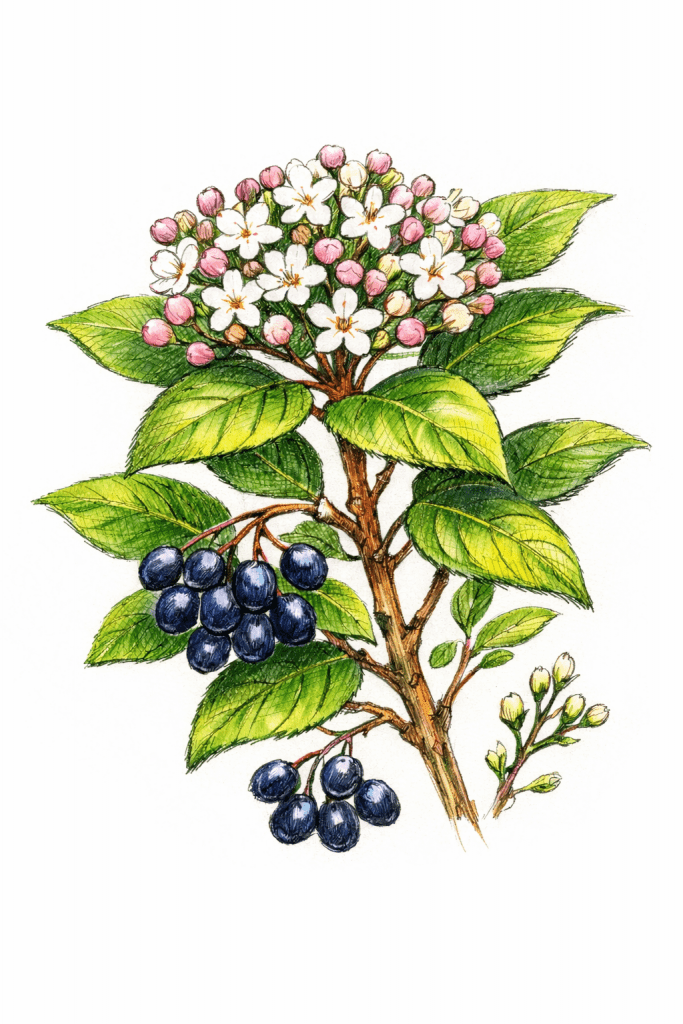
Typically reaching around 2–4 metres in height and spread, Viburnum tinus has a naturally dense, rounded form. It is well suited to mixed borders, hedging, woodland edges and sheltered garden spaces, where it provides year-round structure and winter colour.
Name and Plant Family
- Botanical name: Viburnum tinus
- Common name: Laurustinus
- Plant family: Adoxaceae
The genus Viburnum includes more than 150 species, many prized for their flowers, fragrance or autumn colour. Viburnum tinus stands out for its evergreen nature and winter-flowering habit, making it especially valuable in British gardens.
History and Heritage
Native to the Mediterranean region, Viburnum tinus has been cultivated in Britain since at least the 16th century. It was particularly favoured in formal and walled gardens, where its tolerance of shade and ability to flower during colder months made it a reliable ornamental shrub.
In historic landscapes, laurustinus was often planted near entrances or paths, where its winter flowers could be enjoyed up close. Its enduring popularity reflects a long tradition of choosing plants not only for beauty, but for their ability to bring comfort and continuity through the seasons.
Laurustinus in Poetry and Reflection
While Viburnum tinus may not feature as prominently in poetry as roses or lilies, it has long been admired by gardeners and writers for its quiet persistence. Winter-flowering shrubs like laurustinus often symbolise hope, endurance and the promise of renewal.
A traditional gardener’s saying reflects this sentiment:
“When the laurustinus flowers, winter loosens its grip.”
Such plants remind us that beauty does not disappear in winter – it simply changes form, offering subtler pleasures for those who take the time to look.
Advantages of Viburnum tinus
Year-round interest
As an evergreen shrub with winter flowers and spring berries, Viburnum tinus provides structure and colour in every season.
Winter flowering
Its blooms appear when little else is in flower, offering vital nectar for early pollinators and welcome brightness for gardeners.
Low maintenance
Once established, laurustinus is relatively easy to care for, requiring minimal pruning and coping well with a range of soil types.
Versatile planting
Suitable for hedging, borders or as a specimen shrub, it works well in both formal and informal garden settings.
Wildlife friendly
The flowers attract pollinators, while the berries provide food for birds later in the year.
Disadvantages to Consider
Shelter required
Although hardy in much of the UK, Viburnum tinus benefits from protection against cold winds and severe frost, particularly in exposed sites.
Flower damage in harsh winters
Prolonged frost can affect buds and blooms, reducing the floral display in some years.
Toxicity
The berries are mildly toxic if ingested by humans or pets, so care should be taken in family gardens.
Limited fragrance
Unlike some other viburnums, the flowers are not strongly scented, which may be a consideration for those seeking winter perfume.
A Lasting Presence in the Garden
Viburnum tinus is a plant of quiet reliability – never showy, yet always rewarding. Its ability to flower through the darker months, combined with its evergreen form and long history in British gardens, makes it a timeless choice for those seeking beauty, structure and resilience.
In celebrating plants like laurustinus, we are reminded that gardens are not just about colour and display, but about continuity, patience and the gentle reassurance of nature carrying on, whatever the season.
Further Reading: RHS Eranthis hyemalis – Winter Aconite, The Corylus – Witch Hazel, How to Protect Your Soil in Winter, A Ruby Gem for Winter: Meeting Cyclamen persicum ‘Verano Red’, Bringing Life to Winter: The Resilience of Eastern Cyclamen
Inspiration: Follow Us on Instagram, Threads, BlueSky, Twitter, TikTok and Pinterest.