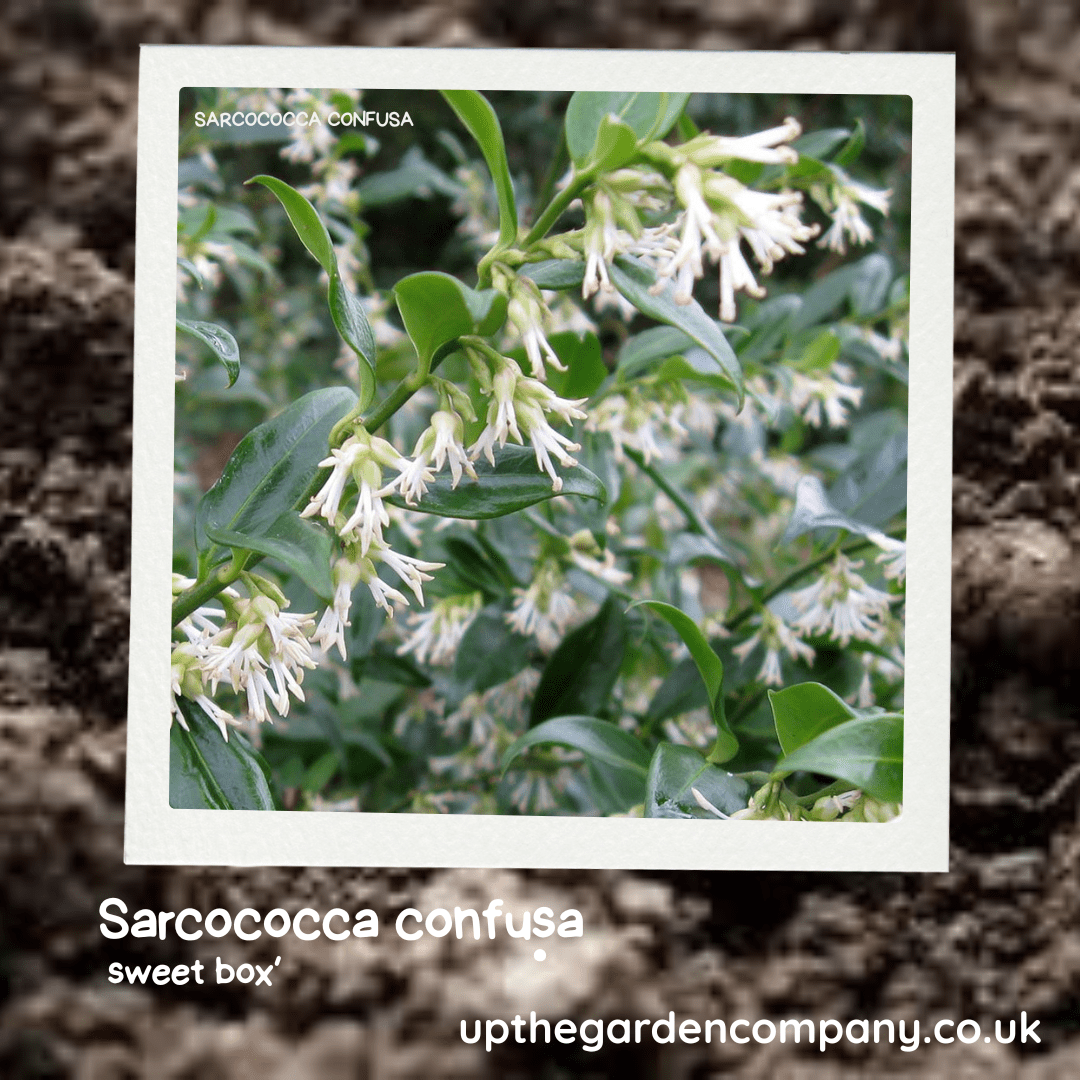
The Winter Wonder: Why Sarcococca Confusa Belongs in Your Garden
Winter in the garden is often associated with dormancy. We tend to think of bare branches, frosty lawns, and a quiet palette of browns and greys. Yet, for those in the know, winter can be one of the most sensory seasons of all. While many plants are sleeping, there is a modest evergreen hero that wakes up just when the temperature drops, filling the crisp air with a perfume that rivals the finest summer blooms.
This plant is Sarcococca confusa, widely known as the sweet box. It is a shrub that does not shout for attention with showy, dinner-plate-sized flowers. Instead, it charms you subtly. You will often smell it before you see it—a heady, vanilla-like fragrance drifting on the breeze in the depths of January. It is an invitation to step outside, breathe deeply, and rediscover the joy of the winter garden.
Whether you have a sprawling country estate or a compact urban courtyard, the sweet box offers something special. It is tough, reliable, and beautiful in an understated way. In this guide, we will explore everything you need to know about this botanical treasure, from its history and habits to the best way to care for it, ensuring your garden remains a sanctuary for the senses all year round.
Unboxing the Sweet Box
To truly appreciate this plant, it helps to understand its roots. Sarcococca confusa belongs to the family Buxaceae, making it a cousin of the common box (Buxus sempervirens) found in topiary gardens across the UK. The botanical name tells a story of its own. Sarcococca comes from the Greek words sarkos (flesh) and kokkos (berry), referring to the fleshy fruits the plant produces. The specific epithet, confusa, hints at a case of mistaken identity; for a long time, taxonomists were unsure of its precise classification, confusing it with similar species like Sarcococca ruscifolia.
You will often hear it referred to as “sweet box” due to its sugary scent and box-like leaves, or sometimes “Christmas box,” as its flowering season often begins around the festive period. Whatever name you choose to use, it remains a staple for gardeners seeking winter interest.
A Journey from Western China
Like many of our favourite garden shrubs, Sarcococca confusa hails from the damp, shaded forests of Western China. It was introduced to British gardens in the early 20th century, a golden era of plant hunting where botanists scoured the globe for new treasures to bring back to Europe.
Its natural habitat gives us a significant clue about how to treat it in our own gardens. Evolving on forest floors means it is naturally adapted to lower light levels and the shelter of taller trees. It has thrived in cultivation in the UK because our temperate, often damp climate mimics the cool, forested slopes of its homeland. Today, it holds the prestigious Award of Garden Merit (AGM) from the Royal Horticultural Society, a seal of approval confirming it is a reliable performer for British gardeners.
Spotting the Sweet Box: A Field Guide
Sarcococca confusa is a dense, rounded, evergreen shrub that typically grows to a manageable height of 1.5 to 2 metres, with a similar spread. It is slow-growing, which makes it an excellent choice for low-maintenance schemes where you do not want to be constantly pruning.
The Foliage
The leaves are ovate, glossy, and a deep, lustrous green. They are arranged alternately along the stem and have a slightly wavy margin, which catches the light beautifully, even on dull days. This permanent structure provides excellent screening and privacy throughout the year.
The Flowers
From December to March, tiny clusters of creamy-white flowers emerge from the leaf axils. They are devoid of petals, consisting instead of prominent stamens, which gives them a fuzzy, tassel-like appearance. While they might look inconspicuous to the eye, their impact on the nose is undeniable. The scent is powerful and carries well in the cold air—a sweet, honeyed aroma that can stop passers-by in their tracks.
The Berries
Following the flowers, the plant produces spherical berries. These start red or purple but mature to a glossy black. Interestingly, because the plant flowers in winter and the berries take a long time to develop, you will often find flowers and the previous year’s black berries on the plant simultaneously. These berries are loved by birds, adding another layer of wildlife value to your green space.
Where to Plant Your Winter Gem
One of the greatest assets of Sarcococca confusa is its versatility. It is celebrated by landscape designers as a “problem solver” because it thrives in conditions that many other plants find difficult.
The Shade Hero
This shrub is one of the very best choices for dry shade. This is notoriously one of the trickiest spots in a garden—often found under the canopy of large trees or at the base of north-facing walls where rain is intercepted and light is scarce. While other plants might struggle and become leggy, the sweet box happily hunkers down. It will tolerate deep shade, although it is just as happy in dappled sunlight.
Soil Requirements
It is not particularly fussy about soil pH, growing well in chalk, loam, clay, or sand. However, like most woodland plants, it prefers a soil that is moisture-retentive but well-drained and rich in organic matter. If you are planting on heavy clay, adding some grit and compost can help the roots establish.
Positioning Strategy
To get the most out of that incredible fragrance, position the plant near a path, a front door, or a patio where you walk frequently in winter. There is nothing quite like arriving home on a cold evening to be greeted by the scent of warm vanilla. It also works exceptionally well in a large pot near an entryway, provided you keep it watered.
Caring for Sarcococca Confusa
Gardening should be a pleasure, not a chore, and Sarcococca respects that philosophy. It is remarkably low maintenance once established.
Watering and Feeding
During its first season, keep the plant well-watered to ensure the root system develops. Once established, it is fairly drought-tolerant, though it will appreciate a drink during prolonged dry spells in summer. A mulch of well-rotted manure or garden compost in spring will help retain moisture and suppress weeds. You can also apply a general-purpose fertiliser, like Growmore or blood, fish, and bone, in the spring to give it a boost.
Pruning
Very little pruning is required. You simply need to tidy it up in mid-spring after flowering has finished. Remove any dead, damaged, or crossing branches to maintain a healthy framework. If you are growing it as a low hedge—a fantastic alternative to Buxus—you can trim it more formally at this time to keep it neat.
Pests and Diseases
Generally, Sarcococca confusa is robust and disease-free. It does not suffer from box blight, which is decimating common box hedges across the country. This resistance makes it a fantastic alternative for structured evergreen planting. You may occasionally spot scale insects, but these rarely cause significant harm.
The Benefits and Considerations
Every plant has its character, and understanding the pros and cons helps you make the right choice for your landscape.
Why you need it:
- Perfume: The scent is world-class and lifts the spirits during the darkest months.
- Toughness: It tolerates pollution, making it ideal for city gardens and front gardens near roads.
- Wildlife: The early flowers provide a vital nectar source for winter-active bees, and the berries sustain birds.
- Shade tolerance: It fills difficult, dark corners with glossy green life.
Things to consider:
- Slow growth: It is not a plant for instant gratification. It takes time to reach its full size, so patience is required.
- Hardiness: While generally hardy in the UK, it can suffer in extremely harsh, prolonged frosts or cold, drying winds. Planting it in a sheltered spot usually negates this risk.
- Subtlety: If you are looking for vibrant splashes of colour, the small white flowers might seem underwhelming visually. This is a plant for texture and scent, not visual drama.
Bring the Scent of Winter Home
Including Sarcococca confusa in your planting scheme is a decision you are unlikely to regret. It is a plant that gives so much while asking for very little in return. It bridges the gap between the seasons, keeping the garden alive with scent and structure when everything else has faded.
Whether you plant it as an informal hedge, a standalone shrub in a shady border, or in a pot by your door, the sweet box is a testament to the quiet beauty of nature. It reminds us that even in the coldest months, there is life, resilience, and sweetness to be found if we only know where to look.
Further Reading: RHS Eranthis hyemalis – Winter Aconite, The Corylus – Witch Hazel, How to Protect Your Soil in Winter
Inspiration: Follow Us on Instagram, Threads, BlueSky, Twitter, TikTok and Pinterest.