Why Witch Hazel ‘Jelena’ Is the Winter Wonder Your Garden Needs

Gardens in winter are often dismissed as dormant, grey spaces waiting for the first breath of spring. We tend to retreat indoors, ignoring the potential beauty that cold months can offer. But nature has a way of surprising us, and few plants deliver that surprise quite like the Witch Hazel. Specifically, the Hamamelis x intermedia ‘Jelena’.

This isn’t just a shrub; it is a fiery beacon in the bleakest months of the year. When frost covers the ground and other plants have withered back, ‘Jelena’ bursts into life with copper-orange blooms that defy the chill. If you want to transform your outdoor space from a winter wasteland into a vibrant landscape, this is the plant to know.

A Meeting of East and West: The Origins of ‘Jelena’

To understand ‘Jelena’, we first need to look at its family tree. The plant is a hybrid, known botanically as Hamamelis x intermedia. This “intermedia” part of the name refers to it being a cross between two Asian species: the Japanese witch hazel (Hamamelis japonica) and the Chinese witch hazel (Hamamelis mollis).

The specific cultivar ‘Jelena’ has a rather romantic history. It was raised at the famous Kalmthout Arboretum in Belgium by Robert and Jelena de Belder. The de Belders were renowned horticulturists who significantly influenced the world of garden design and plant breeding in the 20th century. Robert named this specific seedling after his wife, Jelena, in 1954. It was a fitting tribute—a beautiful, resilient, and unique plant named for a woman who dedicated her life to botany.

Since its introduction, ‘Jelena’ has gained the prestigious Award of Garden Merit (AGM) from the Royal Horticultural Society, cementing its status as a reliable and superior plant for British gardens.

Why You Need ‘Jelena’ in Your Garden

There are many winter-flowering shrubs, but few command attention like this one. Here is why you should consider digging a hole for it this season.

Unrivalled Winter Colour

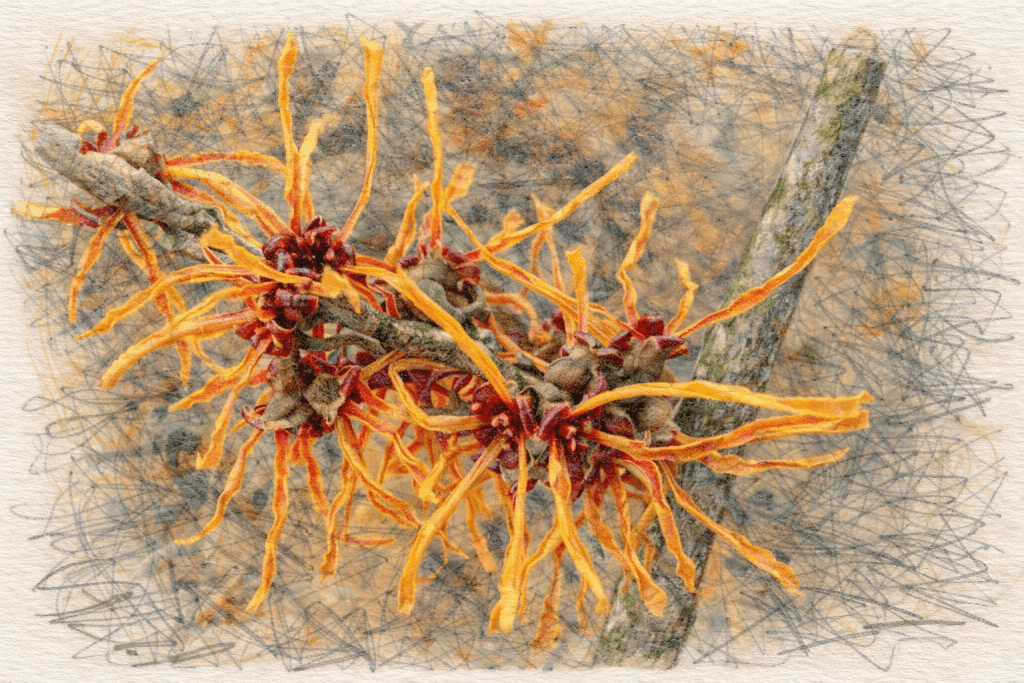
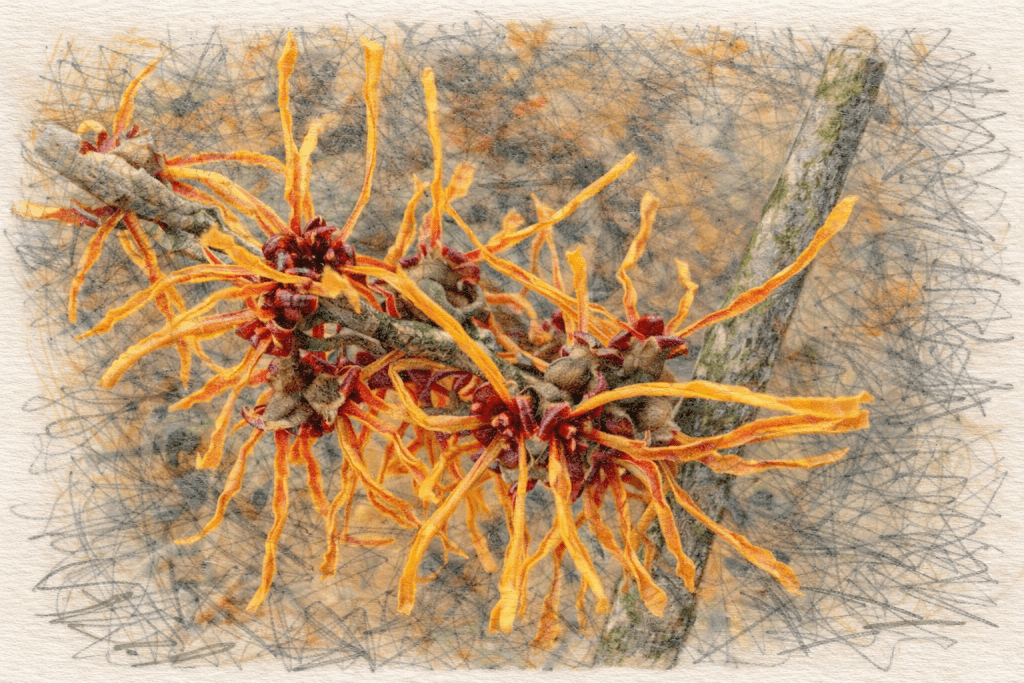
The primary reason gardeners fall in love with ‘Jelena’ is the flowers. Appearing from late December through to February (depending on the weather), the petals are like crimped ribbons. They start red at the base, transition to orange in the middle, and finish with yellow tips. From a distance, this blends into a rich, glowing copper that warms up even the coldest January day.
Incredible Fragrance

Winter gardens can lack scent, but ‘Jelena’ solves this. On a still, sunny winter day, the flowers release a delicate, spicy fragrance. It isn’t overpowering, but rather a subtle perfume that invites you to lean in closer.

Autumn Interest

This plant isn’t a one-trick pony. While it is famous for winter blooms, the foliage in autumn is equally spectacular. The broad, oval green leaves turn magnificent shades of orange, red, and scarlet before falling to reveal the flower buds ready for winter. It works hard for its place in your border for most of the year.

Finding the Perfect Spot: Growing Conditions

Witch Hazels have a reputation for being slightly fussy, but if you get the conditions right, they are generally trouble-free. Here is what ‘Jelena’ loves.

Sun and Shelter

Ideally, plant your Witch Hazel in an open, sunny position or dappled shade. Sun is vital for ripening the wood, which ensures better flowering the following winter. However, try to avoid an exposed, windy site. The flowers are hardy, but strong winds can strip them away prematurely. An open woodland setting is often perfect.

Soil Requirements

‘Jelena’, like most witch hazels, thrives in neutral to acid soil. It prefers a pH of 6.5 or lower. If you are gardening on chalk, you will likely struggle to keep it happy in the ground. In that case, consider a large container filled with ericaceous compost.

The soil needs to be moisture-retentive but free-draining. These plants hate having “wet feet” in winter, but they also dislike drying out completely in summer. A good mulch of leaf mould or compost in the spring helps retain that essential moisture during dryer months.

Space to Spread

This is a deciduous shrub with a spreading habit. Over 10 to 20 years, it can reach a height and spread of 4 metres by 4 metres. It creates a beautiful, vase-shaped silhouette, so give it room to breathe. Avoid crowding it with aggressive competitors.

Perfect Partners: Designing a Winter Scheme

Because ‘Jelena’ has such a distinct shape—bare branches adorned with spidery flowers—it looks best when underplanted. You want companions that highlight its copper tones without competing for height.

Snowdrops (Galanthus): The pure white of snowdrops provides a crisp contrast to the warm orange of the witch hazel. A carpet of white beneath the copper branches looks stunning in February.

Cyclamen (Cyclamen coum): For a splash of colour at ground level, pink or magenta Cyclamen work beautifully. The rounded leaves of the cyclamen contrast well with the spidery nature of the witch hazel flowers.

Hellebores (Helleborus): The Lenten Rose or Christmas Rose offers architectural foliage and nodding flowers that complement the woodland feel of the witch hazel. Look for white or pale yellow varieties to act as a foil for the copper blooms above.

Dogwood (Cornus): If you have a large space, planting red-stemmed or yellow-stemmed dogwood nearby can create a striking “fire and ice” effect, though ensure the dogwood doesn’t crowd the witch hazel.

Beyond the Garden: Uses and Benefits

While Hamamelis x intermedia ‘Jelena’ is primarily ornamental, the wider Witch Hazel family has a long history of utility.

Medicinal Heritage

The North American native species (Hamamelis virginiana) is the source of the witch hazel found in medicine cabinets worldwide. Native Americans used the bark and leaves to treat skin irritations and swellings. Today, distilled witch hazel is a common ingredient in toners and skincare products due to its astringent properties. While ‘Jelena’ is grown for beauty rather than the apothecary, it shares this rich botanical lineage.

Wildlife Haven

In the depths of winter, food sources for pollinators are scarce. On mild winter days, the flowers of ‘Jelena’ can provide a lifeline for early-emerging insects.

Cut Flowers

Don’t be afraid to snip a few branches. Bringing a flowering branch of ‘Jelena’ indoors is a wonderful way to enjoy the scent. The warmth of the house will help the perfume diffuse, filling a room with a clean, spicy aroma.

Myths and Folklore: The Water Witch

The common name “Witch Hazel” is steeped in folklore, though it has nothing to do with witches in the Halloween sense.

The “Witch” part of the name comes from the Old English word wice, meaning “pliant” or “bendable.” Early settlers in America observed Native Americans using the flexible branches of the native Hamamelis for dowsing—the practice of searching for underground water sources.

Because the leaves of the American Witch Hazel resembled the English Hazel tree (to which it is unrelated), the name stuck. The forked twigs were believed to dip downward when held over water, a practice that many dowsers still swear by today. So, when you look at your ‘Jelena’, you are looking at a plant historically associated with hidden depths and discovery.

Interesting Facts About ‘Jelena’

  • Weatherproof Mechanisms: The petals of ‘Jelena’ have a clever survival trick. On extremely cold, frosty nights, the petals curl up tightly towards the centre of the flower to protect themselves. As the sun comes out and the temperature rises, they unfurl again. This extends the flowering period significantly compared to other winter blooms.
  • Slow Burner: Witch hazels are not plants for the impatient. They grow relatively slowly, which makes them ideal for low-maintenance gardens as they rarely need pruning.
  • The “Spider” Flower: Children are often fascinated by the blooms, referring to them as “spiders” or “confetti” due to their crimped, ribbon-like appearance.

Embrace the Cold Season

It is easy to shut the curtains on the garden when the temperature drops, but plants like Hamamelis x intermedia ‘Jelena’ remind us that nature doesn’t stop. It offers colour, scent, and architectural beauty even in the depths of winter.

Whether you have a sprawling country estate or a modest suburban border, there is space for this copper-coloured gem. It connects us to the season, encourages us to step outside, and bridges the gap between the last leaf of autumn and the first bulb of spring.

So, wrap up warm, grab a spade, and invite ‘Jelena’ into your garden. Your winter view will never be the same again.

Further Reading: Winter Flowering Shrubs, Winter Wildlife Garden

Inspiration: Follow Us on InstagramThreads, BlueSkyTwitterTikTok and Pinterest.

The Winter Garden: Winter Interest Shrubs

Winter gardens need not be bleak landscapes of bare branches and dormant soil. The right selection of winter interest shrubs can transform your outdoor space into a captivating display of colour, texture and fragrance throughout the coldest months. These hardy performers stand as beacons of beauty when most plants retreat into seasonal slumber.

Choosing shrubs for winter interest requires understanding how different species contribute to the garden’s structure and appeal during the darker months. Some offer brilliant stems that glow like fire against frost-covered ground, while others produce berries that feed wildlife and provide splashes of vibrant colour. Many winter-flowering varieties release intoxicating fragrances that drift through crisp air, reminding us that life persists even in the depths of winter.

The art of winter gardening has roots stretching back centuries. Victorian gardeners understood the importance of four-season interest, carefully selecting plants that would provide structure and beauty year-round. They recognised that winter gardens serve not only aesthetic purposes but also practical ones—providing shelter for wildlife, protecting soil from erosion, and creating windbreaks that make outdoor spaces more comfortable.

Modern gardeners continue this tradition, though we now have access to an even wider range of cultivars and species. The key lies in selecting shrubs that complement your garden’s existing structure while providing the specific type of winter interest you most desire. Whether you’re drawn to architectural forms, brilliant colours, or seasonal fragrances, the following ten shrubs will ensure your garden remains a source of joy throughout winter’s reign.

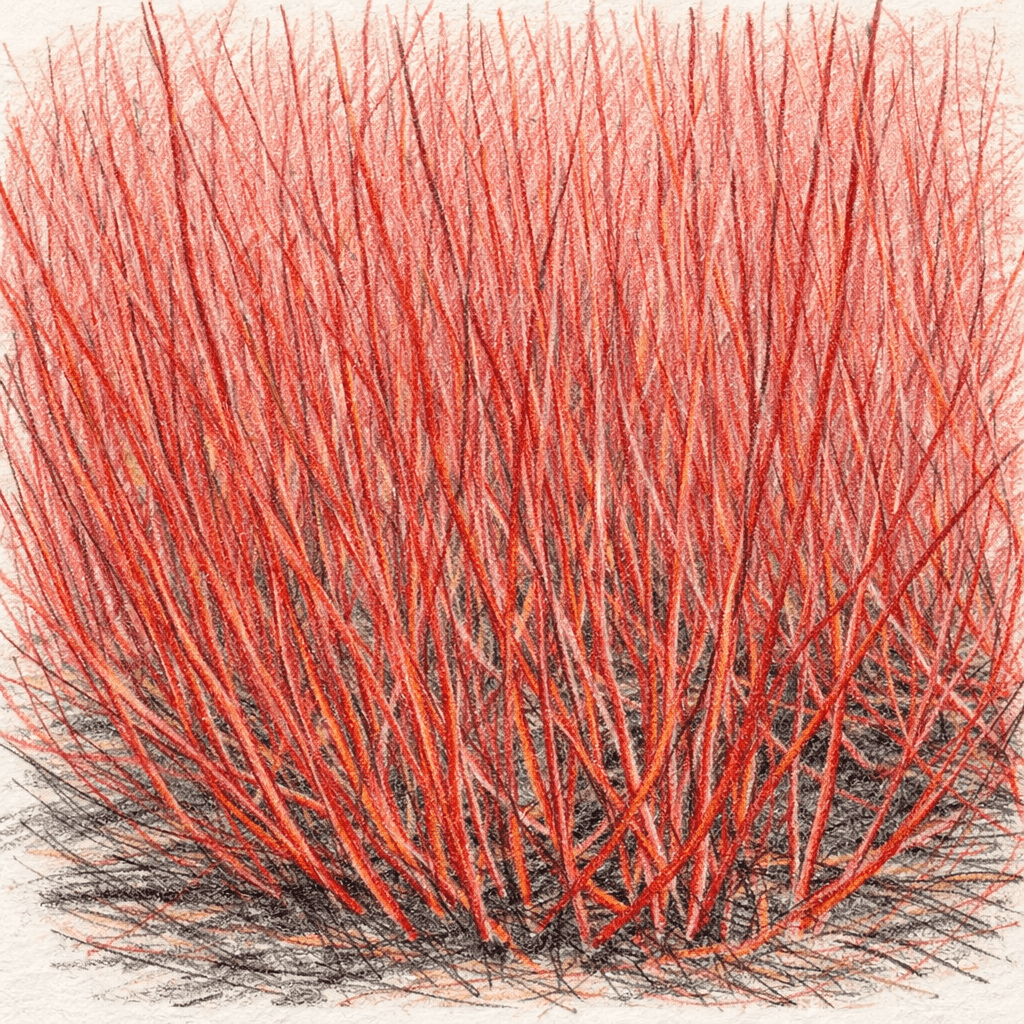
Cornus alba ‘Sibirica’ – Siberian Dogwood

The Siberian Dogwood stands among winter’s most dramatic performers, transforming ordinary garden borders into galleries of living art. This deciduous shrub reveals its true glory only after autumn’s final leaves have fallen, when its brilliant coral-red stems emerge like brushstrokes against winter’s neutral palette.

Native to Siberia and northern China, this hardy shrub has graced British gardens since the 18th century. Victorian plant hunters prized it for its ability to provide colour when little else could survive the harsh conditions. The stems intensify in colour as temperatures drop, reaching their most vibrant hues during the coldest months.

Cornus alba 'Sibirica' - Siberian Dogwood.
Winter Interest Shrub

Advantages: Exceptionally hardy, tolerating temperatures well below freezing. Provides stunning winter colour without requiring flowers. Easy to maintain through annual pruning. Excellent for cutting and bringing indoors for winter arrangements.

Considerations: Can spread vigorously if not managed properly. Requires annual hard pruning to maintain the brightest stem colour. May look untidy during summer months when foliage takes precedence.

Ideal Situation: Thrives in full sun to partial shade with moist, well-drained soil. Plant in locations where winter sun can illuminate the stems for maximum impact. Excellent near water features where reflections double the visual effect.

Hamamelis x intermedia ‘Jelena’ – Witch Hazel

Witch hazel brings magic to winter gardens through its extraordinary ability to bloom during the coldest months. ‘Jelena’ produces masses of copper-orange flowers that unfurl like tiny fireworks across bare branches, typically from December through February.

This hybrid arose from crosses between Asian and American species, combining the best characteristics of both parents. The genus name derives from the Greek words meaning “together with fruit,” referring to the plant’s unusual habit of producing flowers and fruit simultaneously. Ancient civilisations valued witch hazel for its supposed mystical properties, and early American settlers learned to use it medicinally from Native American tribes.

Hamamelis x intermedia 'Jelena' - Witch Hazel.
Winter Interest Shrub

Advantages: Spectacular winter flowering when few other plants bloom. Intense fragrance carries on winter air. Beautiful autumn foliage provides dual-season interest. Long-lived and relatively disease-free once established.

Considerations: Slow to establish and reach flowering size. Expensive initial investment compared to other shrubs. Requires patience as young plants may take several years to bloom prolifically.

Ideal Situation: Prefers partial shade with shelter from harsh winds. Thrives in acidic to neutral soil with consistent moisture. Plant near pathways or windows where the fragrance can be appreciated.

Mahonia x media ‘Charity’ – Oregon Grape

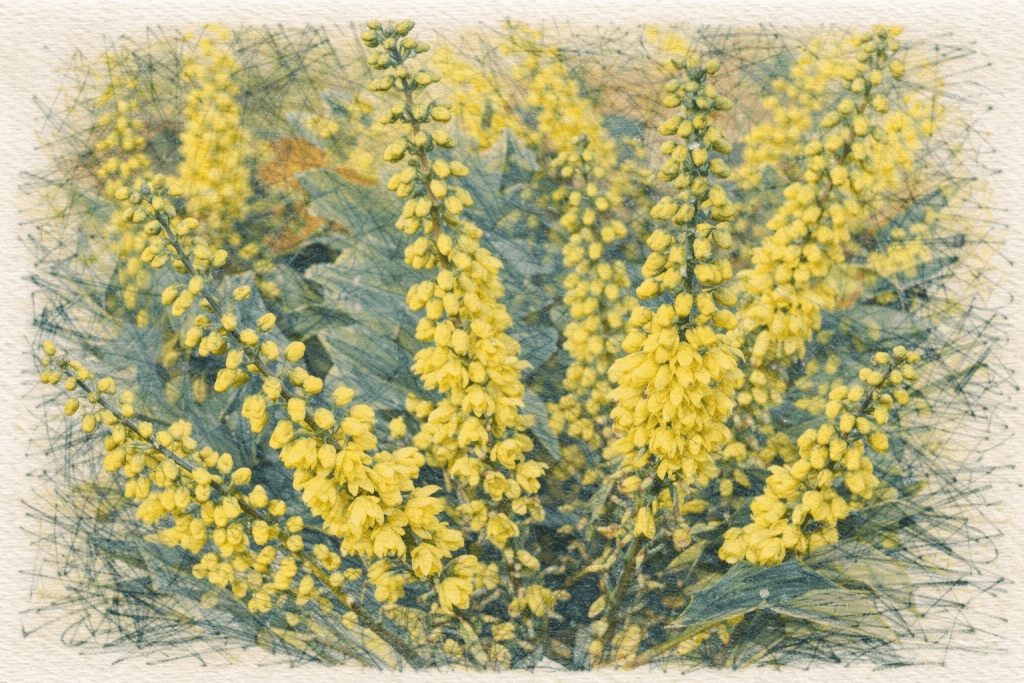
‘Charity’ mahonia commands attention through winter with its architectural presence and honey-scented yellow flowers. This evergreen shrub produces dramatic spikes of bright yellow blooms from November through February, followed by blue-black berries that birds treasure.

The mahonia genus honours Bernard McMahon, an Irish-American botanist who helped introduce Lewis and Clark’s plant discoveries to cultivation. ‘Charity’ represents a hybrid between two species, combining the hardiness of one parent with the floral abundance of the other. Victorian gardeners particularly valued mahonias for their ability to provide structure and colour during winter months.

Mahonia x media 'Charity' - Oregon Grape.
Winter Interest Shrub

Advantages: Evergreen foliage maintains year-round structure. Fragrant flowers attract winter pollinators. Berries provide food for wildlife. Tolerates difficult growing conditions including dry shade.

Considerations: Spiny leaves require careful placement away from pathways. Can become leggy with age if not pruned properly. May suffer wind damage in exposed locations.

Ideal Situation: Excellent for north-facing borders and difficult shady spots. Tolerates most soil types but prefers well-drained conditions. Ideal as a specimen plant or backdrop for smaller winter performers.

Viburnum x bodnantense ‘Dawn’ – Fragrant Viburnum

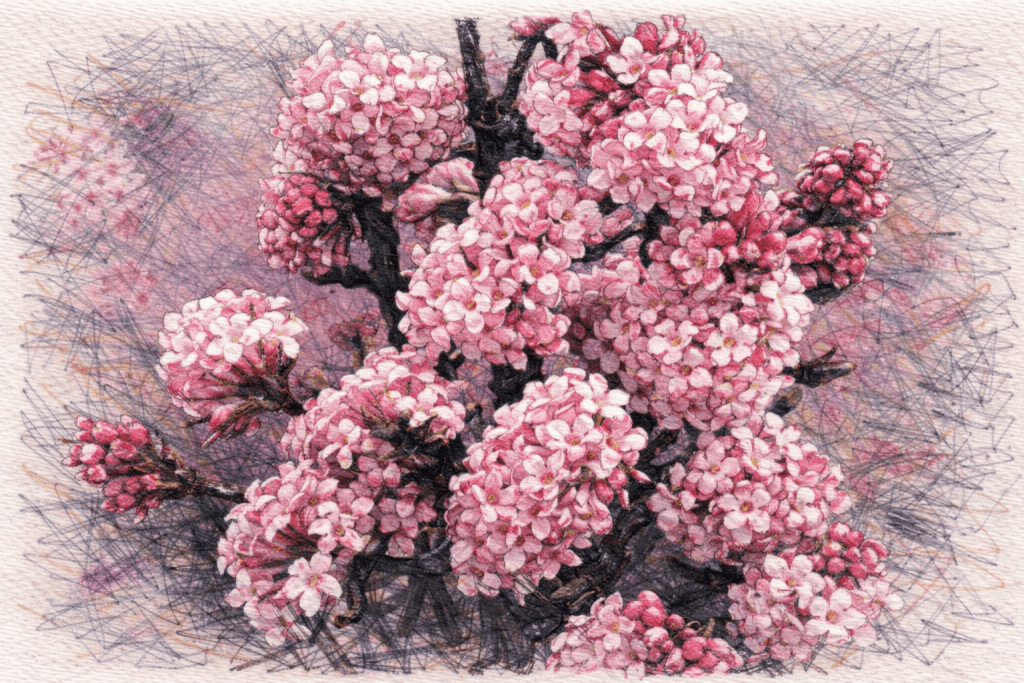
‘Dawn’ viburnum epitomises winter romance, producing clusters of intensely fragrant pink flowers that brave the harshest weather. This deciduous shrub begins blooming in November and continues intermittently through March, with the most prolific displays occurring during mild spells.

This hybrid emerged from Bodnant Garden in Wales during the 1930s, where it quickly gained recognition for its exceptional winter performance. The cross between two Asian species created a shrub that combined the best flowering characteristics of both parents. Its common name reflects the plant’s ability to bring the promise of spring even during winter’s darkest days.

Viburnum x bodnantense 'Dawn' - Fragrant Viburnum.
Winter Interest Shrub

Advantages: Exceptional fragrance carries long distances on winter air. Flowers appear sporadically throughout winter months. Attractive autumn foliage extends seasonal interest. Relatively fast-growing compared to other winter bloomers.

Considerations: Flowers may be damaged by severe frost, though new buds continue opening. Can become quite large if not pruned regularly. May look sparse during summer months.

Ideal Situation: Thrives in full sun to partial shade with fertile, well-drained soil. Plant near seating areas or pathways where fragrance can be fully appreciated. Benefits from shelter from harsh winds.

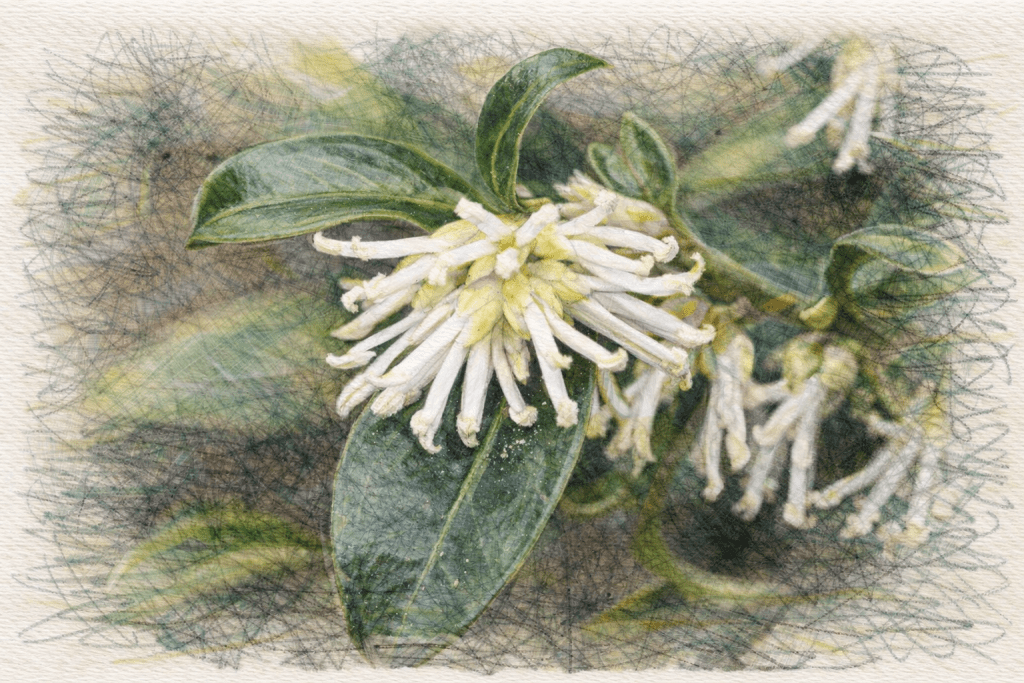
Sarcococca confusa – Sweet Box

Sweet box proves that the most powerful winter performers often come in modest packages. This compact evergreen produces tiny white flowers that release an intensely sweet fragrance capable of perfuming entire garden areas. The blooms appear from December through February, followed by glossy black berries.

Native to western China, sarcococca species have provided winter fragrance in British gardens since the Victorian era. The genus name combines Greek words meaning “fleshy berry,” while the species name “confusa” reflects the botanical confusion that once surrounded this group of closely related plants. Despite its small stature, sweet box has earned a place among the most treasured winter garden plants.

Sarcococca confusa - Sweet Box.
Winter Interest Shrub

Advantages: Intense fragrance from inconspicuous flowers. Excellent ground cover in challenging locations. Tolerates deep shade where few other plants thrive. Requires minimal maintenance once established.

Considerations: Slow to establish and spread. Flowers are not visually striking despite their fragrance. Can be expensive to purchase in sufficient quantities for ground cover use.

Ideal Situation: Perfect for dry shade under trees or shrubs. Thrives in most soil types except waterlogged conditions. Ideal near entrances or pathways where fragrance creates welcoming atmospheres.

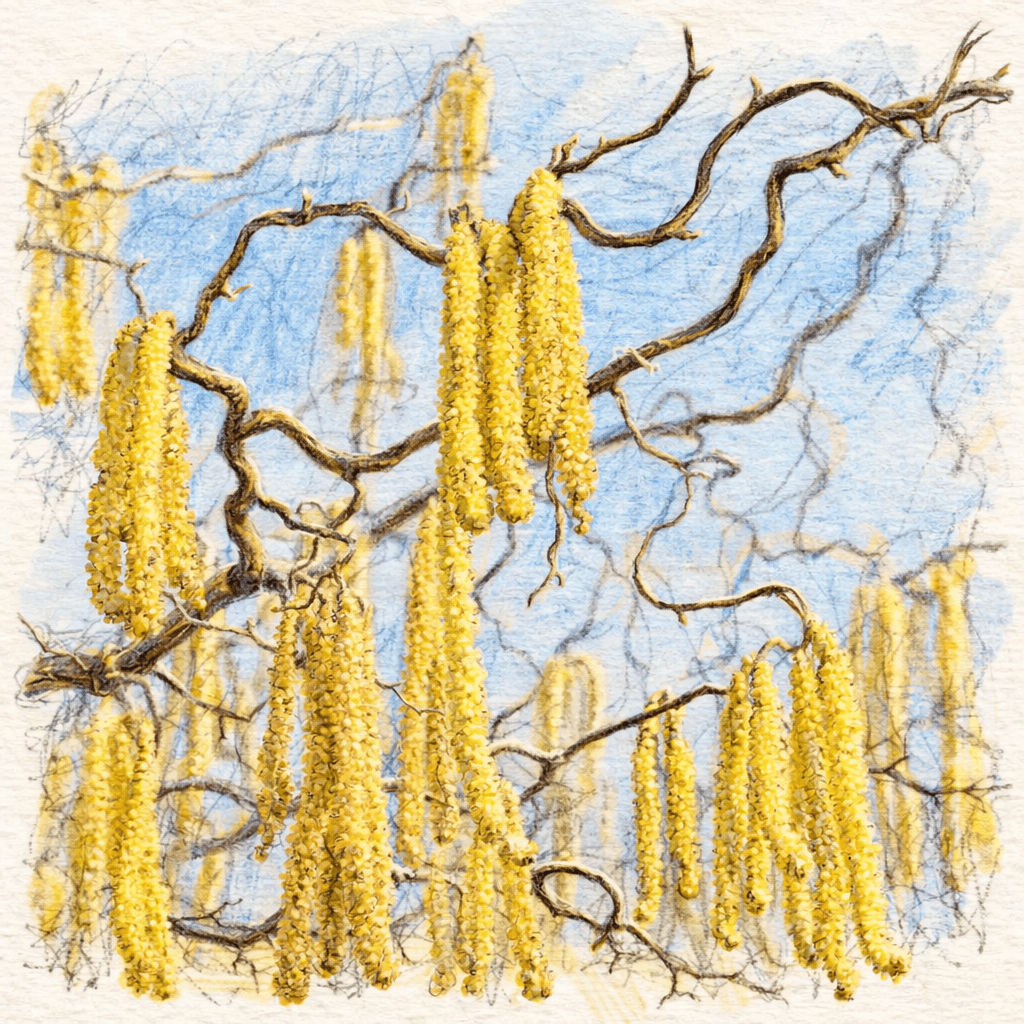
Corylus avellana ‘Contorta’ – Corkscrew Hazel

The corkscrew hazel transforms winter gardens into living sculptures through its extraordinary twisted branches. This deciduous shrub reveals its full architectural drama only after leaves fall, when the contorted stems create intricate patterns against winter skies. Long yellow catkins drape the branches in late winter, adding movement and colour.

This remarkable cultivar arose as a mutation discovered in a Gloucestershire hedgerow during the 1860s. Victorian gardeners immediately recognised its unique appeal, and it quickly became a prized specimen plant in fashionable gardens. The twisted growth habit results from a genetic mutation that affects the plant’s ability to grow in straight lines, creating the characteristic spiralled branches that give it such distinctive character.

Corylus avellana 'Contorta' - Corkscrew Hazel.
Winter Interest Shrub

Advantages: Unique architectural form provides year-round interest. Dramatic winter silhouette creates focal points. Catkins provide early nectar for pollinators. Suitable for containers and small gardens.

Considerations: Can be grafted onto straight rootstock that may produce unwanted shoots. Relatively expensive due to slow propagation methods. Limited autumn colour compared to other hazels.

Ideal Situation: Displays best in open locations where twisted branches can be fully appreciated. Tolerates most soil types but prefers well-drained conditions. Excellent as specimen plants or conversation pieces.

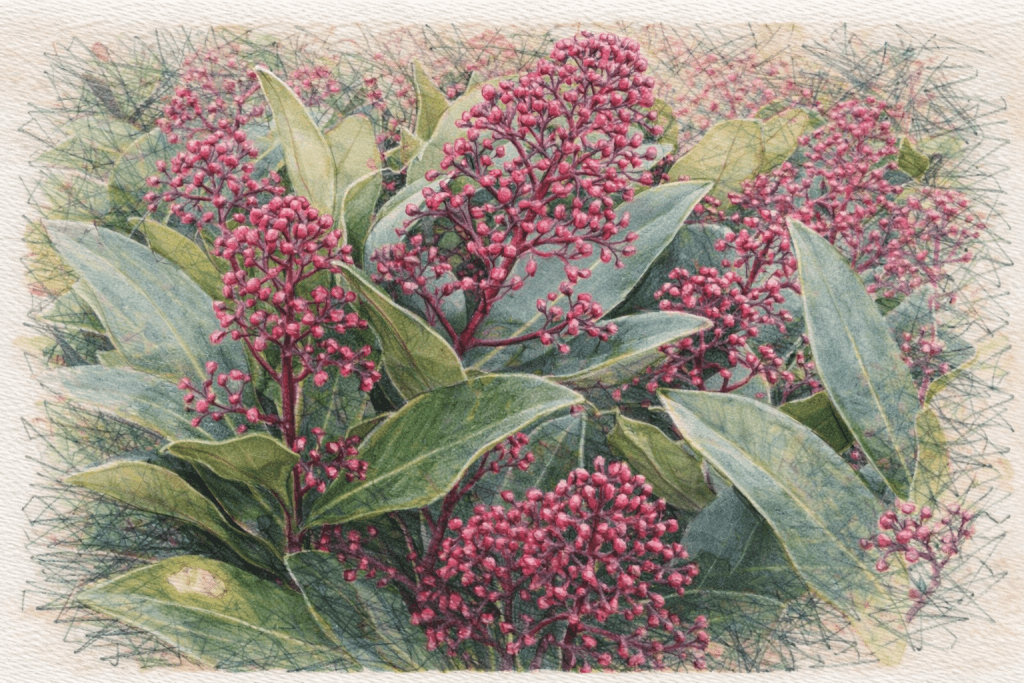
Skimmia japonica ‘Rubella’ – Japanese Skimmia

‘Rubella’ skimmia brings reliable colour to winter gardens through its distinctive red flower buds and bronze-tinted foliage. This compact evergreen maintains its ornamental appeal throughout the darkest months, with deep red buds providing colour from autumn through to spring flowering.

Japanese skimmias arrived in British gardens during the mid-19th century, introduced by plant hunters exploring Japan’s mountainous regions. ‘Rubella’ represents a male selection valued specifically for its winter bud colour and compact growth habit. Traditional Japanese gardens have long appreciated skimmias for their ability to provide colour and structure in shaded areas.

Skimmia japonica 'Rubella' - Japanese Skimmia.
Winter Interest Shrub

Advantages: Compact size suits small gardens and containers. Reliable winter colour regardless of weather conditions. Aromatic foliage when crushed. Tolerates pollution and urban conditions.

Considerations: Male plants do not produce berries. Requires lime-free soil conditions. Can suffer from phytophthora in waterlogged conditions.

Ideal Situation: Perfect for shaded borders and woodland gardens. Thrives in acidic, humus-rich soil with consistent moisture. Excellent companion for other acid-loving plants like rhododendrons.

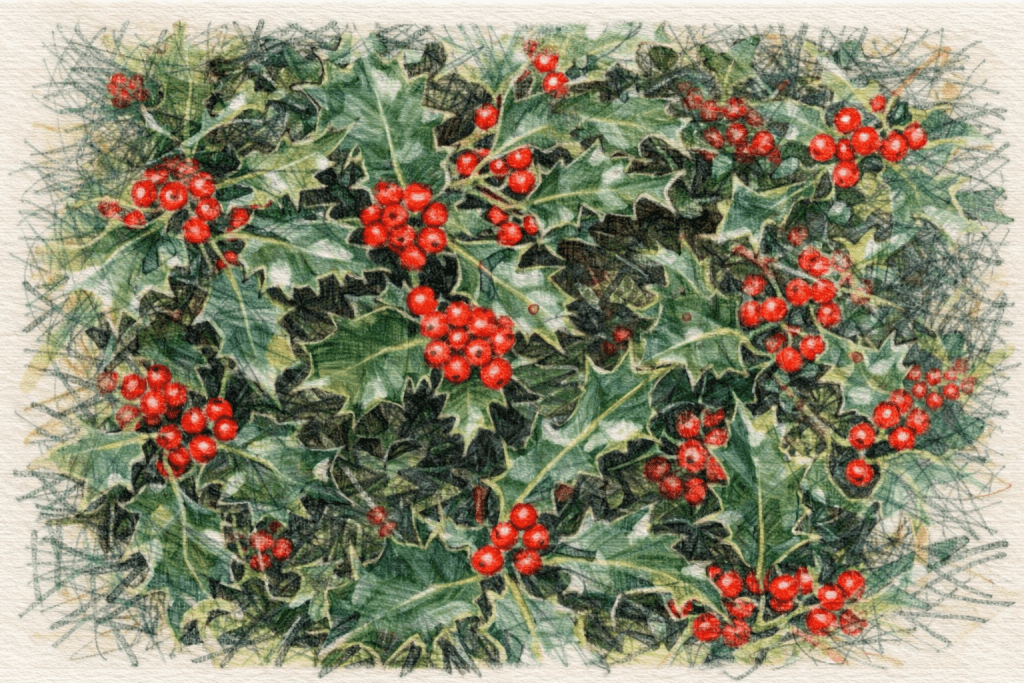
Ilex aquifolium ‘J.C. van Tol’ – English Holly

‘J.C. van Tol’ holly provides classic winter appeal through its glossy evergreen foliage and brilliant red berries. This self-fertile cultivar eliminates the usual requirement for separate male and female plants, making it ideal for smaller gardens where space limitations prevent planting multiple specimens.

Holly holds deep cultural significance in British tradition, with its association with Christmas celebrations stretching back to pre-Christian times. Ancient Celts believed holly possessed protective powers, while early Christians adopted it as a symbol of Christ’s crown of thorns. ‘J.C. van Tol’ was selected in the Netherlands during the early 20th century, prized for its reliable berry production and relatively smooth-edged leaves.

Ilex aquifolium 'J.C. van Tol' - English Holly.
Winter Interest Shrub

Advantages: Self-fertile variety produces berries without requiring separate male plant. Berries provide excellent food source for winter birds. Evergreen foliage maintains year-round structure. Traditional Christmas decoration material.

Considerations: Growth can be slow initially. May require protection from harsh winds when young. Berries attractive to birds may be quickly consumed.

Ideal Situation: Thrives in full sun to partial shade with well-drained soil. Excellent for hedging or specimen planting. Benefits from shelter during establishment period.

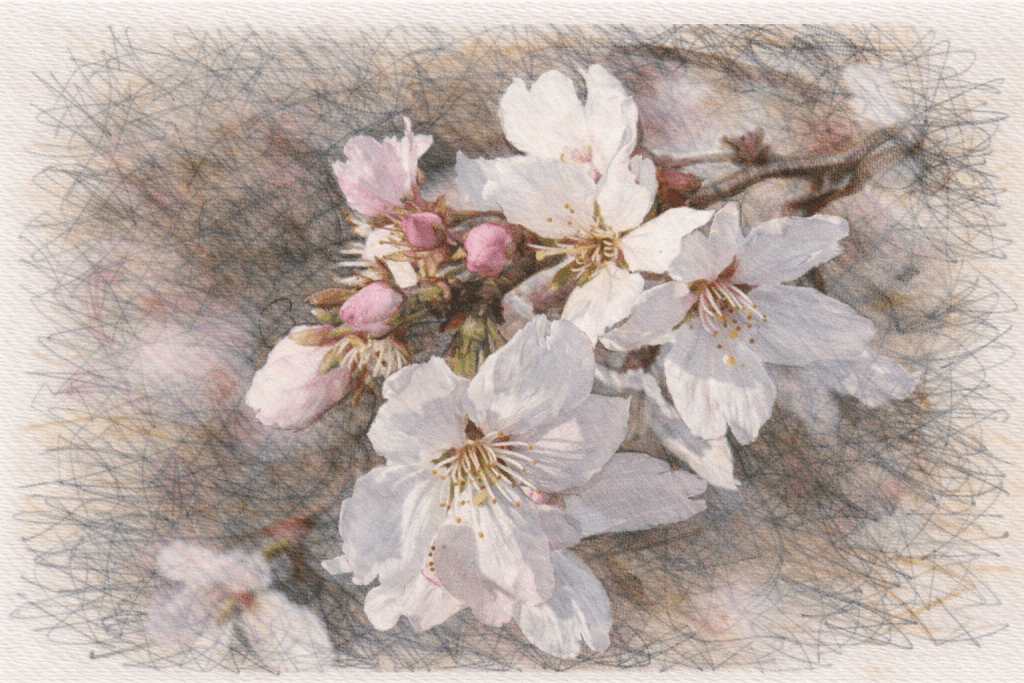
Prunus x subhirtella ‘Autumnalis’ – Autumn Cherry

The autumn cherry defies conventional expectations by producing delicate pink flowers intermittently throughout winter months. This small deciduous tree creates an enchanting display from November through March, with the most prolific flowering occurring during mild spells between cold snaps.

This remarkable cultivar represents centuries of Japanese horticultural expertise, developed through careful selection and breeding programmes. Japanese cherry cultivation dates back over a thousand years, with winter-flowering varieties particularly treasured for their ability to provide beauty during harsh months. The name ‘Autumnalis’ reflects its unusual flowering season, though winter blooms often surpass autumn displays in abundance.

Prunus x subhirtella 'Autumnalis' - Autumn Cherry.
Winter Interest Shrub

Advantages: Unusual winter flowering period creates garden highlights. Delicate flowers provide nectar for winter-active pollinators. Attractive bark provides additional winter interest. Suitable for smaller gardens due to modest size.

Considerations: Flowers may be damaged by severe frost, reducing display quality. Can be short-lived compared to other flowering trees. May suffer from various cherry diseases.

Ideal Situation: Performs best in full sun with well-drained, fertile soil. Benefits from shelter from harsh winds that can damage delicate flowers. Excellent near seating areas where winter blooms can be appreciated.

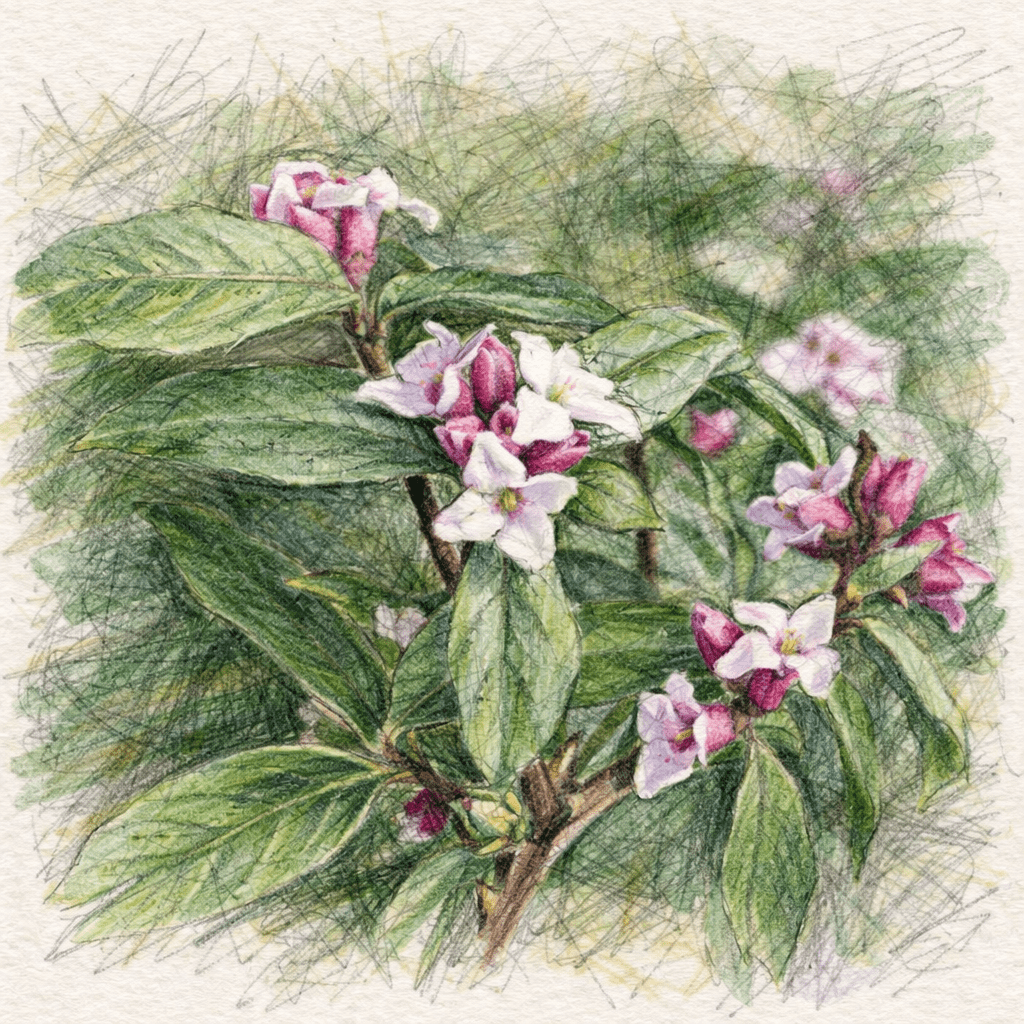
Daphne bholua ‘Jacqueline Postill’ – Himalayan Daphne

‘Jacqueline Postill’ daphne concludes our selection with perhaps the most intoxicating fragrance winter gardens can offer. This semi-evergreen shrub produces clusters of pink and white flowers from December through February, releasing a perfume so intense it can scent entire garden areas.

This cultivar originated from seeds collected in Nepal during the 1960s, representing the remarkable diversity found in Himalayan plant communities. Named after the wife of the nurseryman who first cultivated it, ‘Jacqueline Postill’ has proven to be among the hardiest of the winter-flowering daphnes. The species grows naturally at high altitudes, explaining its tolerance for cold conditions.

Daphne bholua 'Jacqueline Postill' - Himalayan Daphne.
Winter Interest Shrub

Advantages: Exceptional winter fragrance unmatched by most garden plants. Semi-evergreen habit maintains some structure year-round. Relatively compact size suits smaller gardens. Flowers attract winter-flying moths.

Considerations: Can be challenging to establish successfully. Dislikes root disturbance once planted. May suffer sudden death syndrome common to daphnes.

Ideal Situation: Requires excellent drainage and slightly alkaline soil conditions. Benefits from morning sun and afternoon shade. Plant near pathways or windows where fragrance can be fully appreciated.

Creating Your Winter Garden Masterpiece

These ten shrubs represent just the beginning of winter garden possibilities. Success lies in understanding how each plant contributes to the overall composition, creating layers of interest that sustain beauty throughout the coldest months. Consider combining plants with different flowering times to extend the display season, and remember that winter gardens benefit from thoughtful placement where low-angled sunlight can illuminate stems, flowers, and berries to maximum effect.

The rewards of winter gardening extend far beyond aesthetic pleasure. These shrubs provide crucial habitat and food sources for wildlife during harsh months, support early pollinators with nectar and pollen, and remind us that nature’s beauty persists even during the most challenging seasons. Your garden becomes a beacon of life and colour when the wider landscape sleeps, creating a sanctuary that nurtures both wildlife and human spirits throughout winter’s reign.

Further Reading: RHS How to Plant a ShrubHow to Plant a Tree, How to plant a shrub

Inspiration: Follow Us on InstagramThreads, BlueSkyTwitterTikTok and Pinterest.