Witch Hazel ‘Pallida’: A Beam of Sunshine for Your Winter Garden

Winter in the garden is often dismissed as a dormant season—a time of grey skies, bare branches, and sleeping soil. Yet, for those in the know, it is a season of subtle beauty and surprising vibrancy. Just when the frost bites hardest and the days feel shortest, nature offers us a gift that defies the gloom: Hamamelis x intermedia ‘Pallida’.

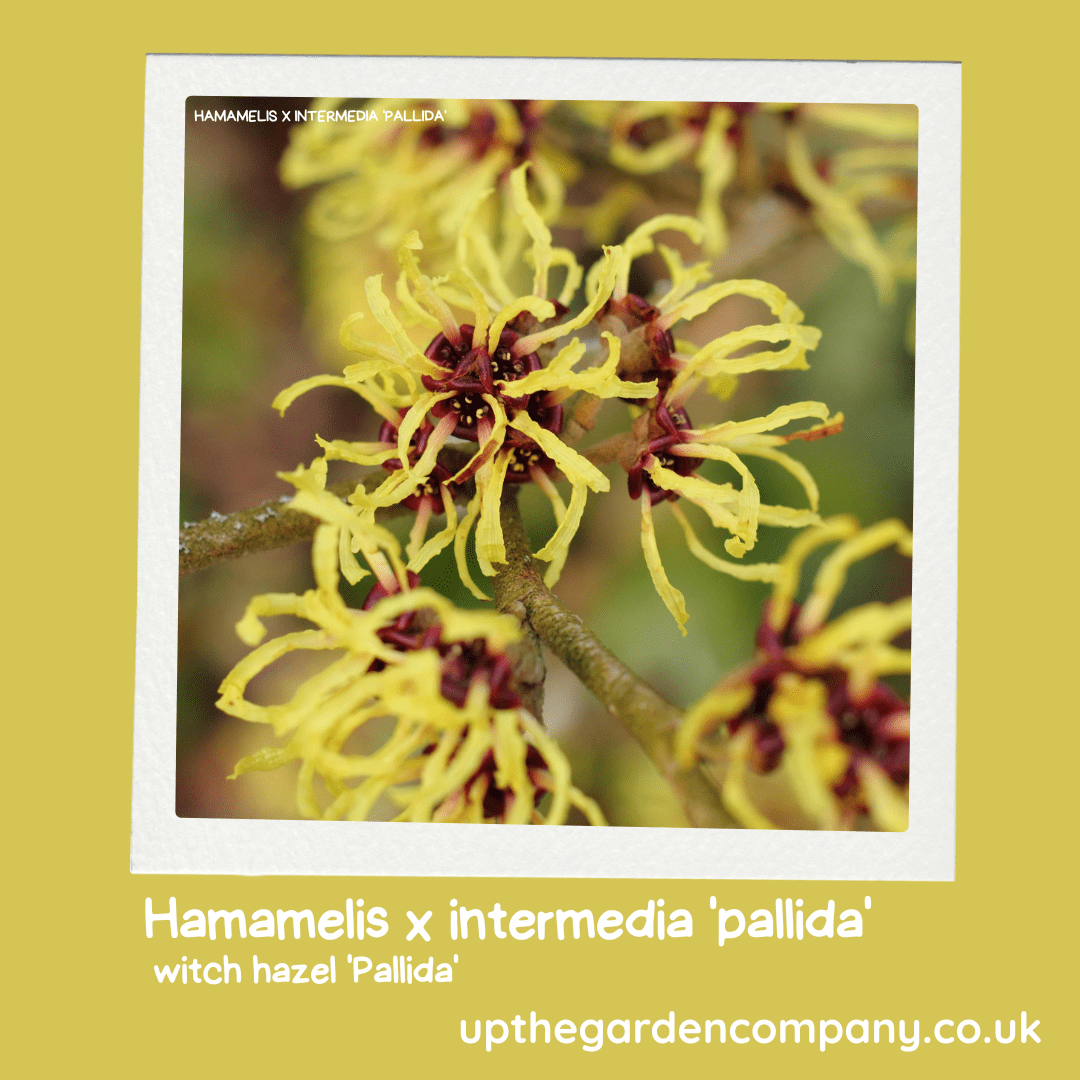
Known more commonly as Witch Hazel, this remarkable shrub is a beacon of light in the darker months. Imagine stepping out into the crisp, cold air and being greeted by sulphur-yellow blooms clinging to bare wood, glowing like trapped sunlight against a winter sky. But it isn’t just the sight that captivates; it is the scent. A rich, sweet fragrance that drifts on the breeze, promising that spring is just around the corner.

If you are looking to transform your winter landscape from bleak to brilliant, ‘Pallida’ is the perfect candidate. It invites you to bundle up, grab a hot drink, and wander into the garden to admire one of the Royal Horticultural Society’s most celebrated shrubs.

Getting to Know Hamamelis x intermedia ‘Pallida’

Before you dig a hole, it helps to know exactly what you are inviting into your garden. The plant is a hybrid, a happy marriage between the Japanese witch hazel (Hamamelis japonica) and the Chinese witch hazel (Hamamelis mollis).

While there are many varieties of witch hazel available, ranging from copper-orange to deep reds, ‘Pallida’ is widely regarded as one of the finest. Its name, ‘Pallida’, refers to the pale, sulphur-yellow colour of its petals. These petals are distinctive—narrow, crinkled, and ribbon-like, they look almost like spidery fireworks exploding along the leafless branches.

This variety is so highly esteemed that it holds the prestigious Award of Garden Merit (AGM) from the Royal Horticultural Society. This is the gold standard for plants, assuring you that it performs reliably in British gardens, is reasonably resistant to pests, and offers excellent constitution.

A History Rooted in Resilience

The story of the witch hazel is as fascinating as the plant itself. The genus name Hamamelis comes from the Greek words hama (together) and mela (fruit), referring to the unique habit of the plant bearing flowers and fruit at the same time—a rarity in the botanical world.

The Hamamelis x intermedia hybrids were largely developed in the early 20th century. However, ‘Pallida’ specifically gained prominence for its exceptional flowering habit. It was first noticed in the famous RHS Garden Wisley in the 1930s, standing out amongst seedlings for its intense fragrance and heavy flowering. Since then, it has become a staple for landscape designers and home gardeners alike who crave structure and scent in the off-season.

The Magic Behind the Name

The common name “Witch Hazel” conjures up images of cauldrons and spells, but the etymology is far more grounded. “Witch” in this context derives from the Middle English word wiche, meaning pliant or bendable.

Early settlers in North America used the flexible forked branches of the native witch hazel (Hamamelis virginiana) for dowsing—an ancient practice used to locate underground water sources. While ‘Pallida’ is an ornamental hybrid rather than the native medicinal variety, it carries this lineage of “water witching” history in its very timber.

Finding the Perfect Spot

To get the absolute best out of your ‘Pallida’, you need to mimic its natural preferences. It is not an overly fussy plant, but it does have specific requirements to thrive rather than just survive.

Soil Requirements

This is the most critical factor. Witch hazels are woodland plants at heart. They crave:

  • Acid to Neutral Soil: They generally dislike chalk. If your garden sits on chalky bedrock, you will struggle to keep ‘Pallida’ happy in the ground. In this case, opt for a large container filled with ericaceous compost.
  • Moisture: They love moisture-retentive soil. They do not want to sit in a swamp, but they hate drying out in summer.
  • Drainage: Good drainage is essential to prevent root rot in winter.

Light and Situation

Where you plant your witch hazel dictates how well it flowers.

  • Sun vs. Shade: An open, sunny spot is ideal. While they will tolerate partial shade, the flowering is always more profuse in full sun.
  • Shelter: Try to plant ‘Pallida’ in a spot sheltered from harsh, drying winds. This protects the delicate winter blooms and keeps the scent lingering in the air.
  • Space: This is not a plant for a tight corner. ‘Pallida’ has a beautiful, vase-shaped habit that spreads outwards. It needs room to stretch its arms.

A Sensory Experience

Think about where you will be in winter. Don’t hide this shrub at the back of a border you only visit in July. Plant it near a path, a front gate, or a doorway. You want to be able to smell that incredible perfume every time you leave the house.

The Advantages of Growing ‘Pallida’

Why choose ‘Pallida’ over other winter shrubs? The benefits are plentiful for the patient gardener.

Unrivalled Winter Scent

The fragrance of ‘Pallida’ is widely considered the strongest of all the witch hazels. It has a sweet, citrusy aroma that can carry for yards on a still day. It provides a sensory experience when most other plants are dormant.

Autumn Colour

It isn’t just a one-trick pony. Before the leaves fall to reveal the winter flowers, ‘Pallida’ puts on a spectacular autumn show. The broad, green leaves turn a buttery yellow, lighting up the garden in October and November.

Wildlife Friendly

For early pollinators braving the cold, witch hazel provides a vital source of nectar. Seeing a bumblebee navigating the crinkled yellow petals in February is a joy for any nature lover.

Low Maintenance

Once established, ‘Pallida’ requires very little pruning. In fact, it prefers to be left alone to develop its natural, elegant shape. Simply remove any dead or crossing wood in late spring after flowering has finished.

Considerations and Drawbacks

No plant is perfect, and it is important to be realistic about whether ‘Pallida’ suits your garden.

  • Patience is Key: Witch hazels are slow growers. Do not expect it to fill a space overnight. It is an investment in time.
  • Cost: Because they are slow to propagate and grow, buying a mature specimen can be expensive compared to faster-growing shrubs.
  • Summer Appearance: During the height of summer, the shrub is essentially a background of green leaves. It is a “quiet” plant during the warmer months, allowing summer perennials to take centre stage.
  • Suckering: Grafted plants can sometimes send up suckers from the rootstock. These need to be removed promptly, or they can overtake the main plant.

Transform Your Winter Landscape

Gardening is often about anticipation—planting bulbs in autumn for spring colour, or sowing seeds in March for summer salads. Planting a Hamamelis x intermedia ‘Pallida’ is a promise to yourself that winter will no longer be a time of garden absence.

By welcoming this shrub into your outdoor space, you ensure that even on the coldest, darkest days of the year, there is life, vibrancy, and a scent that lifts the spirits. Whether you have a sprawling country estate or a modest urban courtyard, the luminous yellow flowers of ‘Pallida’ serve as a reminder that nature never truly sleeps.

Visit your local nursery or specialist grower this weekend. Seek out the distinctive spidery blooms of ‘Pallida’, and bring a touch of winter sunshine home.

Further Reading: RHS Eranthis hyemalis – Winter AconiteThe Corylus – Witch HazelHow to Protect Your Soil in WinterA Ruby Gem for Winter: Meeting Cyclamen persicum ‘Verano Red’, Bringing Life to Winter: The Resilience of Eastern Cyclamen

Inspiration: Follow Us on InstagramThreads, BlueSkyTwitterTikTok and Pinterest.

Why Witch Hazel ‘Jelena’ Is the Winter Wonder Your Garden Needs

Gardens in winter are often dismissed as dormant, grey spaces waiting for the first breath of spring. We tend to retreat indoors, ignoring the potential beauty that cold months can offer. But nature has a way of surprising us, and few plants deliver that surprise quite like the Witch Hazel. Specifically, the Hamamelis x intermedia ‘Jelena’.

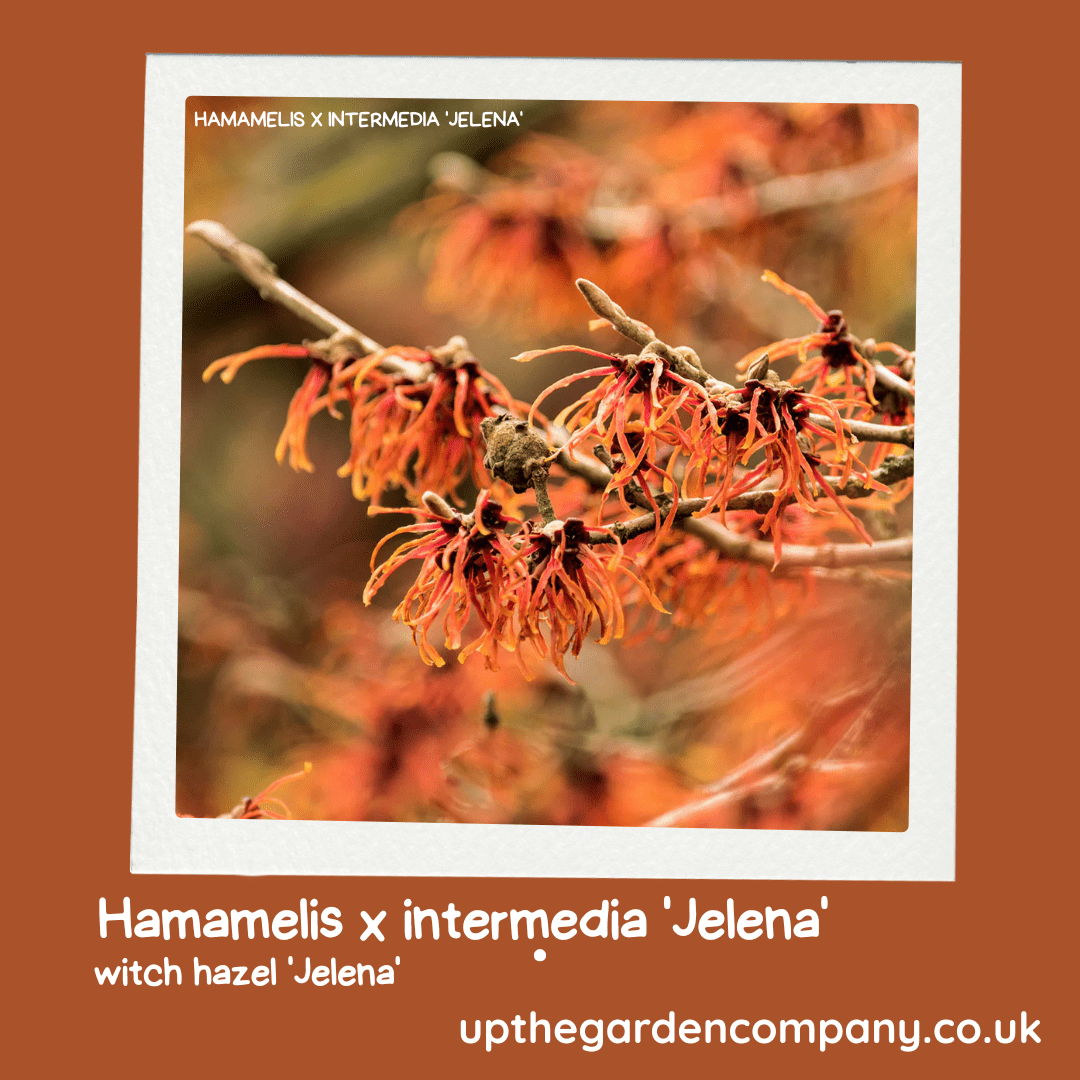
This isn’t just a shrub; it is a fiery beacon in the bleakest months of the year. When frost covers the ground and other plants have withered back, ‘Jelena’ bursts into life with copper-orange blooms that defy the chill. If you want to transform your outdoor space from a winter wasteland into a vibrant landscape, this is the plant to know.

A Meeting of East and West: The Origins of ‘Jelena’

To understand ‘Jelena’, we first need to look at its family tree. The plant is a hybrid, known botanically as Hamamelis x intermedia. This “intermedia” part of the name refers to it being a cross between two Asian species: the Japanese witch hazel (Hamamelis japonica) and the Chinese witch hazel (Hamamelis mollis).

The specific cultivar ‘Jelena’ has a rather romantic history. It was raised at the famous Kalmthout Arboretum in Belgium by Robert and Jelena de Belder. The de Belders were renowned horticulturists who significantly influenced the world of garden design and plant breeding in the 20th century. Robert named this specific seedling after his wife, Jelena, in 1954. It was a fitting tribute—a beautiful, resilient, and unique plant named for a woman who dedicated her life to botany.

Since its introduction, ‘Jelena’ has gained the prestigious Award of Garden Merit (AGM) from the Royal Horticultural Society, cementing its status as a reliable and superior plant for British gardens.

Why You Need ‘Jelena’ in Your Garden

There are many winter-flowering shrubs, but few command attention like this one. Here is why you should consider digging a hole for it this season.

Unrivalled Winter Colour

The primary reason gardeners fall in love with ‘Jelena’ is the flowers. Appearing from late December through to February (depending on the weather), the petals are like crimped ribbons. They start red at the base, transition to orange in the middle, and finish with yellow tips. From a distance, this blends into a rich, glowing copper that warms up even the coldest January day.

Incredible Fragrance

Winter gardens can lack scent, but ‘Jelena’ solves this. On a still, sunny winter day, the flowers release a delicate, spicy fragrance. It isn’t overpowering, but rather a subtle perfume that invites you to lean in closer.

Autumn Interest

This plant isn’t a one-trick pony. While it is famous for winter blooms, the foliage in autumn is equally spectacular. The broad, oval green leaves turn magnificent shades of orange, red, and scarlet before falling to reveal the flower buds ready for winter. It works hard for its place in your border for most of the year.

Finding the Perfect Spot: Growing Conditions

Witch Hazels have a reputation for being slightly fussy, but if you get the conditions right, they are generally trouble-free. Here is what ‘Jelena’ loves.

Sun and Shelter

Ideally, plant your Witch Hazel in an open, sunny position or dappled shade. Sun is vital for ripening the wood, which ensures better flowering the following winter. However, try to avoid an exposed, windy site. The flowers are hardy, but strong winds can strip them away prematurely. An open woodland setting is often perfect.

Soil Requirements

‘Jelena’, like most witch hazels, thrives in neutral to acid soil. It prefers a pH of 6.5 or lower. If you are gardening on chalk, you will likely struggle to keep it happy in the ground. In that case, consider a large container filled with ericaceous compost.

The soil needs to be moisture-retentive but free-draining. These plants hate having “wet feet” in winter, but they also dislike drying out completely in summer. A good mulch of leaf mould or compost in the spring helps retain that essential moisture during dryer months.

Space to Spread

This is a deciduous shrub with a spreading habit. Over 10 to 20 years, it can reach a height and spread of 4 metres by 4 metres. It creates a beautiful, vase-shaped silhouette, so give it room to breathe. Avoid crowding it with aggressive competitors.

Perfect Partners: Designing a Winter Scheme

Because ‘Jelena’ has such a distinct shape—bare branches adorned with spidery flowers—it looks best when underplanted. You want companions that highlight its copper tones without competing for height.

Snowdrops (Galanthus): The pure white of snowdrops provides a crisp contrast to the warm orange of the witch hazel. A carpet of white beneath the copper branches looks stunning in February.

Cyclamen (Cyclamen coum): For a splash of colour at ground level, pink or magenta Cyclamen work beautifully. The rounded leaves of the cyclamen contrast well with the spidery nature of the witch hazel flowers.

Hellebores (Helleborus): The Lenten Rose or Christmas Rose offers architectural foliage and nodding flowers that complement the woodland feel of the witch hazel. Look for white or pale yellow varieties to act as a foil for the copper blooms above.

Dogwood (Cornus): If you have a large space, planting red-stemmed or yellow-stemmed dogwood nearby can create a striking “fire and ice” effect, though ensure the dogwood doesn’t crowd the witch hazel.

Beyond the Garden: Uses and Benefits

While Hamamelis x intermedia ‘Jelena’ is primarily ornamental, the wider Witch Hazel family has a long history of utility.

Medicinal Heritage

The North American native species (Hamamelis virginiana) is the source of the witch hazel found in medicine cabinets worldwide. Native Americans used the bark and leaves to treat skin irritations and swellings. Today, distilled witch hazel is a common ingredient in toners and skincare products due to its astringent properties. While ‘Jelena’ is grown for beauty rather than the apothecary, it shares this rich botanical lineage.

Wildlife Haven

In the depths of winter, food sources for pollinators are scarce. On mild winter days, the flowers of ‘Jelena’ can provide a lifeline for early-emerging insects.

Cut Flowers

Don’t be afraid to snip a few branches. Bringing a flowering branch of ‘Jelena’ indoors is a wonderful way to enjoy the scent. The warmth of the house will help the perfume diffuse, filling a room with a clean, spicy aroma.

Myths and Folklore: The Water Witch

The common name “Witch Hazel” is steeped in folklore, though it has nothing to do with witches in the Halloween sense.

The “Witch” part of the name comes from the Old English word wice, meaning “pliant” or “bendable.” Early settlers in America observed Native Americans using the flexible branches of the native Hamamelis for dowsing—the practice of searching for underground water sources.

Because the leaves of the American Witch Hazel resembled the English Hazel tree (to which it is unrelated), the name stuck. The forked twigs were believed to dip downward when held over water, a practice that many dowsers still swear by today. So, when you look at your ‘Jelena’, you are looking at a plant historically associated with hidden depths and discovery.

Interesting Facts About ‘Jelena’

  • Weatherproof Mechanisms: The petals of ‘Jelena’ have a clever survival trick. On extremely cold, frosty nights, the petals curl up tightly towards the centre of the flower to protect themselves. As the sun comes out and the temperature rises, they unfurl again. This extends the flowering period significantly compared to other winter blooms.
  • Slow Burner: Witch hazels are not plants for the impatient. They grow relatively slowly, which makes them ideal for low-maintenance gardens as they rarely need pruning.
  • The “Spider” Flower: Children are often fascinated by the blooms, referring to them as “spiders” or “confetti” due to their crimped, ribbon-like appearance.

Embrace the Cold Season

It is easy to shut the curtains on the garden when the temperature drops, but plants like Hamamelis x intermedia ‘Jelena’ remind us that nature doesn’t stop. It offers colour, scent, and architectural beauty even in the depths of winter.

Whether you have a sprawling country estate or a modest suburban border, there is space for this copper-coloured gem. It connects us to the season, encourages us to step outside, and bridges the gap between the last leaf of autumn and the first bulb of spring.

So, wrap up warm, grab a spade, and invite ‘Jelena’ into your garden. Your winter view will never be the same again.

Further Reading: Winter Flowering Shrubs, Winter Wildlife Garden

Inspiration: Follow Us on InstagramThreads, BlueSkyTwitterTikTok and Pinterest.