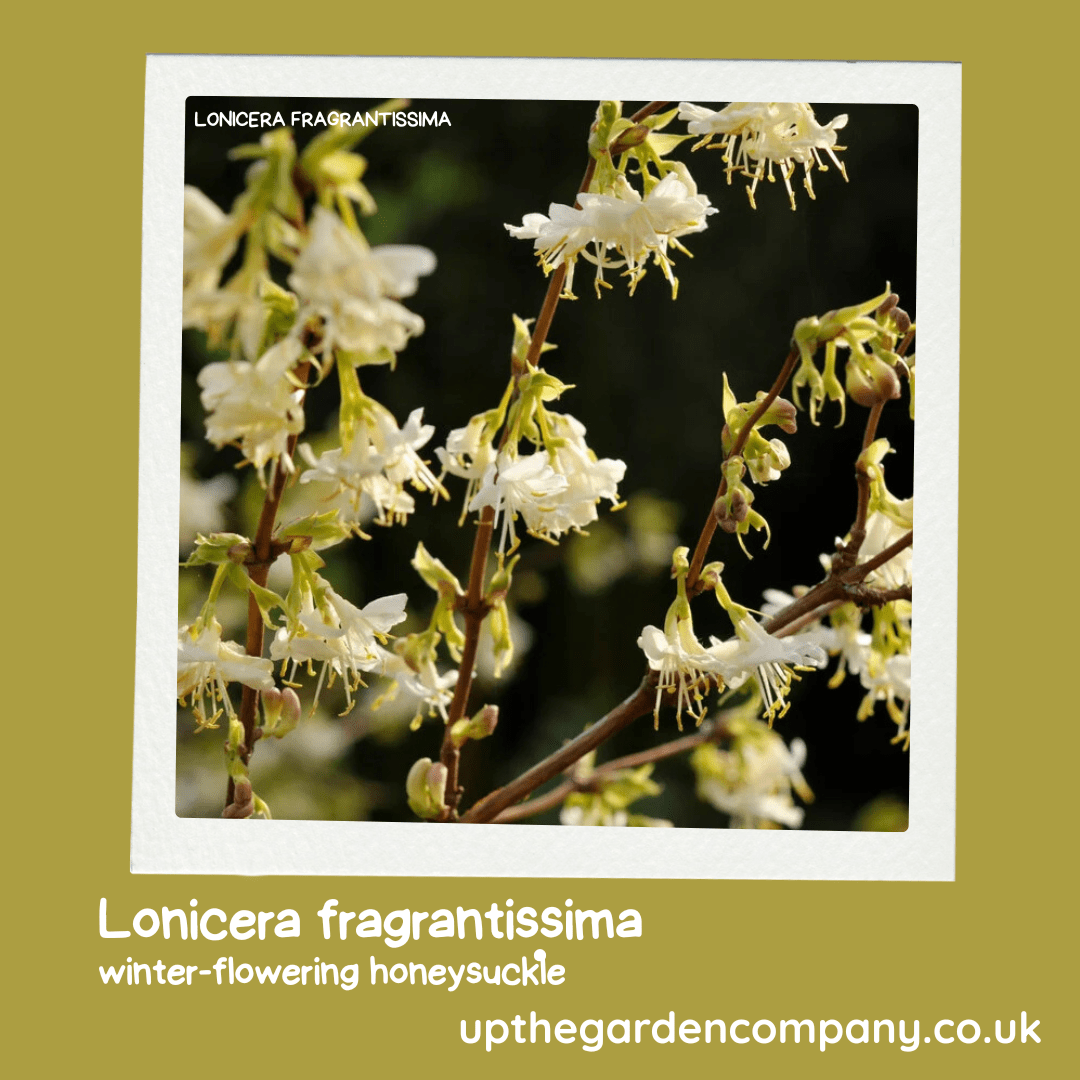
January and February can feel like a monochrome waiting game in the garden. The vibrant riot of summer is a distant memory, and the fresh green promises of spring have yet to break the soil. But, if you catch a drift of sweet, lemon-tinged perfume on the chilly air, you have likely found a winter-flowering honeysuckle.
This unassuming shrub is a true garden hero. While other plants retreat into dormancy, Lonicera fragrantissima bursts into life, offering delicate creamy-white blooms and a scent that rivals the finest perfumes. It serves as a reminder that nature never truly sleeps, even in the depths of winter.
For gardeners looking to extend the season and bring sensory delight to the colder months, this plant is an essential addition. It is hardy, forgiving, and generous with its fragrance. Let’s explore the story of this winter wonder and discover how you can welcome it into your own green space.
Meeting the Winter Honeysuckle
To truly appreciate this plant, we must first understand what it is—and what it is not. When most people hear “honeysuckle,” they picture the twisting, climbing vines of the woodbine (Lonicera periclymenum) that scramble over cottage arches in July.
The winter-flowering honeysuckle is different. Botanically known as Lonicera fragrantissima, it is a deciduous or semi-evergreen shrub, not a climber. It belongs to the Caprifoliaceae family, a group that includes viburnums and weigelas. Rather than scaling a trellis, it forms a bushy, tangled mound of arching branches, typically reaching heights of about two metres.
Its common names reflect its virtues. “Winter honeysuckle” tells you when it performs; “January jasmine” hints at its powerful scent; and “sweet breath of spring” suggests the hope it offers during the darkest days of the year.
A Traveller from the East
Like many of our garden favourites, Lonicera fragrantissima has travelled a long way to reach British soil. It originates from China and was introduced to the West by the legendary Scottish plant hunter Robert Fortune.
Fortune is a figure straight out of an adventure novel. In the 1840s, the Royal Horticultural Society sent him to China to collect plants. At the time, China was largely closed to foreigners, making his expeditions dangerous. He famously disguised himself as a mandarin to travel inland, collecting tea plants and ornamentals. He introduced Lonicera fragrantissima to Britain in 1845. Since then, it has remained a steadfast favourite for those in the know, bridging the gap between the last rose of autumn and the first daffodil of spring.
Where to Plant Your Winter Honeysuckle
The primary reason to grow this shrub is its perfume. Therefore, the golden rule of planting winter honeysuckle is simple: position it where you will smell it.
Do not tuck it away at the back of a deep border where you rarely venture in January. Instead, place it near a front path, beside the back door, or next to a driveway where you park the car. It is a plant that greets you.
Situation and Position
Lonicera fragrantissima is remarkably unfussy, but it performs best when you give it a little consideration:
- Sun and Shade: It is happy in full sun or partial shade. A sunny spot will encourage more prolific flowering, but it is tolerant of shadier corners.
- Shelter: While the plant itself is fully hardy down to -15°C or lower, the flowers are delicate. Planting it near a south or west-facing wall helps protect the blooms from harsh frosts and strong winds, ensuring the scent lingers longer in the air.
- Space: Remember that this is a shrub with a somewhat unruly, spreading habit. Give it room to stretch its elbows—about 1.5 to 2 metres of spread is typical for a mature plant.
Soil Requirements
One of the reasons this plant remains popular is its lack of pretension regarding soil. It is not a diva. It thrives in well-drained soil of almost any type—chalk, clay, sand, or loam. As long as it is not sitting in a waterlogged bog, it will likely thrive. If your soil is particularly poor, digging in some well-rotted garden compost or manure before planting will give it a welcome boost.
Stories, Folklore and the Language of Flowers
Honeysuckles have long held a special place in folklore, symbolizing the bonds of love and devoted affection. This meaning comes from the climbing varieties, whose stems cling tightly to anything they touch. In the Victorian language of flowers, gifting honeysuckle was a way to say, “I am yours.”
While the shrubby winter honeysuckle lacks the clinging stems, it shares the family reputation for protection. In Scottish folklore, it was often believed that growing honeysuckle near the home would prevent evil spirits from entering. It was thought to keep the household safe and sweet.
There is also a delightful old wives’ tale suggesting that bringing honeysuckle blooms into the house would tempt a wedding to follow shortly after. However, young girls were historically warned not to bring the flowers indoors too often, lest the heady scent cause them to have “too many distinct dreams.”
Literary giants have also been seduced by the genus. Shakespeare mentions “woodbine” (honeysuckle) frequently, often as a metaphor for an embrace. While he was writing about the native British climber, the sentiment applies beautifully to the winter variety: a plant that embraces the cold season with warmth and sweetness.
Why You Need This Plant (and What to Watch Out For)
Every plant has its character, and Lonicera fragrantissima is no exception. Here is a breakdown of why it deserves a spot in your garden, along with a few honest caveats.
The Benefits
- The Scent: This cannot be overstated. The fragrance is fresh, lemony, and incredibly strong. On a mild winter day, a single bush can scent an entire corner of a garden.
- Wildlife Haven: Winter-active pollinators, such as the buff-tailed bumblebee, often struggle to find food in January. This shrub provides a vital nectar source when few other plants are in bloom.
- Low Maintenance: It requires very little attention once established. It rarely suffers from pests or diseases and is drought-tolerant once its roots are down.
- Winter Cheer: The flowers appear on bare wood (or amongst sparse leaves in mild areas), looking like tiny white stars. They are excellent for cutting; bring a few sprigs indoors, and they will perfume a whole room for days.
The Disadvantages
- Summer Scruffiness: We must be honest—this is not a plant you grow for its summer foliage. After flowering, it produces dull green, oval leaves. It can look a bit untidy and nondescript from May to October.
- Berry Toxicity: The plant produces small red berries in early summer. While birds love them, they are mildly toxic to humans and can cause stomach upset if ingested.
- Space Hog: Because of its arching habit, it can look a bit leggy. It is not the best choice for a tiny, manicured courtyard unless you are prepared to prune it regularly.
How to Use It in the Garden
To mitigate the “summer scruffiness,” treat Lonicera fragrantissima as a support act in the summer and a headliner in the winter.
- The Mixed Border: Plant it towards the back of a mixed border. In summer, let vibrant perennials like Dahlias, Salvias, or herbaceous Clematis grow up and around it to hide its plain leaves. In winter, when the perennials die back, the honeysuckle takes centre stage.
- Informal Hedging: It makes a wonderful informal hedge or screen. It won’t give you the razor-sharp lines of Box or Yew, but it creates a dense, fragrant barrier that filters wind effectively.
- Woodland Edge: If you have a larger garden with a woodland feel, this shrub looks right at home amongst snowdrops, winter aconites, and hellebores.
Bring the Fragrance Home
If you have a gap in your garden that needs filling, consider the winter honeysuckle. It asks for very little—just a patch of earth and a little light—but gives back so much. It turns the coldest walk to the compost heap into a sensory delight and provides a lifeline for our precious bees.
Next time you visit a garden centre or a winter garden open day, follow your nose. If you find yourself drawn to a sweet, citrusy aroma, you’ll know you’ve found Lonicera fragrantissima. Why not pick one up and plant a little joy for next January?
Further Reading: The Winter Garden: Winter Interest Shrubs, Winter Planning: Design Your Dream Border for Next Year
Inspiration: Follow Us on Instagram, Threads, BlueSky, Twitter, TikTok and Pinterest.