The Garden You Can Touch: Discovering the Beauty of Texture
Close your eyes for a moment and reach out your hand.
Feel the cool smoothness of a pebble warmed by the afternoon sun. Run your fingers across the velvet softness of a lamb’s ear leaf. Brush gently through the feathery plumes of ornamental grasses as they sway in the breeze. Rest your palm against the deeply furrowed bark of an old oak that has quietly witnessed generations of changing seasons.
A garden is so often admired for its beauty, yet some of its greatest pleasures are discovered not through our eyes, but through our fingertips.
We live in a world where much of life is experienced through screens. Smooth glass, keyboards and plastic have become familiar textures, while opportunities to connect with the natural world can easily slip away.
Perhaps that is why gardens feel so restorative.
They invite us to reach out.
To touch.
To reconnect with the world around us.
Touch Connects Us to Nature
Touch is one of our earliest senses to develop and one of the most instinctive.
Long before we understand words, we learn through touch. We explore the world by holding, feeling and discovering.
That instinct never truly leaves us.
Even as adults, we are drawn towards natural textures without consciously thinking about it. We trail our hands through long grass, pick up interesting stones on a beach, stroke the soft ears of a rabbit or pause to feel the bark of an ancient tree.
Nature encourages interaction.
Unlike many carefully curated indoor spaces, gardens are not places where everything is out of reach. They invite curiosity.
The more we engage with them physically, the more connected we become.
A Symphony of Texture
Walk slowly through a garden and notice just how many different textures surround you.
There is the silky smoothness of rose petals.
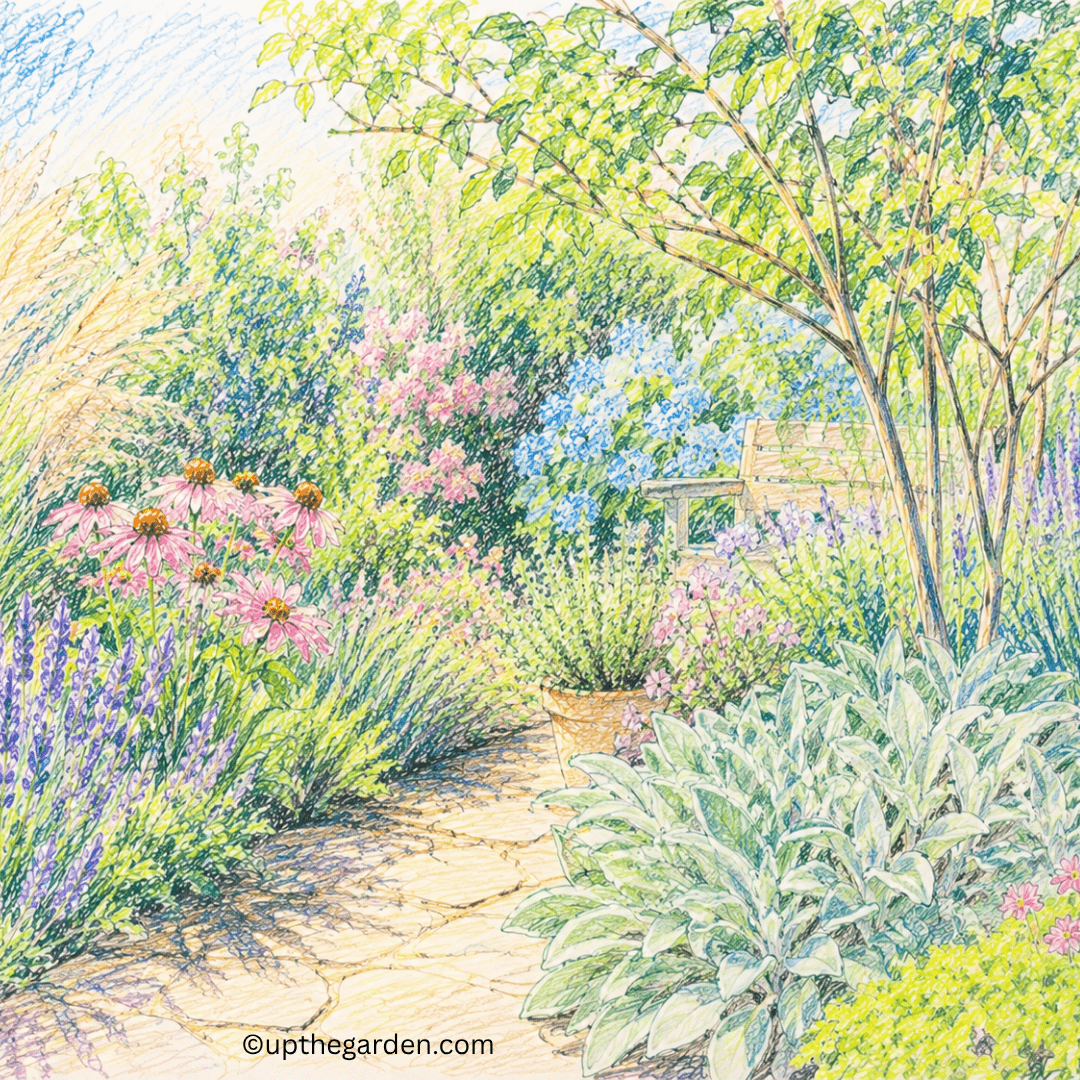
The soft, woolly leaves of lamb’s ear that seem almost too velvety to be real.
The delicate lace-like foliage of fennel, floating gently in the slightest breeze.
The glossy leaves of camellias catching the morning light.
The crisp, architectural spikes of irises.
The springy cushions of moss beneath mature trees.
Even within a single flower bed, dozens of contrasting textures sit side by side, each adding depth and interest.
It is often these differences that make planting feel harmonious.
Large leaves beside fine grasses.
Soft foliage alongside structured evergreens.
Smooth petals against rough seed heads.
Texture gives a garden character long after the brightest flowers have faded.
Plants That Invite You to Reach Out
Some plants seem almost designed to be touched.
Lamb’s ear is perhaps the most famous, delighting children and adults alike with its wonderfully soft leaves.
Lady’s mantle catches droplets of rain that sparkle like tiny jewels before rolling across the leaf surface.
Ornamental grasses whisper against your hands as you walk past.
Fern fronds unfurl with extraordinary delicacy each spring.
Mullein offers tall stems clothed in thick, velvety foliage.
Even herbs encourage touch.
Brush past rosemary and its aromatic oils are released.
Rub thyme between your fingers and its fragrance lingers long afterwards.
Touch and scent work together, creating memories that stay with us long after we leave the garden.
The Quiet Beauty of Bark
Trees offer some of the richest textures in any landscape.
The peeling cinnamon bark of ornamental cherries.
The smooth, pale trunks of silver birch.
The deeply ridged bark of ancient oaks.
The rugged character of Scots pine.
Each tells its own story.
As trees age, their bark changes, recording years of growth, storms weathered and seasons endured.
Running a hand across an old tree reminds us that nature measures time rather differently from us.
There is comfort in that quiet permanence.
Stone, Wood and Water
Texture extends far beyond planting.
Weathered timber benches become smoother with every passing year.
Old brick walls develop softened edges where moss and lichens slowly establish themselves.
Natural stone warms beneath summer sunshine and cools quickly after evening rain.
Gravel crunches reassuringly beneath our feet.
Even water offers texture.
Dip your hands into a pond or gently flowing stream and feel the coolness that contrasts so beautifully with warm summer air.
The ripples moving across the surface become something we can both see and feel.
The best gardens bring these natural materials together, allowing each one to complement the others.
Gardening with Bare Hands
There is something deeply satisfying about working directly with the soil.
Scooping compost into pots.
Breaking apart clods of earth.
Planting tiny seedlings with care.
Harvesting potatoes hidden beneath the surface.
Pulling carrots from loose soil.
These simple tasks reconnect us with natural rhythms.
For many gardeners, gloves are useful for difficult jobs, yet there is something irreplaceable about occasionally feeling the earth itself.
Healthy soil is alive.
Rich, crumbly and full of life, it reminds us that every flourishing garden begins beneath our feet.
Why Texture Matters for Wellbeing
Touch grounds us in the present moment.
When we focus on how something feels, our attention naturally shifts away from worries and towards the experience unfolding before us.
This is one reason sensory gardens have become increasingly important in hospitals, schools, care homes and community spaces.
People living with dementia often respond positively to familiar textures.
Children develop confidence through tactile exploration.
Those recovering from illness may find comfort in simply brushing their hands through fragrant herbs or feeling warm stone beneath their fingertips.
Gardens offer therapy without demanding anything in return.
They simply invite us to be present.
Designing a Garden Rich in Texture
Creating a tactile garden does not require endless varieties of plants.
Instead, think about contrast.
Pair broad leaves with delicate foliage.
Allow ornamental grasses to soften harder landscaping.
Mix polished pebbles with rough stone.
Include bark that changes through the seasons.
Choose evergreen shrubs with glossy leaves alongside soft perennials.
Introduce natural timber that will weather gracefully over time.
Leave ornamental seed heads standing through autumn and winter, adding structure long after flowers have faded.
Every season brings fresh textures.
Spring offers tender new growth.
Summer provides abundance.
Autumn introduces drying grasses, seed heads and colourful bark.
Winter reveals the sculptural framework hidden beneath summer foliage.
Texture ensures that even without flowers, a garden remains full of interest.
Seeing With Our Hands
Children instinctively understand that gardens are places to explore.
They stroke petals, collect feathers, gather pinecones and marvel at smooth conkers.
Somewhere along the way, many adults become more hesitant.
We admire gardens from a distance rather than becoming part of them.
Yet the most memorable gardens invite participation.
They encourage us to kneel beside a flower bed.
To feel lavender between our fingers.
To trace the patterns in bark.
To gather herbs for supper.
To brush dew from long grass on an early summer morning.
Touch transforms observation into connection.
The Garden That Holds Your Hand
Perhaps this is one of the quiet lessons every garden offers.
Beauty is not only something to be admired from afar.
It is something to experience.
The softness of a petal.
The coolness of stone.
The warmth of timber after a sunny afternoon.
The reassuring weight of freshly harvested vegetables cradled in our hands.
The rich crumble of healthy soil between our fingers.
These small moments slow us down.
They remind us that nature is not simply something we look at.
It is something we belong to.
The next time you step into a garden, resist the temptation to hurry from one flower to the next.
Pause.
Reach out.
Feel the textures that surround you.
You may discover that the garden has been speaking to your hands all along.
And in doing so, it quietly reminds us that some of life’s greatest comforts are wonderfully, reassuringly tangible.
Further Reading: The Sound of the Garden, The Taste of the Garden, The Scent of the Garden, The Garden through our Eyes, The Garden for the Soul – For all the Senses
Inspiration: Follow Us on Instagram, Threads, BlueSky, Twitter, TikTok and Pinterest.