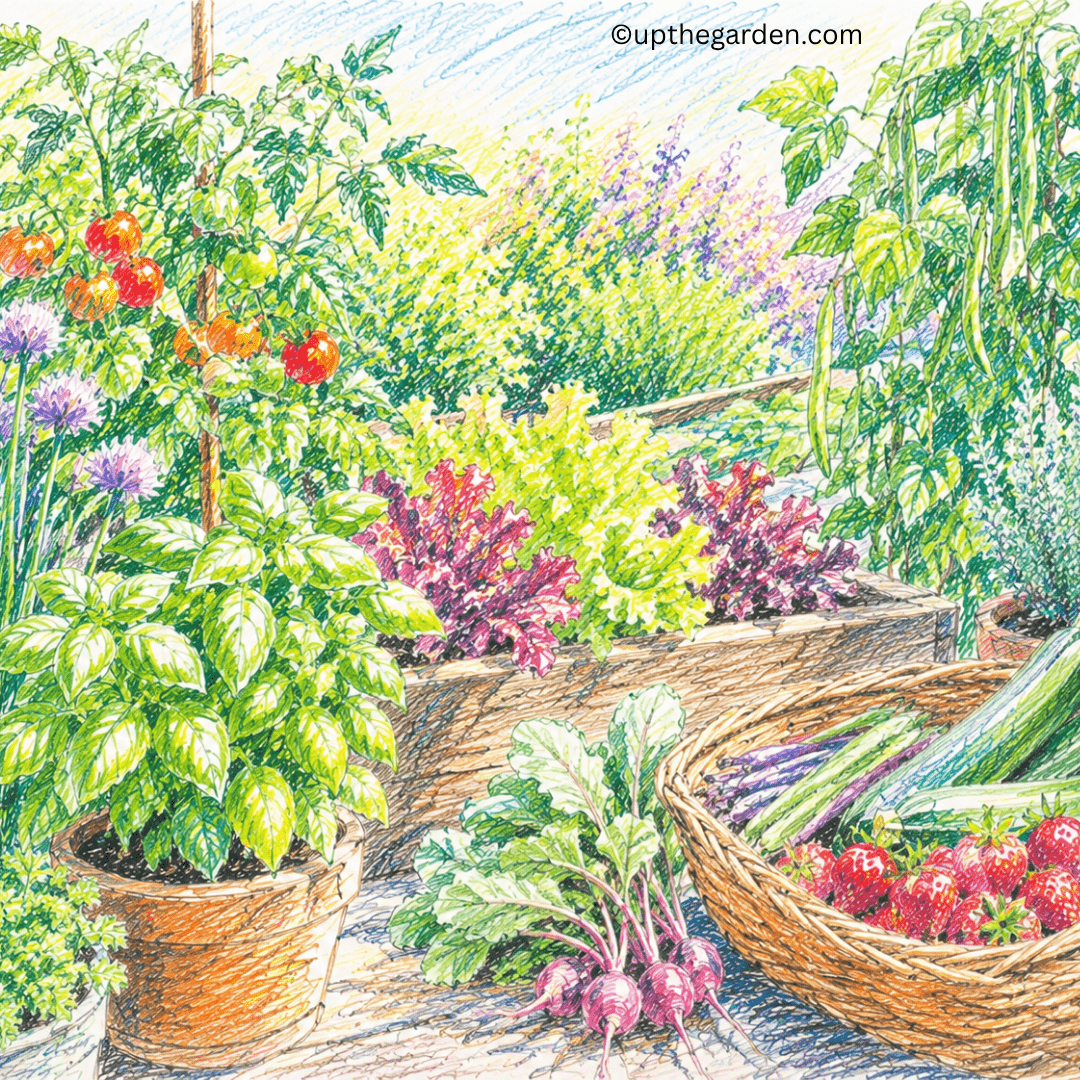
There is a particular kind of satisfaction that comes from eating something you have grown yourself.
A tomato still warm from the afternoon sun. Sweet peas picked moments before they reach the saucepan. A strawberry whose sweetness arrives before you have even stepped back into the house. A sprig of rosemary gathered as a casserole gently simmers in the kitchen.
The flavours seem somehow richer.
Not because they are necessarily more complicated, but because they carry with them something no shop can sell.
Patience.
Care.
The memory of sowing tiny seeds weeks or even months before. Watching the first shoots emerge, protecting tender seedlings from late frosts, watering during dry spells, and quietly celebrating the first signs of a harvest.
When we grow our own food, we are not simply cultivating vegetables, herbs or fruit.
We are nurturing a deeper relationship with the seasons, the land and the meals we place upon our table.
Perhaps that is why food from the garden tastes so unforgettable.
The Flavour of Freshness
Many fruits and vegetables begin to lose some of their flavour almost as soon as they are picked.
Sugars gradually convert to starch. Delicate aromas begin to fade. Moisture is lost during storage and transport.
By the time produce reaches supermarket shelves, it may have travelled hundreds or even thousands of miles.
A home-grown carrot, gently lifted from the soil moments before lunch, has never had time to lose its freshness.
A handful of peas eaten straight from the pod are astonishingly sweet.
Raspberries gathered while the morning dew still clings to their leaves seem almost impossible to compare with those transported across the country.
Freshness is not simply a matter of convenience.
It is one of the greatest ingredients in flavour.
The Gift of the Seasons
Modern life allows us to buy almost any fruit or vegetable at almost any time of year.
There is convenience in that abundance, yet something valuable can quietly be lost.
Gardening gently teaches us that every season has its own treasures.
Spring brings tender asparagus, broad beans, radishes and fresh herbs.
Summer overflows with tomatoes, courgettes, cucumbers, beans, strawberries and fragrant basil.
Autumn offers pumpkins, apples, pears, blackberries and earthy root vegetables.
Winter rewards patience with kale, leeks, Brussels sprouts and the comforting flavours of stored onions and squash.
Rather than feeling deprived by seasonal eating, gardeners often discover the opposite.
Each harvest becomes something eagerly anticipated.
When strawberries arrive, they feel like a celebration.
The first ripe tomato of summer becomes an occasion.
The year’s first apple reminds us that another season has quietly turned.
Sunshine Has a Flavour
Anyone who has eaten a tomato straight from the vine knows that sunshine can almost be tasted.
Plants transform sunlight into energy through photosynthesis, creating the sugars that give fruit its sweetness.
Long, bright days allow flavours to develop fully.
Healthy soil contributes too.
Rich organic matter, thriving microorganisms and balanced nutrients all influence the quality of the harvest.
Good gardening is rarely about forcing rapid growth.
It is about creating the right conditions for plants to develop naturally.
Just as a beautifully aged cheese or carefully baked loaf benefits from time, so too does a tomato ripened slowly beneath the summer sun.
The Joy of Harvesting
Harvesting is one of gardening’s quiet pleasures.
Unlike shopping, it asks us to observe.
To notice.
To slow down.
Courgettes seem to appear overnight.
Beans hide beneath leaves that only yesterday looked empty.
A handful of herbs becomes an excuse to wander through the borders before supper.
Children quickly learn this magic.
The excitement of digging for potatoes is little different from searching for buried treasure.
Pulling carrots from the earth reveals colours and shapes that no packet can predict.
Collecting eggs, picking apples or gathering blackberries become rituals that many remember long into adulthood.
Gardens teach us where food truly comes from.
That lesson may be more valuable today than ever before.
Herbs: The Garden’s Hidden Treasure
If vegetables provide nourishment, herbs provide personality.
A single handful of freshly picked parsley transforms a simple potato salad.
Mint lifts summer drinks and desserts.
Thyme deepens slow-cooked casseroles.
Rosemary perfumes roasted vegetables.
Sage adds warmth to autumn dishes.
Chives brighten freshly scrambled eggs.
One of the pleasures of herbs is their generosity.
Many ask for little beyond sunshine and well-drained soil, yet reward us with months or even years of flavour.
Even the smallest garden, balcony or windowsill can usually accommodate a few pots.
Their harvest may be modest in size, but never in character.
Flowers on the Plate
Some of the garden’s most beautiful flavours arrive dressed as flowers.
Peppery nasturtiums brighten salads.
Calendula petals add cheerful splashes of gold.
Violas bring elegance to cakes and desserts.
Borage flowers offer a gentle cucumber flavour and float beautifully in summer drinks.
For centuries, edible flowers have appeared in kitchens across Britain, adding colour, fragrance and subtle flavour.
They remind us that gardens can nourish both body and imagination.
As always, only flowers known to be edible and grown without harmful pesticides should ever be eaten.
Cooking Begins in the Garden
The finest meals often begin long before the oven is switched on.
They begin while watering seedlings.
Supporting climbing beans.
Pinching out tomato side shoots.
Waiting patiently for apples to ripen.
The garden shapes our cooking.
Instead of asking, “What shall we buy?”
We begin asking, “What is ready today?”
That simple change transforms the kitchen.
Recipes become more flexible.
Menus follow the rhythm of the seasons.
Waste often reduces naturally because fresh produce is harvested only as needed.
Gardening quietly teaches creativity.
A basket of courgettes encourages new recipes.
A glut of blackberries becomes jam, crumble or cordial.
Surplus herbs are dried or frozen for winter.
The garden gently encourages abundance to be shared.
Neighbours exchange runner beans.
Friends leave with bunches of flowers and bags of apples.
Harvests become conversations.
Growing Food Nourishes More Than the Body
The benefits of growing food extend well beyond nutrition.
Gardening encourages movement, fresh air and gentle exercise.
Harvesting slows us down.
Preparing meals from freshly gathered ingredients encourages mindfulness.
Children who help grow vegetables are often more willing to taste them.
Families gather outdoors.
Meals become celebrations of shared effort.
Even a single pot of salad leaves can create a sense of achievement.
Growing food reminds us that nourishment begins long before we sit down to eat.
The Flavours We Remember
Ask someone about the finest tomato they have ever tasted and it is rarely one bought in a supermarket.
Instead, they often describe one picked from a greenhouse on a warm August afternoon.
The apples gathered from a grandparent’s orchard.
Peas eaten straight from the pod.
Blackberries collected during countryside walks.
Fresh mint stirred into homemade lemonade.
The smell of basil on sun-warmed fingers.
These are not simply memories of food.
They are memories of place.
Of people.
Of seasons.
Of gardens.
Taste becomes entwined with emotion in ways we scarcely notice until years later.
The Garden’s Greatest Recipe
Perhaps the finest recipe any garden teaches is surprisingly simple.
Take healthy soil.
Add sunshine, rain and time.
Mix gently with curiosity and patience.
Season generously with hope.
Share the harvest whenever you can.
It is a recipe that has nourished people for generations.
One that asks us to work with nature rather than against it.
One that reminds us that the richest harvests are measured not only in baskets of fruit and vegetables, but in moments shared around a table.
Savouring the Seasons
A garden changes the way we eat because it changes the way we notice.
We begin to anticipate rather than expect.
To celebrate rather than consume.
To value freshness over convenience.
To understand that the finest flavours are rarely rushed.
Perhaps that is why gardeners so often describe home-grown food as tasting different.
It carries with it the warmth of sunshine, the richness of healthy soil, the unpredictability of the weather and the quiet satisfaction of having nurtured something from seed to harvest.
Every mouthful tells a story.
Not simply of food, but of the seasons that shaped it.
And perhaps that is the greatest gift a garden can offer.
It reminds us that the most memorable meals are not always the most elaborate.
Sometimes they are nothing more than warm tomatoes, fragrant herbs, fresh bread and good company enjoyed outdoors, while the evening sun sinks gently behind the very garden that provided them.
For in the end, the true flavour of the garden is not found only in what we grow.
It is found in the gratitude, patience and joy that growing teaches us—season after season, harvest after harvest.
Further Reading: The Sound of the Garden, The Garden you can Touch, The Scent of the Garden, The Garden through our Eyes, The Garden for the Soul – For all the Senses
Inspiration: Follow Us on Instagram, Threads, BlueSky, Twitter, TikTok and Pinterest.