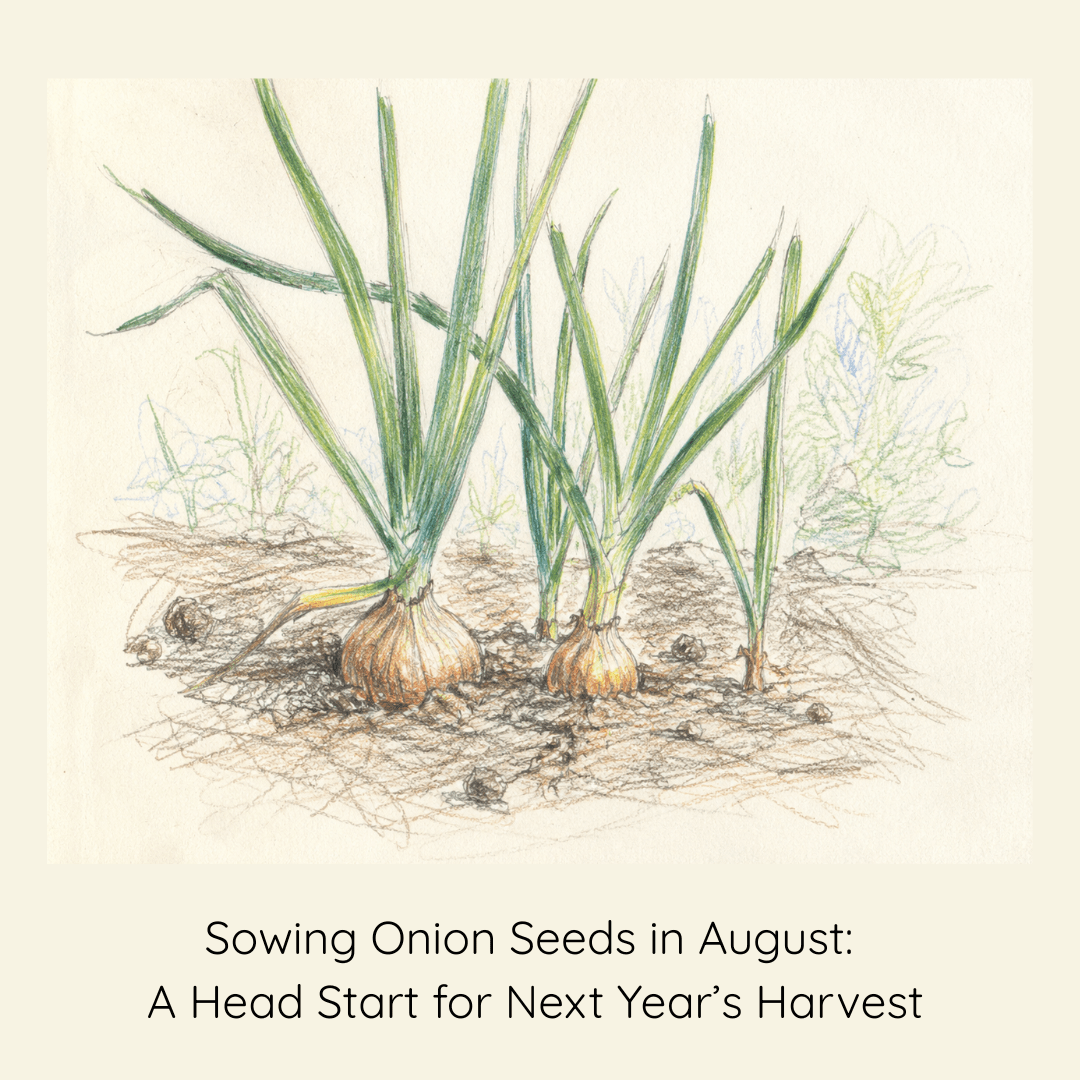
As summer begins to fade and vegetable beds start to empty, it’s tempting to think the growing season is drawing to a close. In fact, August offers the perfect opportunity to sow overwintering onion seeds, setting the stage for an early harvest the following summer.
By making the most of the warmth still left in the soil, onion seedlings have time to establish before winter arrives. Growth slows during the colder months, but as temperatures rise in spring, the plants quickly spring back into life, producing mature bulbs weeks ahead of spring-sown onions.
If you’ve never tried autumn sowing before, it’s a simple way to keep your kitchen garden productive long after many summer crops have finished.
Which onion seeds can you sow in August?
Not all onions are suitable for autumn sowing. Standard storage onions are best sown in late winter or spring, while overwintering varieties have been bred to cope with colder weather.
Popular varieties include:
- ‘Senshyu Yellow’ – a reliable Japanese variety producing golden-brown bulbs with a mild flavour.
- ‘Electric’ – an attractive red onion with striking purple skin and crisp white flesh.
- ‘Toughball’ – bred specifically for autumn sowing, offering good winter hardiness and resistance to bolting.
These varieties are usually sown from late August through to early September, depending on local weather conditions. The aim is for seedlings to establish while the soil remains warm, without producing too much leafy growth before winter.
Why sow onions in August?
Autumn sowing has several advantages for the home gardener.
Earlier harvests
The greatest benefit is timing. Overwintered onions are often ready to lift from June to early July, several weeks ahead of spring-sown crops.
Better use of space
Beds that have held potatoes, broad beans or early salads can be replanted almost immediately, making full use of your growing space.
Strong spring growth
Established root systems allow onions to make the most of spring rainfall and longer daylight hours, often producing vigorous plants with very little encouragement.
Are there any disadvantages?
Like any gardening method, autumn sowing comes with a few challenges.
Severe winters can occasionally damage young plants, particularly in exposed gardens or poorly drained soil. Heavy, waterlogged ground is far more likely to cause problems than cold itself.
Young seedlings may also attract slugs and snails during mild autumn weather, while birds sometimes disturb freshly sown rows in search of seed.
Finally, although overwintered onions produce an excellent early crop, they don’t usually store for quite as long as onions sown in spring. They’re perfect for enjoying fresh through summer and early autumn but are generally not the best choice for long-term winter storage.
Choosing the right position
Onions thrive in an open, sunny position where they receive at least six hours of direct sunlight each day.
Good air circulation helps reduce the risk of fungal diseases, while well-drained soil prevents bulbs sitting in excessive winter moisture.
Avoid planting onions where members of the onion family have grown during the previous year. Rotating crops helps reduce the build-up of soil-borne pests and diseases.
Preparing the soil
Well-prepared soil makes a noticeable difference to the quality of the crop.
Remove weeds thoroughly before sowing and fork over the bed to loosen compacted ground. Incorporate garden compost if your soil is light or lacking in organic matter, but avoid adding fresh manure, which encourages soft growth and can affect bulb development.
Rake the surface until it forms a fine, level seedbed.
If your garden has heavy clay soil, consider creating raised beds or incorporating horticultural grit to improve drainage. Overwintering onions dislike sitting in cold, wet ground for long periods.
How to sow onion seeds
Using a garden line, mark out shallow drills around 1cm deep and space them approximately 30cm apart.
Sow the seed thinly along the drill before covering lightly with soil. Firm the surface gently using the back of a rake or your hand, then water carefully using a watering can fitted with a fine rose.
If conditions remain warm and the soil is moist, germination usually takes between one and three weeks.
Watering young seedlings
During late summer, keep the seedbed evenly moist while seedlings establish, particularly during dry spells.
Once autumn rainfall becomes more reliable, watering is rarely necessary unless the weather remains unusually dry.
Throughout winter, nature generally provides enough moisture, and excessive watering can do more harm than good.
Thinning seedlings
When seedlings are large enough to handle comfortably, thin them gradually until each plant stands around 10 to 15cm apart.
Giving onions enough growing space allows bulbs to swell properly the following spring.
Any surplus seedlings can often be transplanted elsewhere while they’re still small, provided they’re lifted carefully with as much root as possible.
Looking after your onions through winter
Overwintering onions need surprisingly little attention.
Keep weeds under control by hand, taking care not to disturb the shallow roots. Hoe lightly on dry days whenever weeds appear.
If prolonged freezing weather is forecast, a layer of horticultural fleece can provide temporary protection for young plants in colder parts of the UK, although many overwintering varieties are perfectly hardy once established.
As spring arrives, growth begins in earnest. Water only during prolonged dry spells, particularly while bulbs are swelling.
Avoid overfeeding. Excess nitrogen encourages lush green leaves rather than well-formed bulbs. If the soil was prepared well before sowing, additional feeding is rarely needed.
When to harvest
Overwintering onions are usually ready between June and early July, depending on the variety and the weather.
You’ll know they’re approaching maturity when the leaves begin to turn yellow and naturally flop over.
Resist the temptation to bend the foliage yourself. Allowing it to collapse naturally helps the bulbs finish ripening and produces onions that store more successfully.
Lift the bulbs on a dry day, loosening the soil gently with a fork before easing them from the ground by hand.
How to cure and store onions
Before storing, onions need time to cure properly.
Lay freshly harvested bulbs in a single layer somewhere warm, dry and well ventilated for around two to three weeks. A greenhouse, shed or covered porch with good airflow works well.
Once the necks have dried completely and the skins have become papery, trim away the roots and cut the foliage back to around 3cm. Alternatively, leave the tops intact and plait suitable varieties for hanging.
Store cured onions in a cool, dry, frost-free place with plenty of ventilation. Mesh bags, slatted crates or onion strings all allow air to circulate and help reduce the risk of rot.
Check stored onions every few weeks and remove any that begin to soften or show signs of mould.
A simple job with generous rewards
Sowing onion seeds in August is one of those small gardening tasks that pays dividends many months later. While much of the vegetable garden is winding down, you’re already preparing for next year’s harvest.
With a sunny position, free-draining soil and a little care during their first few weeks, overwintering onions quietly get on with the job through autumn and winter. By early summer, you’ll be rewarded with firm, flavoursome bulbs ready for the kitchen just as many other crops are beginning to find their stride.
It’s a gentle reminder that in gardening, the seasons are never quite as separate as they seem. One harvest often begins with the seeds sown for the next.
Further Reading: Why you should Grow your Own Food, How to Start Your Own Vegetable Patch, How to Plan and Design Your Dream Vegetable Patch, Why Choose Sow It Grow It and Feast for Your Garden?, How to Choose the Perfect Flower Pot for Your Crops, The Principles of Organic Gardening
Inspiration: Follow Us on Instagram, Threads, BlueSky, Twitter, TikTok and Pinterest.