There comes a moment in every garden when the exuberance of midsummer begins to soften. The roses are no longer at their peak, many early perennials have finished flowering, and the long evenings carry the first hint that autumn is quietly waiting in the wings.
Yet this is far from the end of the gardening year.
Late summer has a beauty all of its own. The light becomes richer, seed heads catch the morning dew, ornamental grasses begin to sway with elegance, and a carefully chosen palette of flowers continues to provide colour well into September and beyond. Rather than mourning the passing of summer, this is the perfect time to celebrate a garden entering its second season.
Seeing the Garden Differently
Creating colour as summer begins to fade is not simply about filling gaps with more flowers. It is about understanding how the character of the garden changes.
The sunlight sits lower in the sky, casting longer shadows and bathing borders in warm, golden light. Colours that may have seemed ordinary in July suddenly glow with remarkable intensity. Deep purples become richer, soft pinks appear more luminous, and fiery oranges and reds seem almost to catch the evening sun.
A successful late summer garden embraces these subtle changes instead of trying to recreate the height of June.
The Plants That Carry the Garden Forward
Many of the finest garden plants save their best performance for late summer.
Japanese anemones begin their graceful display just as many early perennials are fading, their delicate flowers dancing above neat clumps of foliage.
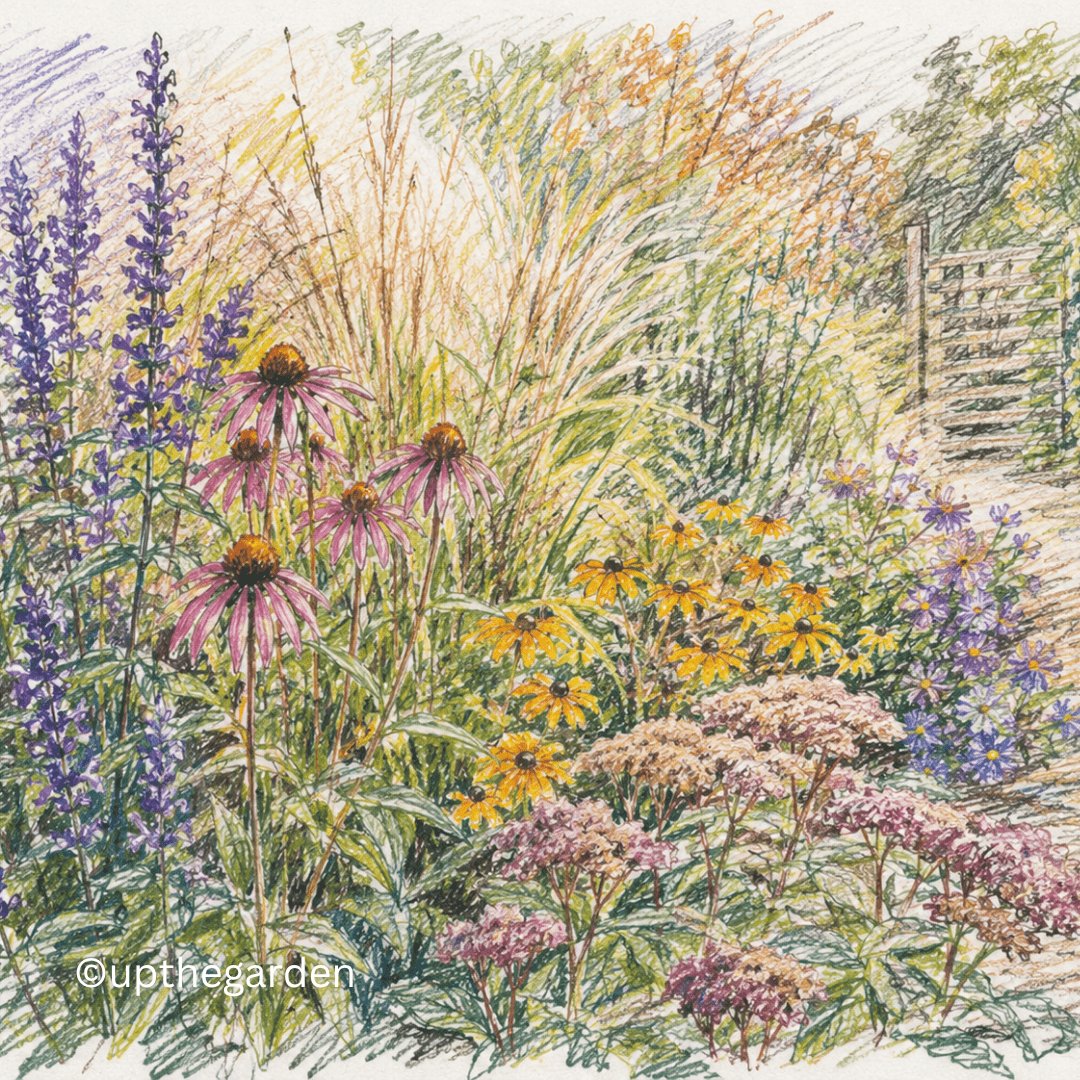
Salvias continue flowering tirelessly, attracting bees well into autumn with their vibrant spires of purple, blue, crimson and pink.
Rudbeckias bring warmth with cheerful golden blooms that brighten borders even on overcast days, while heleniums provide rich shades of amber, copper and burnt orange that seem made for late summer sunshine.
Sedums, now more commonly known as Hylotelephium, slowly deepen from soft green buds into dusky pink flower heads that become magnets for butterflies and bees.
At the back of the border, tall grasses begin to take centre stage. Their flower plumes shimmer in even the gentlest breeze, adding movement and texture that remains long after flowering plants have finished.
Thinking Beyond Flowers
One of the greatest pleasures of late summer gardening is learning to appreciate more than blooms alone.
Foliage becomes increasingly important. Silvery leaves reflect the evening light, while burgundy and bronze foliage provides welcome depth among softer greens.
Textures begin to matter just as much as colour. Ferns, ornamental grasses, clipped evergreens and broad-leaved perennials all combine to create interest that lasts for months.
Seed heads also deserve their moment.
Rather than rushing to tidy borders, allow the sculptural forms of plants such as echinacea, teasels and alliums to remain. They catch frost beautifully later in the year, provide food for birds and give structure to the winter garden.
Sometimes restraint creates far greater beauty than constant tidying.
Colour Through Contrast
Late summer planting works best when colours complement one another rather than compete.
Warm yellows alongside deep purples create striking contrast.
Soft whites bring freshness to borders that might otherwise appear heavy.
Cool blues help balance fiery oranges and reds, creating a sense of calm amongst the abundance.
Repeating these combinations throughout the garden helps draw the eye naturally from one border to another, creating harmony without becoming predictable.
Containers That Keep Performing
Containers often begin to tire by August, but they can be refreshed surprisingly easily.
Replacing fading annuals with late-flowering salvias, asters, chrysanthemums, ornamental grasses and ivy creates displays that continue until the first frosts.
Trailing herbs such as thyme and oregano soften the edges of pots, while silvery foliage plants provide a wonderful backdrop for brighter flowers.
Grouping containers together also creates pockets of colour exactly where they’re needed, whether beside a doorway, along a path or around a seating area.
Feeding the Garden’s Wildlife
Late summer is one of the busiest seasons for pollinators.
Bees continue gathering nectar, butterflies search for late flowers and birds begin preparing for the months ahead.
Choosing nectar-rich plants extends far beyond improving the appearance of your borders. It provides valuable food when many earlier flowers have disappeared.
Leaving some seed heads standing also supports finches and other garden birds well into autumn, while avoiding unnecessary deadheading allows wildlife to benefit from nature’s abundance.
A colourful garden is often one that’s alive with movement and birdsong.
Planning for Next Year
One of the hidden joys of late summer lies in looking ahead.
Walking through the garden now reveals where colour fades too quickly, where gaps appear and where structure is lacking.
Taking photographs, making simple notes and observing which combinations work particularly well makes planning far easier during the quieter winter months.
It’s also an ideal time to begin planting autumn-flowering perennials, dividing overcrowded clumps and choosing spring bulbs that will carry the garden beautifully into another year.
Every season quietly prepares the next.
Finding Beauty in the Changing Seasons
Perhaps the greatest lesson a garden teaches us is that beauty is never fixed.
It changes with the light.
It shifts with the weather.
It evolves from flowers to foliage, from blossoms to berries, from vivid borders to graceful silhouettes.
When summer begins to fade, the garden isn’t reaching an ending. It is simply revealing a different chapter—one filled with softer light, richer colours, drifting grasses and the quiet confidence that comes from nature following its own rhythm.
If we slow down and look carefully, we discover that late summer may be one of the most rewarding seasons of all.
Top Tips for Keeping Your Garden Colourful into Autumn
- Plant late-flowering perennials alongside summer favourites.
- Include ornamental grasses for movement and texture.
- Mix flowering plants with attractive foliage.
- Leave decorative seed heads standing for wildlife and winter interest.
- Refresh tired containers with autumn performers.
- Water deeply during dry spells to prolong flowering.
- Feed flowering plants with a high-potash fertiliser where appropriate.
- Make notes now to improve next year’s planting scheme.
A garden that celebrates late summer is one that continues to surprise, delight and welcome both people and wildlife long after the height of the season has passed.
Further reading: The Garden and the Soul: How Nature Changes Us, The Power of Native Plants: Creating Beautiful, Resilient Gardens, A Garden for Every Season: A Garden to Love All Year, How to Plant a Hedge, The August Garden: Finding Beauty in High Summer
Inspiration: Follow Us on Instagram, Threads, BlueSky, Twitter, TikTok and Pinterest.