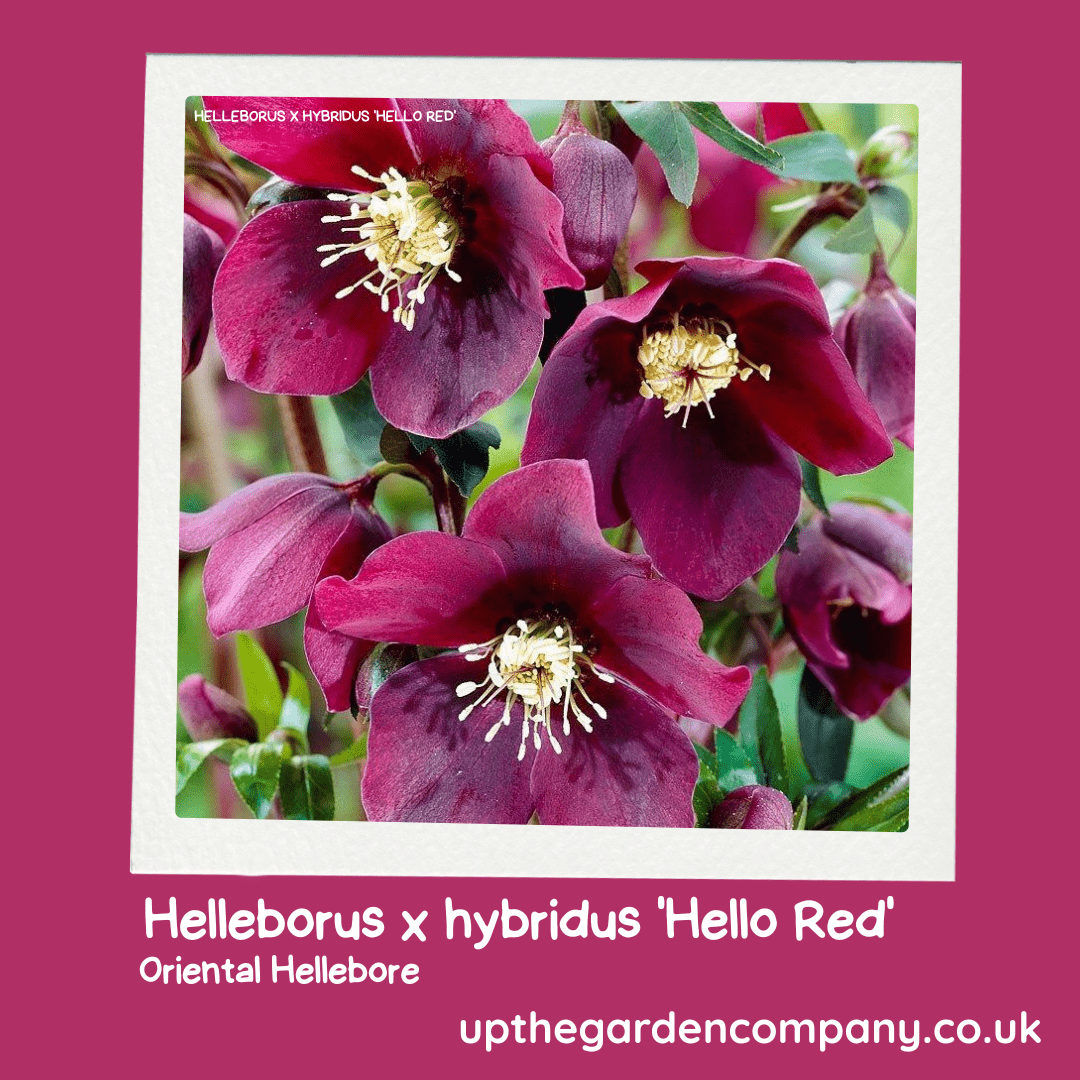
Winter gardens can often feel a little sleepy. As frost settles and the vibrant colours of summer fade into memory, many gardeners pack away their tools until spring. But there is a quiet, resilient beauty to be found in the colder months, provided you know where to look. Enter the Helleborus x hybridus ‘Hello Red’—a stunning Lenten Rose that refuses to let the grey skies win.
This exceptional perennial is a true winter hero. When most other plants are dormant, ‘Hello Red’ bursts into life, offering deep, rich tones that warm up even the chilliest borders. Whether you are an experienced horticulturist or simply looking to add a splash of colour to a shady corner, this plant is a rewarding addition to any green space.
A Rose by Any Other Name
Despite its common name, the Lenten Rose, this plant isn’t actually a rose at all. Helleborus x hybridus belongs to the Ranunculaceae family, making it a distant cousin of the buttercup, delphinium, and anemone. The name ‘Lenten Rose’ comes from its flowering time, which often coincides with the Christian season of Lent, leading up to Easter.
The specific variety we are celebrating here is ‘Hello Red’. As part of the Helleborus x hybridus group (often referred to as hybrid Lenten Roses), it has been bred for vigour and colour. The ‘Hello’ series is renowned for its upright habit and outward-facing blooms, meaning you don’t have to lift the flower heads to enjoy their beauty—they look right back at you.
Historically, hellebores originate from the mountainous regions of Southern and Central Europe, particularly the Balkans. They evolved to survive in rocky, scrubby woodlands, which explains their remarkable toughness and shade tolerance today.
Finding the Perfect Spot
One of the great joys of growing Helleborus x hybridus ‘Hello Red’ is its versatility. However, to see it truly flourish, you should aim to replicate its natural woodland habitat.
Climate and Situation
These plants are hardy souls. They thrive in the cool, temperate climates of the UK and can withstand frost with ease. In fact, seeing their flowers dusted with morning frost is one of the season’s most magical sights.
The ideal situation is semi-shade or dappled shade. Imagine the light filtering through the branches of deciduous trees—that is the “sweet spot” for a hellebore. While they can tolerate deep shade, they may flower less profusely. Conversely, too much direct summer sun can scorch their leathery foliage.
Soil Requirements
‘Hello Red’ is not overly fussy, but it does appreciate rich, well-drained soil. It dislikes having “wet feet,” so avoid waterlogged areas where winter rain pools. If your soil is heavy clay, incorporate plenty of organic matter or grit to improve drainage. They prefer neutral to alkaline soil, making them perfect for chalky gardens, though they will cope perfectly well in slightly acidic conditions too.
Caring for Your ‘Hello Red’
Once established, hellebores are famously low-maintenance, making them perfect for busy gardeners. A little care, however, goes a long way in keeping them looking their best.
Planting
When planting, dig a hole twice the size of the root ball. Mix in some well-rotted garden compost or leaf mould to give it a nutrient-rich start. ensure the crown of the plant sits just slightly above the soil level to prevent rot. Water it in well.
Pruning and Tidy-Up
The most critical task for hellebore care happens in late winter or early spring, just as the new flower buds begin to emerge at the base. This is the time to cut back the old, tattered foliage from the previous year.
Removing the old leaves serves two purposes:
- Aesthetics: It allows the new, vibrant red flowers to be seen clearly without a backdrop of messy, brown leaves.
- Health: It removes any fungal spores (like Hellebore Black Death or leaf spot) that may be lingering on the old foliage, protecting the new growth.
Feeding and Watering
Apply a generous mulch of organic matter in autumn to keep the roots cool and moist. A slow-release general fertiliser applied in early spring will encourage robust flowering. While they are drought-tolerant once established, keep an eye on them during particularly dry spells in their first year.
Companions in the Border
A single hellebore is lovely, but a drift of them is spectacular. However, ‘Hello Red’ also plays beautifully with others. To create a stunning winter and early spring display, consider pairing it with:
- Snowdrops (Galanthus): The crisp white of snowdrops contrasts perfectly with the deep, moody reds of the hellebore.
- Ferns: As the hellebores fade in late spring, ferns unfurl their fronds to fill the space and provide textural interest.
- Cyclamen coum: These offer low carpets of pink and purple that harmonise with the hellebore’s height.
- Pulmonaria (Lungwort): With their spotted leaves and blue-pink flowers, they enjoy the same shady conditions.
Why Choose ‘Hello Red’?
Every plant has its pros and cons, but ‘Hello Red’ is heavily weighted towards the former.
The Advantages
- Early Colour: It blooms when most of the garden is bare, providing nectar for early-emerging bumblebees.
- Longevity: These are long-lived perennials that can thrive for decades if left undisturbed.
- Evergreen Foliage: Even when not in flower, the architectural, leathery leaves provide ground cover and structure throughout the year.
- Deer and Rabbit Resistant: The sap is unpalatable to deer and rabbits, making it a safe choice for countryside gardens.
The Disadvantages
- Toxicity: It is important to note that all parts of the hellebore are toxic if ingested. This protects them from pests but means they should be treated with caution around pets and children. The sap can also irritate sensitive skin, so wearing gloves when pruning is advisable.
- Slow to Establish: They can take a year or two to settle in before they start flowering prolifically. Patience is key.
Myths, Magic, and Folklore
The hellebore is steeped in history and folklore, often associated with both healing and witchcraft.
In ancient times, it was believed that scattering powdered hellebore roots in the air could render you invisible—though we certainly don’t recommend trying this! In Greek mythology, the plant was used to cure madness. The most famous story involves Melampus, a soothsayer, using hellebore to cure the daughters of King Proetus, who had been driven mad and believed they were cows.
More closely related to the name ‘Lenten Rose’, Christian legend tells of a young shepherdess named Madelon. She was weeping because she had no gift to give the Christ child in Bethlehem. An angel, seeing her tears, swept away the snow to reveal a beautiful white flower—the Christmas Rose (Helleborus niger), a close relative of our hybrid friend.
Today, the ‘Hello Red’ carries less mystical baggage but retains all the enchantment. It serves as a reminder that life persists even in the depths of winter.
Bring Your Garden to Life
Whether you are looking to fill a shady void under a tree or simply want to enjoy flowers in February, Helleborus x hybridus ‘Hello Red’ is a superb choice. Its deep, rich colouring and easy-going nature make it a staple for the winter garden.
Planting a hellebore is an act of faith in the coming spring—a way to ensure that even on the darkest days, your garden still has a heartbeat.
Further Reading: Helleborus niger: The Star Plant That Brightens the Winter Garden, The Winter Garden: Winter Interest Shrubs, Winter Planning: Design Your Dream Border for Next Year
Inspiration: Follow Us on Instagram, Threads, BlueSky, Twitter, TikTok and Pinterest.