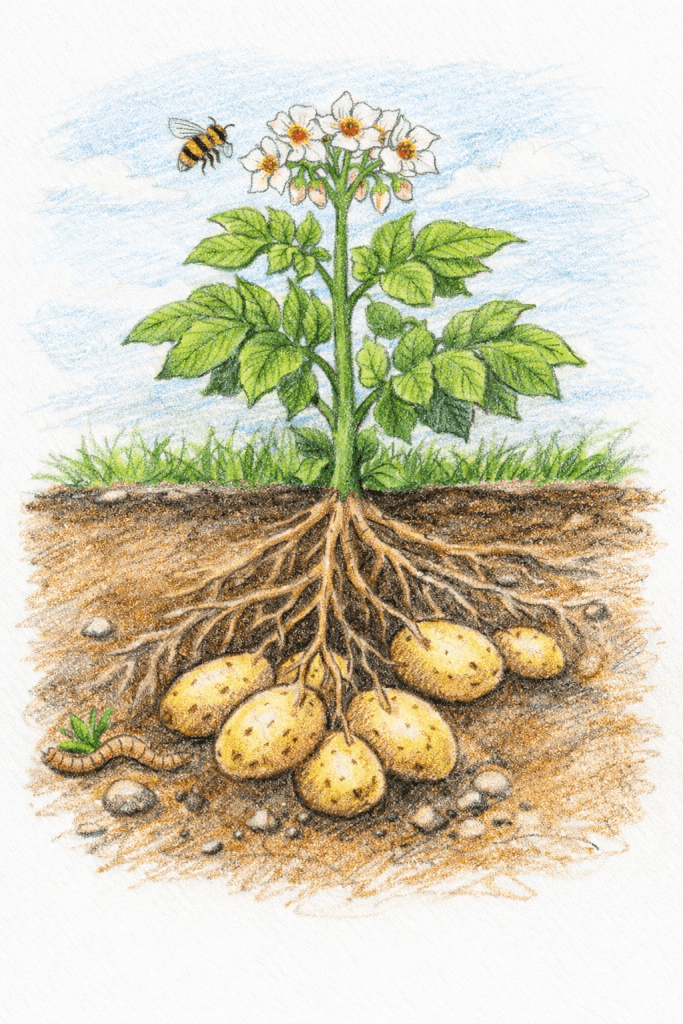
There are few pleasures in the garden quite like lifting the first potatoes of the season from the soil. Beneath the leaves and stems lies a hidden harvest – earthy, nourishing and wonderfully satisfying to grow yourself.
Potatoes are among the easiest and most reliable crops for home gardeners, thriving in vegetable beds, allotments and even large containers on a patio. With a little preparation and care, they reward you with generous yields and flavours far fresher than anything found on a supermarket shelf.
Whether you are new to gardening, keen to grow more of your own food, or simply curious about where your meals begin, growing potatoes offers a gentle and practical way to reconnect with the land.
This guide will walk you through everything you need to know about growing potatoes at home, from choosing the right varieties to planting, caring for your plants and enjoying a successful harvest.
Why Grow Your Own Potatoes?
Potatoes have been a staple of British kitchens for centuries, appearing in everything from comforting stews to crisp roast dinners. Yet growing your own offers rewards that go well beyond the plate.
Fresh flavour straight from the soil
Freshly lifted potatoes have a delicate sweetness and texture that is difficult to replicate with shop-bought produce. When cooked soon after harvesting, their flavour is noticeably richer and more vibrant.
An abundant crop for little effort
Potatoes are famously generous plants. A small number of seed potatoes can produce a surprisingly large harvest, making them one of the most productive crops for home gardens.
A sustainable choice
Growing your own potatoes helps reduce food miles, plastic packaging and waste. It is a simple step towards a more sustainable kitchen and garden.
A perfect crop for beginners
Potatoes are forgiving plants that tolerate a range of growing conditions. Their reliable nature makes them an excellent choice for anyone learning the basics of gardening.
A wonderful way to engage children
Few gardening tasks delight children more than digging for hidden potatoes in the soil. It offers a hands-on way to learn where food comes from and to appreciate the rhythms of the seasons.
Choosing the Right Potatoes to Grow
When growing potatoes at home, it is important to begin with seed potatoes rather than ordinary supermarket potatoes.
Seed potatoes are specially grown for planting and are carefully inspected to ensure they are free from disease. They are widely available in garden centres and from specialist suppliers in late winter and early spring.
Potatoes are typically divided into three main groups depending on how quickly they mature.
First Early Potatoes
First early potatoes are the quickest to grow and are often planted in March.
They usually mature within around ten weeks, producing small, tender potatoes that are perfect for boiling or steaming.
These are often enjoyed as new potatoes, lifted fresh from the soil and served with butter and herbs.
Popular first early varieties include:
- Rocket
- Pentland Javelin
- Swift
Second Early Potatoes
Second earlies take slightly longer to mature and are typically harvested between July and August.
They produce slightly larger tubers and are well suited to salads and light summer dishes.
Common second early varieties include:
- Charlotte
- Maris Peer
- Kestrel
Maincrop Potatoes
Maincrop potatoes are planted later and take 16–20 weeks to mature, but they produce the largest harvest.
These varieties are ideal for roasting, baking and storing through the colder months.
Well-known maincrop varieties include:
- King Edward
- Maris Piper
- Desiree
Planting a mix of early and maincrop potatoes allows you to enjoy a steady harvest from early summer into autumn.
Chitting Potatoes: Giving Them a Head Start
Before planting, many gardeners choose to chit their seed potatoes.
Chitting simply means allowing the potatoes to sprout before they go into the soil. This gives them a helpful head start and can lead to earlier harvests.
To chit potatoes:
- Place them in a shallow tray or egg carton.
- Position them with the small buds (known as “eyes”) facing upwards.
- Keep them somewhere cool and bright, such as a windowsill or greenhouse.
After a few weeks, short green shoots will begin to develop. Once these shoots reach around 2–3 centimetres long, the potatoes are ready to plant.
Preparing the Soil for Potatoes
Potatoes grow best in fertile, well-drained soil that retains moisture without becoming waterlogged.
Before planting, take time to prepare the ground properly.
Improve the soil with organic matter
Dig in well-rotted compost or manure to enrich the soil. This provides essential nutrients and improves soil structure.
Ensure good drainage
Heavy soils can be improved by adding compost or planting in raised beds to prevent waterlogging.
Aim for slightly acidic soil
Potatoes prefer soil with a pH between 5.5 and 6.5, which also helps reduce the risk of certain diseases.
Taking a little care at this stage will help create the ideal environment for strong, healthy plants.
How to Plant Potatoes
Once the soil has warmed and the risk of hard frost has passed, it is time to plant.
Follow these simple steps for success.
Dig planting trenches
Create shallow trenches around 10–15 centimetres deep.
Space the potatoes
Place seed potatoes roughly 30 centimetres apart, with rows spaced about 60 centimetres apart.
Position the sprouts upwards
Always plant with the shoots facing upward so they can grow towards the surface.
Cover with soil
Gently cover the potatoes with soil and lightly firm the ground.
With warmth and moisture, shoots will begin to emerge within a few weeks.
Growing Potatoes in Containers
If you do not have a large garden, potatoes grow beautifully in containers, bags or raised beds.
Large pots, buckets or specialised potato grow bags all work well.
To grow potatoes in containers:
- Fill the container with around 10 centimetres of compost.
- Place a few seed potatoes on top.
- Cover with more compost.
- Continue adding compost as the shoots grow.
This method allows you to grow potatoes even on a balcony, patio or small garden space.
Caring for Potato Plants
Once established, potato plants require only modest care to thrive.
Earthing up
One of the most important tasks when growing potatoes is earthing up.
As shoots reach around 15 centimetres tall, mound soil around the base of the plant.
This serves several purposes:
- Protects young plants from frost
- Prevents potatoes from turning green in sunlight
- Encourages the plant to produce more tubers
Repeat this process as the plant continues to grow.
Watering
Potatoes prefer consistent moisture, particularly when the plants begin to flower.
Water deeply during dry periods, but avoid waterlogged soil.
Feeding
An occasional application of organic fertiliser or liquid feed can help support healthy growth, especially in containers where nutrients are limited.
How to Encourage a Bigger Potato Harvest
A few simple practices can help maximise your crop.
Mulch the soil
Applying mulch around plants helps retain moisture and suppress weeds.
Rotate crops
Avoid growing potatoes in the same location each year. Crop rotation helps prevent soil-borne diseases.
Protect plants from frost
Young potato plants are vulnerable to frost, so covering them with soil or fleece during cold nights can protect the crop.
Maintain healthy soil
Good soil structure and organic matter support stronger plant growth and better yields.
Common Potato Pests and Problems
Like all crops, potatoes can occasionally face pests or diseases. Fortunately, many problems can be prevented through good gardening habits.
Slugs
Slugs may feed on developing tubers. Keeping beds tidy and encouraging natural predators can help manage them.
Aphids
These small insects feed on leaves and can weaken plants. A strong spray of water or natural predators often keeps them under control.
Potato blight
Blight is a fungal disease encouraged by warm, humid weather. Ensuring good air circulation and removing affected foliage quickly can help limit its spread.
Potato scab
This condition causes rough patches on potato skins. Maintaining slightly acidic soil reduces the risk.
Healthy soil and regular observation are often the best defence against most problems.
When and How to Harvest Potatoes
The most satisfying moment of potato growing arrives when it is time to lift the crop.
Harvesting first and second earlies
Early potatoes are ready when the plants begin to flower.
Carefully loosen the soil with a fork and gently lift the tubers from beneath the plant.
These potatoes are best enjoyed fresh rather than stored.
Harvesting maincrop potatoes
Maincrop varieties should remain in the ground until the foliage begins to yellow and die back.
Two weeks before harvesting, cut the stems down to allow the skins to toughen. This helps the potatoes store more successfully.
Lift the crop carefully and allow the potatoes to dry briefly before storage.
Storing Your Homegrown Potatoes
Proper storage ensures your harvest lasts well into the colder months.
For best results:
- Store potatoes in a cool, dark and well-ventilated place
- Keep them in paper sacks, wooden crates or hessian bags
- Avoid exposure to light, which can cause greening
Under the right conditions, maincrop potatoes can keep for several months.
A Simple Step Towards Sustainable Living
Growing potatoes at home offers more than a plentiful harvest. It is a quiet reminder of how food begins – beneath the soil, shaped by seasons and patience.
Even a small garden can produce an impressive yield, and the process of planting, tending and harvesting brings a deeper appreciation for the meals we enjoy each day.
With their reliability, versatility and generous harvests, potatoes remain one of the most rewarding crops a gardener can grow.
Plant a few this spring, and by summer you may find yourself lifting your own basket of fresh, earthy potatoes from the ground – a simple pleasure that never loses its charm.
Further Reading: The Benefits of Growing your Own Food ,
Inspiration: Follow Us on Instagram, Threads, BlueSky, Twitter, TikTok and Pinterest.