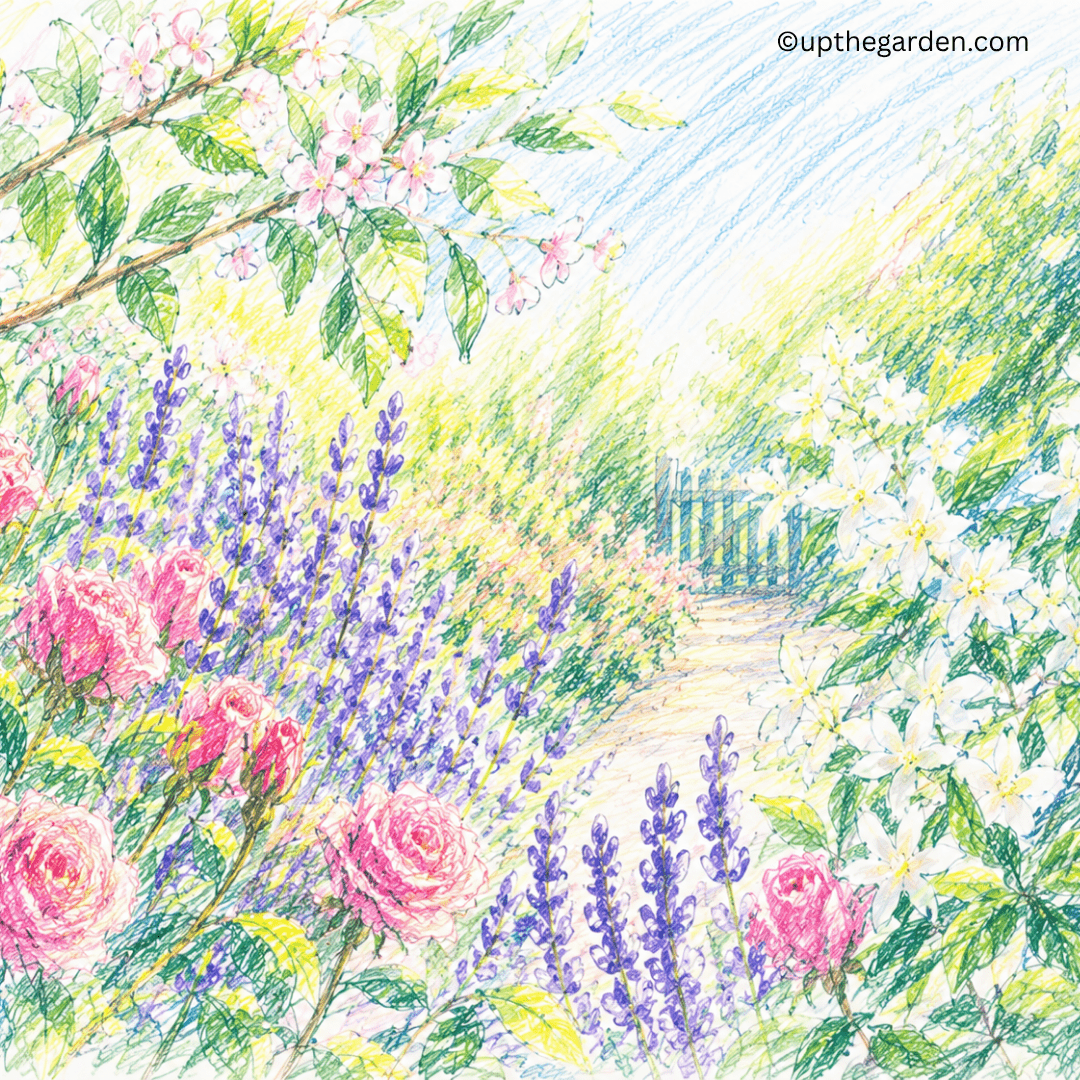
There are some fragrances we never truly forget.
The perfume of a rose warmed by the afternoon sun. Lavender carried on a gentle breeze. Freshly cut grass drifting through an open window. The rich, earthy scent that rises from dry soil as the first drops of rain begin to fall.
Long after flowers have faded and the seasons have changed, these fragrances remain.
They linger not only in the garden, but in our memories.
Among all our senses, smell possesses a remarkable ability to transport us through time. A single fragrance can return us instantly to a childhood garden, a grandparent’s greenhouse, a seaside cottage overflowing with sweet peas, or a warm summer evening when the air seemed almost heavy with roses and honeysuckle.
Perhaps that is one of gardening’s greatest gifts.
A beautiful garden is not simply something we see.
It is something we remember.
The Sense Most Closely Linked to Memory
Scientists have long understood that our sense of smell is closely connected to the parts of the brain responsible for memory and emotion.
Unlike our other senses, scent follows a remarkably direct path to areas that process feelings and recollections. That is why a familiar fragrance can evoke vivid memories long before we consciously recognise it.
A sprig of rosemary may remind us of Sunday lunches.
Mint can bring back memories of childhood sweets or summer drinks.
The scent of tomato leaves might instantly return us to an old greenhouse where someone patiently showed us how to pinch out side shoots.
These moments often arrive unexpectedly.
One breath is all it takes.
Gardens become woven into our lives not simply through photographs, but through fragrances that quietly stay with us for decades.
The Perfume of Flowers
Many of the world’s most cherished garden plants have been loved for centuries as much for their fragrance as for their appearance.
Roses have perhaps become the very symbol of floral perfume.
Some varieties offer delicate hints of apple or citrus, while others fill an entire garden with rich, classic fragrance on a warm afternoon. Old English shrub roses are particularly treasured for their scent, rewarding anyone who pauses to lean in close.
Lavender has an altogether different character.
Fresh, herbal and calming, its fragrance has soothed people for generations. Walk beside a lavender hedge on a sunny day and the essential oils released by the warmth create an experience that feels almost restorative.
Sweet peas provide another kind of magic.
Their soft, nostalgic perfume has become one of the defining scents of early summer, filling vases indoors as beautifully as they perfume the garden itself.
Then there are lilies, stocks, carnations and phlox, each bringing its own distinctive fragrance to the changing seasons.
Together they create layers of scent that shift from one month to the next.
The Quiet Fragrance of Herbs
Not all scented plants announce themselves with flowers.
Some of the most memorable aromas come from foliage.
Brush your hand gently across rosemary and its resinous fragrance lingers on your fingertips.
Rub the soft leaves of sage and the air fills with earthy warmth.
Mint releases an instant burst of freshness with the slightest touch.
Thyme, lemon balm and oregano each contribute their own subtle character.
These are scents that invite interaction.
Unlike many ornamental flowers, herbs encourage us to reach out, touch, harvest and enjoy them.
Perhaps that is why kitchen gardens often feel so deeply satisfying.
They appeal not only to our taste, but to our sense of smell throughout the growing season.
Rain Has a Fragrance Too
One of the garden’s most extraordinary scents arrives not from a flower at all.
After days of warm, dry weather, the first rainfall awakens an unmistakable aroma rising from the earth.
Scientists call this fragrance petrichor.
It is created when rain releases natural oils from plants and compounds produced by soil-dwelling microorganisms, carrying them into the air.
Most gardeners know it simply as the smell of rain.
It speaks of renewal.
Of thirsty borders drinking deeply.
Of dust settling.
Of lawns turning green once more.
Few fragrances feel quite so reassuring.
The Evening Garden
As daylight fades, something remarkable begins to happen.
Many flowers become more fragrant.
Plants that rely upon moths and other night-flying pollinators often release their strongest perfume after sunset.
Honeysuckle drifts through the evening air with remarkable sweetness.
Jasmine perfumes sheltered courtyards.
Nicotiana begins to fill borders with soft fragrance just as the day’s warmth starts to fade.
Even white flowers seem transformed.
Reflecting the last light of day while releasing their evening perfume, they create gardens that remain every bit as enchanting after sunset as they are beneath the midday sun.
A comfortable bench, a warm evening and a gently scented garden may be among life’s simplest pleasures.
The Scent of the Seasons
Every season carries its own distinctive fragrance.
Spring begins gently.
Hyacinths perfume cool mornings while flowering currants, lilac and blossom hint at warmer days ahead.
Summer is abundance.
Roses, lavender, sweet peas and herbs combine into a rich tapestry of fragrance that seems to drift wherever the breeze chooses to carry it.
Autumn becomes earthier.
Fallen leaves, ripening apples, damp woodland paths and freshly turned soil remind us that another growing season is drawing towards its close.
Even winter has its moments.
Winter-flowering honeysuckle surprises passers-by with delicate perfume.
Sarcococca, often called Christmas box, fills cold air with astonishing sweetness despite its tiny flowers.
The garden rarely loses its ability to delight those willing to pause and breathe deeply.
Designing a Garden for Fragrance
Many gardens are planned almost entirely around colour.
Yet designing with scent in mind adds another layer of enjoyment.
Fragrant plants are often best positioned where people naturally linger.
Beside a doorway where perfume greets visitors.
Along a frequently used path.
Near a seating area where evening scents can be fully appreciated.
Outside a kitchen window.
Around a bench placed beneath climbing roses.
Layering fragrances throughout the year ensures there is always something waiting to be discovered.
A well-designed scented garden need not be large.
Even a small courtyard, balcony or collection of containers can become rich with perfume.
Sometimes just a single pot of lavender or a climbing jasmine is enough to transform an ordinary space into something memorable.
Invisible Beauty
Unlike flowers, fragrance cannot be photographed.
It leaves no visible trace.
Yet it shapes our experience of a garden just as profoundly as colour or structure.
It slows us down.
Invites us closer.
Encourages us to breathe more deeply.
It asks us not merely to look, but to experience.
Perhaps this is why so many of our happiest memories involve gardens.
We remember gathering herbs with muddy hands.
Picking sweet peas for the kitchen table.
Walking beneath blossom trees.
Cutting lavender to dry indoors.
Smelling tomatoes ripening in a greenhouse.
These moments become part of us.
The Fragrances We Carry Forward
As gardeners, we often think we are growing flowers.
In truth, we are also cultivating memories.
Every scented rose planted today may one day remind a child of home.
Every lavender border may become the fragrance someone associates with peaceful summer evenings.
Every rosemary bush may flavour both meals and memories for years to come.
Gardens teach us that beauty is not always something we can see.
Sometimes it is carried on the breeze.
Sometimes it rises quietly after rain.
Sometimes it lingers on our hands long after we have finished tending the borders.
And perhaps that is why the fragrances of a garden stay with us long after we have left it.
Flowers bloom and fade.
Seasons come and go.
But the memories carried on their perfume remain, returning when we least expect them, reminding us that the smallest moments are often the ones that endure the longest.
The next time you wander through a garden, pause for a moment before looking for the finest bloom.
Close your eyes instead.
Breathe deeply.
You may discover that the garden has been telling its story all along—not through colour or shape, but through the invisible language of fragrance.
Further Reading: The Sound of the Garden, The Garden you can Touch, The Taste of the Garden, The Garden through our Eyes, The Garden for the Soul – For all the Senses
Inspiration: Follow Us on Instagram, Threads, BlueSky, Twitter, TikTok and Pinterest.