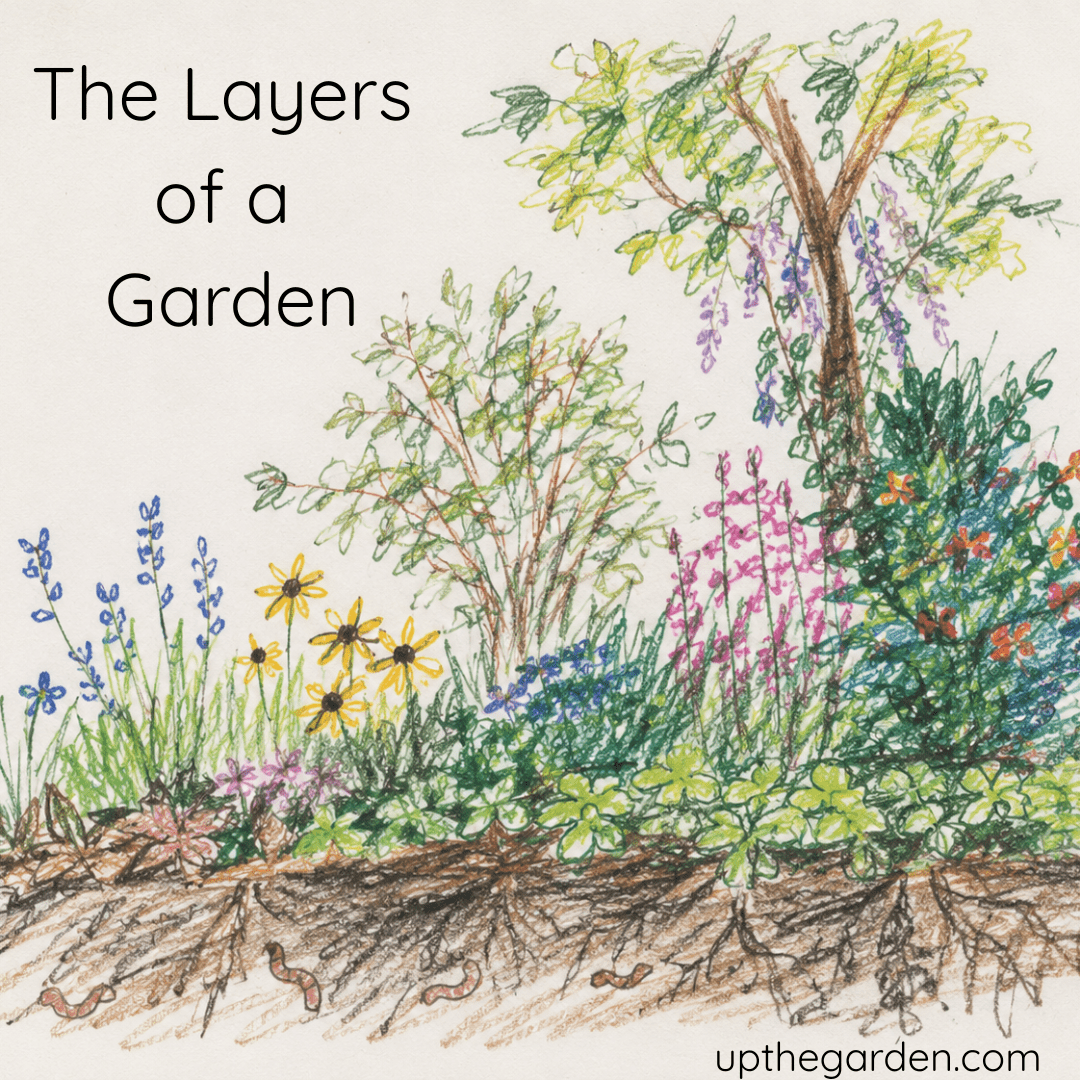
A healthy garden isn’t simply a collection of plants. It’s a living landscape, made up of layers that work together to support life in every season.
Take a walk through a woodland and you’ll notice how naturally these layers appear. Rich soil lies beneath your feet, carpets of mosses and fallen leaves cover the ground, wildflowers bloom amongst grasses, shrubs form sheltered thickets and trees stretch high above, creating a leafy canopy. Every level has its own purpose, and every one is home to wildlife.
Our gardens can reflect this same pattern.
When a garden is made up of little more than neatly mown grass and open beds, there is less space for nature to settle. Wildlife has fewer places to hide, feed and raise its young, and the landscape offers little protection from changing weather or predators.
By creating layers instead, we begin to mimic the habitats that wildlife has relied upon for thousands of years. Each layer brings something different, and together they create a garden that is richer, more resilient and full of life.
Healthy soil – where every garden begins
The most important part of any garden is often the one we never see.
Beneath the surface lies an extraordinary world, alive with earthworms, fungi, beetles, bacteria and countless other tiny organisms. Together they break down fallen leaves and organic matter, returning valuable nutrients to the soil and creating the conditions that plants need to thrive.
Healthy soil is the foundation for everything that follows. It stores water during dry spells, improves drainage after heavy rain and supports strong, healthy roots.
When we allow nature to do much of this work for us—leaving organic matter to decompose and disturbing the soil as little as possible—we nurture a living ecosystem beneath our feet.
It is here that the story of every thriving garden begins.
Groundcover – a gentle layer of protection
Just above the soil sits a layer that is often overlooked, yet plays an important role throughout the year.
Low-growing plants, fallen leaves and natural leaf litter act as a protective blanket, helping the soil retain moisture, regulating temperature and reducing erosion.
For wildlife, this layer offers safety as well as shelter.
Beetles and woodlice quietly recycle decaying plant material. Frogs and toads rest in the cool shade beneath leaves, while hedgehogs forage amongst the leaf litter in search of insects and worms. Many butterflies, moths and other insects spend part of their lives hidden amongst this protective cover before emerging with the changing seasons.
Allowing leaves to gather beneath shrubs or in quieter corners of the garden may seem like a small gesture, but it creates valuable habitat where nature can flourish undisturbed.
Flowers and grasses – bringing the garden to life
As the garden begins to grow upwards, flowers and ornamental grasses add movement, colour and a rich source of food for wildlife.
From the earliest spring flowers to late autumn blooms, nectar and pollen sustain bees, butterflies, hoverflies and countless other pollinating insects. Native grasses provide seeds for birds, shelter for insects and places where many species complete their life cycles.
A garden that offers flowers across the seasons becomes a dependable source of food when little else may be available.
The gentle hum of bees drifting between blossoms or butterflies dancing above the borders reminds us that these planting schemes are about far more than appearance. They keep the garden alive with movement and help pollinate fruit, vegetables and flowering plants throughout the landscape.
Shrubs and hedges – nature’s shelterbelt
As the layers deepen, shrubs and hedges create structure and refuge.
Their dense branches offer protection from wind and rain while providing safe nesting places for birds and quiet cover for small mammals. Within tangled stems, insects find places to spend the winter, emerging again as temperatures begin to rise.
Through the seasons, shrubs offer an ever-changing supply of food. Blossom appears in spring, attracting hungry pollinators, while berries and hips ripen later in the year, sustaining birds as autumn gives way to winter.
A mixed hedge is especially valuable, with different species flowering and fruiting at different times. It creates not simply a boundary, but a living corridor that allows wildlife to move safely through the garden.
Trees and climbers – reaching for the sky
The final layer lifts the garden into the canopy.
Trees bring height, shade and permanence, creating places where birds can nest and squirrels can forage, while their branches provide shelter from summer sun and winter weather alike. Their bark supports mosses, lichens and insects, adding yet another habitat to the garden.
Climbing plants make use of every available surface, clothing walls, fences and tree trunks with flowers, foliage and berries. Ivy is one of the most valuable of all, flowering in autumn when nectar is scarce and producing berries that become an important source of food during the colder months.
As leaves fall each year, they return to the ground below, feeding the soil and completing a cycle that connects the tallest tree with the smallest soil organism.
Every layer tells a story
Nature rarely works in isolation.
The soil feeds the plants. Groundcover protects the soil. Flowers nourish pollinators. Shrubs provide shelter. Trees create the canopy. Together they form a connected web of life, with each layer supporting the next.
The beauty of this approach is that every garden, no matter its size, has room for another layer. A handful of spring flowers beneath a hedge, a patch of leaf litter left undisturbed, a native shrub, a climbing rose or a small tree can all help weave wildlife back into the landscape.
By looking beyond individual plants and thinking instead about the layers they create, we begin to garden as nature does. The reward is more than a beautiful space. It is a garden alive with birdsong, buzzing insects, changing seasons and the quiet rhythms of the natural world.
Further reading: The Garden and the Soul: How Nature Changes Us, The Power of Native Plants: Creating Beautiful, Resilient Gardens, A Garden for Every Season: A Garden to Love All Year, How to Plant a Hedge
Inspiration: Follow Us on Instagram, Threads, BlueSky, Twitter, TikTok and Pinterest.