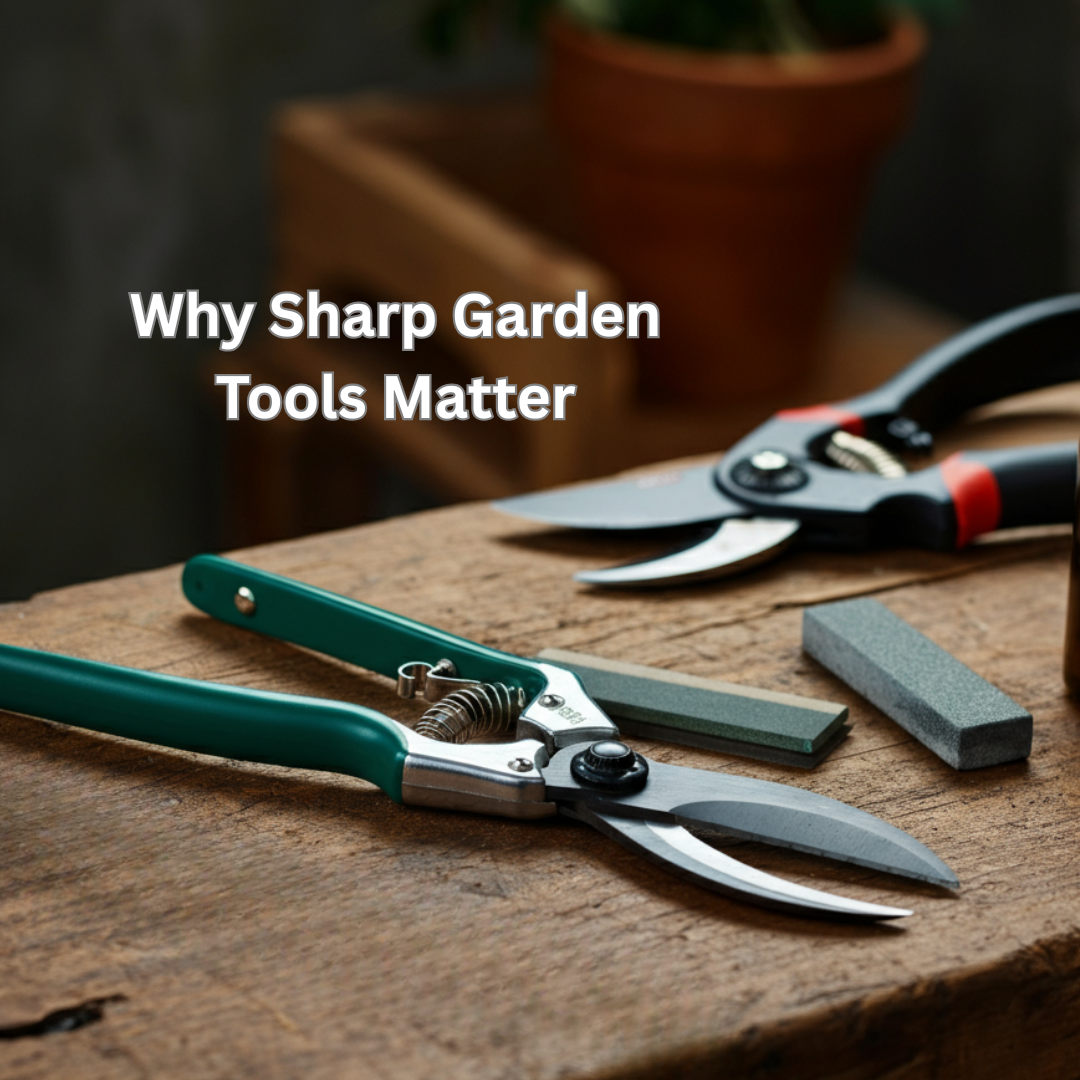
Gardening is an activity that requires precision and care. A crucial, yet often overlooked, aspect of effective garden maintenance is the condition of your tools. Using dull secateurs, shears and loppers can damage plants, increase the physical effort required, and ultimately lead to a less healthy garden. Keeping your tools sharp ensures clean cuts, promotes plant health, and makes your gardening tasks more efficient and enjoyable.
Why Sharp Garden Tools Matter
Using sharp tools is fundamental to good horticultural practice. The benefits extend from the health of your plants to your own physical ease.
- Promotes Plant Health and Faster Healing: A sharp blade makes a clean, precise cut that damages fewer plant cells. This allows the plant to heal more quickly, much like a surgical incision. A clean cut is less susceptible to diseases and pests, which can easily enter through the ragged wound left by a dull blade. Dull tools crush and tear plant tissues, creating a larger surface area for infection and causing unnecessary stress to the plant.
- Reduces Physical Strain: Cutting with a sharp tool requires significantly less force. This reduces strain on your hands, wrists and arms, making gardening a more comfortable and less fatiguing activity. For gardeners who spend many hours pruning, this can help prevent repetitive strain injuries.
- Improves Pruning Accuracy: Sharp tools give you greater control, allowing you to make precise cuts exactly where you intend. This is important when shaping plants, removing specific branches, or deadheading flowers. Dull blades can slip or fail to cut through a branch cleanly, potentially damaging parts of the plant you intended to keep.
- Extends Tool Lifespan: Regular sharpening and maintenance prevent the formation of rust and nicks on the blades. By keeping the cutting edge in good condition, you reduce the overall wear and tear on the tool, ensuring it remains functional for many years.
What You Need to Sharpen Your Tools
Before you begin, gather the necessary equipment. Having the right supplies will make the sharpening process safer and more effective.
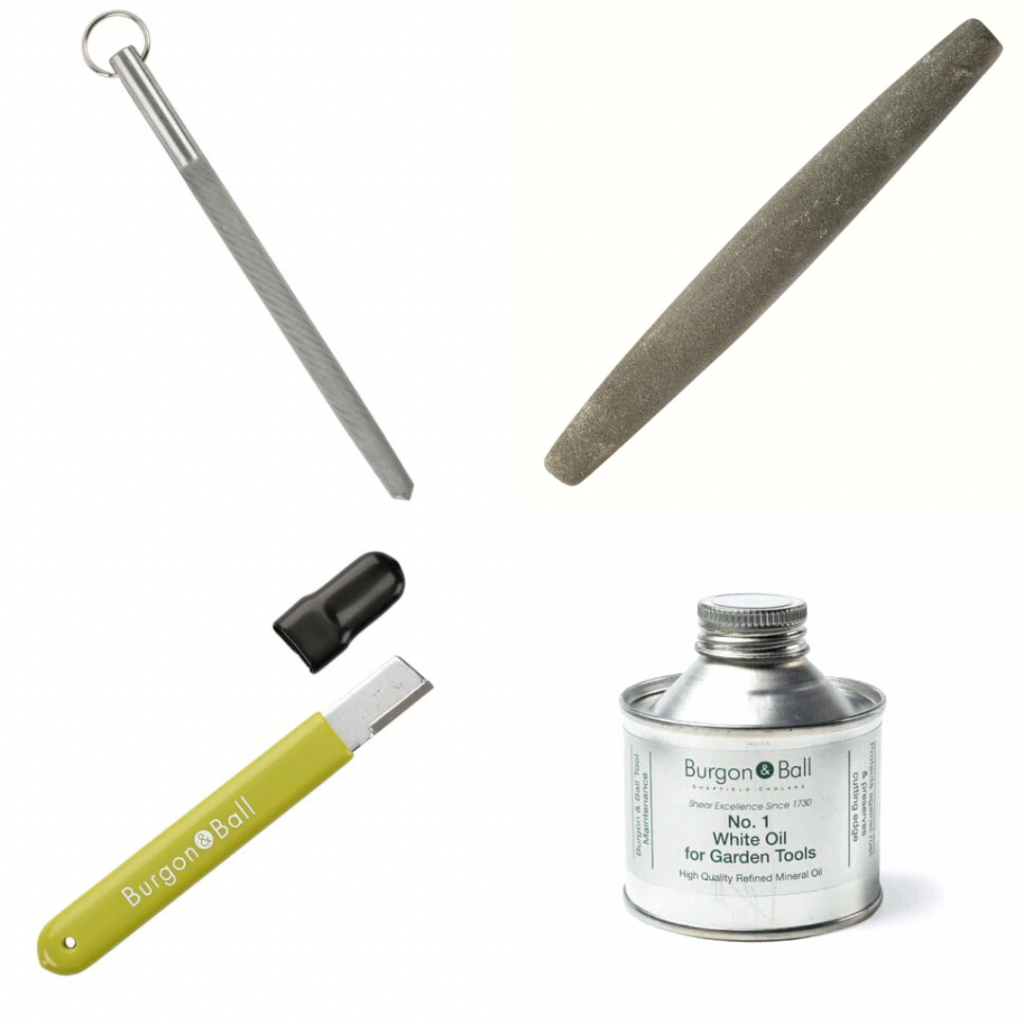
- Sharpening Stone (Whetstone) or Diamond File: These are the primary tools for sharpening. A whetstone is a traditional option, available in various grits (coarseness). A medium-grit stone is usually sufficient for garden tools. Diamond files are more aggressive and work faster, making them ideal for very dull or damaged blades.
- Safety Gloves: Heavy-duty gloves will protect your hands from accidental cuts.
- Eye Protection: Safety glasses are recommended to shield your eyes from any metal filings.
- Vice or Clamp: A vice provides a secure way to hold the tool, freeing both of your hands for sharpening. This is particularly useful for larger tools like shears.
- Cleaning Supplies: You will need a stiff brush, soapy water, and a cloth to clean the tools before sharpening. Methylated spirits can be used to sterilise the blades and remove stubborn sap.
- Lubricating Oil: A product like WD-40 or a general-purpose lubricating oil is essential for protecting the blades from rust after sharpening.
How to Sharpen Your Garden Tools: A Step-by-Step Guide
The following method can be applied to most single-bladed cutting tools, such as secateurs and loppers, as well as double-bladed shears.
1. Clean the Tool Thoroughly
Before you can sharpen a blade, it must be completely clean. Dirt, sap, and rust can clog your sharpening file and prevent you from achieving a clean edge.
- Disassemble the tool if possible. This makes it easier to access the blades. Use a spanner or screwdriver to undo the central nut.
- Use a stiff brush and warm, soapy water to scrub away any dirt and debris.
- For stubborn sap, soak a cloth in methylated spirits and rub it over the blades until the residue dissolves.
- Dry the tool completely with a clean cloth to prevent immediate rusting.
2. Secure the Blade
For safety and precision, it is important that the tool is held firmly in place.
- If you have a bench vice, secure the tool or the individual blade in the vice with the bevelled edge facing upwards.
- If you do not have a vice, you can hold smaller tools like secateurs firmly in your non-dominant hand, resting your arm on a stable surface. Always ensure the blade is pointing away from your body.
3. Sharpen the Bevelled Edge
Most garden tools, like bypass secateurs, have a single bevelled cutting edge. The other blade is flat and should not be sharpened.
- Identify the bevel, which is the angled surface of the cutting blade. This is the only part you need to sharpen.
- Hold your sharpening stone or file at the same angle as the existing bevel (usually between 10-20 degrees). Maintaining this angle is the most critical part of the process.
- Press the file firmly against the blade and push it in one direction, from the base of the blade to the tip. Follow the curve of the blade.
- Lift the file and return to the starting position. Do not saw back and forth, as this can damage the edge.
- Repeat this motion 10-20 times, applying consistent pressure. You should start to see a new, shiny edge forming.
- For shears with two bevelled blades, repeat this process on the second blade.
4. Remove the Burr
Sharpening creates a small ridge of metal on the flat side of the blade, known as a burr. This needs to be removed to create a truly sharp edge.
- Turn the blade over.
- Lay your sharpening stone flat against the back of the blade.
- Make one or two gentle passes to remove the burr. The back of the blade should be perfectly flat, so do not try to create a new angle.
5. Reassemble and Lubricate
Once you are satisfied with the sharpness, it is time to reassemble and protect the tool.
- Wipe the blades with a clean cloth to remove any metal filings.
- Apply a light coat of lubricating oil to all metal parts, including the blades, spring, and pivot joint. This will prevent rust and ensure a smooth cutting action.
- Reassemble the tool, ensuring the central nut is tight but still allows for free movement.
Maintaining Your Tools
Regular maintenance will keep your tools in good condition and reduce the frequency of major sharpening sessions.
- How Often to Sharpen: For avid gardeners, sharpening tools once or twice a season is a good rule of thumb. However, if you notice that your tools are crushing stems instead of cutting them cleanly, it is time to sharpen them, regardless of when they were last maintained.
- Cleaning After Each Use: A quick wipe-down after each use can make a significant difference. Use a cloth to remove any soil and moisture. For sap, use methylated spirits.
- Proper Storage: Store your tools in a dry place, such as a shed or garage, to protect them from moisture and prevent rust. Do not leave them outside.
Invest in Healthier Plants
Maintaining sharp garden tools is a simple but vital practice for any gardener. It ensures clean, healthy cuts that protect your plants from disease, reduces physical effort and prolongs the life of your equipment. By dedicating a small amount of time to cleaning and sharpening your secateurs and shears, you are making a valuable investment in the long-term health and beauty of your garden.
Further reading: Why Garden Hygiene Matters, Maintaining your Garden Tools, How to Choose Garden Tools
Follow Us on Instagram for Daily Gardening Inspiration
