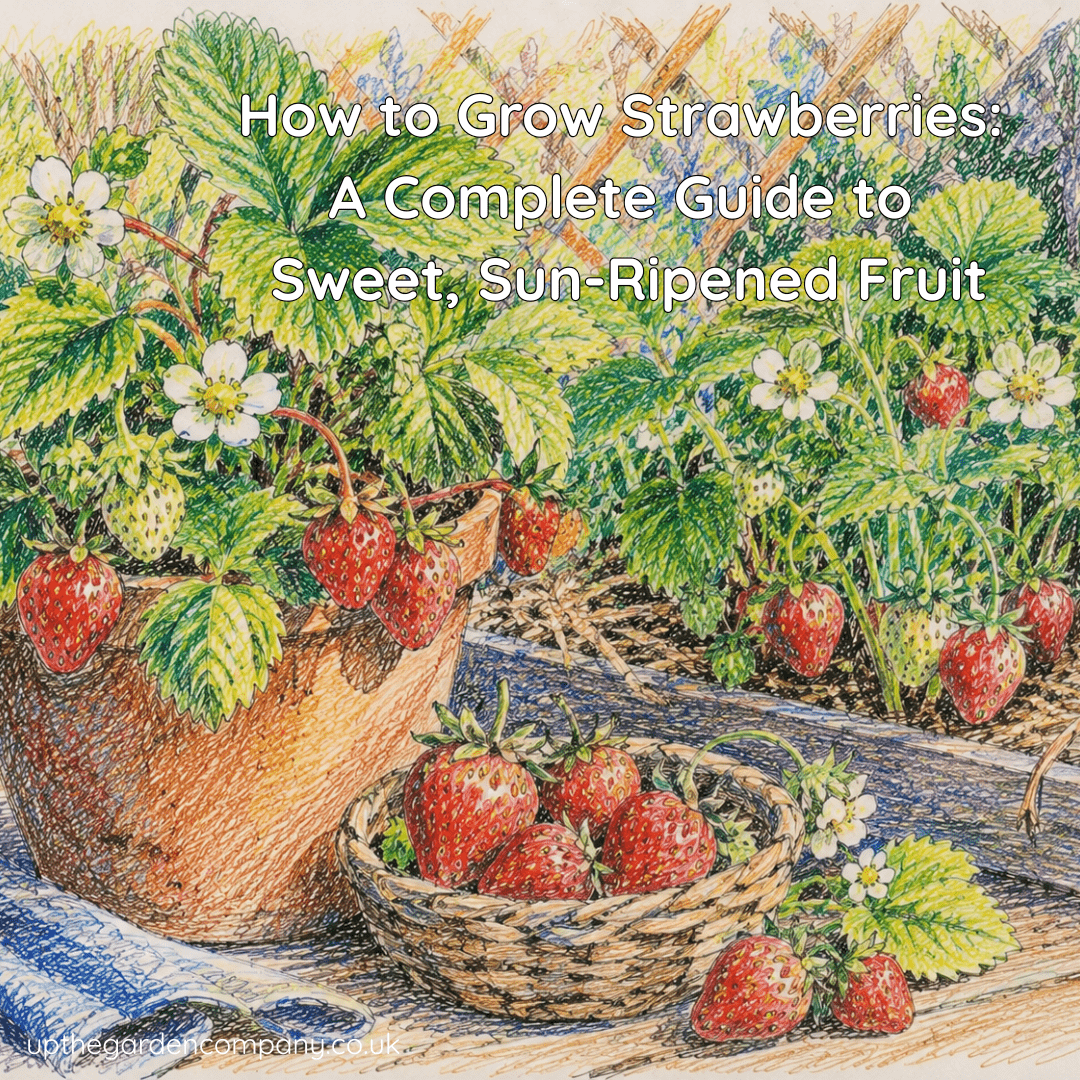
There are few gardening pleasures quite like picking a perfectly ripe strawberry on a warm summer morning.
Still warm from the sun, its fragrance fills the air long before the first bite. The flavour is rich, sweet and intensely aromatic – a world away from the uniform berries found on supermarket shelves. It is a taste that evokes childhood summers, kitchen gardens bursting with life and the simple joy of growing your own food.
For centuries, strawberries have been treasured by gardeners, cooks and herbalists alike. From the tiny wild strawberries that once carpeted woodland clearings to the plump garden varieties cultivated today, these remarkable plants have earned their place as one of Britain’s favourite fruits.
The good news is that strawberries are surprisingly easy to grow. Whether you have a traditional kitchen garden, an allotment, raised beds or simply a sunny balcony with a few containers, a handful of plants can reward you with months of delicious harvests.
In this guide, we’ll explore the fascinating history of the strawberry, discover how to choose the best varieties, learn how to grow healthy productive plants and uncover the folklore and traditions that have surrounded this much-loved fruit for generations.
The Story of the Strawberry
The garden strawberry we enjoy today is a relatively recent arrival in horticultural history.
Long before modern cultivation, wild strawberries (Fragaria vesca) grew throughout Europe, Asia and parts of North America. These tiny fruits were prized for their intense perfume and flavour. Medieval gardeners often cultivated them in monastery gardens, whilst woodland foragers gathered them from hedgerows and forest edges.
The strawberry we know today, Fragaria × ananassa, emerged during the eighteenth century through a fortunate accident of nature. French horticulturists discovered that two American species growing together — Fragaria virginiana from eastern North America and Fragaria chiloensis from Chile — cross-pollinated naturally.
The resulting hybrid produced larger, sweeter fruits than either parent and quickly transformed strawberry cultivation throughout Europe.
Few fruits owe their existence to such a happy coincidence.
The Botanical Beauty of Strawberries
Although commonly referred to as berries, strawberries are botanically unusual.
Those tiny “seeds” scattered across the surface are actually individual fruits known as achenes. The juicy red flesh we eat is not the fruit at all, but an enlarged flower receptacle that develops after pollination.
This makes strawberries one of the few fruits that wear their true fruits on the outside.
Strawberries belong to the Rosaceae family, placing them alongside roses, apples, pears, cherries and raspberries. Look closely at a strawberry flower and the family resemblance becomes clear. The delicate white petals and golden centre could easily be mistaken for a miniature wild rose.
Strawberries Through History and Folklore
Strawberries have long held symbolic and cultural significance.
The Ancient Romans believed strawberries could help relieve melancholy and were thought to possess medicinal qualities. Medieval herbalists prescribed them for a variety of ailments, whilst Renaissance artists often included strawberries in paintings to symbolise purity, virtue and abundance.
Church stone carvings throughout Britain frequently feature strawberry motifs. The fruit’s heart-shaped form and sweet flavour made it a symbol of righteousness and perfection.
One old country belief suggested that if newlyweds shared a double strawberry, they would enjoy a long and happy marriage.
Another tradition held that placing strawberry leaves beneath a pillow could encourage prophetic dreams.
Perhaps the most famous tribute comes from seventeenth-century writer Dr William Butler, who observed:
“Doubtless God could have made a better berry, but doubtless God never did.”
Many gardeners who have tasted a freshly picked strawberry would find it difficult to disagree.
Choosing the Best Strawberry Varieties
One of the secrets to enjoying strawberries over many months is selecting a mixture of varieties.
By combining early, mid-season and late-fruiting cultivars with perpetual varieties, you can harvest fruit from late May until the first autumn frosts.
Summer-Fruiting Strawberries
Summer-fruiting varieties produce one abundant crop over a few weeks, making them ideal for preserving, freezing and jam-making.
‘Cambridge Favourite’ remains a classic British variety, renowned for reliability, good disease resistance and excellent flavour.
‘Hapil’ produces glossy fruits with outstanding sweetness and remains a favourite among experienced growers.
‘Honeoye’ crops early and heavily, making it a good choice for gardeners eager for the first fruits of summer.
Perpetual Strawberries
Perpetual or everbearing varieties provide smaller harvests over a much longer season.
‘Mara des Bois’ is widely regarded as one of the finest tasting strawberries available, combining modern productivity with the intense aroma of wild strawberries.
‘Albion’ produces large fruits throughout summer and well into autumn.
Alpine Strawberries
For something a little different, alpine strawberries offer exquisite flavour in miniature form.
These compact plants produce small fruits continuously and are perfect for edging paths, filling containers or tucking into ornamental borders.
Where Strawberries Grow Best
Strawberries are surprisingly adaptable but perform best when given the conditions they enjoy most.
Choose a sunny position receiving at least six hours of direct sunlight each day. The more sunshine the plants receive, the sweeter the fruit is likely to be.
They prefer fertile, moisture-retentive soil that drains freely. Heavy clay can be improved with organic matter, whilst light sandy soils benefit from generous additions of garden compost.
Preparing the soil thoroughly before planting pays dividends for years to come.
Planting Strawberries for Success
Plant strawberries in spring or late summer, allowing plenty of space for air circulation between plants.
Position each plant carefully so that the crown sits exactly at soil level. Planting too deeply can encourage rot, whilst planting too high leaves roots vulnerable to drying out.
Water thoroughly after planting and apply a mulch to help retain moisture and suppress weeds.
For gardeners with limited space, strawberries thrive in containers, hanging baskets and vertical growing systems, making them one of the most versatile fruits for modern gardens.
Caring for Strawberry Plants
Healthy strawberry plants require surprisingly little attention once established.
Regular watering during flowering and fruit development is essential. Consistent moisture helps prevent misshapen fruit and improves flavour.
A fortnightly feed with a high-potassium fertiliser during the fruiting season supports strong yields and encourages sweeter berries.
Traditional straw mulch remains one of the simplest and most effective methods of protecting fruit. It keeps berries clean, reduces rot and helps deter slugs.
The practice became so widespread that many believe it inspired the fruit’s common name.
Common Problems and How to Avoid Them
Even the best-maintained strawberry patch occasionally encounters challenges.
Slugs remain the most persistent pest, particularly during wet summers. Encouraging frogs, hedgehogs and ground beetles helps maintain natural balance.
Grey mould (Botrytis) can affect ripening fruit in damp conditions. Good air circulation and prompt removal of damaged fruit significantly reduce problems.
Powdery mildew may appear during periods of drought stress, whilst viruses can gradually reduce vigour and productivity.
Replacing plants every three to four years and rotating planting areas helps maintain healthy, productive crops.
The Rewards of Growing Your Own
Growing strawberries is about far more than producing fruit.
It is the anticipation of the first flowers, the excitement of spotting swelling berries and the simple pleasure of harvesting food moments before it reaches the table.
A handful of plants can provide months of enjoyment, support pollinating insects and connect us with centuries of gardening tradition.
Most importantly, they remind us that some of life’s greatest pleasures are often the simplest.
A sun-ripened strawberry, picked fresh from the garden and eaten at its peak, remains one of them.
Further Reading: How and When to Thin your Fruit Trees, How to Grow your Own Fruit, Guide to Store your Fruit Harvest,
Inspiration: Follow Us on Instagram, Threads, BlueSky, Twitter, TikTok and Pinterest.