A Guide to Brighter Spring Gardens
Few shrubs signal the arrival of spring quite like forsythia. Just as winter loosens its grip, these cheerful plants burst into life, their arching branches studded with bright yellow flowers that seem to glow in the soft spring sunshine. In gardens large and small, forsythia brings a welcome splash of colour at a time when the landscape is still waking from winter.
Yet while the display may look effortless, a thriving forsythia benefits from a little thoughtful care. With the right pruning at the right time, this generous shrub will reward you year after year with clouds of golden blossom. Whether you have recently planted one or are tending a long-established specimen, knowing when and how to cut back a forsythia will help keep it healthy, balanced and full of life.
About the Forsythia Shrub
Forsythia (botanical name Forsythia × intermedia and related species) is a deciduous flowering shrub belonging to the olive family. It takes its name from the Scottish botanist William Forsyth, after whom the plant was named in the eighteenth century. Most forsythias grown in British gardens originate from species native to China, Korea and Japan, where they have been cultivated for centuries for their early blossoms.
The shrub is best known for its brilliant golden-yellow flowers, which appear along the bare stems in late winter to early spring, often from February through to April depending on the weather. These star-shaped blooms arrive before the leaves emerge, creating the striking effect of glowing branches covered entirely in colour.
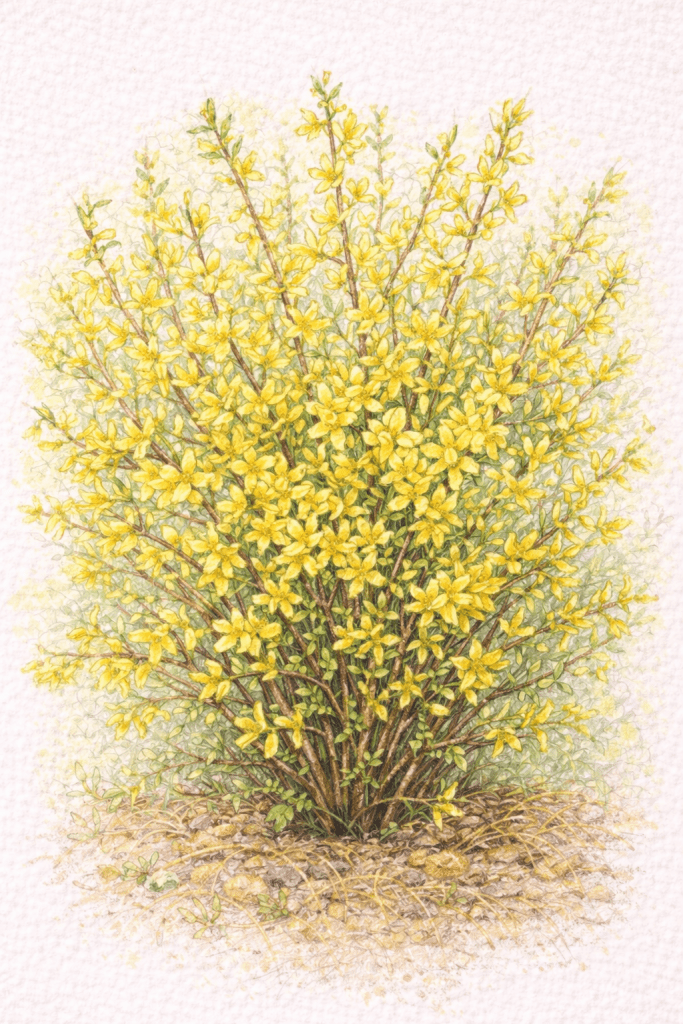
Once the flowering display fades, fresh green leaves unfold to form a dense, leafy shrub for the rest of the growing season. During summer it provides a soft green backdrop in borders or hedges, before the foliage gradually drops in autumn, leaving behind its elegant branching structure through winter.
Forsythia grows quickly and naturally forms a graceful, arching shape. Most garden varieties reach around 2–3 metres in height and spread, though smaller cultivars are available for more compact spaces. It can be grown as a standalone feature, trained along a wall, or planted as part of an informal hedge where its spring flowers create a striking seasonal display.
When Should You Cut Back a Forsythia?
The best time to prune forsythia is just after it has finished flowering, usually in late spring. At this stage the shrub has completed its display but has not yet started forming the buds that will produce next year’s flowers.
Forsythia blooms on wood produced during the previous year, so if pruning is delayed until late summer or autumn, many of those developing flower buds will be removed. By pruning soon after flowering, you allow the plant the entire growing season to produce fresh shoots that will carry the next spring’s blossoms.
As a simple guide, aim to prune within four to six weeks after the flowers fade.
Reviving an Overgrown Forsythia
Left to grow unchecked, forsythia can become rather sprawling and congested. Older shrubs may develop woody stems with fewer flowers in the centre.
Thankfully, this is a resilient plant that responds well to pruning. Even an overgrown shrub can usually be restored with careful thinning, while older plants can be rejuvenated every few years with a more substantial cut back.
The key is always timing: carry out heavier pruning soon after flowering, giving the plant the full season to recover and produce new growth.
How to Cut Back a Forsythia
Pruning a forsythia is refreshingly simple and surprisingly satisfying. With a pair of sharp secateurs and a little patience, you can keep your shrub looking healthy and natural year after year.
1. Remove Dead or Damaged Wood
Begin by identifying any branches that are dead, damaged, or crossing over one another. Cut these stems back to their base. This improves air circulation and encourages stronger new growth.
2. Thin Out Older Stems
Forsythia flowers best on younger wood. Each year, remove around a quarter to a third of the oldest stems, cutting them right down to ground level.
This keeps the shrub open and stimulates vigorous new shoots.
3. Maintain the Natural Shape
Forsythia is most attractive when allowed to keep its natural, arching form. Rather than clipping it tightly, shorten any excessively long or untidy stems while maintaining the overall shape.
Stepping back occasionally while pruning will help you keep the plant balanced.
4. Lightly Tidy Hedges
If your forsythia forms part of a hedge, you can give the outer growth a light trim once the main pruning is complete. Avoid heavy clipping, which may reduce flowering.
Tools You’ll Need
Pruning is easier with the right equipment. A few simple tools will do the job well:
- Sharp secateurs for smaller stems
- Loppers for thicker branches
- Gardening gloves to protect your hands
- A garden trug or bag for collecting cuttings
Keeping tools clean and sharp ensures neat cuts and helps prevent damage to the plant.
Caring for Forsythia Through the Year
While pruning is the main task, a little additional care will help your shrub thrive.
Feed After Pruning
After pruning, apply a layer of compost or a balanced fertiliser around the base of the plant. This encourages strong new growth.
Mulch the Soil
Adding mulch helps retain moisture, improve soil structure and suppress weeds. Spread it around the base but keep it slightly away from the stems.
Water During Dry Periods
Established forsythia plants cope well with ordinary garden conditions, but watering during prolonged dry spells will support healthy growth.
Watch for Pests
Forsythia is generally trouble-free, though the occasional aphid may appear on young shoots. These are rarely serious and can usually be managed naturally.
Rejuvenating an Older Shrub
If a forsythia has become very large or neglected, it can be cut back hard to encourage fresh growth.
Shortly after flowering, reduce the entire shrub to around 10–15cm above the ground. This will remove the following year’s flowers, but the plant will respond with strong new shoots and renewed vigour.
Within a couple of seasons, it should regain its shape and bloom beautifully once again.
A Bright Welcome to Spring
There is something undeniably uplifting about the first sight of forsythia in bloom. Its golden flowers appear almost overnight, brightening borders, hedgerows and garden corners just as the days begin to lengthen.
With a little thoughtful pruning and modest care, this generous shrub will continue to greet each new spring with the same cheerful display — a reliable sign that warmer days are on the way.
Further Reading: RHS – Royal Horticultural Society,
Take a look at our other Blogs: Unveiling the Beauty of Lily of the Valley, Celebrating the Primrose, The Enigmatic Beauty of the Hellebores
Inspiration: Follow Us on Instagram, Threads, BlueSky, Twitter, TikTok and Pinterest.