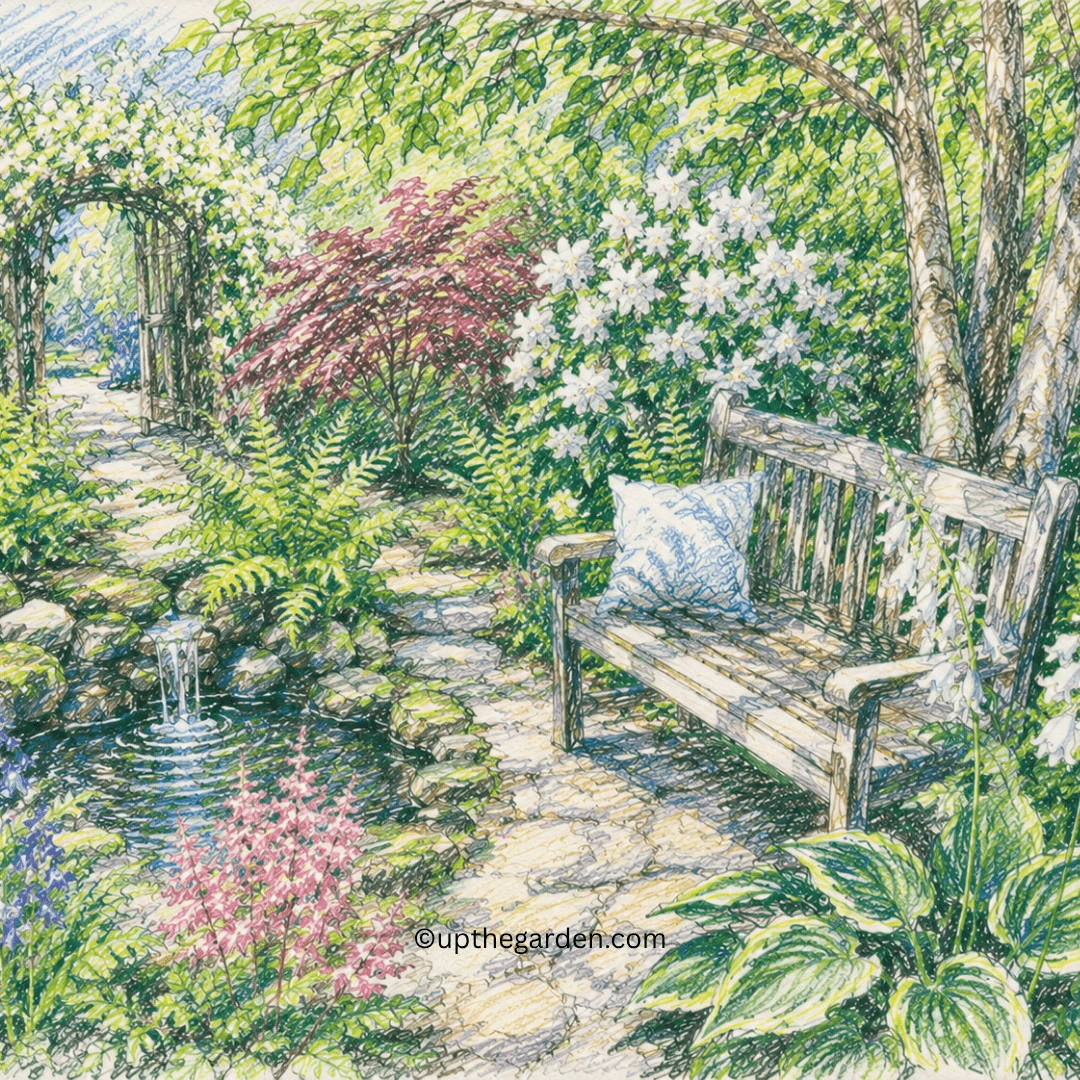
When the temperature rises and the garden seems to shimmer in the heat, there’s something deeply comforting about finding a cool, shaded corner. Beneath the canopy of a tree, beside a gently rippling pond, or along a winding path edged with ferns, the air feels fresher and the pace of the day slows.
A cool garden offers more than relief from the sun. It creates a space for rest and reflection, a haven for wildlife, and a garden that remains inviting even during the warmest days of summer. Rich in texture, layered with foliage and shaped by shade, these gardens reveal a quieter kind of beauty.
As our summers become warmer and periods of dry weather more common, creating cooler outdoor spaces is becoming increasingly important. Fortunately, many of the principles behind a cool garden have long been part of Britain’s gardening tradition. Woodland walks, shaded glades and moisture-loving plantings have been cherished for generations, valued as much for their atmosphere as their appearance.
Whether you have a compact courtyard or a large country garden, it’s possible to create spaces that feel calm, sheltered and refreshingly cool.
What is a Cool Garden?
A cool garden is designed to make the most of shade, moisture and planting that thrives away from full sun. Rather than relying on bright, sun-loving flowers, it celebrates foliage, texture and subtle seasonal change.
Dappled light filtering through leaves, layers of greenery in every shade imaginable, and the soothing sound of water are often at the heart of these gardens. Mature trees create shelter overhead, shrubs and perennials fill the middle layers, and ground-cover plants soften the spaces beneath.
The result is a garden that feels noticeably different from its surroundings. Even on the hottest day, a well-designed cool garden can offer welcome relief, creating a microclimate that supports both people and wildlife.
Cool gardens come in many forms. Some take inspiration from natural woodland, with winding paths and drifts of ferns. Others are more formal, using pleached trees, courtyards and reflective pools to create shade and tranquillity. What unites them is a sense of calm and a connection to nature.
Why Create a Cool Garden?
One of the greatest pleasures of a cool garden is the atmosphere it creates. These are spaces that encourage you to slow down, sit for a while and enjoy the simple sounds of rustling leaves, birdsong and moving water.
They also allow gardeners to grow a remarkable range of plants that might struggle in brighter, drier conditions. Ferns, hostas, hellebores and woodland flowers all flourish in sheltered settings, bringing colour and texture to places where many plants would fail.
Cool gardens can also play an important role in supporting wildlife. Damp soil, dense planting and shaded areas provide shelter for frogs, toads, insects and birds. Fallen leaves and decaying wood create valuable habitat, whilst ponds offer water for countless species.
Trees and extensive planting help cool the surrounding environment too. Their leaves provide shade, reduce moisture loss from the soil and create a more comfortable space during periods of hot weather.
Perhaps most importantly, cool gardens offer a sense of escape. Their quieter character encourages a closer appreciation of nature, from the unfurling fronds of a fern to the delicate markings on a woodland flower.
Things to Consider
Whilst cool gardens bring many rewards, they require a different approach to planting and design.
Shade naturally limits the range of plants that will thrive, and gardens designed around cooler conditions often rely more heavily on foliage than floral displays. For some gardeners, this subtle beauty is part of the appeal. Others may wish to balance shaded areas with a few sunnier spots for flowering plants.
Moist conditions can also encourage slugs, snails and certain fungal diseases. Good air circulation and thoughtful spacing between plants help prevent problems, whilst regular observation allows issues to be addressed early.
Patience is often required. Trees take time to mature and develop the canopy needed to create lasting shade. The most successful cool gardens are rarely created overnight; they evolve gradually, becoming richer and more established with each passing year.
It’s also important to avoid making a garden feel dark or enclosed. Careful use of lighter foliage, white flowers and reflective surfaces helps maintain a sense of openness and light.
Designing a Cool Garden
The most successful cool gardens work with the natural conditions of a site rather than against them. Begin by observing where shade already falls throughout the day. North-facing boundaries, mature trees and the shadow of buildings often provide the perfect starting point.
Layered planting is key. Trees form the upper canopy, shrubs create structure beneath, and perennials weave through the lower layers. This approach mirrors natural woodland and helps create the sheltered conditions that define a cool garden.
Trees with light, airy canopies are particularly effective. Silver birch and amelanchier provide shade without blocking all sunlight, allowing a soft, dappled effect that supports a wide range of underplanting.
Water can transform the atmosphere of a cool garden. A pond, rill or simple fountain introduces movement and sound whilst helping to create a sense of freshness. Even a small water feature can become a focal point and attract wildlife.
Materials also influence how a space feels. Pale stone, gravel and permeable surfaces tend to remain cooler than darker materials, whilst allowing rainwater to soak naturally into the ground.
Above all, create places to pause. A bench beneath a tree, a hidden seat surrounded by foliage or a shaded terrace can turn a garden into a true retreat.
Plants for a Cool Garden
A cool garden offers the opportunity to grow some of the most elegant and characterful plants in the garden.
Trees
Silver birch brings light shade and beautiful bark throughout the year. Amelanchier offers spring blossom, summer greenery and brilliant autumn colour. Japanese maples provide delicate foliage and are well suited to smaller gardens, whilst beech and oak create magnificent canopies in larger spaces.
Shrubs
Hydrangeas thrive in partial shade, producing generous flowers from summer into autumn. Sarcococca adds winter fragrance, whilst fatsia brings bold evergreen structure. Camellias reward sheltered gardens with elegant spring blooms.
Perennials
Hostas remain among the most versatile shade-loving plants, prized for their sculptural leaves. Ferns add texture and movement, whilst astilbes bring soft plumes of colour. Hellebores flower during the colder months, and pulmonarias provide early nectar for pollinators.
Rodgersias, epimediums and brunneras all contribute distinctive foliage and seasonal interest, helping to build the rich tapestry that characterises cool planting schemes.
Ground Cover and Bulbs
Hardy geraniums, ajuga and lamium spread gently through borders, knitting planting together and helping to suppress weeds. In spring, snowdrops, bluebells, cyclamen and erythroniums bring colour before the canopy fully develops.
Gardens to Inspire You
Across the UK, some remarkable gardens demonstrate the beauty of cool, shaded planting.
Woodland walks at Bodnant Garden in North Wales showcase drifts of spring flowers beneath mature trees, whilst the sheltered valleys create an atmosphere of cool tranquillity.
The Savill Garden in Windsor Great Park makes imaginative use of woodland planting and moisture-loving species, showing how shade can be used to dramatic effect.
In Scotland, Inverewe Garden demonstrates the lush possibilities of a cool, damp climate, with exotic foliage and woodland plantings thriving in the sheltered landscape.
Many historic gardens also contain hidden corners where shade and water combine to create peaceful retreats. These quieter spaces often leave the strongest impression, inviting visitors to slow down and experience the garden in a different way.
Creating Your Own Summer Sanctuary
Cool gardens offer a welcome contrast to the brightness and intensity of midsummer. They celebrate shade rather than sunshine, texture rather than spectacle, and atmosphere rather than abundance.
Creating one doesn’t require a complete redesign. A single tree, a carefully placed bench or a border filled with shade-loving plants can begin to transform how a garden feels.
Over time, as trees mature and planting settles, these spaces develop their own character. They become places to escape the heat, watch wildlife and enjoy the quieter side of gardening.
In a world that often feels busy and fast-moving, a cool garden offers something increasingly precious: a place to pause.
Further Reading: Mast Years: Why They Happen and Their Impact
Inspiration: Follow Us on Instagram, Threads, BlueSky, Twitter, TikTok and Pinterest.