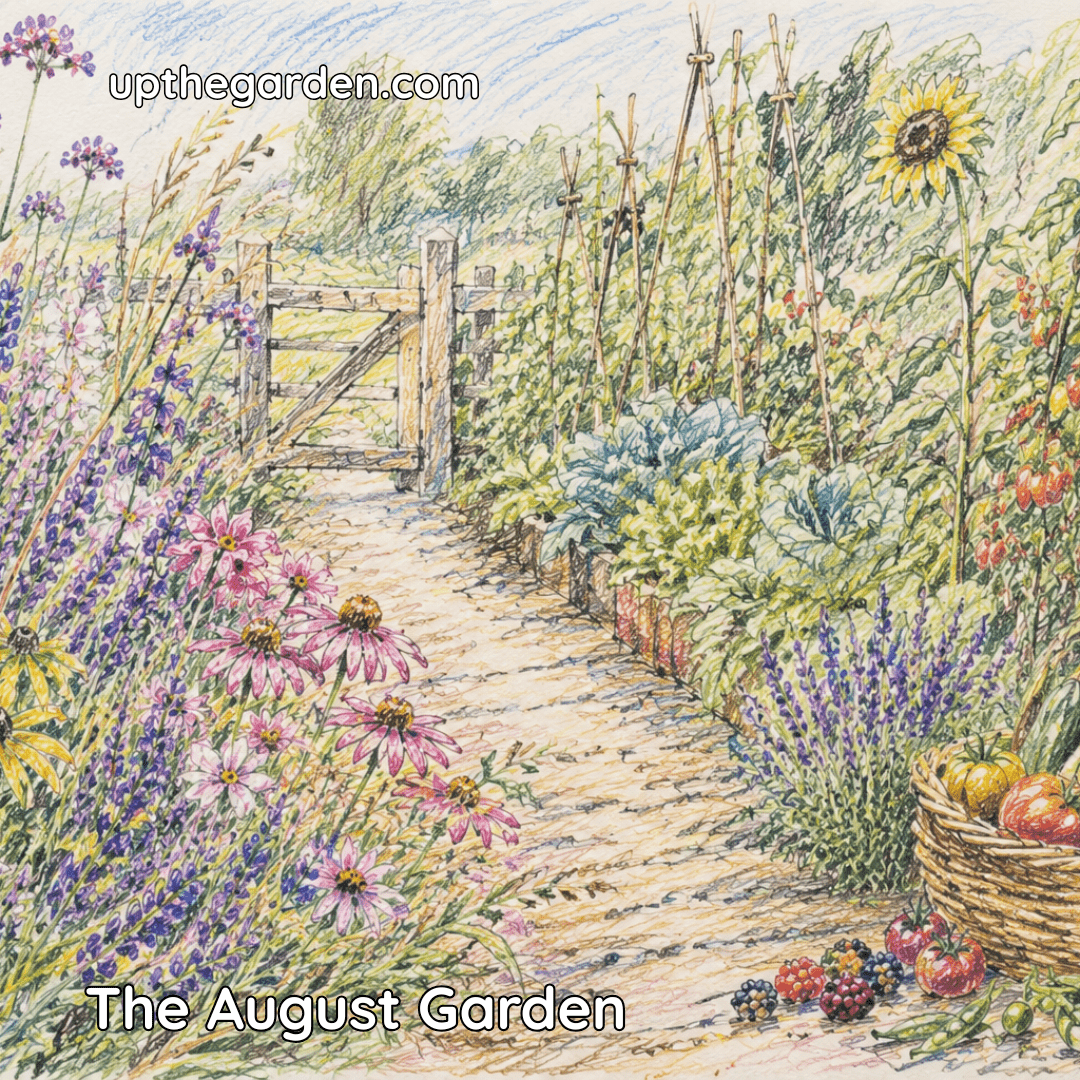
There is a quiet confidence about an August garden.
The urgency of spring has passed. The excitement of new growth has softened into something richer and more contemplative. This is the season when the garden asks us not to rush from one task to the next, but to pause, to observe, and to appreciate everything that months of care have quietly created.
This year, however, many gardens across the UK are telling a different story. Prolonged dry weather has tested even the most established planting. Lawns have faded from emerald to straw, borders have needed careful attention, and watering has become less about encouraging growth and more about helping cherished plants endure. Yet, despite the challenges, August continues to reveal the remarkable resilience of our gardens.
Some plants seem almost to revel in the heat. Lavender hums with bees from dawn until dusk, releasing its unmistakable fragrance with every passing breeze. Nepeta spills over pathways in clouds of violet-blue, while Russian sage, gaura and verbena bonariensis dance effortlessly in the warm air. Sedums begin to gather strength for their autumn display, and ornamental grasses catch the light, their feathery plumes moving gently against clear blue skies.
The stars of the late-summer border are impossible to ignore. Dahlias take centre stage with blooms ranging from soft blush pinks and creamy whites to fiery oranges, deep burgundies and rich crimson. Coneflowers stand proudly alongside rudbeckias, their golden petals glowing in the afternoon sunshine, while heleniums bring warm copper and amber tones that seem to mirror the landscape itself. Japanese anemones begin to unfurl elegant flowers, hinting that autumn is quietly waiting in the wings.
The scents of August are altogether different from those of early summer. Sweet peas may be producing their final stems, but they continue to perfume the evening air. Rosemary, thyme and oregano release their aromatic oils as the sun warms their leaves, while lavender remains one of the defining fragrances of the season. Stand beside a border planted with herbs on a warm afternoon, and the air itself seems infused with the essence of summer.
It is not only the flowers that reach their peak. The kitchen garden offers its own kind of abundance. Tomatoes ripen on the vine, their flavour deepened by long hours of sunshine. Courgettes appear almost overnight, runner beans hang in generous clusters, and French beans continue to crop if picked regularly. Beetroot, carrots and early potatoes are lifted from warm soil, while cucumbers, chillies and peppers reward those growing under glass.
Beyond the vegetable patch, orchards and fruit gardens begin to offer their treasures. Early apples swell on the branch, pears start to soften, and plum trees bow gently beneath the weight of their fruit. Blackberries tumble through hedgerows, raspberries continue to provide handfuls for breakfast tables, and blueberries offer their final harvest before autumn begins to take hold.
August is perhaps the richest month for wildlife. Bees remain the garden’s busiest visitors, collecting nectar from salvias, echinacea and asters with tireless determination. Red admirals, peacocks and painted ladies drift between flowering borders, while hoverflies, lacewings and dragonflies make the most of the warmth. As evening falls, moths emerge to visit pale blooms, and bats silently patrol overhead, feeding on insects invisible in the fading light.
There is an intricate balance at work in every thriving garden. Seedheads provide food for goldfinches in the months ahead, flowering herbs support countless pollinators, and ponds become havens for frogs, newts and damselflies seeking refuge from the heat. Even the driest corners can become valuable habitats when thoughtfully planted with drought-tolerant species that continue to nourish wildlife through the height of summer.
Although August feels wonderfully abundant, it is also a month of gentle stewardship. Deadheading roses, cosmos and dahlias encourages weeks of further flowering. Watering deeply but less frequently helps roots search further into the soil. Mulching around shrubs and perennials helps conserve precious moisture, while collecting seed from favourite flowers offers the promise of next year’s displays. Every small task feels like an investment in the future rather than simply another item on the gardening list.
Perhaps this is why August holds such a special place in the gardening calendar. It teaches patience, resilience and appreciation in equal measure. It reminds us that gardens are living landscapes, shaped as much by the weather as by the gardener’s hand. Some years they overflow effortlessly; others demand ingenuity and care. Yet they continue to surprise us with moments of extraordinary beauty.
As the light slowly begins to soften and evenings draw in almost imperceptibly, there is every reason to linger outdoors a little longer. Sit beneath the shade of an old tree with a cup of tea. Wander slowly through the borders as bees move from flower to flower. Breathe in the calming scent of lavender, watch butterflies settle on sun-warmed blooms, and savour the satisfaction of gathering vegetables and fruit grown with your own hands.
The August garden is not simply a celebration of summer’s height. It is a reminder that even in challenging seasons, nature has an extraordinary capacity for resilience. Beauty is still there to be found—in every dahlia bloom, every buzzing bee, every handful of freshly picked tomatoes and every quiet evening spent surrounded by a garden that continues, against the odds, to flourish.
A healthy garden isn’t simply a collection of plants. It’s a living landscape, made up of layers that work together to support life in every season.
Take a walk through a woodland and you’ll notice how naturally these layers appear. Rich soil lies beneath your feet, carpets of mosses and fallen leaves cover the ground, wildflowers bloom amongst grasses, shrubs form sheltered thickets and trees stretch high above, creating a leafy canopy. Every level has its own purpose, and every one is home to wildlife.
Our gardens can reflect this same pattern.
When a garden is made up of little more than neatly mown grass and open beds, there is less space for nature to settle. Wildlife has fewer places to hide, feed and raise its young, and the landscape offers little protection from changing weather or predators.
By creating layers instead, we begin to mimic the habitats that wildlife has relied upon for thousands of years. Each layer brings something different, and together they create a garden that is richer, more resilient and full of life.
Healthy soil – where every garden begins
The most important part of any garden is often the one we never see.
Beneath the surface lies an extraordinary world, alive with earthworms, fungi, beetles, bacteria and countless other tiny organisms. Together they break down fallen leaves and organic matter, returning valuable nutrients to the soil and creating the conditions that plants need to thrive.
Healthy soil is the foundation for everything that follows. It stores water during dry spells, improves drainage after heavy rain and supports strong, healthy roots.
When we allow nature to do much of this work for us—leaving organic matter to decompose and disturbing the soil as little as possible—we nurture a living ecosystem beneath our feet.
It is here that the story of every thriving garden begins.
Groundcover – a gentle layer of protection
Just above the soil sits a layer that is often overlooked, yet plays an important role throughout the year.
Low-growing plants, fallen leaves and natural leaf litter act as a protective blanket, helping the soil retain moisture, regulating temperature and reducing erosion.
For wildlife, this layer offers safety as well as shelter.
Beetles and woodlice quietly recycle decaying plant material. Frogs and toads rest in the cool shade beneath leaves, while hedgehogs forage amongst the leaf litter in search of insects and worms. Many butterflies, moths and other insects spend part of their lives hidden amongst this protective cover before emerging with the changing seasons.
Allowing leaves to gather beneath shrubs or in quieter corners of the garden may seem like a small gesture, but it creates valuable habitat where nature can flourish undisturbed.
Flowers and grasses – bringing the garden to life
As the garden begins to grow upwards, flowers and ornamental grasses add movement, colour and a rich source of food for wildlife.
From the earliest spring flowers to late autumn blooms, nectar and pollen sustain bees, butterflies, hoverflies and countless other pollinating insects. Native grasses provide seeds for birds, shelter for insects and places where many species complete their life cycles.
A garden that offers flowers across the seasons becomes a dependable source of food when little else may be available.
The gentle hum of bees drifting between blossoms or butterflies dancing above the borders reminds us that these planting schemes are about far more than appearance. They keep the garden alive with movement and help pollinate fruit, vegetables and flowering plants throughout the landscape.
Shrubs and hedges – nature’s shelterbelt
As the layers deepen, shrubs and hedges create structure and refuge.
Their dense branches offer protection from wind and rain while providing safe nesting places for birds and quiet cover for small mammals. Within tangled stems, insects find places to spend the winter, emerging again as temperatures begin to rise.
Through the seasons, shrubs offer an ever-changing supply of food. Blossom appears in spring, attracting hungry pollinators, while berries and hips ripen later in the year, sustaining birds as autumn gives way to winter.
A mixed hedge is especially valuable, with different species flowering and fruiting at different times. It creates not simply a boundary, but a living corridor that allows wildlife to move safely through the garden.
Trees and climbers – reaching for the sky
The final layer lifts the garden into the canopy.
Trees bring height, shade and permanence, creating places where birds can nest and squirrels can forage, while their branches provide shelter from summer sun and winter weather alike. Their bark supports mosses, lichens and insects, adding yet another habitat to the garden.
Climbing plants make use of every available surface, clothing walls, fences and tree trunks with flowers, foliage and berries. Ivy is one of the most valuable of all, flowering in autumn when nectar is scarce and producing berries that become an important source of food during the colder months.
As leaves fall each year, they return to the ground below, feeding the soil and completing a cycle that connects the tallest tree with the smallest soil organism.
Every layer tells a story
Nature rarely works in isolation.
The soil feeds the plants. Groundcover protects the soil. Flowers nourish pollinators. Shrubs provide shelter. Trees create the canopy. Together they form a connected web of life, with each layer supporting the next.
The beauty of this approach is that every garden, no matter its size, has room for another layer. A handful of spring flowers beneath a hedge, a patch of leaf litter left undisturbed, a native shrub, a climbing rose or a small tree can all help weave wildlife back into the landscape.
By looking beyond individual plants and thinking instead about the layers they create, we begin to garden as nature does. The reward is more than a beautiful space. It is a garden alive with birdsong, buzzing insects, changing seasons and the quiet rhythms of the natural world.
Further reading: The Garden and the Soul: How Nature Changes Us, The Power of Native Plants: Creating Beautiful, Resilient Gardens, A Garden for Every Season: A Garden to Love All Year, How to Plant a Hedge
Inspiration: Follow Us on Instagram, Threads, BlueSky, Twitter, TikTok and Pinterest.