Creating Colour When Summer Begins to Fade

There comes a moment in every garden when the exuberance of midsummer begins to soften. The roses are no longer at their peak, many early perennials have finished flowering, and the long evenings carry the first hint that autumn is quietly waiting in the wings.

Yet this is far from the end of the gardening year.

Late summer has a beauty all of its own. The light becomes richer, seed heads catch the morning dew, ornamental grasses begin to sway with elegance, and a carefully chosen palette of flowers continues to provide colour well into September and beyond. Rather than mourning the passing of summer, this is the perfect time to celebrate a garden entering its second season.

Seeing the Garden Differently

Creating colour as summer begins to fade is not simply about filling gaps with more flowers. It is about understanding how the character of the garden changes.

The sunlight sits lower in the sky, casting longer shadows and bathing borders in warm, golden light. Colours that may have seemed ordinary in July suddenly glow with remarkable intensity. Deep purples become richer, soft pinks appear more luminous, and fiery oranges and reds seem almost to catch the evening sun.

A successful late summer garden embraces these subtle changes instead of trying to recreate the height of June.

The Plants That Carry the Garden Forward

Many of the finest garden plants save their best performance for late summer.

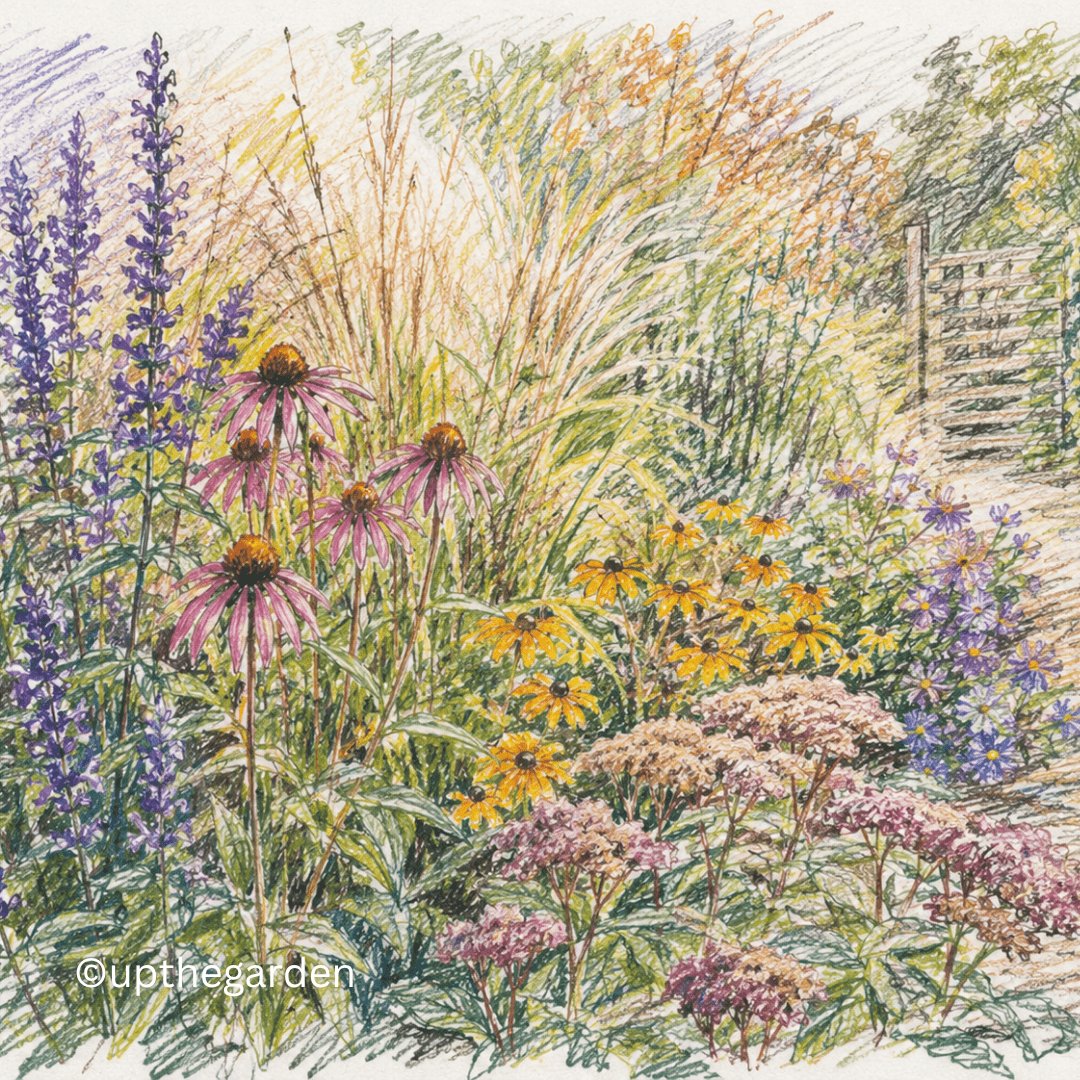
Japanese anemones begin their graceful display just as many early perennials are fading, their delicate flowers dancing above neat clumps of foliage.

Salvias continue flowering tirelessly, attracting bees well into autumn with their vibrant spires of purple, blue, crimson and pink.

Rudbeckias bring warmth with cheerful golden blooms that brighten borders even on overcast days, while heleniums provide rich shades of amber, copper and burnt orange that seem made for late summer sunshine.

Sedums, now more commonly known as Hylotelephium, slowly deepen from soft green buds into dusky pink flower heads that become magnets for butterflies and bees.

At the back of the border, tall grasses begin to take centre stage. Their flower plumes shimmer in even the gentlest breeze, adding movement and texture that remains long after flowering plants have finished.

Thinking Beyond Flowers

One of the greatest pleasures of late summer gardening is learning to appreciate more than blooms alone.

Foliage becomes increasingly important. Silvery leaves reflect the evening light, while burgundy and bronze foliage provides welcome depth among softer greens.

Textures begin to matter just as much as colour. Ferns, ornamental grasses, clipped evergreens and broad-leaved perennials all combine to create interest that lasts for months.

Seed heads also deserve their moment.

Rather than rushing to tidy borders, allow the sculptural forms of plants such as echinacea, teasels and alliums to remain. They catch frost beautifully later in the year, provide food for birds and give structure to the winter garden.

Sometimes restraint creates far greater beauty than constant tidying.

Colour Through Contrast

Late summer planting works best when colours complement one another rather than compete.

Warm yellows alongside deep purples create striking contrast.

Soft whites bring freshness to borders that might otherwise appear heavy.

Cool blues help balance fiery oranges and reds, creating a sense of calm amongst the abundance.

Repeating these combinations throughout the garden helps draw the eye naturally from one border to another, creating harmony without becoming predictable.

Containers That Keep Performing

Containers often begin to tire by August, but they can be refreshed surprisingly easily.

Replacing fading annuals with late-flowering salvias, asters, chrysanthemums, ornamental grasses and ivy creates displays that continue until the first frosts.

Trailing herbs such as thyme and oregano soften the edges of pots, while silvery foliage plants provide a wonderful backdrop for brighter flowers.

Grouping containers together also creates pockets of colour exactly where they’re needed, whether beside a doorway, along a path or around a seating area.

Feeding the Garden’s Wildlife

Late summer is one of the busiest seasons for pollinators.

Bees continue gathering nectar, butterflies search for late flowers and birds begin preparing for the months ahead.

Choosing nectar-rich plants extends far beyond improving the appearance of your borders. It provides valuable food when many earlier flowers have disappeared.

Leaving some seed heads standing also supports finches and other garden birds well into autumn, while avoiding unnecessary deadheading allows wildlife to benefit from nature’s abundance.

A colourful garden is often one that’s alive with movement and birdsong.

Planning for Next Year

One of the hidden joys of late summer lies in looking ahead.

Walking through the garden now reveals where colour fades too quickly, where gaps appear and where structure is lacking.

Taking photographs, making simple notes and observing which combinations work particularly well makes planning far easier during the quieter winter months.

It’s also an ideal time to begin planting autumn-flowering perennials, dividing overcrowded clumps and choosing spring bulbs that will carry the garden beautifully into another year.

Every season quietly prepares the next.

Finding Beauty in the Changing Seasons

Perhaps the greatest lesson a garden teaches us is that beauty is never fixed.

It changes with the light.

It shifts with the weather.

It evolves from flowers to foliage, from blossoms to berries, from vivid borders to graceful silhouettes.

When summer begins to fade, the garden isn’t reaching an ending. It is simply revealing a different chapter—one filled with softer light, richer colours, drifting grasses and the quiet confidence that comes from nature following its own rhythm.

If we slow down and look carefully, we discover that late summer may be one of the most rewarding seasons of all.


Top Tips for Keeping Your Garden Colourful into Autumn

  • Plant late-flowering perennials alongside summer favourites.
  • Include ornamental grasses for movement and texture.
  • Mix flowering plants with attractive foliage.
  • Leave decorative seed heads standing for wildlife and winter interest.
  • Refresh tired containers with autumn performers.
  • Water deeply during dry spells to prolong flowering.
  • Feed flowering plants with a high-potash fertiliser where appropriate.
  • Make notes now to improve next year’s planting scheme.

A garden that celebrates late summer is one that continues to surprise, delight and welcome both people and wildlife long after the height of the season has passed.

Further reading: The Garden and the Soul: How Nature Changes UsThe Power of Native Plants: Creating Beautiful, Resilient GardensA Garden for Every Season: A Garden to Love All YearHow to Plant a Hedge, The August Garden: Finding Beauty in High Summer

Inspiration: Follow Us on InstagramThreads, BlueSkyTwitterTikTok and Pinterest.

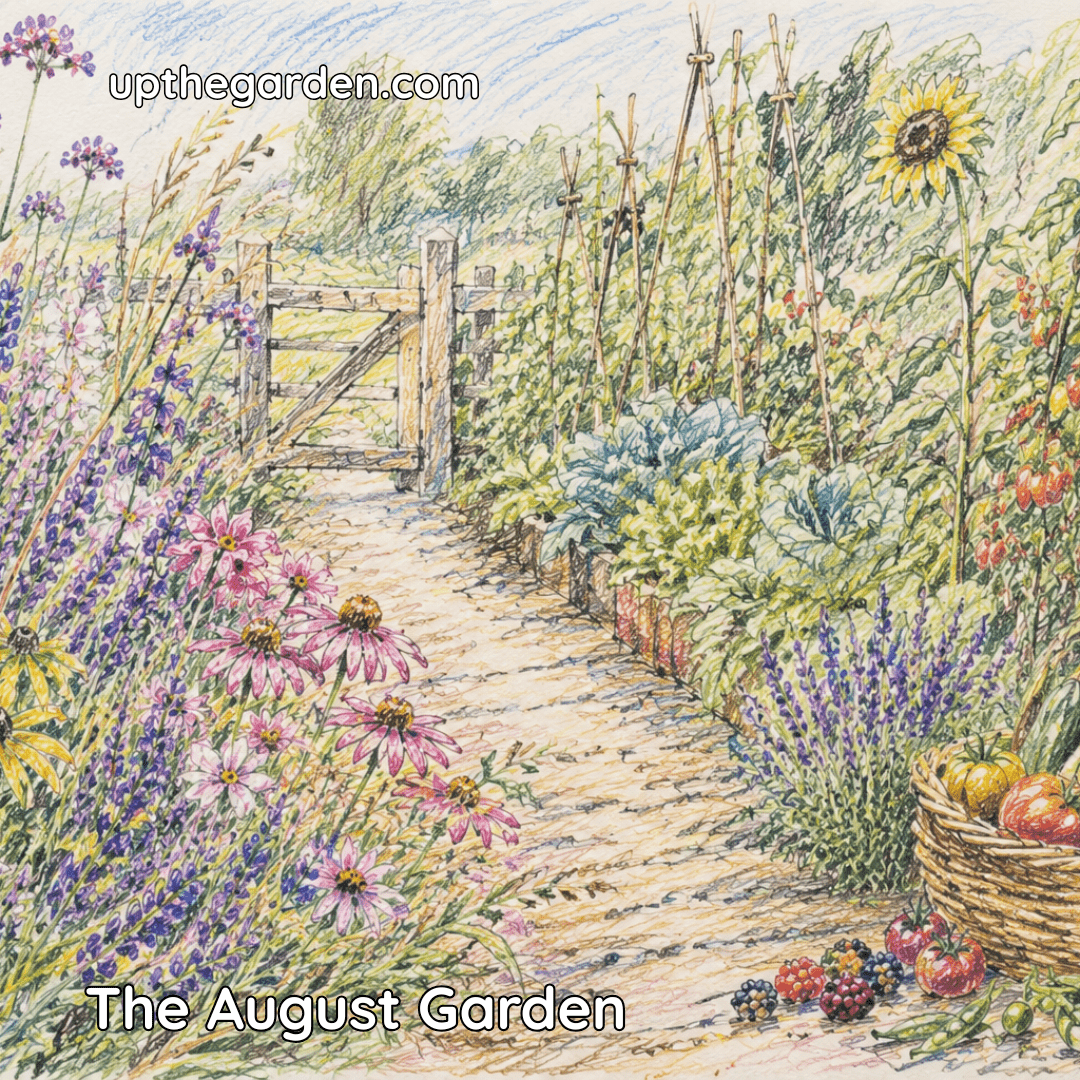
The August Garden: Finding Beauty in High Summer

There is a quiet confidence about an August garden.

The urgency of spring has passed. The excitement of new growth has softened into something richer and more contemplative. This is the season when the garden asks us not to rush from one task to the next, but to pause, to observe, and to appreciate everything that months of care have quietly created.

This year, however, many gardens across the UK are telling a different story. Prolonged dry weather has tested even the most established planting. Lawns have faded from emerald to straw, borders have needed careful attention, and watering has become less about encouraging growth and more about helping cherished plants endure. Yet, despite the challenges, August continues to reveal the remarkable resilience of our gardens.

Some plants seem almost to revel in the heat. Lavender hums with bees from dawn until dusk, releasing its unmistakable fragrance with every passing breeze. Nepeta spills over pathways in clouds of violet-blue, while Russian sage, gaura and verbena bonariensis dance effortlessly in the warm air. Sedums begin to gather strength for their autumn display, and ornamental grasses catch the light, their feathery plumes moving gently against clear blue skies.

The stars of the late-summer border are impossible to ignore. Dahlias take centre stage with blooms ranging from soft blush pinks and creamy whites to fiery oranges, deep burgundies and rich crimson. Coneflowers stand proudly alongside rudbeckias, their golden petals glowing in the afternoon sunshine, while heleniums bring warm copper and amber tones that seem to mirror the landscape itself. Japanese anemones begin to unfurl elegant flowers, hinting that autumn is quietly waiting in the wings.

The scents of August are altogether different from those of early summer. Sweet peas may be producing their final stems, but they continue to perfume the evening air. Rosemary, thyme and oregano release their aromatic oils as the sun warms their leaves, while lavender remains one of the defining fragrances of the season. Stand beside a border planted with herbs on a warm afternoon, and the air itself seems infused with the essence of summer.

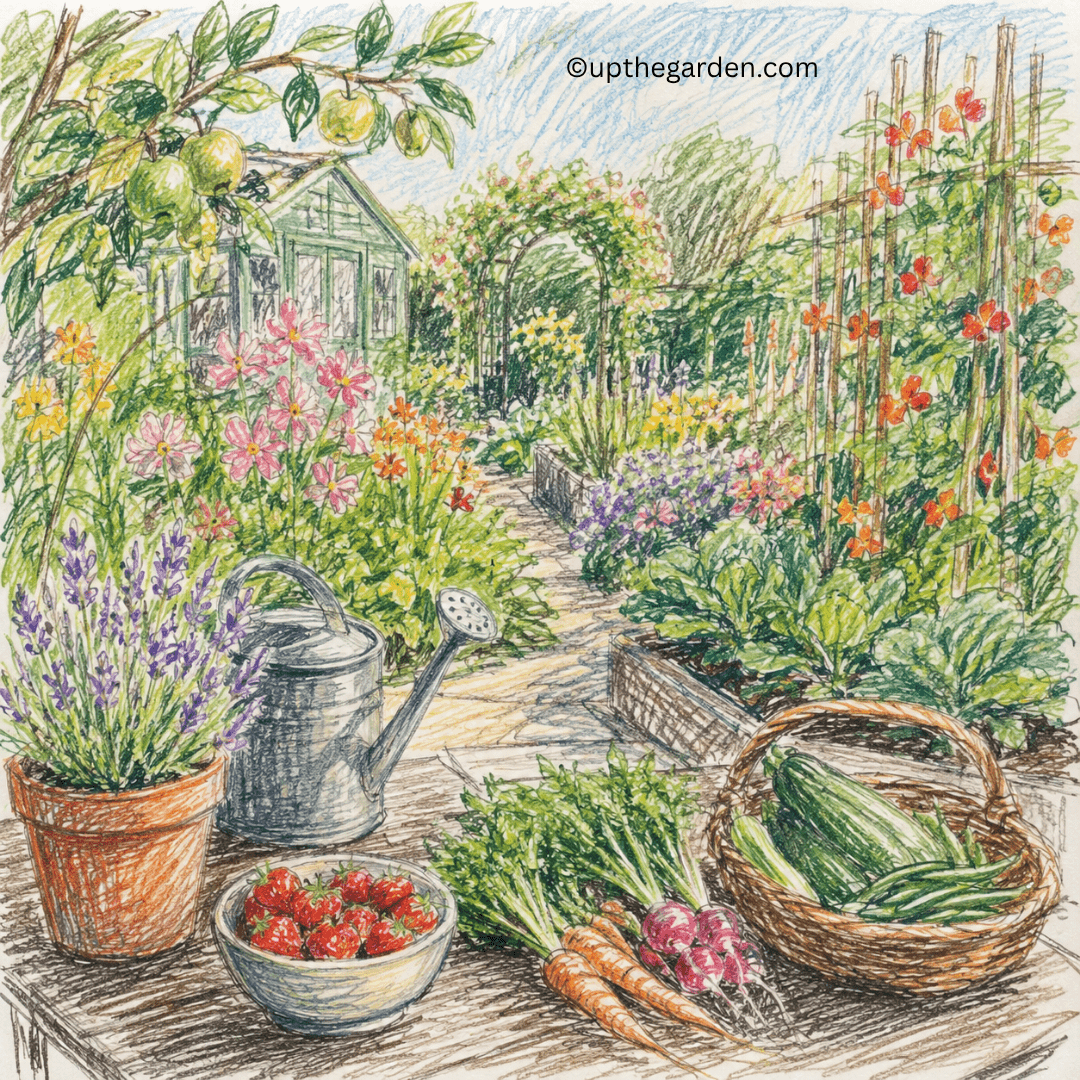
It is not only the flowers that reach their peak. The kitchen garden offers its own kind of abundance. Tomatoes ripen on the vine, their flavour deepened by long hours of sunshine. Courgettes appear almost overnight, runner beans hang in generous clusters, and French beans continue to crop if picked regularly. Beetroot, carrots and early potatoes are lifted from warm soil, while cucumbers, chillies and peppers reward those growing under glass.

Beyond the vegetable patch, orchards and fruit gardens begin to offer their treasures. Early apples swell on the branch, pears start to soften, and plum trees bow gently beneath the weight of their fruit. Blackberries tumble through hedgerows, raspberries continue to provide handfuls for breakfast tables, and blueberries offer their final harvest before autumn begins to take hold.

August is perhaps the richest month for wildlife. Bees remain the garden’s busiest visitors, collecting nectar from salvias, echinacea and asters with tireless determination. Red admirals, peacocks and painted ladies drift between flowering borders, while hoverflies, lacewings and dragonflies make the most of the warmth. As evening falls, moths emerge to visit pale blooms, and bats silently patrol overhead, feeding on insects invisible in the fading light.

There is an intricate balance at work in every thriving garden. Seedheads provide food for goldfinches in the months ahead, flowering herbs support countless pollinators, and ponds become havens for frogs, newts and damselflies seeking refuge from the heat. Even the driest corners can become valuable habitats when thoughtfully planted with drought-tolerant species that continue to nourish wildlife through the height of summer.

Although August feels wonderfully abundant, it is also a month of gentle stewardship. Deadheading roses, cosmos and dahlias encourages weeks of further flowering. Watering deeply but less frequently helps roots search further into the soil. Mulching around shrubs and perennials helps conserve precious moisture, while collecting seed from favourite flowers offers the promise of next year’s displays. Every small task feels like an investment in the future rather than simply another item on the gardening list.

Perhaps this is why August holds such a special place in the gardening calendar. It teaches patience, resilience and appreciation in equal measure. It reminds us that gardens are living landscapes, shaped as much by the weather as by the gardener’s hand. Some years they overflow effortlessly; others demand ingenuity and care. Yet they continue to surprise us with moments of extraordinary beauty.

As the light slowly begins to soften and evenings draw in almost imperceptibly, there is every reason to linger outdoors a little longer. Sit beneath the shade of an old tree with a cup of tea. Wander slowly through the borders as bees move from flower to flower. Breathe in the calming scent of lavender, watch butterflies settle on sun-warmed blooms, and savour the satisfaction of gathering vegetables and fruit grown with your own hands.

The August garden is not simply a celebration of summer’s height. It is a reminder that even in challenging seasons, nature has an extraordinary capacity for resilience. Beauty is still there to be found—in every dahlia bloom, every buzzing bee, every handful of freshly picked tomatoes and every quiet evening spent surrounded by a garden that continues, against the odds, to flourish.


A healthy garden isn’t simply a collection of plants. It’s a living landscape, made up of layers that work together to support life in every season.

Take a walk through a woodland and you’ll notice how naturally these layers appear. Rich soil lies beneath your feet, carpets of mosses and fallen leaves cover the ground, wildflowers bloom amongst grasses, shrubs form sheltered thickets and trees stretch high above, creating a leafy canopy. Every level has its own purpose, and every one is home to wildlife.

Our gardens can reflect this same pattern.

When a garden is made up of little more than neatly mown grass and open beds, there is less space for nature to settle. Wildlife has fewer places to hide, feed and raise its young, and the landscape offers little protection from changing weather or predators.

By creating layers instead, we begin to mimic the habitats that wildlife has relied upon for thousands of years. Each layer brings something different, and together they create a garden that is richer, more resilient and full of life.

Healthy soil – where every garden begins

The most important part of any garden is often the one we never see.

Beneath the surface lies an extraordinary world, alive with earthworms, fungi, beetles, bacteria and countless other tiny organisms. Together they break down fallen leaves and organic matter, returning valuable nutrients to the soil and creating the conditions that plants need to thrive.

Healthy soil is the foundation for everything that follows. It stores water during dry spells, improves drainage after heavy rain and supports strong, healthy roots.

When we allow nature to do much of this work for us—leaving organic matter to decompose and disturbing the soil as little as possible—we nurture a living ecosystem beneath our feet.

It is here that the story of every thriving garden begins.

Groundcover – a gentle layer of protection

Just above the soil sits a layer that is often overlooked, yet plays an important role throughout the year.

Low-growing plants, fallen leaves and natural leaf litter act as a protective blanket, helping the soil retain moisture, regulating temperature and reducing erosion.

For wildlife, this layer offers safety as well as shelter.

Beetles and woodlice quietly recycle decaying plant material. Frogs and toads rest in the cool shade beneath leaves, while hedgehogs forage amongst the leaf litter in search of insects and worms. Many butterflies, moths and other insects spend part of their lives hidden amongst this protective cover before emerging with the changing seasons.

Allowing leaves to gather beneath shrubs or in quieter corners of the garden may seem like a small gesture, but it creates valuable habitat where nature can flourish undisturbed.

Flowers and grasses – bringing the garden to life

As the garden begins to grow upwards, flowers and ornamental grasses add movement, colour and a rich source of food for wildlife.

From the earliest spring flowers to late autumn blooms, nectar and pollen sustain bees, butterflies, hoverflies and countless other pollinating insects. Native grasses provide seeds for birds, shelter for insects and places where many species complete their life cycles.

A garden that offers flowers across the seasons becomes a dependable source of food when little else may be available.

The gentle hum of bees drifting between blossoms or butterflies dancing above the borders reminds us that these planting schemes are about far more than appearance. They keep the garden alive with movement and help pollinate fruit, vegetables and flowering plants throughout the landscape.

Shrubs and hedges – nature’s shelterbelt

As the layers deepen, shrubs and hedges create structure and refuge.

Their dense branches offer protection from wind and rain while providing safe nesting places for birds and quiet cover for small mammals. Within tangled stems, insects find places to spend the winter, emerging again as temperatures begin to rise.

Through the seasons, shrubs offer an ever-changing supply of food. Blossom appears in spring, attracting hungry pollinators, while berries and hips ripen later in the year, sustaining birds as autumn gives way to winter.

A mixed hedge is especially valuable, with different species flowering and fruiting at different times. It creates not simply a boundary, but a living corridor that allows wildlife to move safely through the garden.

Trees and climbers – reaching for the sky

The final layer lifts the garden into the canopy.

Trees bring height, shade and permanence, creating places where birds can nest and squirrels can forage, while their branches provide shelter from summer sun and winter weather alike. Their bark supports mosses, lichens and insects, adding yet another habitat to the garden.

Climbing plants make use of every available surface, clothing walls, fences and tree trunks with flowers, foliage and berries. Ivy is one of the most valuable of all, flowering in autumn when nectar is scarce and producing berries that become an important source of food during the colder months.

As leaves fall each year, they return to the ground below, feeding the soil and completing a cycle that connects the tallest tree with the smallest soil organism.

Every layer tells a story

Nature rarely works in isolation.

The soil feeds the plants. Groundcover protects the soil. Flowers nourish pollinators. Shrubs provide shelter. Trees create the canopy. Together they form a connected web of life, with each layer supporting the next.

The beauty of this approach is that every garden, no matter its size, has room for another layer. A handful of spring flowers beneath a hedge, a patch of leaf litter left undisturbed, a native shrub, a climbing rose or a small tree can all help weave wildlife back into the landscape.

By looking beyond individual plants and thinking instead about the layers they create, we begin to garden as nature does. The reward is more than a beautiful space. It is a garden alive with birdsong, buzzing insects, changing seasons and the quiet rhythms of the natural world.

Further reading: The Garden and the Soul: How Nature Changes UsThe Power of Native Plants: Creating Beautiful, Resilient GardensA Garden for Every Season: A Garden to Love All YearHow to Plant a Hedge

Inspiration: Follow Us on InstagramThreads, BlueSkyTwitterTikTok and Pinterest.

The July Garden: Living in the Height of Summer

There comes a moment each year when the garden seems to take a deep breath and simply flourish.

July is that moment.

The careful planning of winter, the hopeful sowing of spring and the patient tending of early summer suddenly come together in an extraordinary display of colour, scent and abundance. Borders swell beyond their edges, roses reach their glorious peak, vegetables seem to grow almost while you’re watching, and every corner hums quietly with life.

This is not a month for rushing.

The July garden asks something rather different of us. It invites us to slow our pace, wander without purpose and notice the countless small details that might otherwise pass us by. A bee disappearing deep into a foxglove. The delicate lacework of a spider’s web sparkling with morning dew. A blackbird carrying worms across the lawn. The scent of sweet peas drifting gently on the warm afternoon air.

Gardens have always rewarded those who linger.


Early morning is perhaps the finest time to step outside.

Before the day gathers its warmth, leaves are still cool beneath your fingertips and birds fill the air with song. The low sun catches the silvery foliage of lavender, ornamental grasses shimmer with dew and every flower seems freshly opened to greet the day.

This is when roses are at their most enchanting.

For centuries they have been celebrated not only for their beauty but also their extraordinary fragrance. Ancient Persians distilled rose water long before it appeared in European gardens, while medieval monasteries grew roses for medicines, perfumes and food.

Even today, few scents evoke an English summer quite so completely.

Removing faded blooms now quietly encourages many varieties to flower again. It is one of those gentle tasks that feels less like work and more like caring for an old friend.

Nearby, the sweet peas continue their own performance.

The more flowers you gather, the more they bloom, filling the house with perfume that no bottle has ever quite managed to recreate. There is quiet satisfaction in cutting a handful each morning, knowing tomorrow there will almost certainly be more.

As the writer Beverley Nichols once observed:

“To plant a garden is to believe in tomorrow.”

By July, tomorrow has arrived.


The herbaceous borders have found their rhythm.

Delphiniums stand proudly above neighbouring perennials, salvias dance with bees, achillea catches the sunlight, while echinacea and rudbeckia begin their long summer display. Every border changes almost daily, colours weaving together in combinations that no designer could completely predict.

One of gardening’s greatest lessons is learning when not to interfere.

Leave a few flowers to mature into seed heads and they become every bit as beautiful as the blooms themselves. Poppies transform into elegant green sculptures. Alliums dry into delicate globes that catch the evening light, while teasels quietly prepare a feast for goldfinches later in the year.

A garden need not always be flowering to be beautiful.

Sometimes structure tells the richer story.


There is another orchestra playing too.

Listen for a moment.

The steady hum around lavender belongs to bumblebees gathering nectar. Hoverflies drift effortlessly between flowers, quietly pollinating as they go. Butterflies settle on verbena and buddleia, while dragonflies patrol nearby ponds with astonishing precision.

Even the smallest insect hotel is likely to be busy now.

July reminds us that a successful garden is measured not simply by the plants we grow, but by the wildlife we welcome.

Leave a shallow dish of water for bees.

Allow a little patch of grass to flower.

Resist the temptation to tidy every corner.

Nature often asks for less intervention than we imagine.


Meanwhile, the kitchen garden begins offering generous rewards.

Courgettes seem to appear overnight, broad beans swell in their pods and tomatoes slowly deepen from green to glowing red. Herbs become wonderfully abundant. Basil waits beside ripening tomatoes, parsley spills over raised beds, mint threatens to take over entirely and thyme perfumes every warm pathway.

Freshly lifted new potatoes remain one of July’s greatest pleasures.

There is little ceremony required. Simply boil them gently before tossing with butter, chopped parsley and a pinch of sea salt.

Sometimes the finest meals are also the simplest.

Nearby, strawberries continue producing their sweetest fruit, while raspberries hide beneath leafy canes waiting to surprise anyone willing to look closely enough.

July is not simply beautiful.

It is delicious.


As afternoon warmth settles across the garden, scents become richer.

Lavender perfumes the borders.

Climbing roses release their fragrance.

Jasmine begins to fill the evening air.

It is perhaps the perfect moment to pause with a cup of tea beneath a favourite tree and simply watch.

Children search for butterflies.

Bees continue their patient work.

Swallows skim low across the lawn.

A robin appears, hopeful that today’s gardening might uncover another worm.

The garden continues perfectly well without us for a little while.


By evening, long shadows stretch across the borders and the colours soften once again.

This is when white flowers begin to glow.

Nicotiana, cosmos and hydrangeas seem almost luminous beneath the fading light. The warmth of the day lingers in brick walls and greenhouse glass, while blackbirds offer one final song before dusk settles quietly over the garden.

There is a deep contentment in July evenings.

Not because every weed has been removed or every border looks perfect, but because gardens are living places rather than finished projects.

They are always becoming.

Always changing.

Always offering something new to notice tomorrow.


Perhaps that is why July is loved by so many gardeners.

It reminds us that gardening has never really been about flowers alone.

It is about patience rewarded.

About sharing strawberries still warm from the sun.

About muddy hands, buzzing bees, birdsong drifting through open windows and quiet moments spent watching butterflies dance across the borders.

The work of spring has become the joy of summer.

And for a few precious weeks, the garden gives back far more than it asks.


Recipe: Summer Garden Herb & Courgette Tart

A light lunch celebrating some of July’s finest harvests.

Ingredients

  • 1 sheet ready-rolled puff pastry
  • 2 medium courgettes, thinly sliced
  • 150g soft goat’s cheese
  • 2 tbsp crème fraîche
  • A handful of fresh basil
  • A handful of chopped parsley
  • Fresh thyme leaves
  • Olive oil
  • Sea salt and black pepper
  • Optional: a drizzle of local honey

Method

  1. Heat the oven to 200°C (180°C fan).
  2. Score a 2cm border around the pastry and prick the centre with a fork.
  3. Mix the goat’s cheese with the crème fraîche and spread over the pastry.
  4. Arrange the courgette slices on top, brushing lightly with olive oil.
  5. Scatter with thyme, season well and bake for 25–30 minutes until golden.
  6. Finish with fresh basil, parsley and, if you like, a drizzle of honey.

Serve warm with freshly picked salad leaves and buttered new potatoes.


A Gentle Reminder

July is also the month to water wisely. A thorough soak in the cool of the morning or evening is far kinder to plants than frequent light watering. Harvest little and often, keep picking flowers to encourage more blooms, and don’t be too quick to tidy every fading stem. Seed heads, long grass and a few untamed corners provide food and shelter for the wildlife that makes every summer garden feel truly alive.


Further Reading: How and When to Thin your Fruit TreesHow to Grow your Own FruitGuide to Store your Fruit Harvest,

Inspiration: Follow Us on InstagramThreads, BlueSkyTwitterTikTok and Pinterest.