Tulips: A Spring Story in Colour and Light

There is a moment each spring—often in April, sometimes stretching into May—when the garden seems to gather itself and offer something quietly remarkable. It is not the first sign of life, nor the boldness of high summer, but something in between. A sense of arrival.

And at the heart of it, more often than not, are tulips.

They stand with a certain poise—upright, composed, yet fleeting. Their petals, sometimes tightly held, sometimes thrown wide to the light, seem to hold the very essence of the season: colour, clarity, and a kind of gentle confidence.

“Shine bright like a tulip.” — Anonymous

It may be a simple line, but it captures something true. Tulips do not apologise for their brightness. They arrive, they bloom, and then they are gone—leaving behind the quiet memory of colour.


What Are Tulips?

Tulipa

Tulips belong to the Liliaceae family, a group known for its elegance and symmetry. They grow from bulbs—small, unassuming forms that rest beneath the soil through winter, gathering strength for their brief but remarkable display.

And brief it is.

Each tulip bloom lasts only a short time, yet in that moment it offers extraordinary variety. There are the classic cup-shaped flowers, neat and composed, but also fringed edges that catch the light, double blooms layered like peonies, and parrot tulips with petals that twist and curl as though shaped by wind.

With more than 3,000 recognised varieties, tulips offer something for every garden—whether in soft, muted pastels or deep, dramatic tones that border on black.

But perhaps what makes them most compelling is not their diversity, but their timing. They arrive just when the garden needs them most.
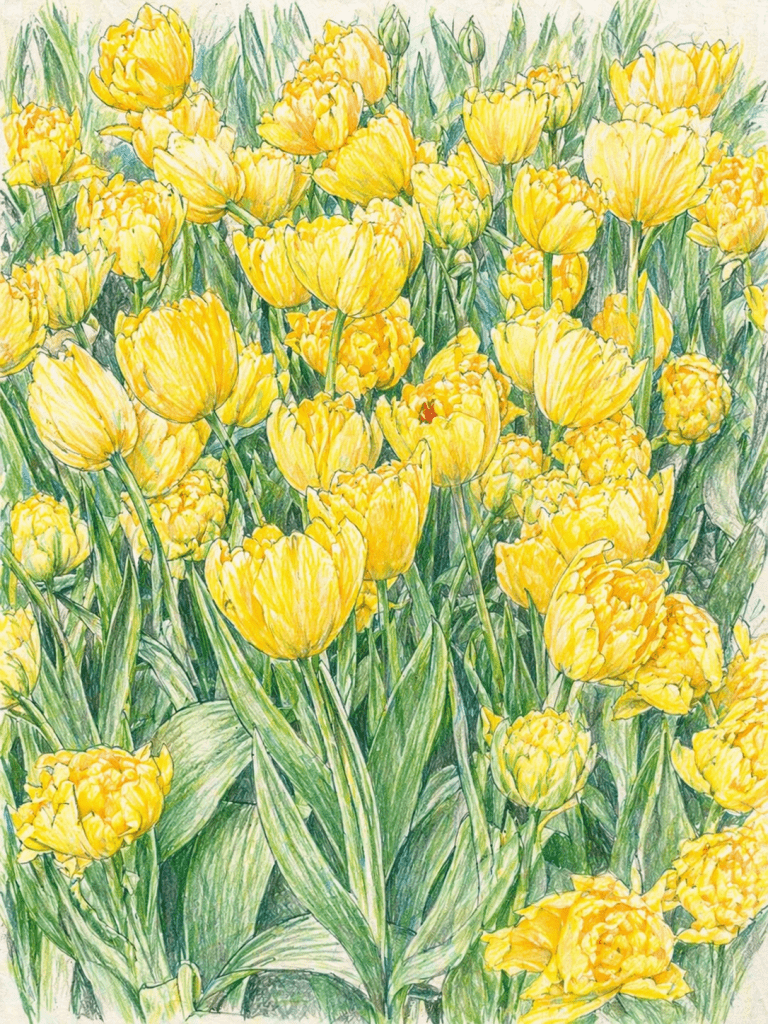
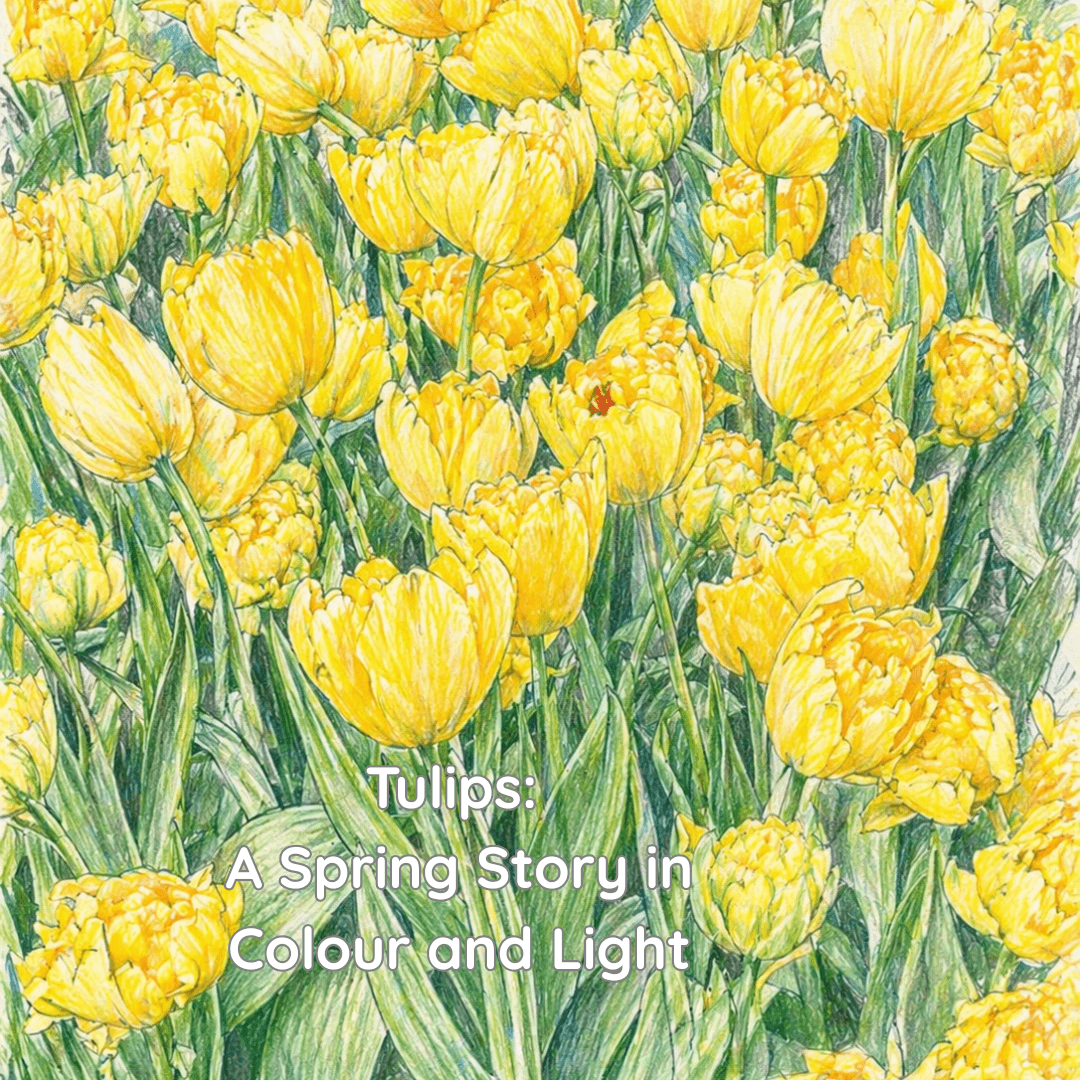
Tulipa - Tulips (yellow)
Tulipa – Tulips

A History Rooted in Beauty and Obsession

Though we often associate tulips with the Netherlands, their story begins much further east, in the landscapes of Central Asia.

From there, they were cultivated and celebrated in the Ottoman Empire, where they became symbols of abundance, beauty, and refinement. Gardens were designed around them. Festivals marked their flowering. They were, quite simply, treasured.

By the 16th century, tulips had travelled into Europe, carried along trade routes and into the hands of botanists and collectors. It was in the Netherlands, however, that their story took an extraordinary turn.

The period now known as Tulip Mania saw these flowers rise beyond admiration into something approaching obsession. Rare varieties became objects of desire, and bulbs were bought and sold for astonishing sums—sometimes the equivalent of a house.

It is a story often told as a cautionary tale. And yet, beneath it lies something more enduring: a reflection of how deeply we respond to beauty, even when it is fleeting.


Why Tulips Still Matter

To plant tulips today is to take part in a quiet continuity—a tradition that stretches back centuries.

But their value is not just historical. It is immediate, sensory, and deeply restorative.

They are among the first to bring true colour into the garden after winter. Not tentative greens, but confident reds, yellows, purples, and whites. A signal that the season has turned.

They ask for very little in return. A place in the sun. Soil that drains well. A little patience.

And in giving them that, they offer more than colour. They invite pollinators back into the garden. They sit easily among other spring bulbs—daffodils, muscari, hyacinths—creating layers of texture and form.

Perhaps most importantly, they remind us to notice.


Planting Tulips: A Gesture of Trust

There is something quietly hopeful about planting tulip bulbs.

It happens in autumn, when the garden is beginning to wind down. The days shorten, the air cools, and yet—there you are, placing something into the soil that will not show itself for months.

It is, in its own way, an act of trust.

Plant the bulbs between late September and November, before the ground hardens with frost. Choose a place where they will catch the light—at least six hours of sun each day if possible.

Set them into the soil at a depth roughly three times their height, pointed end facing upwards, spaced just enough to allow each bloom its moment.

Then cover them. Water lightly. And wait.


Care, and the Art of Letting Be

Tulips do not ask for constant attention.

Through winter, they rest. Rain does most of the work. Too much interference can do more harm than good.

As spring arrives and shoots begin to appear, a light feeding can help support their growth. And when they flower—simply allow them their time.

Once the blooms fade, remove the spent flowers. Not to tidy, but to allow the plant to direct its energy back into the bulb below. Leave the leaves in place until they yellow and fall away naturally. It is here, quietly, that next year’s display is being prepared.


Tulips in the Garden: More Than Display
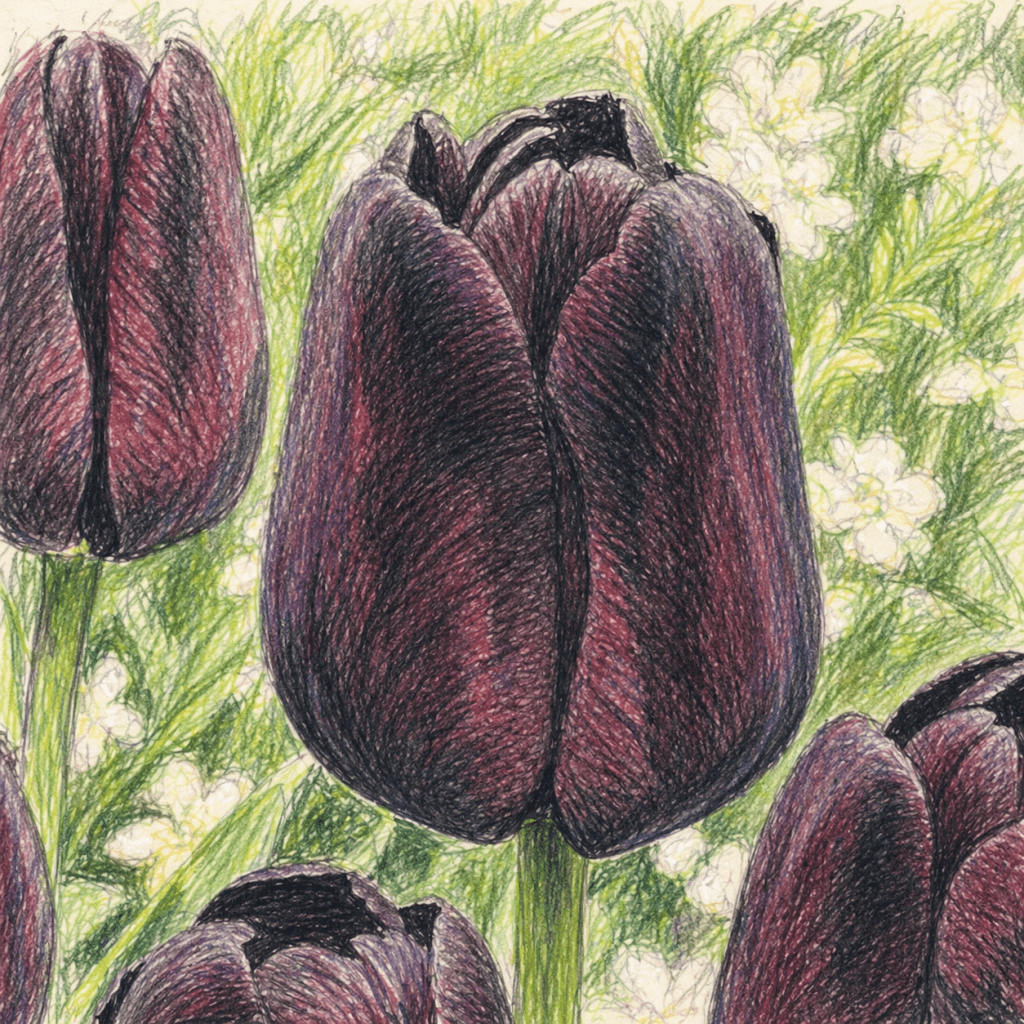
Tulipa - Tulip 'Queen of Night'
Tulipa – Tulip ‘Queen of Night’

It is easy to think of tulips as purely ornamental—plants chosen for colour, arranged for effect.

But spend time among them, and something else becomes clear.

They shift with the light, opening in warmth, closing as evening falls. They respond to weather, to temperature, to time of day. In this way, they feel less like static features and more like participants in the garden’s rhythm.

They have long been associated with love, renewal, and new beginnings. Red tulips, in particular, are often said to symbolise deep affection. White, a sense of forgiveness. Yellow, once thought to represent jealousy, now more often linked to cheerfulness and light.

Yet perhaps their truest meaning lies not in symbolism, but in presence.

As the writer Dorothy Parker once observed, with characteristic wit:
“I’d rather have roses on my table than diamonds on my neck.”

One suspects tulips would do just as well.


A Final Reflection

Tulips do not linger.

Their petals fall. Their colour fades. And in a matter of weeks, they are gone from view.

But this is not a loss. It is part of their gift.

They remind us that the garden is not fixed—it is always moving, always changing. That beauty can be brief and still complete. That some of the most meaningful moments are those we cannot hold onto for long.

So when they appear each spring, it is worth pausing.

To walk among them.
To notice their colour in the light.
To remember that this, too, is part of the rhythm of the year.

And that, quietly, beneath the soil, it will begin again.

Further Reading:   How to Refurbish Your Garden to Add Value to Your HomeHow to create a thriving garden on a new build plotSustainable Hardscaping: Build a Beautiful, Eco-Friendly GardenClimate-Resilient Planting: Future-Proofing Your GardenTransform Your Garden into a Butterfly HavenTen Plants that butterflies love

Inspiration: Follow Us on InstagramThreads, BlueSkyTwitterTikTok and Pinterest.

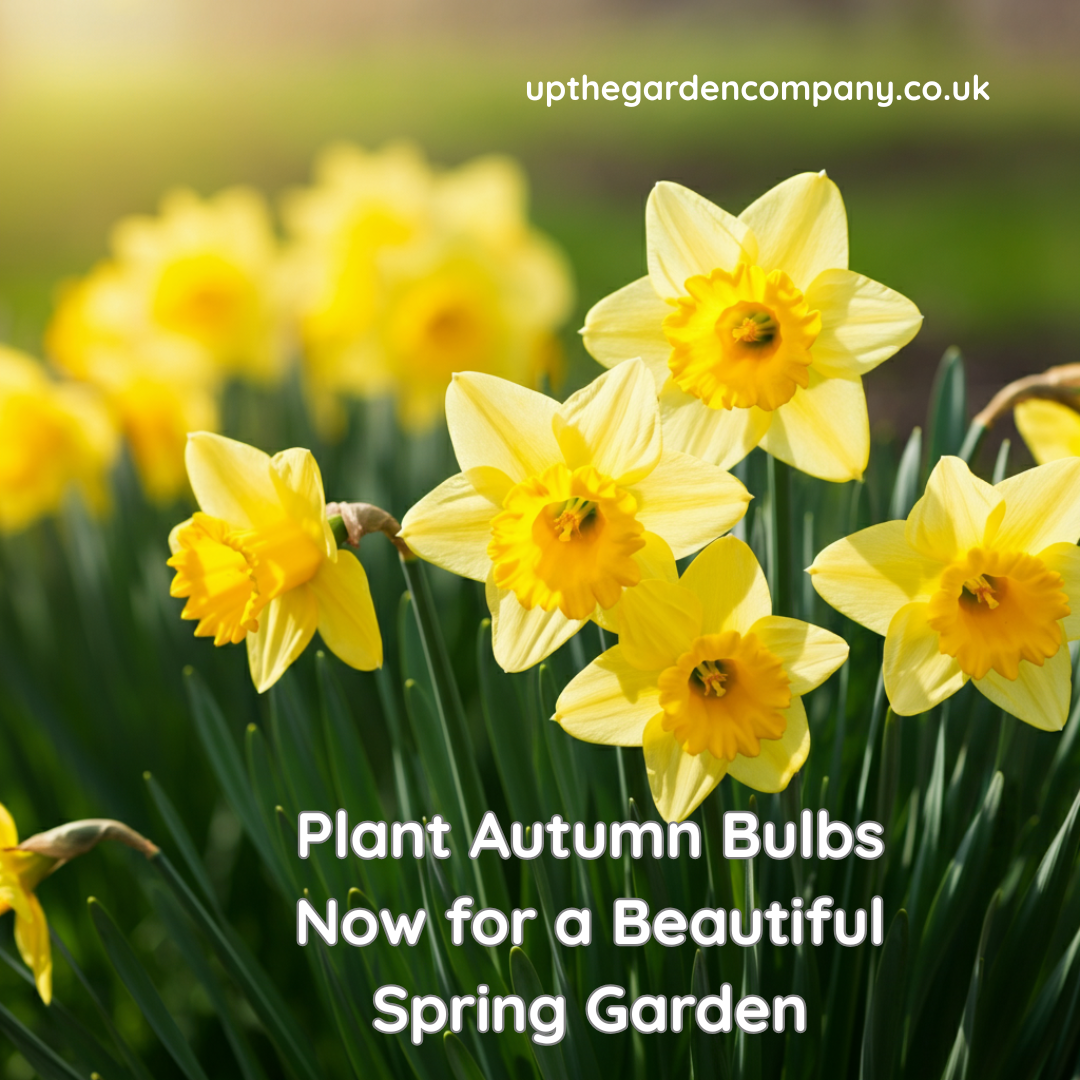
Autumn Bulbs for Spring Garden

Autumn marks one of the most rewarding times in the gardening calendar. As temperatures cool and leaves begin to turn, it’s the perfect opportunity to plant spring-flowering bulbs that will brighten your garden when winter finally releases its grip. With just a little effort now, you’ll create a spectacular display of colour that will lift your spirits during the darker months ahead.

Planting bulbs in autumn isn’t just about creating beauty—it’s about working with nature’s timing. Spring bulbs need a cold winter period to develop properly, making autumn planting essential for success. Whether you’re a seasoned gardener or just starting out, this guide will help you choose the right bulbs, plant them correctly and enjoy a stunning spring display.

What Bulbs Can Be Planted in Autumn

Spring-flowering bulbs offer an incredible variety of colours, shapes and blooming times. Here are the most popular options that thrive when planted in autumn:

Daffodils (Narcissus) are among the most reliable spring bulbs. These cheerful yellow flowers naturalise well in grass and return year after year with minimal care. Plant them 10-15cm deep in well-drained soil.

Tulips provide vibrant colour in countless varieties, from early-flowering species tulips to late-season Darwin hybrids. They prefer slightly alkaline soil and should be planted 15-20cm deep for best results.

Crocuses are perfect for creating carpets of purple, white or yellow flowers. These small bulbs work well in rock gardens, under trees or naturalised in lawn areas. Plant them 7-10cm deep.

Hyacinths offer intense fragrance alongside their dense flower spikes. Available in pink, blue, white and purple, they make excellent container plants or border specimens. Plant 12-15cm deep.

Snowdrops create delicate white flowers that often push through snow. These hardy bulbs multiply naturally and are perfect for woodland gardens. Plant them 7-10cm deep in partial shade.

Alliums produce striking spherical flower heads in purple, white, or yellow. These ornamental onions add architectural interest to borders and are excellent for cutting. Plant larger varieties 15-20cm deep.

Grape hyacinths (Muscari) create dense clusters of blue or white bell-shaped flowers. They spread readily and work well as ground cover or in containers. Plant 7-10cm deep.

Essential Considerations for Successful Bulb Planting

Success with autumn bulb planting depends on several key factors that ensure your bulbs develop properly and bloom reliably.

Soil drainage is absolutely critical. Bulbs will rot in waterlogged conditions, so ensure your planting area drains well. If your soil is heavy clay, add grit or plant in raised beds to improve drainage.

Planting depth follows a simple rule: plant bulbs at a depth three times their height. A 5cm tall bulb should be planted 15cm deep. This depth provides protection from frost and gives bulbs room to develop strong root systems.

Spacing allows bulbs to grow without competing for nutrients. As a general guide, space bulbs one to two bulb-widths apart. For naturalised plantings, you can plant more densely for greater impact.

Site selection matters for long-term success. Most spring bulbs prefer full sun to partial shade and well-drained soil. Consider the mature size of nearby plants—bulbs need sunlight to photosynthesise and build energy for next year’s blooms.

Timing is crucial for autumn planting. Plant bulbs when soil temperatures have cooled but before the ground freezes. In the UK, this typically means September through November, depending on your location.

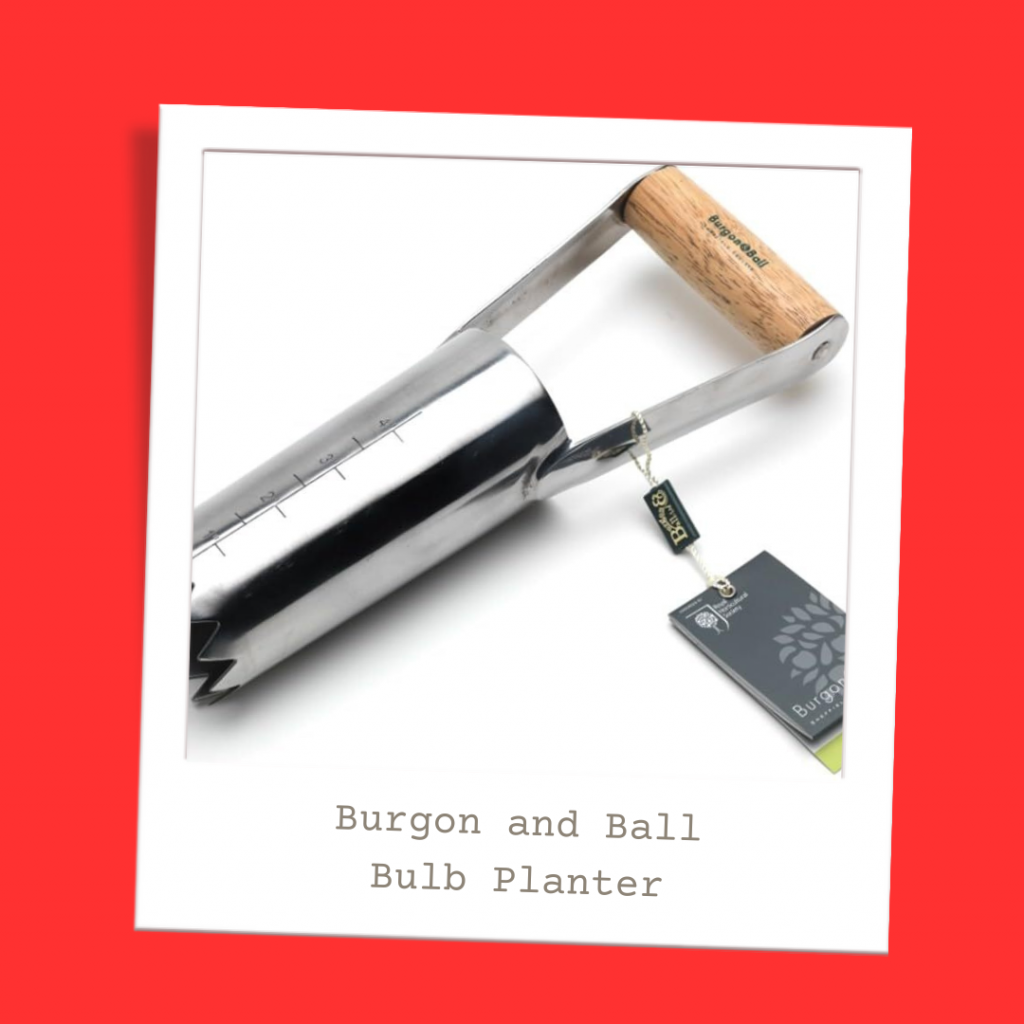
Burgon and Ball RHS Bulb Planter
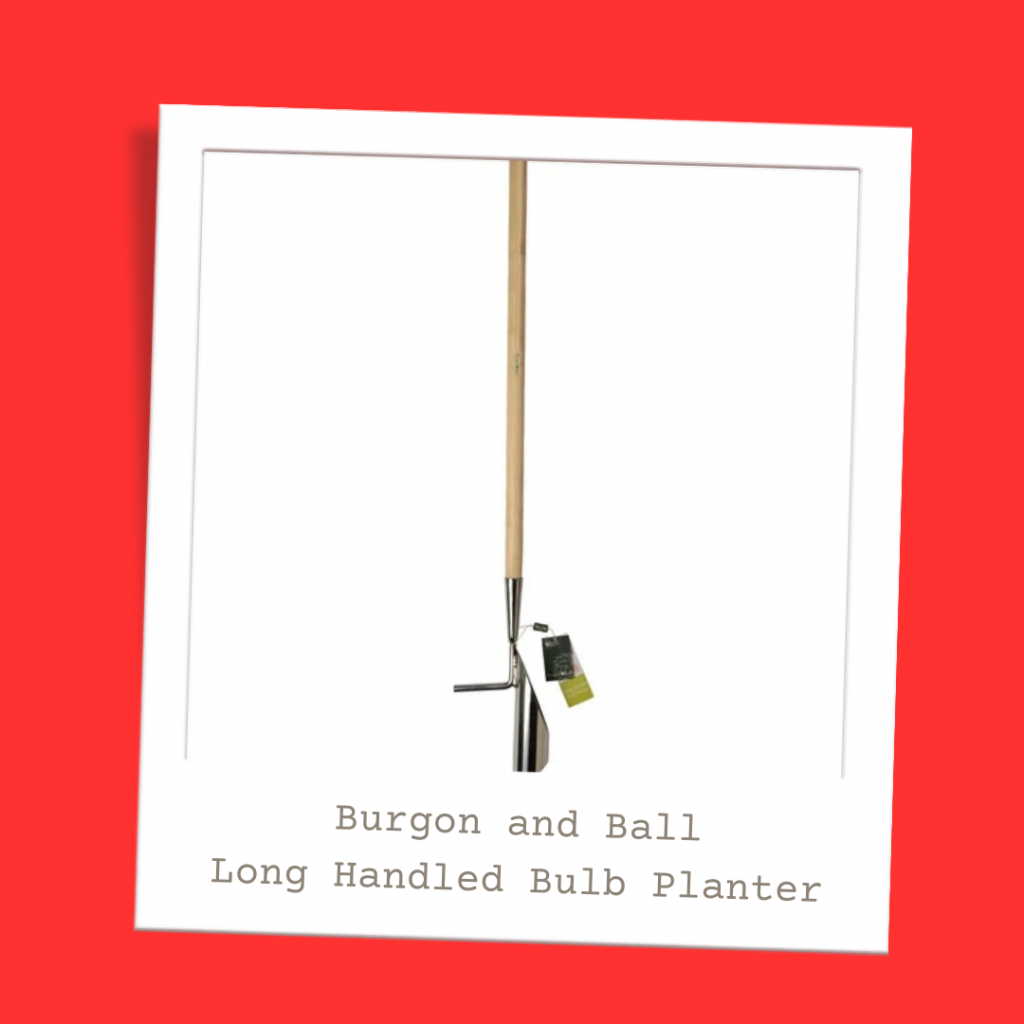
Burgon and Ball Long Handled Bulb Planter

Best Methods for Planting Bulbs

Different planting methods suit different situations and garden styles. Choose the approach that works best for your space and design goals.

Individual hole planting works well for formal designs or when adding bulbs to established borders. Use a bulb planter or narrow spade to create holes of the correct depth. Place one bulb per hole, pointed end upward, and backfill with soil.

Trench planting is efficient for large quantities of the same bulb type. Dig a trench to the appropriate depth, place bulbs along the bottom at correct spacing, then cover with soil. This method works particularly well for creating drifts of daffodils or crocuses.

Layered planting maximises impact in limited space by planting different bulbs at various depths in the same area. Plant large bulbs like tulips deepest, medium bulbs like daffodils in the middle layer, and small bulbs like crocuses nearest the surface.

Container planting allows you to create portable displays and control growing conditions precisely. Use containers at least 20cm deep with drainage holes. Layer different bulb types for extended flowering periods.

Naturalised planting creates informal, meadow-like displays. Scatter bulbs randomly over the planting area, then plant where they fall for a natural look. This method works beautifully with daffodils and crocuses in grass.

When planting, always place bulbs with the pointed end facing upward. If you’re unsure which end is up, plant the bulb on its side—it will find its way to the surface. Water thoroughly after planting to settle soil around the bulbs.

When Your Bulbs Will Bloom

Understanding bloom times helps you plan a succession of colour throughout spring. Early bulbs provide crucial nectar for emerging pollinators, while later varieties extend the display into early summer.

February bloomers include snowdrops, winter aconites and early crocuses. These hardy pioneers often flower through snow and signal winter’s end.

March flowers bring the first major wave of colour with species tulips, more crocuses, early daffodils and iris reticulata. These bulbs mark the true beginning of spring.

April displays feature the main daffodil season, hyacinths, grape hyacinths and many tulip varieties. This is typically the peak blooming period for spring bulbs.

May bloomers include late tulips, alliums and Spanish bluebells. These extend the bulb season and bridge the gap to early summer perennials.

June flowers from late alliums and some lilies (if planted in autumn) complete the spring bulb display and overlap with summer flowering plants.

Most bulbs will bloom for two to three weeks, though some varieties last longer. Weather conditions affect timing—cold springs delay flowering while warm weather speeds it up.

Caring for Your Newly Planted Bulbs

After planting, your bulbs need minimal care but benefit from a few simple practices. Apply a thin layer of mulch to conserve moisture and suppress weeds, but avoid thick mulches that prevent shoots from emerging.

Water bulbs if autumn is particularly dry, but avoid overwatering once cold weather arrives. Most bulbs prefer drier conditions during their dormant period.

Mark planting locations to avoid accidental damage when working in the garden. Small plant labels or a garden map help you remember where bulbs are planted.

Creating Your Spring Garden Vision

Successful bulb planting combines practical techniques with creative vision. Plant bulbs in odd-numbered groups for natural-looking displays and choose varieties with different bloom times for extended colour.

Consider companion plants that will complement your bulbs and provide structure as bulb foliage dies back. Hostas, ferns and other perennials work well for this purpose.

Most importantly, plant enough bulbs to create real impact. A hundred daffodils costs little more than a restaurant meal but provides years of spring joy.

Your autumn bulb planting efforts will reward you with months of beautiful blooms, starting when you need them most. Take time now to prepare your garden for a spectacular spring display that will make every chilly morning worthwhile.

Further Reading: Crocuses: Nature’s Painted Jewels, The Daffodil: A Symbol of Spring & Renewal, The Snowdrop: A Symbol of Hope and Resilience

For Daily Inspiration: Follow Us On Instagram 💚