The Garden in May

A month of quiet abundance and unfolding stories

There is a moment in May—often in the early morning, when the light is still soft—when the garden feels as though it has taken a breath and settled into itself.

April’s urgency has passed. The rush of first growth, the tentative greening, the uncertainty of frost—all behind us now. In their place comes something steadier. Borders begin to fill, colours deepen, and the garden starts to feel less like a collection of plants and more like a place with its own rhythm and voice.

To walk through it at this time of year is to notice not just what is in bloom, but how each plant seems to carry a story—of history, of meaning, of quiet return.


The tulips are often the first to catch the eye.

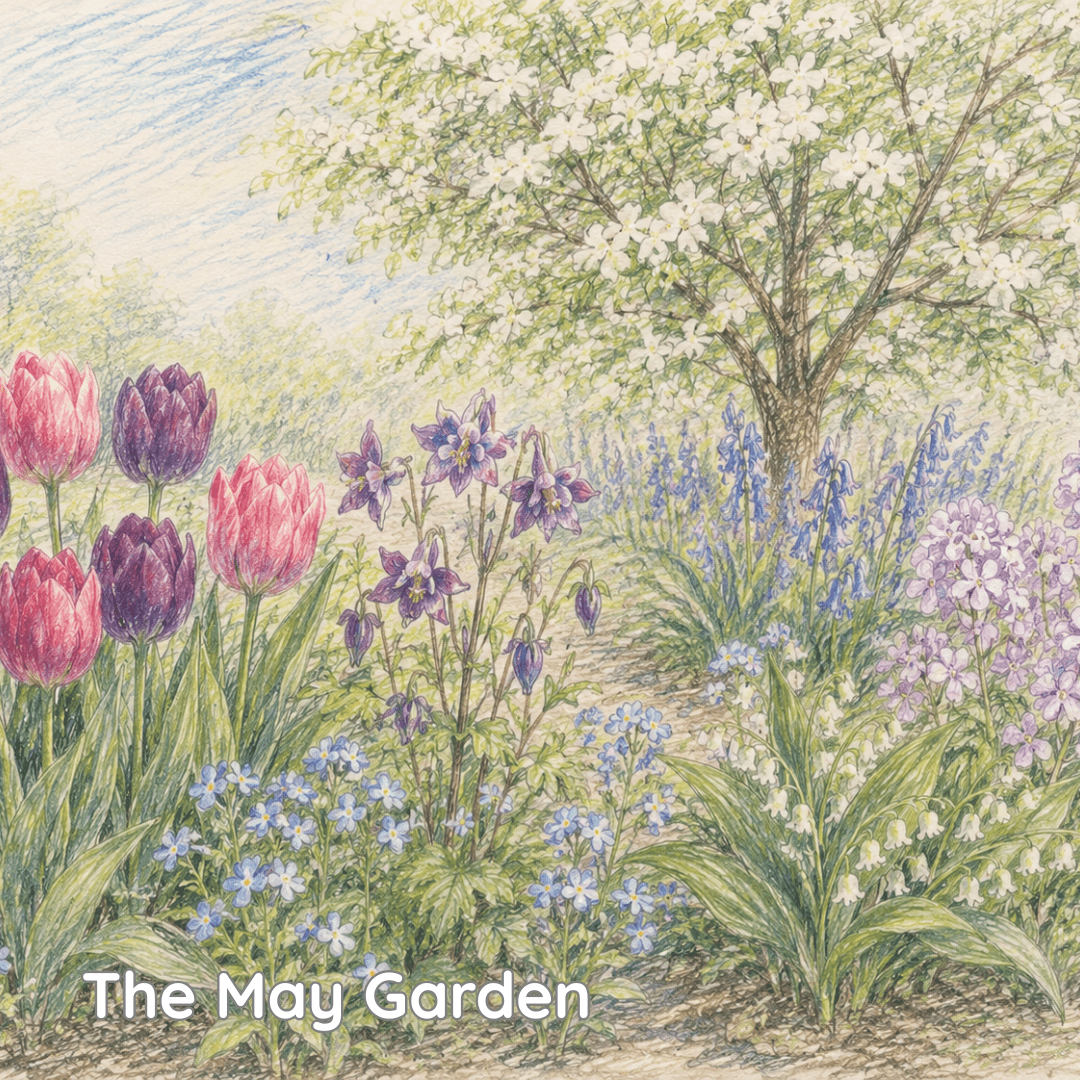
They stand with a certain confidence now, their forms no longer tightly held but open—petals curved wide to the sky. Tulipa, as they are known botanically, have travelled far to reach this moment in the garden. Once coveted to the point of obsession, their beauty sparked a frenzy centuries ago, when a single bulb might be traded for the price of a house. Today, they feel both extravagant and familiar.

They speak, perhaps, of something simple: that beauty need not last long to be deeply felt.


Beneath them, and often half-hidden, lily of the valley begins its quiet work.

Convallaria majalis is not a plant that demands attention. Its small white bells hang modestly, releasing a fragrance that seems almost too delicate for the scale of the garden. And yet, it lingers—soft, persistent.

It has long been associated with the return of happiness, gathered in May as a symbol of renewal. There is something reassuring in that idea. That even the smallest, most understated things can carry meaning enough to endure.


As the eye lifts, the alliums begin to rise.

Tall, architectural, and improbably precise, their globe-shaped flowers—clusters of countless tiny blooms—hover above the border like quiet punctuation marks. Members of the Allium family, they share their lineage with onions and garlic, yet here they are transformed into something almost sculptural.

There is patience in their growth. A reminder, perhaps, that what appears simple is often the result of time and careful unfolding.


Nearby, aquilegia weave themselves gently through the planting.

Aquilegia vulgaris, sometimes called columbine, has a softness to it—a tendency to lean, to drift slightly off centre, as though guided more by breeze than by structure. It is a plant that belongs as much to memory as to the present, often found in older gardens where it has quietly settled and returned, year after year.

There is a sense of continuity in it. A feeling that the garden does not begin or end with us.


And then, almost suddenly, the peonies begin to open.

At first, they are all promise—tight buds, rounded and waiting. But given a few warm days, they unfurl into something altogether more extravagant. Paeonia lactiflora carries with it centuries of admiration, a plant long associated with prosperity and honour.

Yet their beauty is fleeting. Petals fall as quickly as they open.

It is this briefness, perhaps, that makes them so compelling.


Threading through the borders, the forget-me-nots hold their ground.

Myosotis sylvatica—small, bright, and unassuming—form soft drifts of blue that seem to gather light rather than reflect it. They ask very little of the gardener, and yet offer something enduring.

Their name alone carries a weight of feeling. A quiet insistence on remembrance.


Beyond the garden’s edges, or sometimes woven into its wilder corners, hawthorn comes into bloom.

Crataegus monogyna, the May tree, marks the turning point of the season. Its blossom—frothy, white, and abundant—has long been gathered for May Day celebrations, though never brought indoors, where folklore warns it brings ill fortune.

Stand near it, and there is a particular scent—earthy, unmistakable.

It is the smell of the countryside in May.


In shaded spaces, where the garden leans towards woodland, bluebells settle into their own quiet display.

Hyacinthoides non-scripta are not showy in the way of tulips or peonies. Instead, they create atmosphere—drifts of soft violet-blue that seem to belong to another time.

They are often a sign of ancient ground, places where the soil has remained undisturbed for generations.

To walk among them is to feel, briefly, part of something much older.


Closer to the path, the irises begin to catch the light.

Named for the messenger goddess who travelled on rainbows, Iris germanica carries a certain elegance. Each flower feels intricately made—petals marked, folded, and edged with care.

They stand as a reminder that the garden is not just a place of growth, but of detail.


And as evening draws in, there is one final presence worth noticing.

Sweet rocket, Hesperis matronalis, does not announce itself in the brightness of day. It waits. But as the light fades, its scent begins to drift—soft, almost imperceptible at first, then quietly filling the air.

It is a plant that rewards attention, but only if you linger.


A Garden to Be Noticed

May does not overwhelm. It invites.

It asks that we slow down, that we look a little closer, that we notice not just the bold colours, but the spaces between them—the scent carried on the air, the movement of stems, the quiet return of plants that have been here long before us.

In this way, the garden becomes more than a collection of flowers.

It becomes a story—one that unfolds, gently, year after year.

Further Reading:   How to Refurbish Your Garden to Add Value to Your HomeHow to create a thriving garden on a new build plotSustainable Hardscaping: Build a Beautiful, Eco-Friendly GardenClimate-Resilient Planting: Future-Proofing Your GardenTransform Your Garden into a Butterfly HavenTen Plants that butterflies love

Inspiration: Follow Us on InstagramThreads, BlueSkyTwitterTikTok and Pinterest.

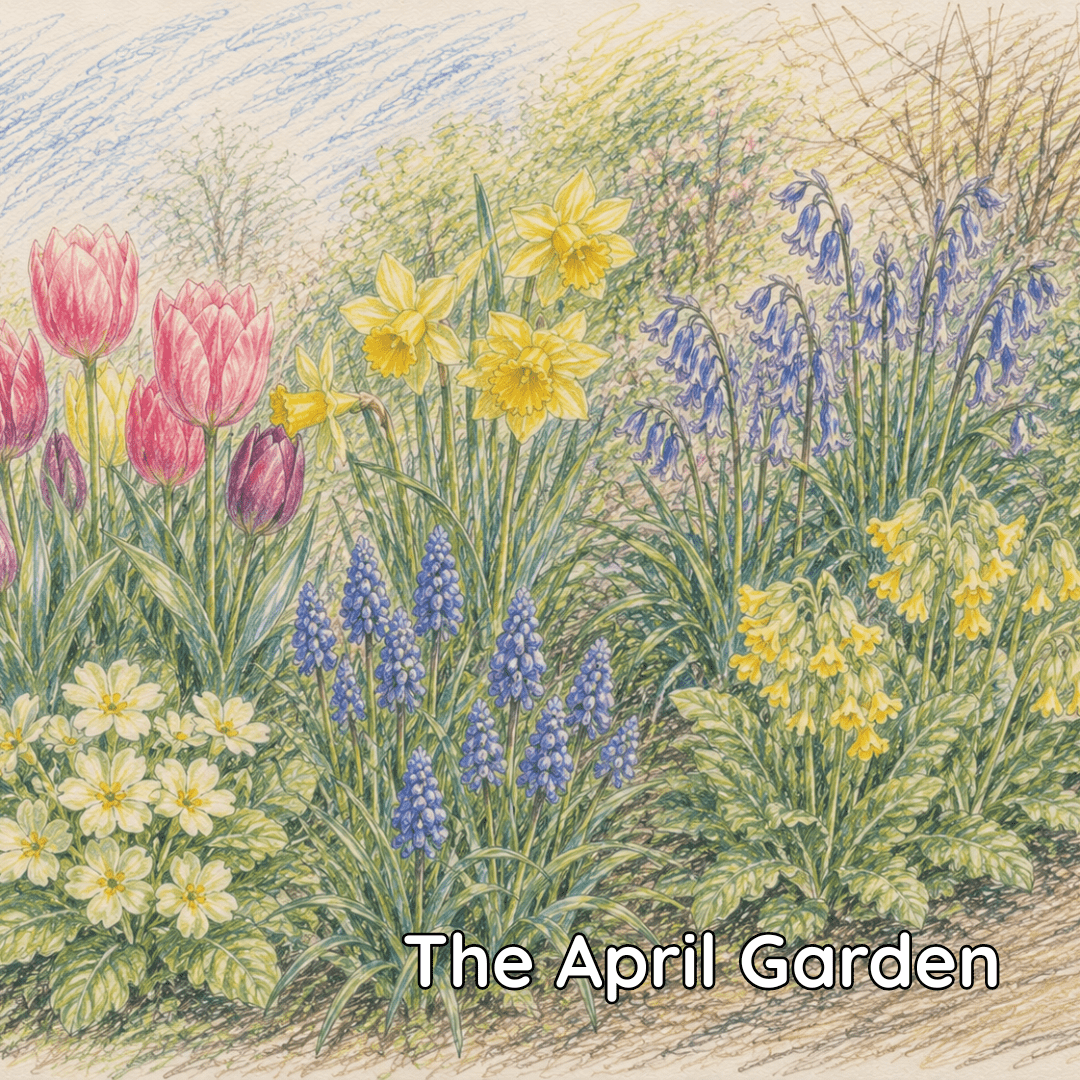
The April Garden

April marks a quiet but confident turning point in the garden. The tentative signs of early spring give way to something fuller—hedgerows soften, trees begin to leaf, and borders gather colour and substance.

There is a sense of momentum now. Warmer days and lengthening light encourage steady growth, while cool nights still serve as a gentle reminder to tread carefully. For gardeners, April is both a time to enjoy what is emerging and to prepare for the abundance ahead.


🌼 What’s Blooming in the April Garden

An April garden is rich in variety, offering layers of colour from bulbs, shrubs, and early perennials.

🌷 Spring Bulbs

Tulips bring structure and clarity to borders. Their upright stems and bold colours—ranging from soft creams to deep purples—create strong visual impact. Many varieties respond to sunlight, opening wide during the day.

Daffodils continue their display, particularly mid- and late-season varieties. Their cheerful yellow and white blooms remain a defining feature of the April landscape.

Muscari (grape hyacinths) form low clusters of blue and purple, ideal for edging paths or filling gaps between larger plants. They are also valuable for early pollinators.


🌿 Woodland Flowers

Bluebells are at their peak towards the end of April, particularly in ancient woodlands. Native varieties are highly scented and form dense, atmospheric carpets.

Primroses and cowslips add a softer, more natural touch. These native wildflowers thrive in lightly shaded areas and are closely associated with traditional British landscapes.


🌺 Flowering Shrubs

Shrubs provide structure and early-season drama in the April garden.

Magnolia trees are often at their most striking now. Their large, sculptural blooms appear before the leaves, creating a brief but memorable display.

Camellias continue to flower in sheltered spots, offering glossy foliage and elegant blooms. They prefer acidic soil and consistent moisture.

Forsythia delivers vibrant yellow flowers along bare stems, often one of the earliest bursts of colour in the garden.

Ribes (flowering currant) produces cascading clusters of pink or red flowers, highly attractive to bees and other pollinators.


🌱 Early Perennials

Perennials begin to establish themselves, forming the backbone of the season ahead.

Pulmonaria (lungwort) offers spotted foliage and nectar-rich flowers that change from pink to blue.

Brunnera provides delicate blue flowers and attractive heart-shaped leaves, thriving in shaded borders.

These plants are essential for supporting wildlife and building early structure in the garden.


🧰 Essential Gardening Jobs in April

April is one of the most important months for garden maintenance. Acting now ensures strong growth and healthy plants throughout spring and summer.

🌿 General Garden Jobs

  • Keep on top of weeding before growth accelerates
  • Apply mulch to beds to retain moisture and improve soil
  • Begin regular lawn mowing, keeping blades slightly high
  • Feed plants with a balanced fertiliser
  • Install supports for taller plants early

🥕 Vegetable Garden Jobs in April

The vegetable garden becomes increasingly active in April, with sowing well underway.

  • Sow carrots, beetroot, lettuce, and spinach outdoors
  • Plant early potatoes
  • Start courgettes, beans, and squash under cover
  • Thin seedlings to avoid overcrowding
  • Protect crops from late frosts using fleece or cloches

Good soil preparation is essential—ensure beds are weed-free and enriched with compost.


🍓 Fruit Garden Jobs in April

April is a crucial time for fruit development, particularly as blossom begins to appear.

  • Feed fruit trees and bushes with a high-potash fertiliser
  • Mulch around plants to conserve moisture
  • Protect blossoms from late frosts
  • Plant fruit bushes such as raspberries and currants
  • Check supports for climbing fruits

Encouraging pollinators now will directly impact fruit yields later in the year.


🌺 Flower Garden Jobs in April

The flower garden begins to take shape, with plenty to do to ensure a long-lasting display.

  • Sow hardy annuals such as cornflowers and nigella outdoors
  • Deadhead fading spring bulbs
  • Divide overcrowded perennials
  • Harden off indoor-grown seedlings
  • Fill gaps in borders for continuous seasonal colour

Planning ahead now helps create a balanced and natural flow through the garden.


🌿 Why April Matters in the Garden

April is not just another month—it is a foundation for the entire gardening year.

What you do now influences:

  • Summer flowering displays
  • Vegetable harvests
  • Fruit yields
  • Overall plant health

It is a time that rewards quiet consistency rather than urgency.


❓ April Garden – FAQs

What flowers bloom in April?

In April, gardens feature tulips, daffodils, bluebells, primroses, cowslips, and flowering shrubs like magnolia, camellia, and forsythia.


What should I do in the garden in April?

Key April gardening jobs include weeding, mulching, sowing vegetables, planting potatoes, feeding plants, mowing lawns, and protecting crops from late frost.


What vegetables can I plant in April?

You can plant carrots, beetroot, lettuce, spinach, and potatoes outdoors, while starting courgettes and beans under cover.


Is April a good time to plant flowers?

Yes, April is ideal for sowing hardy annuals and planting perennials, as soil temperatures begin to rise and daylight increases.


What fruit garden jobs should be done in April?

Feed fruit plants, mulch around them, protect blossoms from frost, plant new bushes, and ensure proper support for climbing fruits.


🌼 Final Thoughts

The April garden is a place of quiet energy. Growth is no longer tentative—it is assured, gathering strength with each passing day.

There is satisfaction in tending it now. Small, thoughtful actions—sowing, feeding, observing—create the conditions for everything that follows.

Step outside when you can. Notice the changes.
Because in April, the garden is not just growing—it is becoming.

Further Reading: Forget-Me-Not Flowers (Myosotis), RHS – Common Cowslip

Take a look at our fabulous range of garden shop here

Inspiration: Follow Us on InstagramThreads, BlueSkyTwitterTikTok and Pinterest.