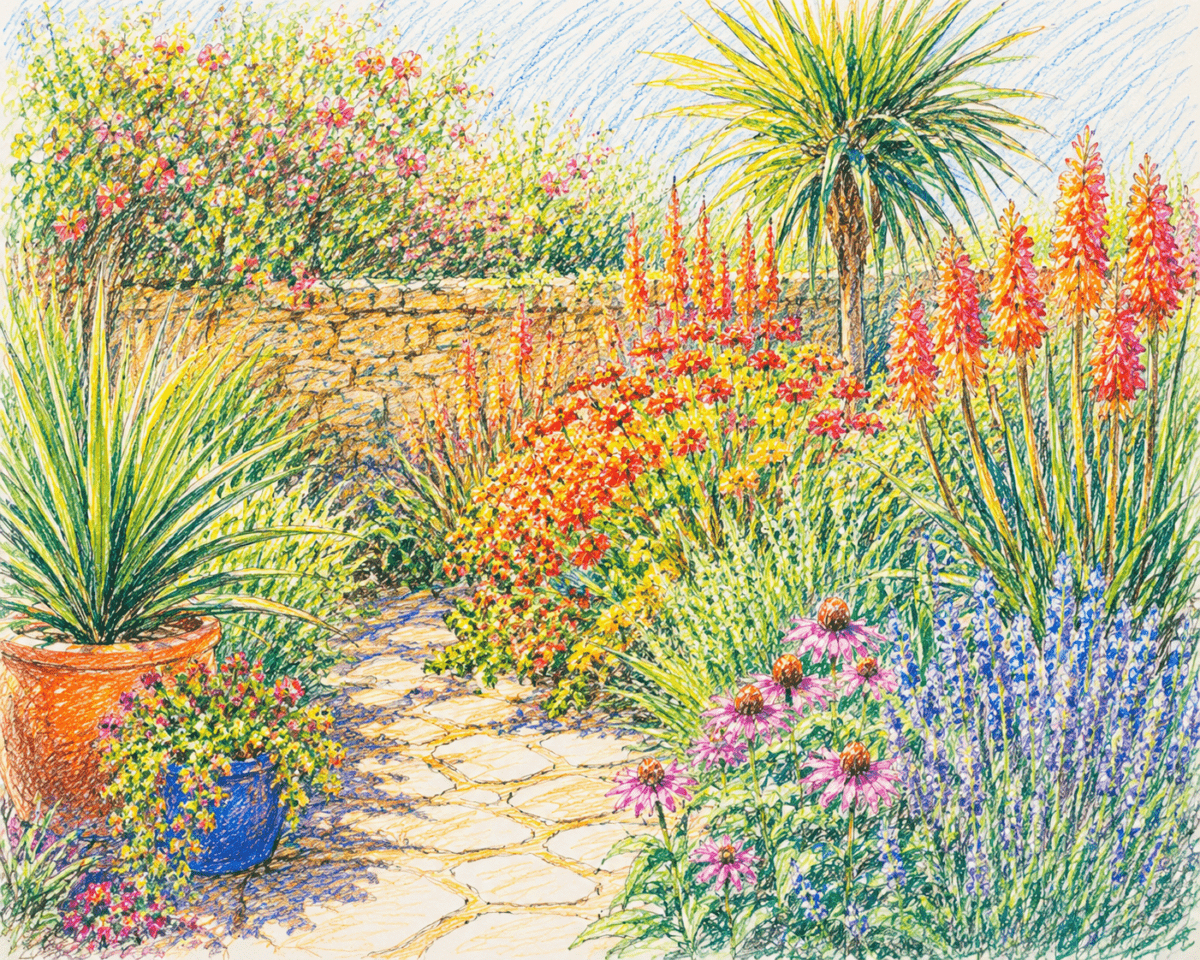
The late summer garden often sings with a different tune. As the soft pastels of June and July begin to fade, a new, more fiery palette can take centre stage. This is the world of the “hot garden,” a style that embraces bold, luminous colours to create a display that sizzles with energy right through to the first frosts. It’s a planting style that feels thrilling and theatrical, drawing on a rich spectrum of reds, oranges, and yellows to extend the feeling of summer long after its peak.
This guide will walk you through the creation of your own hot garden. We will explore what defines this exciting style, its many benefits, and the practical considerations needed to bring it to life. From choosing the perfect sun-drenched spot to selecting plants that burst with colour, you’ll find everything you need to cultivate a garden that glows with warmth and intensity.
What is a Hot Garden?
A hot garden is a planting scheme designed around a specific colour palette: the warm end of the spectrum. Think of the colours of a sunset or a crackling bonfire—vivid reds, deep crimsons, burnt oranges, sunny yellows, and even touches of magenta and electric purple. The goal is to combine these hues to create a vibrant, high-energy space that feels dynamic and visually stimulating.
This style isn’t just about colour; it’s also about texture and form. The plants often feature large, architectural leaves and dramatic flower shapes that contribute to the overall exotic or tropical feel. The effect is a garden that feels lush, full, and unapologetically bold, particularly dazzling in the low, golden light of late summer and early autumn.
Historically, the concept gained prominence in the early 20th century, with influential garden designers like Christopher Lloyd popularising the style at his world-renowned garden, Great Dixter. Lloyd was a master of combining colours in ways that others found daring, proving that a garden could be both sophisticated and electrifyingly bright.
The Joys and Challenges of a Hot Garden
Embracing a hot garden scheme comes with a wealth of benefits, but it’s also wise to be aware of its potential drawbacks before you begin.
Key Benefits
- Extended Season of Interest: Hot-coloured plants, such as dahlias, heleniums, and cannas, often peak in late summer and autumn, providing a spectacular display when other parts of the garden are starting to look tired.
- High Visual Impact: There is nothing subtle about a hot garden. The bold colours create an immediate and powerful focal point, drawing the eye and making even a small space feel exciting and full of life.
- Attracts Pollinators: Many late-season, brightly coloured flowers are a magnet for bees, butterflies, and other pollinators, creating a buzzing, lively ecosystem.
- Complements Late Summer Light: The low, golden rays of the late afternoon sun make these warm colours positively glow, creating a magical, atmospheric effect.
Possible Disadvantages
- Can Be Overwhelming: If not carefully planned, the sheer intensity of the colours can feel chaotic or visually jarring. A well-considered design is essential to achieve harmony.
- Requires a Sunny Spot: The vast majority of plants that fit this brief are sun-lovers. A hot garden is not a suitable style for a shady or north-facing plot.
- Higher Maintenance: Many of the star plants, like dahlias and cannas, are tender perennials that need to be lifted and stored over winter in most parts of the UK. This adds an extra layer of seasonal work.
Designing Your Hot Garden
Success with a hot garden lies in thoughtful planning. Before you even think about buying plants, consider the fundamental design principles that will make your border sing.
Choose Your Site Carefully
The first and most crucial step is selecting the right location. You need a spot that receives at least six to eight hours of direct sunlight a day. This is non-negotiable, as sun-loving plants will fail to thrive and produce the vibrant flowers you desire without it. A south- or west-facing border is ideal. Also, consider shelter; a position protected from strong winds will help prevent damage to tall, stately plants like cannas and certain dahlias.
Soil Considerations
Most hot-themed plants prefer well-drained but moisture-retentive soil. They are often vigorous growers and need plenty of nutrients and water to support their lush growth and prolific flowering. Before planting, it’s a great idea to enrich your soil by digging in plenty of organic matter, such as well-rotted manure or garden compost. This will improve both the soil’s structure and its fertility, giving your plants the best possible start. If you have heavy clay, adding grit will improve drainage, which is vital for preventing roots from rotting, especially during wet winters.
Playing with Colour
While the theme is “hot,” this doesn’t mean a random jumble of bright colours. A successful scheme has structure.
- Anchor Colours: Choose one or two dominant colours to act as the backbone of your design. For example, you might build your scheme around a deep, velvety red and a rich orange.
- Accent Colours: Use pops of contrasting or complementary hot colours to add rhythm and interest. A splash of bright yellow or a flash of magenta can lift the entire scheme.
- The Role of Green: Don’t underestimate the importance of foliage. Green acts as the perfect canvas for hot colours, providing a calming counterpoint that stops the scheme from becoming overwhelming. Look for plants with interesting leaf shapes, textures, and shades of green, from dark, glossy leaves to zingy lime-green foliage. Dark purple or bronze foliage, like that of Dahlia ‘Bishop of Llandaff’, can also add incredible depth and drama.
Structure and Form
A successful garden design has layers. Think about the heights and shapes of your plants to create a visually pleasing composition.
- Back of the Border: Use tall, architectural plants to create a dramatic backdrop. Think towering cannas, statuesque verbenas, or tall grasses like Miscanthus.
- Middle of the Border: This is where you can place your mid-height “star” plants, such as dahlias, heleniums, and rudbeckias. Plant them in bold drifts or groups of three or five for a naturalistic, impactful look.
- Front of the Border: Use lower-growing plants to edge the border and soften the transition to the lawn or path. Heucheras with bronze or lime-green leaves, or low-growing geums, work beautifully here.
Plant Suggestions for a Hot Garden
Here are some excellent plant choices to get you started, from towering architectural wonders to vibrant floral fillers.
Architectural Stars (Back of the Border)
- Canna indica: With their enormous, paddle-like leaves (often in shades of green, bronze, or stripes) and brilliant flowers in red, orange, or yellow, cannas provide an instant tropical feel.
- Verbena bonariensis: Though its flowers are purple, its tall, wiry stems and airy habit allow it to weave through hotter colours, adding height without bulk.
- Helianthus (Sunflowers): The quintessential sun-loving flower, with many varieties offering rich, rusty reds and deep oranges beyond the classic yellow.
Mid-Border Performers
- Dahlia: The undisputed queens of the late summer garden. Varieties are almost endless. For a hot scheme, look for Dahlia ‘Bishop of Llandaff’ (scarlet flowers, dark foliage), ‘David Howard’ (apricot-orange), or ‘Totally Tangerine’.
- Helenium (Sneezeweed): These daisy-like flowers come in fiery shades of yellow, orange, and red. ‘Moerheim Beauty’ is a classic, with rich, reddish-brown petals.
- Crocosmia: Their arching sprays of trumpet-shaped flowers are invaluable. Crocosmia ‘Lucifer’ is a famous variety with intense, tomato-red blooms.
- Rudbeckia fulgida ‘Goldsturm’ (Black-Eyed Susan): Offers a mass of golden-yellow, daisy-like flowers with a dark central cone from late summer onwards.
- Kniphofia (Red Hot Poker): The name says it all. These plants produce dramatic spikes of tubular flowers, typically in shades of red, orange, and yellow.
Front of the Border and Fillers
- Geum: Many geums flower earlier in the season, but some, like ‘Totally Tangerine’, will repeat-flower into late summer, offering brilliant pops of orange.
- Heuchera: Grown primarily for their foliage, varieties like ‘Marmalade’ (rich amber and pink) or ‘Lime Marmalade’ (bright lime green) provide fantastic contrast.
- Achillea (Yarrow): Look for varieties like ‘Walther Funcke’ which has flowers that open orange-red and fade to terracotta and ochre.
The Master of Hot Gardens: Christopher Lloyd
No discussion of hot gardens is complete without mentioning Christopher Lloyd (1921-2006) of Great Dixter in East Sussex. A truly revolutionary gardener and writer, Lloyd tore up the rulebook of polite, pastel-coloured English gardening. He championed the use of vibrant, clashing colours and bold, exotic forms.
His famous Long Border at Great Dixter is a masterclass in this style. Here, he fearlessly combined cannas, dahlias, and crocosmias in a sizzling display that demonstrated how powerful and joyous a hot colour scheme could be. Visiting Great Dixter is a pilgrimage for anyone interested in this style of gardening; it remains a living, breathing example of a garden created with passion and horticultural genius.
Great Hot Gardens to Visit in the UK
If you’re looking for inspiration, seeing a mature hot garden in person is invaluable.
- Great Dixter, East Sussex: The original and, for many, still the best. The Long Border is at its peak from August to October.
- RHS Garden Wisley, Surrey: The extensive herbaceous borders here often feature spectacular hot-themed sections, showcasing a huge variety of plants.
- Hidcote Manor Garden, Gloucestershire: While famous for its garden “rooms,” Hidcote features a stunning Red Border that provides a perfect example of a single-colour dominant scheme.
Realising Your Own Hot Garden
Creating a hot garden is a wonderfully rewarding project that brings a unique energy and prolonged beauty to your outdoor space. It is a celebration of colour, light, and life, perfectly timed to illuminate the golden days of late summer and autumn. While it demands a sunny spot and a little more effort in terms of maintenance, the spectacular results are more than worth it.
By carefully considering your site, preparing your soil, and choosing a harmonious blend of colours and forms, you can design a garden that not only looks stunning but also feels alive. So why not embrace the bold? Take inspiration from the masters, select your fiery palette, and prepare to plant a garden that truly sizzles.
Further Reading: Creating a Butterfly Garden: A Quiet Invitation to Nature, Ten Plants that butterflies love, Sustainable Hardscaping: Build a Beautiful, Eco-Friendly Garden, Why Bees Are Essential to Our Gardens, Top 10 Garden Birds in the UK (and How to Spot Them), Helping Wildlife This Winter, How to Create and Maintain a Garden Pond, Transform Your Allotment into a Biodiversity Haven
Inspiration: Follow Us on Instagram, Threads, BlueSky, Twitter, TikTok and Pinterest.