There is something irresistible about a warm summer’s day in the garden.
The borders are alive with colour, bees drift lazily between flowers, and long evenings invite us outdoors long after the working day is done. Yet while we may welcome the sunshine, our gardens often experience it rather differently.
After several days of heat, even the healthiest plants can begin to look weary. Leaves droop. Flowers fade more quickly. Containers dry out at surprising speed. The greenhouse, once a place of growth and promise, can start to feel more like an oven.
The good news is that most plants are remarkably resilient when given the right care. The secret isn’t necessarily watering more, but watering wisely.
Understanding what heat does to plants
Plants lose moisture through their leaves throughout the day. During hot weather, this process speeds up dramatically.
To protect themselves, many plants temporarily wilt, particularly during the hottest part of the afternoon. This can look alarming, but it isn’t always a sign that a plant is dying.
Much like us seeking shade on a hot day, plants have their own ways of coping.
The important thing is to observe carefully before reaching for the watering can. A plant that looks exhausted at 3pm may have recovered completely by evening.
The biggest mistake gardeners make
When temperatures soar, it’s tempting to water whenever plants appear distressed.
Unfortunately, midday is often the worst possible time.
Water applied during the hottest part of the day evaporates quickly before it can reach the roots where it is needed most. In extreme conditions, rapid temperature changes can also place additional stress on already struggling plants.
Instead, water either:
- Early in the morning before temperatures rise.
- Later in the evening once the heat of the day has passed.
These cooler periods allow moisture to soak deeply into the soil, giving roots time to absorb it properly.
Think of it as offering a long, refreshing drink rather than a hurried splash.
Soak, don’t sprinkle
One of the most common sights during a heatwave is a gardener lightly spraying plants every day.
It feels helpful, but often achieves very little.
A brief sprinkle only wets the soil surface. The moisture disappears quickly, encouraging roots to remain close to the top where they are more vulnerable to drying out.
A deep soak is far more effective.
Water slowly and thoroughly so moisture penetrates well below the surface. This encourages roots to grow deeper into the soil where conditions remain cooler and more stable.
In hot weather, one deep watering is usually far more beneficial than several shallow ones.
Water the roots, not the leaves
When plants are struggling, our instinct is often to cool the foliage.
In reality, the roots are where attention should be focused.
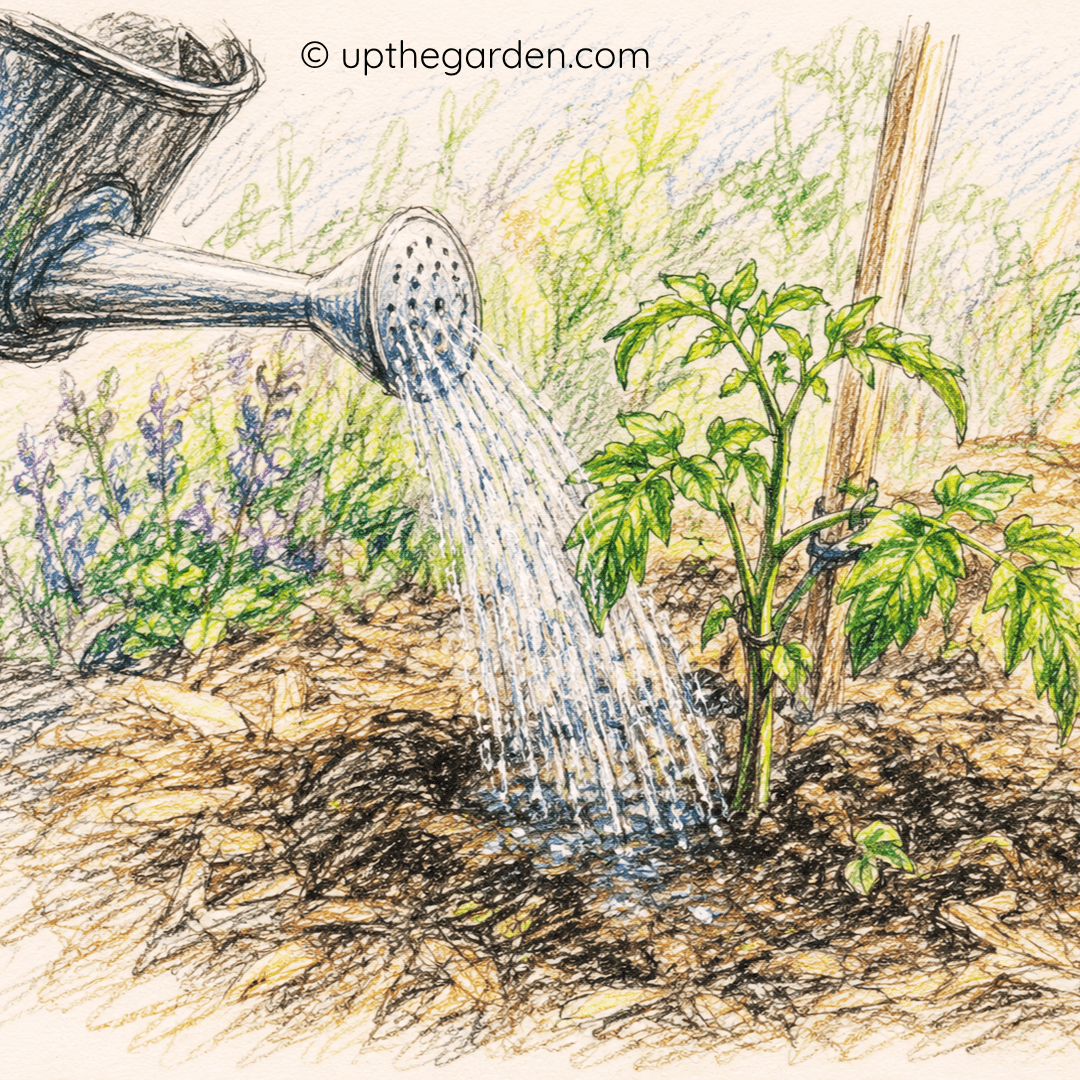
Aim water directly at the base of the plant, allowing it to soak into the soil around the root zone.
Wet leaves provide only temporary relief and can sometimes encourage fungal problems when conditions change. The roots are the plant’s lifeline, and that’s where moisture will do the greatest good.
A slow trickle at ground level is often worth far more than a shower from above.
Containers need extra attention
Pots and containers can become particularly vulnerable during hot weather.
Unlike plants growing in open ground, they have only a limited volume of soil from which to draw moisture. Terracotta pots, while beautiful, can dry out especially quickly.
Check containers daily during prolonged heat.
Signs they need water include:
- Soil pulling away from the edges of the pot.
- Wilting that persists into the evening.
- Containers feeling noticeably light when lifted.
Grouping pots together can help create a slightly cooler, more humid environment and reduce moisture loss.
Using mulch to lock in moisture
Nature rarely leaves bare soil exposed.
A layer of mulch helps mimic natural conditions by reducing evaporation and keeping the root zone cooler.
Suitable mulches include:
- Garden compost
- Well-rotted manure
- Leaf mould
- Bark chippings
Applied around plants, mulch acts like a protective blanket, helping precious moisture remain in the soil for longer.
During a heatwave, this simple step can make a remarkable difference.
Reviving heat-stressed greenhouse plants
Greenhouses present a particular challenge during periods of hot weather.
Even on a moderately warm day, temperatures inside can rise dramatically. During a heatwave, conditions may become severe enough to cause heat stress in tomatoes, cucumbers, peppers and other tender crops.
Signs of heat exhaustion include:
- Wilting despite moist compost
- Flower drop
- Yellowing leaves
- Scorched leaf edges
- Slowed growth
If plants are suffering, resist the urge to flood them immediately.
Instead:
Increase ventilation
Open doors, vents and windows as early as possible each morning.
Encouraging airflow is one of the most effective ways to reduce excessive temperatures.
Create shade
Greenhouse shading paint, shade netting, or even temporary sheets positioned outside can help reduce the intensity of direct sunlight.
Water thoroughly at the roots
Give plants a deep watering during the cooler parts of the day, ensuring moisture reaches the entire root ball.
Damp down paths
Lightly wetting greenhouse paths and staging can help lower temperatures through evaporation without saturating plant roots.
Remove severely damaged foliage
If leaves have become scorched or crispy, remove them gradually. This allows plants to direct energy into healthy new growth.
Most importantly, be patient.
Plants often look worse before they recover. Given cooler conditions and consistent care, many will bounce back surprisingly well.
Accepting a little imperfection
One of the quiet lessons gardening teaches is that not every leaf needs to be perfect.
During prolonged hot weather, some flowers may fade sooner. A few leaves may scorch. Growth may temporarily slow.
This is part of the natural rhythm of the season.
The aim isn’t to create a flawless garden throughout every weather event. It is to help plants remain healthy enough to continue growing when conditions improve.
Working with the weather, not against it
The most successful gardeners rarely fight nature. Instead, they learn to observe it.
They notice which parts of the garden stay cool longest. They water before the day begins. They protect soil with mulch and recognise the difference between temporary wilting and genuine distress.
A heatwave can be challenging, but it can also teach us to garden more thoughtfully.
And as evening arrives, temperatures soften, and the first shadows stretch across the borders, there is a certain satisfaction in knowing that a few simple actions have helped your garden weather another hot summer’s day.
After all, gardening has never been about controlling nature. It has always been about working alongside it 💚
Further Reading: How to Help your Garden Survive when there is a Hosepipe Ban, The Art of Ollas, How to Refurbish Your Garden to Add Value to Your Home, How to create a thriving garden on a new build plot, Sustainable Hardscaping: Build a Beautiful, Eco-Friendly Garden, Climate-Resilient Planting: Future-Proofing Your Garden, Transform Your Garden into a Butterfly Haven, Ten Plants that butterflies love
Inspiration: Follow Us on Instagram, Threads, BlueSky, Twitter, TikTok and Pinterest.