In The Arms of Mother Nature: Hedgehog Awareness Week 5th to 11th May 2024
There’s something about the humble hedgehog that captures the hearts of people across the globe. Maybe it’s their charmingly prickly exterior and surprisingly endearing faces, or perhaps it’s their status as one of the most beloved woodland creatures. There’s no denying the fact that hedgehogs hold a special place in the narrative of man and nature. However, the idyllic scene of these spiky little mammals scuttling through the undergrowth is being marred by a narrative of decline. This brings us to Hedgehog Awareness Week, a vital annual event aimed at shedding light on the plight of hedgehogs and taking action to protect them. This is a call to arms for wildlife enthusiasts, animal lovers, and anyone with an eco-conscience.
Unravelling the Charm of the Hedgehog
Hedgehogs are nocturnal, insect-eating mammals with a characteristic protective layer of sharp spines. Their popularity in the public’s eye is perhaps surpassed only by their vulnerability. With numbers in sharp decline due to habitat loss and human intervention, it is no wonder that initiatives like Hedgehog Awareness Week are not just important but also essential. This weeklong event celebrates the uniqueness of hedgehogs and aims to raise awareness about the issues threatening their very survival.
The Decline in Hedgehog Population
For decades, the hedgehog has been an iconic symbol of British wildlife. However, with its numbers dropping at an alarming rate, it’s a stark reminder of a more profound issue. Urbanisation, pesticide use, road accidents, and even the loss of garden hedges have contributed to a decline in the hedgehog population. The statistics are worrying – with a third of the UK’s population lost in just ten years, the hedgehog’s future is indeed precarious.
Why Awareness Is Key
Hedgehog Awareness Week has never been more critical than it is now. By understanding the challenges that hedgehogs face, we can play a pivotal role in their conservation. Awareness initiatives educate the public about the simple things that anyone can do to help hedgehogs, from making gardens more hedgehog-friendly to creating safe spaces for them to nest.
What You Can Do to Protect Hedgehogs
Preservation begins at an individual level. There are numerous steps we can take to create a haven for hedgehogs in our local areas:
Hedgehog Highways
Creating small holes in or under garden fences and walls establishes hedgehog highways, allowing them to find the wider habitat and food resources they need.
Nesting Sites
Leave a wild area of the garden for nesting. Compost heaps, log piles, and dense undergrowth all provide safe spaces for hedgehogs to rest and breed.
Food and Water
Leaving shallow dishes of water and a little moist cat or dog food can provide a life-saving meal for a hungry hedgehog.
Avoiding Chemicals
Minimising the use of pesticides and slug pellets in the garden ensures that hedgehogs don’t inadvertently ingest harmful substances as they search for food.
Get Involved in Hedgehog Awareness Week
Participating in Hedgehog Awareness Week doesn’t have to be daunting. Whether attending local events, sharing information on social media, or making small changes at home, every action contributes to a brighter future for hedgehogs. This year’s focus is on cataloguing hedgehog sightings to gather important data on their habitats and movement patterns.
Supporting Organisations
There are several organisations dedicated to hedgehog conservation that could use our support. From donations to volunteering, there are ways to ensure these organisations can continue their essential work.
Hedgehog Hospitals
Support your local hedgehog hospital, or if you’re unable to volunteer, consider donating food, funds, or supplies.
Conservation Groups
Joining a conservation group can be an effective way to contribute to the protection of hedgehogs and their habitats.
Wildlife Charities
Many renowned wildlife charities have hedgehog-focused projects. Your support can help these projects in their conservation efforts.
The Road Ahead
Hedgehog Awareness Week should not be the only time we think about protecting these enchanting creatures. It’s a reminder of the ongoing work needed to safeguard our natural world. By embodying the spirit of this event throughout the year, we can collectively create an environment that is safe and nurturing for hedgehogs—and all wildlife—a part of Mother Nature we can all be proud to protect.
Are you an eco-conscious individual looking for an innovative way to promote biodiversity and turn your garden into an insect sanctuary? Or perhaps you’re a gardener eager to see your green retreat flourish with the vibrancy of nature? Introducing the bug hotel – a simple yet extraordinary structure that can provide a home for various beneficial insects. With the growing awareness and enthusiasm for sustainable living, constructing a bug hotel is not just a project for the environmentally inclined but also a strategic move for your garden’s health.
So, how do you create a bug hotel, ensuring it’s not just another DIY project, but one that cultivates a thriving ecosystem in your own garden, taking your garden game to the next level, with a haven for your six (and even more) legged friends.
Why Build a Bug Hotel?
The decline in insect populations is a growing concern, and scientists have been urging conservation efforts to preserve these vital creatures. Insects are essential parts of every terrestrial ecosystem. They contribute to pollination, decomposition, and serve as an important food source for other species. By providing a refuge through a bug hotel, you are not only creating a support system for local wildlife but also enhancing the health and productivity of your garden. Plus, it’s a fascinating way to observe nature for adults and children.
The Secret Life of Hotel Guests
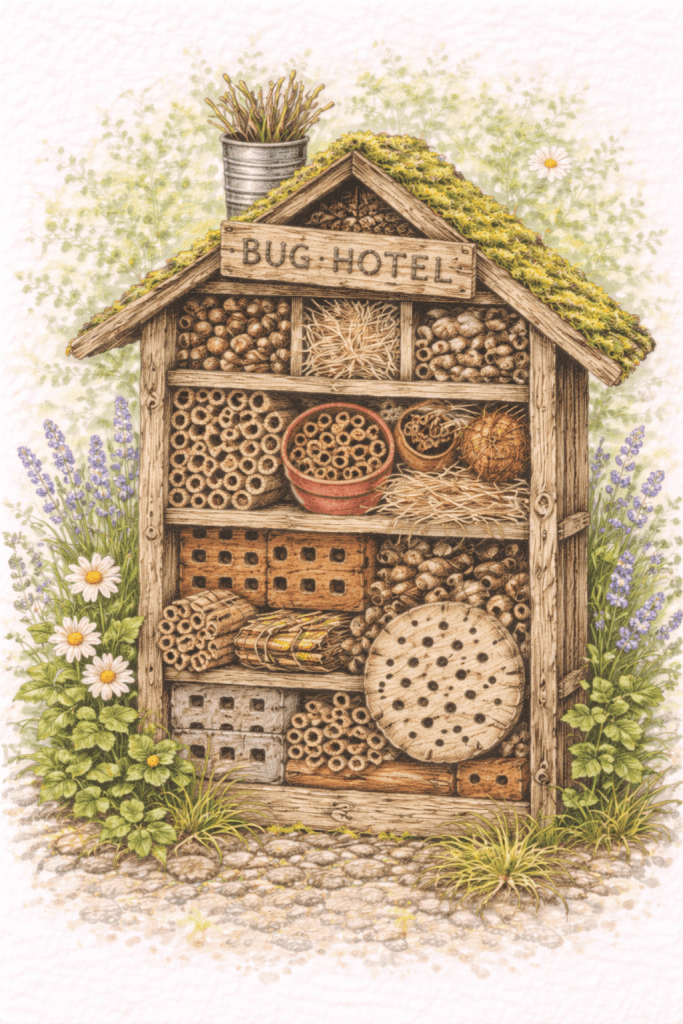
A bug hotel, often called an insect or bee hotel, is a man-made structure created to mimic the components of a natural habitat – crevices for hiding, spaces for nesting, and materials for insulation. Constructing one invites a diverse range of insects like solitary bees, ladybirds, lacewings, and even spiders. In return, they contribute to pest control, pollination, and the general balance of your garden ecosystem.
What Are the Benefits?
Before we get into the nitty-gritty of construction, it’s crucial to understand the plethora of advantages that come with hosting these tiny hotel guests.
A Natural Defence Mechanism
Many of the insects that are attracted to bug hotels, such as ladybirds and certain species of wasps, act as natural predators to garden pests. They help keep the populations of potentially harmful insects in check, ensuring a more balanced and healthier garden ecosystem that doesn’t rely solely on chemical methods for pest control.
Fruitful Pollinators
Solitary bees, for instance, are incredible pollinators — cherry-picking pollen like pros and transferring it to other flowers efficiently. These activities lead to better blooming and fruit production in your garden, offering tangible rewards for your bug-friendly overhaul.
A Multipurpose Hotel
Bug hotels aren’t just for insects. They can also draw other wildlife to your garden. Birds that feed on insects, urban hedgehogs, and even toads may all make their way to the buffet that your hotel provides, adding additional layers of interest and diversity to your garden.
What Materials Do You Need?
Now that you’re convinced of the bug hotel’s merits, it’s time to gather the materials to get started. Firstly, if you don’t really have the time or inclination to get building one yourself, you can buy a ready-made bug hotel. Many schools often choose to buy a ready-made option, and there are really good ones available. But, if you choose to show off your own handywork, then here’s what you’ll need:
Support Structure: A solid frame to hold the components and provide stability. This can be as simple as four larger pieces of wood assembled into a box or a more decorative frame for aesthetic appeal.
Fillings for Insect Rooms: A variety of materials that offer different size nooks for insects to dwell in. For example, hollow plant stems, pine cones, and even reeds, provide hideaways for insects.
Insulation Materials: Dry leaves, straw, and natural fabrics like hessian can safeguard the inside against extreme weather.
A Roof or Covering: Shelter is essential to protect the insects from the elements. A simple sloped roof made of wood, tiles, or even clay pots would suffice.
Fastening Tools: Screws, nails, or strong garden twine will hold the structure together.
Decorative Design Elements: If aesthetics matter to you, you can include decorative elements like painted surfaces, mosaic tiles, or engraved patterns.
How Do You Go About It?
Constructing a bug hotel is a creative endeavour with room for personalisation. Begin by selecting a location in your garden that receives a good amount of sunlight and is sheltered from the elements. Once you find the perfect spot, follow these steps to start building:
Step 1: Construct the Frame
Depending on the size of your bug hotel, assemble the support structure. The goal is to create a solid framework that can house different compartments.
Step 2: Fill the Rooms
Now it’s time to fill the compartments within the frame with materials that insects can use. Create layers starting with larger items like bamboo canes in the lowest layers and finer materials like bark and straw as you build up the layers.
Step 3: Insulate and Protect
After filling the rooms, add a layer of insulation over the top. This will prevent excessive moisture and maintain a consistent temperature inside the hotel. Make sure that the materials you use for insulation, such as dry leaves or shredded paper, won’t pack down and block the insect access.
Step 4: Add a Roof
One of the most crucial components of a bug hotel is a proper roof. This should overhang the structure to provide a drip line, ensuring that water doesn’t penetrate inside. It can also be a prime spot for growing some sedum or other low-maintenance plants that can further attract insects and protect the structure.
Step 5: Decorating the Exterior
Once the bug hotel is functional, you can paint the exterior with non-toxic paint or decorate it with mosaics to add personality and further enhance its appeal to your garden guests.
Ensuring Bug Harmony
While the primary intent is to attract and provide a habitat for these beneficial bugs, it’s important to consider the types of insects your bug hotel may draw in. Try to steer clear of materials or designs that might attract pests or invasive species. Research and consider the local wildlife before setting up your hotel to avoid any unwelcome encroachments.
House Rules for Hotel Dwellers
Just like any property, there are house rules. For instance, avoid using any possible pests as fillers, and don’t use materials that have been treated with chemicals. Also, keep the area pesticide-free to maintain a safe and healthy space for your bugs.
Does It Need Maintenance?
Bug hotels are relatively low maintenance, but they do require a bit of care to ensure they remain effective and attractive to your insect friends.
Regular Checks
Check your bug hotel a couple of times a year, making sure that no pests or other unwelcome guests have taken up residence. Ensure that the structure is still sound and that it hasn’t become a danger to other wildlife in your garden.
Refresh the Rooms
Insect hotel rooms can deteriorate over time, particularly if they are exposed to extreme weather. Refresh the materials as necessary, keeping an eye out for any signs of mould or nesting by undesired occupants.
What Insects Benefit and Why?
Now that you have your bug hotel up and running, who can you expect to check-in? Here are some of the most common visitors and the benefits they bring:
Solitary Bees
Solitary bees are excellent pollinators and are far less likely to sting than their social cousins. By providing a place for these bees to nest, you may see an increase in fruit and flowers in your garden.
Ladybirds
Ladybirds are voracious predators of aphids and other garden pests. They can help control pest populations without the need for chemical intervention.
Lacewings
The delicate, lace-winged insects are efficient predators, their larvae being especially voracious eaters of aphids and other soft-bodied pests.
Spiders
While not an insect, spiders are certainly a welcome resident in any bug hotel. They help control insect populations and are an essential part of the garden ecosystem.
In an era where humanity is re-evaluating its relationship with the environment, creating spaces for nature to flourish has never been more important. A bug hotel is an accessible and rewarding project that can make a real difference in the health of your garden and the wider ecosystem. Enhance your connection with the natural world, spark your creativity, and watch as your garden thrives with the bustling activity of its insect inhabitants. Remember, like any sustainable practice, the impact of a bug hotel is cumulative. Collectively, these small contributions add up to significant changes in the health and resilience of our environment. Take on this project as a beacon of your commitment to the earth and all its inhabitants, big and small. Happy building, and here’s to a buzzing
In the quiet moments of a garden or out on the fringes of a forest, the gentle chirping of birds can transform an ordinary space into a place of wonder. For gardeners and nature enthusiasts, the allure of witnessing these winged creatures is unparalleled. But the whimsical dance of birds is a two-way street — just as they grace us with their presence, we can invite them into our sanctuaries by creating an environment that’s irresistible to our feathered friends. This comprehensive guide is your ticket to transforming your garden into a haven for birds, providing a safe and abundant space that will have them returning season after season.
The Why and How of Attracting Birds to Your Garden
The Intrinsic Ecological Value
Attracting birds is more than just creating a picturesque scene. It’s about fostering a balance in the ecosystem. Birds play a pivotal role in controlling insects, spreading seeds, and even pollinating flowers. By luring them into our gardens, we not only delight in their beauty but also support the intricate tapestry of nature.
The Psychological Benefits
For many, the presence of birds in daily life has a soothing effect. Studies have shown that birdwatching can reduce stress, improve mental acuity, and even support a calming home environment. By attracting birds to your garden, you’re creating an outdoor retreat that refreshes and revitalises.
Natural Food Sources: The Way to a Bird’s Heart
Understanding Dietary Needs
Different bird species have different dietary requirements. Whether it’s seeds for finches, or insects for sparrows, understanding what your local avian community craves is key. Invest in a variety of food sources to cater to a diverse clientele.
Building a Bird-Friendly Landscape
Incorporate native plants that produce seeds, fruits, and nectar. Trees and shrubs offer natural bird food. Additionally, consider leaving seed heads on flowers and shrubs throughout the winter for a natural smorgasbord.
Offering Shelter: Bushes, Trees, and Other Bird Abodes
Vegetative Cover
Thick bushes and dense trees provide excellent shelter from the elements and potential predators. Create a layered landscape with plants of varying height to satisfy the needs of ground-dwelling and aerial birds alike.
Man-Made Bird Houses
While natural shelters are best, strategically placed birdhouses can augment the living space available to cavity-nesting birds. Make sure the houses are tailored to the needs of specific species, with the correct entrance hole size and interior dimensions.
Thirst Quenchers: Providing Water in Your Garden
Birdbaths and Ponds
A shallow birdbath is one of the easiest ways to provide water, and a pond can be an attractive oasis for many bird species. Ensure that any water source is kept clean and fresh to prevent the spread of diseases among your avian visitors.
Nesting Sites and Safety
The Importance of Safe Nesting Sites
Mature trees and certain tall shrubs offer natural nesting sites, but many bird species are adaptable and will use man-made structures. Give birds the security they need by placing nesting boxes high enough to deter predators but low enough for you to monitor and maintain.
Keep an Eye on Predators
The Feline Factor
Domestic cats are one of the leading causes of bird mortality. Minimize the risk by keeping your cat by providing them with a well-fitted bell that can give birds a fighting chance.
Other Garden Protectors
Fencing and spikes can deter larger ground predators, while netting and other barriers can keep more cunning hunters at bay. Simple measures like these can significantly boost the chances of fledglings surviving to adulthood.
The Art of Hygiene: Maintaining Cleanly Feeding Stations
The Pitfalls of Neglected Bird Feeders and Baths
Dirty feeders and baths are a breeding ground for bacteria and can spread diseases like salmonellosis and aspergillosis. Regular cleaning and, when needed, disinfecting, are vital for the health of your local bird population.
Best Practices for Bird-Feeding Hygiene
Use feeders that are easy to clean, and opt for feeders made of nonporous materials like plastic or ceramic that are less likely to harbour pathogens. Be diligent in keeping the area beneath feeders clean to prevent mould and pests as well.
A Culinary Guide for Bird Enthusiasts
Understanding Bird Seed Types
Different seeds attract different birds. Black oil sunflower seeds are a favourite of many feeder birds due to their high oil content, while nyjer seeds are sought after by finches. Offerings like millet and cracked corn can attract a variety of ground-feeding birds.
Beyond Seeds: Other Bird Food Varieties
Suet blocks are a high-energy treat for woodpeckers and other cling-feeders, while mealworms and fruit can entice an even broader spectrum of birds. Live mealworms are particularly beneficial for providing protein during the breeding season.
Conclusion
In the quiet dedication to creating a bird-friendly oasis in your garden, you not only enrich the lives of the creatures that visit but also open yourself to a world of wonder that’s right outside your door. By following the advice in this guide, you’ll be well on your way to becoming a master of avian hospitality, enjoying the sight of vibrant plumage against the verdant backdrop of your own thriving ecosystem. Happy birdwatching!
“Every bird, every tree, every flower reminds me what a blessing and privilege it is just to be alive.”
As gardeners, we have a unique opportunity to create a space that not only looks beautiful but also serves as a sanctuary for wildlife. By including plants that attract birds, butterflies and other wildlife, we can help support local ecosystems and promote biodiversity.
Cat Mint – Nepeta Racemosa is a great option for attracting bees and butterflies to your garden. Not only is it beautiful with its purple flowers, but it also has a lovely scent. This plant is easy to grow and can thrive in full sun or partial shade.
Dutch Lavender – Lavandula intermedia Gros Bleu is a classic garden plant known for its beautiful scent and lovely purple flowers. Dutch Lavender is a hardy variety that attracts bees and butterflies. It needs full sun and well-draining soil to thrive.
Pussy Willow – Salix Capraea is a shrub that produces fuzzy catkins in the spring. These catkins provide food for early emerging bees and butterflies. This shrub is easy to grow and can tolerate wet soil conditions.
Marjoram – Origanum vulgare herb is a great option for attracting bees and butterflies to your garden. It produces beautiful pink flowers in the summer and has a lovely scent. Marjoram is easy to grow and can tolerate both full sun and partial shade.
Giant Hyssop – Agastache foeniculum is a beautiful plant with purple flowers that attract bees and butterflies. It’s also a great source of nectar. This plant needs full sun and well-draining soil to thrive.
Buddleia – Buddleja davidii is commonly known as the butterfly bush, Buddleia is a must-have for any wildlife garden. Its long, fragrant blooms are irresistible to butterflies and moths, while also attracting bees and other pollinators. Moreover, the dense, bushy habit of Buddleia provides excellent cover for smaller wildlife such as mice and birds.
Sunflowers – Helianthus are a great choice for not only providing a bold splash of colour in your garden but also for attracting birds and bees. The large, open flowers and plentiful seeds are particularly appealing to species such as goldfinches and house sparrows. Additionally, sunflowers can also attract bees and other pollinators, making them a great addition to any wildlife garden.
Ivy – Hedera helix is often considered a nuisance plant, ivy can actually be incredibly beneficial to wildlife. As a late-flowering plant, ivy provides a vital source of nectar and pollen in the autumn months when other plants have finished blooming. Additionally, the dense foliage of ivy can provide vital shelter for birds and insects throughout the year.
Including wildlife-friendly plants in your garden is not only a fantastic way to promote biodiversity, but it also provides a chance to enjoy the beauty of nature from your own backyard. By planting a selection of the top plants we have covered, you can create a space that is not only visually stunning but also serves as a valuable habitat for local wildlife.
Gardening is not only a hobby, but it’s also an art form. The beauty of a garden goes beyond flowers and trees. It’s about creating a tranquil space that soothes the soul and inspires creativity. Water is a crucial element in any garden and adding a pond can elevate the aesthetics of your garden to the next level. In this blog post, we’ll discuss the benefits of adding a pond to your garden and why you should consider it for your next gardening project.
Promotes a Healthy Eco-System
Ponds are an excellent addition to your garden because they attract a variety of birds, insects, amphibians, and other wildlife. The presence of water creates the perfect breeding ground for these creatures to thrive. It promotes a natural balance to your garden, helping control pests, and ultimately, retaining the health of your plants. You don’t have to worry about introducing harmful chemicals to your garden because the eco-system thrives naturally.
Enhances the Beauty of Your Garden
A pond is a beautiful addition to any garden. It adds diversity to your outdoor space and creates a sense of tranquillity. Ponds are great for small and large gardens. You can add different features like fountains, waterfalls, and lighting to make your pond stand out. It’s an excellent opportunity to introduce water plants and utilise the visual appeal of having a water feature.
Adds Value to Your Property
Installing a pond is a smart investment that boosts your property’s value. A beautifully landscaped garden with a pond is a selling point. It’s visually appealing, and potential buyers can see the potential in the space. Installing a pond in your garden is an investment that you’ll recoup if you decide to sell your home in the future.
Promotes Relaxation
The sound of water has a calming effect on humans. It reduces stress levels and creates a relaxing ambiance. Installing a pond in your garden provides a tranquil environment that’s perfect for meditation, yoga, or unwinding after a long day. It’s an inviting space where you can take the time to disconnect from the world and focus on relaxation.
Low Maintenance
Ponds are low maintenance, contrary to popular belief. They require very little upkeep once it’s established. You can utilise the power of nature to keep the pond healthy and clean. The key is to manage the balance and level of the ecosystem. Ponds also require very little water compared to other outdoor features, making it an eco-friendly option.
By installing a pond in your garden is a smart investment. It provides a healthy eco-system, enhances the beauty of your garden, adds value to your property, promotes relaxation, and requires low maintenance. You can elevate your garden design by adding a water feature that not only beautifies your outdoor space but also attracts wildlife. The benefits of a pond are endless, and it’s an excellent opportunity to create a tranquil environment that promotes relaxation and creativity. If you’re considering adding a new feature to your garden, consider installing a pond.
With the increasing concern over biodiversity loss, many are turning to their own outdoor spaces to help save wildlife. A wildlife garden can provide a safe haven for a range of animals, from bees to birds and even hedgehogs! It is a great way to do your bit for nature and to encourage your garden to thrive and become more beautiful than ever. In this blog post, we’ll take you through the steps to create a wildlife garden that is both beautiful and beneficial.
Step 1: The Plants
The best way to attract wildlife to your garden is with the right kind of plants. Native plants that provide nectar, pollen and seeds are perfect for most creatures. Flowers such as lavender, marigolds, and cornflowers all provide nectar for bees and butterflies. Berry-bearing shrubs such as holly, rowan, and hawthorn will attract birds. Native wildflowers like oxeye daisies, knapweed, and cowslips are perfect for insects.
Step 2: The Water Feature
A water feature doesn’t have to be massive, but it is an excellent way to attract wildlife to your garden. A pond, stream or small container pond will provide an essential source of water for many creatures. Frogs and toads will lay their eggs in a pond, and dragonflies will hunt over the surface of the water. A simple bird bath will suffice for birds, and even hedgehogs will drink from it too.
Step 3: The Hiding Places
Wildlife needs places to hide and establish territory. A pile of logs in a shady corner will provide a home for insects and small mammals like hedgehogs and mice. A bird box on a tree or attached to a wall will provide a year-round home for birds. A bug hotel is another fun way to provide a home for a wide variety of insects.
Step 4: The Habitats
Different species of wildlife need different types of habitats to survive, depending on their diet and behaviour. To attract pollinators, plant flowers in beds and borders. To attract birds, plant dense shrubs and trees. To attract hedgehogs and other insects, create a wild area in your garden filled with weeds, long grass, and fallen leaves. Different habitats will attract and provide food for different species, and this will create a diverse and thriving wildlife garden.
Step 5: The Maintenance
Once your garden is thriving with wildlife, you’ll need to maintain it carefully. Keep on top of weeds and cut back dead growth to prevent disease from spreading. Allow some plants to go to seed, as this will provide a valuable source of food for birds. Top up the water feature regularly and make sure the bird bath is clean. If you have a pond, clean it out regularly and steer clear of using chemicals.
Creating a wildlife garden in your outdoor space needn’t be complicated, and it can benefit both you and the creatures that call your garden home. Once you have followed these steps, you’ll be able to enjoy watching the wildlife that comes to visit. You’ll also create a beautiful, thriving garden that will bring pleasure for years to come. Join the movement to protect nature by creating your very own wildlife haven in your garden.