Garden Tips: How to Plant a Tree

There’s something profoundly satisfying about planting a tree. Unlike annual flowers that bloom and fade within a season, a tree is a living legacy—one that will stand for decades, perhaps centuries, offering shade, shelter and beauty to generations yet to come. Whether you’re cultivating a small urban garden or stewarding a sprawling country estate, planting a tree is an act of hope and care for the future.

But as with any worthwhile endeavour, success lies in the details. A hastily planted tree can struggle to establish, fail to thrive or even become a liability as it matures. The good news? With a little knowledge and preparation, you can give your tree the best possible start in life.

This guide will walk you through every step of the process, from selecting the right species for your garden to ensuring your young tree thrives in its new home. Let’s begin.

Choosing the Right Tree for Your Garden

Before you even think about digging a hole, take time to consider which tree will suit your garden best. This is where many well-intentioned gardeners go astray. A tree that looks charming in the nursery may grow into a towering giant that dominates your space, casts heavy shade, or causes problems with foundations and drainage.

Consider the Mature Size

Every tree has a mature height and spread, and these dimensions matter more than you might think. A willow might seem appealingly graceful when young, but it can reach 20 metres in height with roots that seek out water pipes and drains. On the other hand, a Japanese maple might top out at just four metres, making it perfect for smaller gardens.

Ask yourself: how much space do I have? Will this tree overshadow flower beds, patios or neighbouring properties? Will it interfere with overhead power lines or underground utilities? A little research now can save years of regret later.

Match the Tree to Your Climate and Soil

Britain’s climate is famously changeable, but even within these isles, conditions vary. A tree that flourishes in the mild, wet west of Scotland may languish in the drier, colder east of England. Similarly, soil type plays a crucial role. Some trees, like birches and pines, tolerate sandy, acidic soils. Others, such as field maples and hawthorns, prefer chalky, alkaline ground.

Test your soil’s pH if you’re unsure, and choose a species that naturally thrives in your local conditions. Native trees—oak, ash, birch, hazel—are often the safest bet, having evolved over millennia to suit British soils and weather.

Think About the Garden’s Microclimate

Even within a single garden, conditions can differ. Observe where frost lingers longest, where wind batters most fiercely, and where the sun lingers in the afternoon. A south-facing spot will be warmer and sunnier, ideal for sun-loving species like magnolias. A shaded corner might suit shade-tolerant trees like holly or yew.

The Shade Factor

Remember that a tree casts shade—sometimes a great deal of it. This can be a blessing on a hot summer’s day, but it can also limit what you can grow beneath it. Dense evergreens like laurel create year-round shade, while deciduous trees allow spring bulbs and woodland flowers to flourish before the canopy fills in.

If you’re planting near the house, consider how the tree’s shadow will move across windows and garden rooms throughout the day and across the seasons.

Selecting a Healthy Tree

Once you’ve decided on a species, it’s time to choose a specific tree. Not all trees are created equal, and a little scrutiny at the garden centre or nursery can make all the difference.

What to Look For

A healthy tree has a strong, straight trunk with no visible wounds, cracks or signs of disease. The bark should be intact and free from peeling or discolouration. Branches should be evenly spaced, not crossing or rubbing against one another.

Check the roots if possible. Containerised trees sometimes become pot-bound, with roots circling tightly around the base. These can struggle to grow outward once planted. Ideally, roots should be firm, white or light brown and free from foul odours.

Avoid trees with yellowing leaves, sparse foliage or signs of pest damage. A tree that’s been poorly cared for in the nursery will take longer to establish—if it establishes at all.

Bare-Root vs. Container-Grown

Trees are sold in two main forms: bare-root and container-grown. Bare-root trees are lifted from the ground during dormancy (November to March) and sold without soil around their roots. They’re often cheaper and establish more quickly, as their roots haven’t been confined. However, they must be planted immediately or heeled into the ground temporarily.

Container-grown trees can be planted almost year-round and are more convenient, though they tend to cost more. Both have their merits; choose based on timing and budget.

How to Plant Your Tree

Now comes the moment you’ve been waiting for: putting your tree in the ground. Done well, this sets the stage for a lifetime of healthy growth.

Choose the Planting Position

Revisit your earlier research. Ensure the spot you’ve chosen offers enough space for the tree’s mature size, suits its soil and light requirements, and won’t interfere with structures or utilities. Mark the position clearly.

Avoid planting too close to buildings—roots can undermine foundations, and branches can damage roofs and gutters. A general rule of thumb is to plant at least half the tree’s mature height away from structures.

Prepare the Ground

Good soil preparation is essential. Begin by clearing a circular area at least one metre in diameter, removing all weeds, grass and debris. Dig a hole twice the width of the root ball but no deeper—the tree should sit at the same level it was growing in the nursery, with the root flare (where the trunk widens at the base) just visible above the soil.

Loosen the soil at the bottom and sides of the hole with a fork to encourage roots to spread. If your soil is heavy clay, consider mixing in some organic matter or grit to improve drainage. Sandy soils benefit from added compost to retain moisture.

Position the Tree

Carefully remove the tree from its container, teasing out any circling roots. If planting bare-root, spread the roots evenly in the hole. Position the tree so it stands upright and straight, then backfill with the excavated soil, firming gently as you go to eliminate air pockets. Water thoroughly.

Staking and Support

Young trees often need support while their roots establish. Drive a sturdy wooden stake into the ground at a 45-degree angle, on the side of the prevailing wind, before planting. Secure the tree to the stake with a flexible tree tie, positioned about a third of the way up the trunk. Check and loosen the tie periodically as the tree grows to prevent it from cutting into the bark.

Most trees need staking for only one to three years. Once the roots have taken hold, remove the stake to allow the trunk to flex and strengthen naturally.

Mulching

Apply a generous layer of mulch—bark chips, well-rotted compost, or leaf mould—around the base of the tree, leaving a small gap around the trunk itself to prevent rot. Mulch suppresses weeds, retains moisture, and adds valuable organic matter to the soil as it breaks down. Aim for a layer at least 5cm deep, extending to the edge of the planting hole.

Watering and Feeding

Even the toughest tree needs care in its first few years.

Watering

Water your newly planted tree regularly, especially during dry spells. A thorough soak once a week is better than frequent shallow watering, as it encourages deep root growth. In the first summer, this is critical. By the second or third year, most trees will have established sufficiently to cope with typical British rainfall.

Feeding

Trees planted in good soil rarely need supplementary feeding. However, if growth seems slow or foliage appears pale, a spring application of general-purpose fertiliser or well-rotted manure can help. Avoid over-feeding, which encourages soft, sappy growth vulnerable to pests and frost damage.

Formative Pruning

Pruning might seem daunting, but a little attention in the early years helps shape a strong, well-balanced tree.

Why Prune?

Formative pruning removes damaged, crossing, or badly placed branches, encouraging a healthy framework. It’s best done in late winter or early spring, when the tree is dormant and wounds heal quickly.

What to Remove

Start by cutting away any dead, diseased, or broken wood. Next, look for branches that cross or rub against one another—these can create wounds that invite infection. Remove the weaker of the two. Aim to maintain a single leading shoot (the main upward-growing branch) and a well-spaced arrangement of side branches.

Keep cuts clean and just above a bud or branch junction. Avoid leaving stubs, which can rot, and don’t use wound paint—modern research suggests it does more harm than good.

When to Call in a Professional

Large trees or complex pruning tasks are best left to qualified arborists. Attempting ambitious cuts without the right equipment or knowledge can be dangerous and may damage the tree.

Additional Care and Advice

Protect from Pests and Disease

Young trees can fall prey to rabbits, deer and voles. A tree guard or spiral wrap around the trunk offers protection. Keep an eye out for signs of disease—unusual leaf spots, cankers or fungal growth—and consult a tree specialist if concerned.

Be Patient

Trees grow slowly. A sapling that seems insignificant in its first year may still look modest in its fifth. But given time, it will reward your patience with shade, beauty and a sense of permanence that few other garden features can match.

Celebrate Seasonal Changes

One of the joys of planting a tree is watching it change with the seasons. Spring blossom, summer foliage, autumn colour, and the stark beauty of winter branches—each has its charm. Choose a tree that offers year-round interest, and your garden will never feel dull.

Planting a Tree is Planting the Future

To plant a tree is to believe in tomorrow. It’s an investment in beauty, biodiversity, and the health of the planet. Whether you’re planting an oak that will outlive you by centuries or a cherry tree that will delight your children with its spring blossom, you’re making a contribution that extends far beyond your own lifetime.

So take your time, do your research, and plant with care. The tree you nurture today will stand as a testament to your stewardship for generations to come..

Further Reading: Mast Years: Why They Happen and Their Impact, RHS How to Plant a Tree, Tree Council

Inspiration: Follow Us on InstagramThreads, BlueSkyTwitterTikTok and Pinterest.

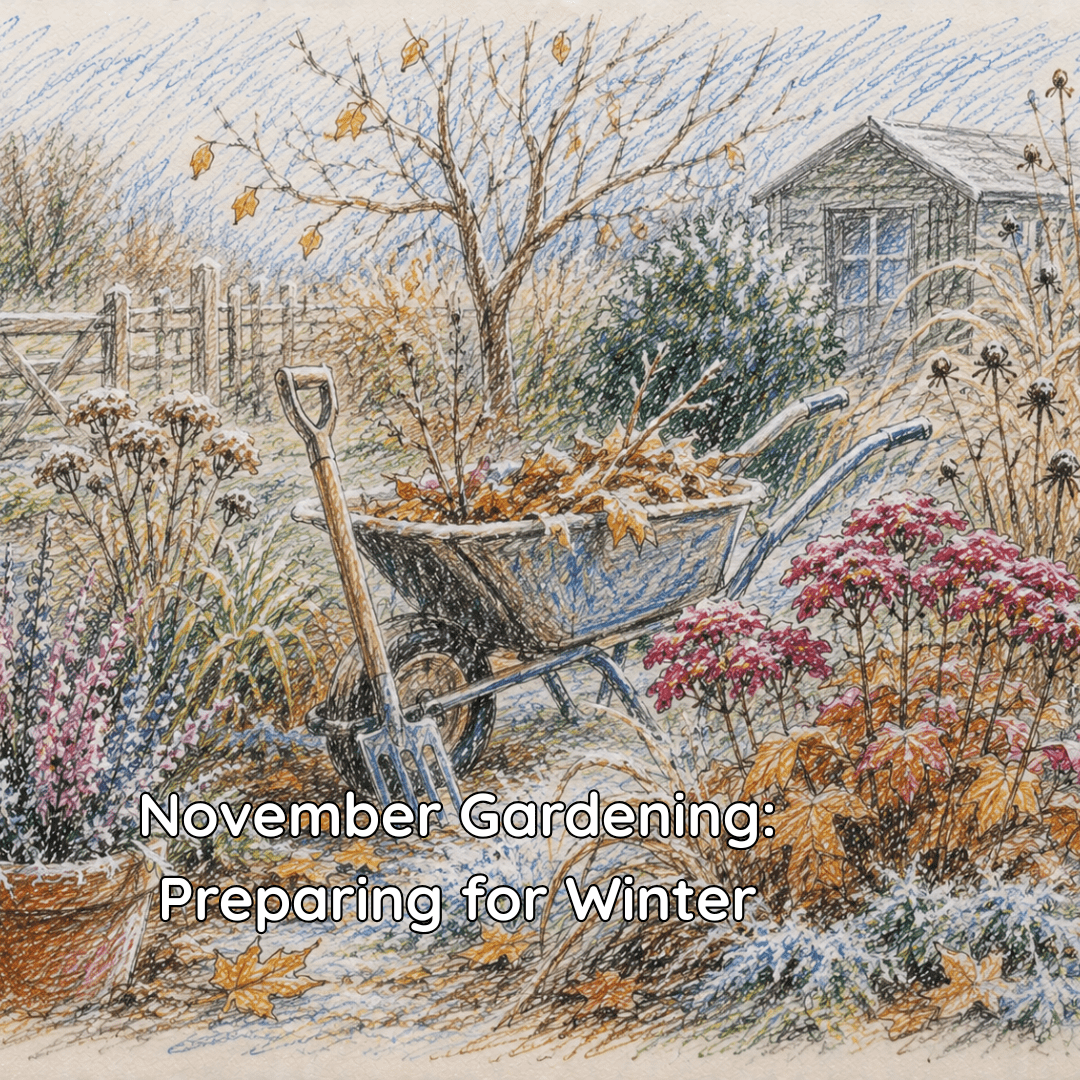
November Gardening: Preparing for Winter

As autumn’s vibrant display begins to fade, November ushers in a quieter, more reflective period in the garden. The air grows crisp, the days shorten and the first frosts often make their appearance. But this is no time for gardeners to retreat indoors entirely. November is a crucial month for preparing your garden for the cold winter ahead and laying the groundwork for a spectacular spring.

From protecting tender plants and supporting wildlife to planting for next year’s blooms, there are many important tasks to undertake. This guide will walk you through ten essential gardening jobs for November, offering detailed advice to help you nurture your garden through the dormant season and ensure it bursts back into life with renewed vigour come spring.

1. Support Your Garden Birds

As natural food sources dwindle, our garden birds rely more heavily on what we can provide. November is the perfect time to establish a feeding routine that will sustain them through the harsh winter months. Birds not only bring life and song to a winter garden but are also invaluable allies, helping to control pests like slugs, snails, and aphids.

What to Feed Them

A varied diet will attract a wider range of species. High-energy foods are particularly important as birds need to build up fat reserves to survive the cold nights.

  • Seeds and Nuts: A high-quality seed mix containing sunflower hearts, niger seeds, and chopped peanuts is a fantastic all-rounder. Sunflower hearts are beloved by finches and tits, while niger seeds are a particular favourite of goldfinches.
  • Fat Balls and Suet: Commercial fat balls, suet blocks, or homemade ‘bird cakes’ provide a vital source of energy. You can make your own by melting suet and mixing in seeds, nuts, and even dried mealworms.
  • Fresh Fruit: Apples, pears, and other soft fruits, either cut up or left whole, are a welcome treat for blackbirds, thrushes, and robins.
  • Water: Don’t forget to provide a source of fresh water for drinking and bathing. A shallow dish or bird bath will suffice. Be sure to check it daily and break the ice on frosty mornings.

Setting Up Your Feeding Station

Place feeders in a relatively open area, away from dense shrubs where cats might hide, but close enough to cover so that smaller birds feel safe. Using multiple feeders can reduce competition and allow different species to feed peacefully. Regularly clean your feeders with a mild disinfectant to prevent the spread of disease.

upthegardencompany.co.uk
FOR SALE
Homes for Birds - Estate Agent Sign.
Image of our recycled bird homes available in our garden shop.

2. Sow Sweet Peas for an Early Start

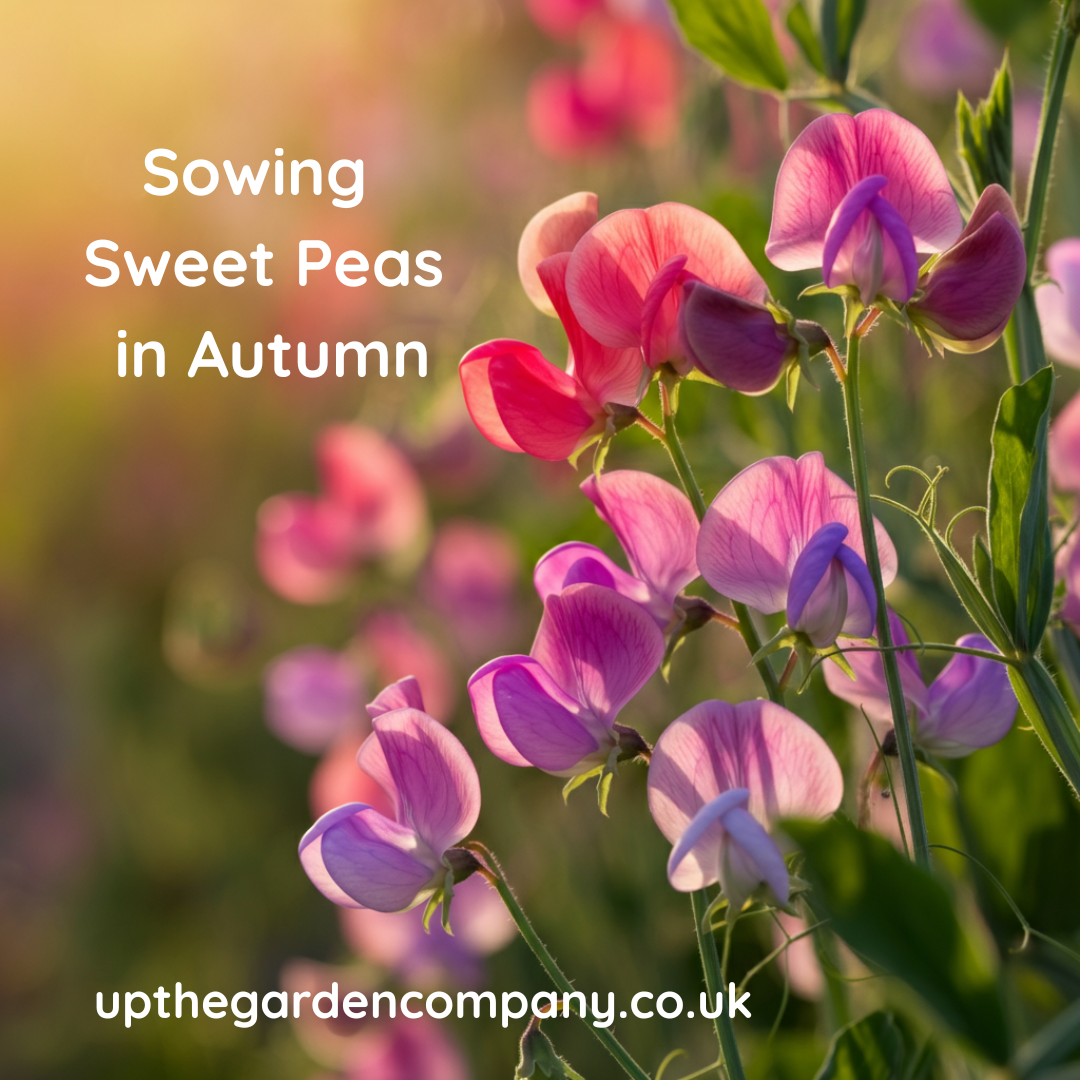
For many gardeners, the sweet pea (Lathyrus odoratus) is the quintessential scent of summer. Native to Sicily, Italy, and the Aegean Islands, these fragrant climbers were first sent to England in 1699 by a Sicilian monk, Francisco Cupani. By sowing them in November, you give them a head start, encouraging strong root development over winter for earlier, more abundant flowers next year.

How to Sow Sweet Peas

  • Choose Your Varieties: Select hardy, autumn-sowing varieties for the best results. ‘Spencer’ types are renowned for their large, ruffled blooms and long stems, perfect for cutting.
  • Use Deep Pots: Sweet peas have long root systems, so sow them in deep pots, root trainers, or even cardboard toilet roll tubes. This allows their roots to grow downwards without restriction.
  • Sowing Technique: Fill your chosen containers with a good-quality, peat-free seed compost. Sow one or two seeds per pot, about 1cm deep. Water them gently and label your varieties clearly.
  • Germination and Care: Place the pots in a cold frame, an unheated greenhouse, or a sheltered spot outdoors. They do not require heat to germinate. Once the seedlings appear, ensure they have plenty of light and good ventilation to prevent them from becoming leggy. Protect them from mice, who find the seeds a tasty winter snack. As soon as they germinate, move them to a frost-free place to grow on.

3. Insulate Outdoor Containers from Frost

Plants in containers are far more vulnerable to frost than those in the ground. The soil in pots freezes much more quickly, which can damage or kill the plant’s roots. Taking steps to insulate your pots is a vital November task, particularly for evergreens, borderline hardy perennials, and prized specimen plants.

Methods for Insulation

  • Bubble Wrap: A simple and effective method is to wrap the outside of the pot with one or two layers of bubble wrap. Secure it with string or tape. To prevent the pot from looking unsightly, you can cover the bubble wrap with a layer of hessian (burlap).
  • Grouping Pots: Huddle your pots together in a sheltered spot, such as against a house wall. This creates a microclimate where the pots protect each other from the coldest winds and share warmth.
  • Lagging: For very large or permanent containers, you can create a more robust ‘jacket’. Build a simple wire-mesh cylinder around the pot, leaving a gap of a few inches, and fill this gap with insulating material like straw, bracken, or even fallen leaves.
  • Raising Pots: Ensure your pots are not sitting directly on the cold, wet ground. More on this in task eight.

4. Protect Brassicas from Pigeons

The brassica family—which includes cabbages, Brussels sprouts, kale, and broccoli—is a staple of the winter vegetable patch. Unfortunately, these crops are also a favourite winter food for pigeons. A flock of hungry pigeons can strip a bed of brassicas bare in a single afternoon, so protection is essential.

Creating a Barrier

The most effective way to protect your crops is with physical netting.

  • Build a Frame: Create a framework over your brassica bed using bamboo canes, wooden stakes, or flexible piping. The frame needs to be tall enough to prevent the netting from touching the plants, as pigeons will simply peck through it.
  • Secure the Netting: Drape bird-proof netting over the frame, ensuring it reaches the ground on all sides. Secure the edges firmly with pegs, bricks, or by burying them in the soil. Pigeons are surprisingly clever and will find any small gaps. Check regularly to ensure the netting remains secure, especially after strong winds.

5. Plant Winter Bedding

While much of the garden is heading into dormancy, you can still inject colour with winter and spring-flowering bedding plants. Planting them in November allows them to establish their roots before the harshest weather arrives, setting them up for a fantastic display.

Choosing Your Plants

  • Pansies and Violas: These are the undisputed champions of winter colour. They are incredibly hardy and will flower intermittently through mild spells in winter before putting on a spectacular show in spring.
  • Primroses and Polyanthus: Offering a rainbow of bright colours, these plants are perfect for the front of borders or in containers.
  • Bellis Perennis (Daisies): These charming, pom-pom-like flowers are tough and reliable, adding a cheerful touch to any winter scheme.
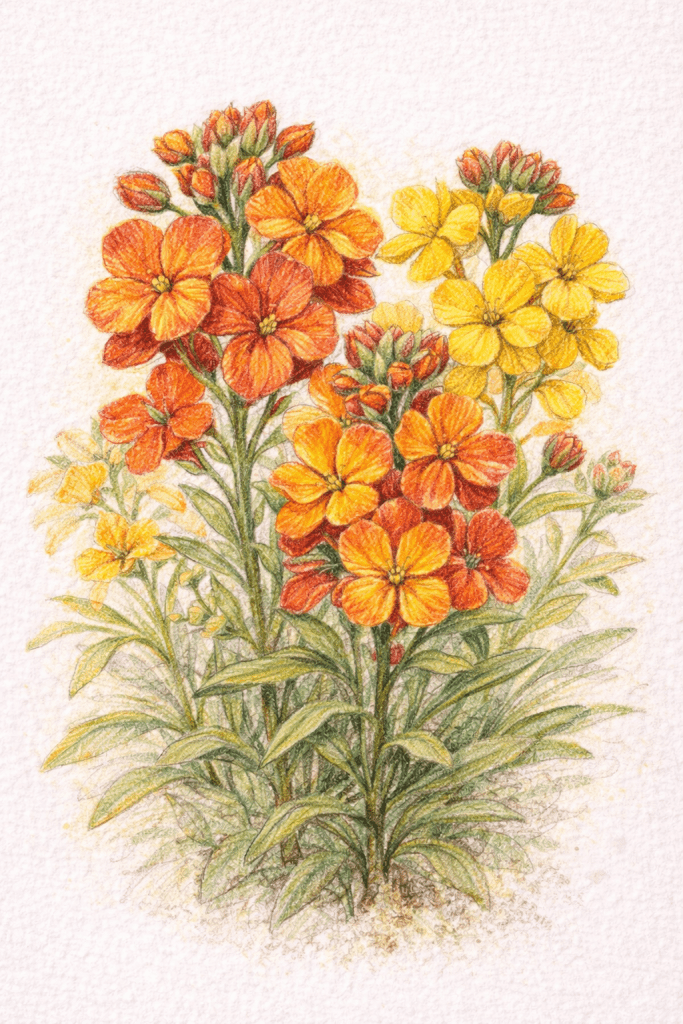
  • Wallflowers (Erysimum): Plant bare-root wallflowers now for a fragrant and colourful display in late spring. They pair beautifully with tulips.

Plant them in well-drained soil or good-quality compost in a sunny spot. Water them in well after planting, but avoid overwatering during the damp winter months.

6. Prune Roses to Prevent Wind-Rock

Roses, beloved since ancient times and cultivated by the Greeks and Romans, require some attention in autumn. A light prune in November helps to protect them from winter gales. Tall, unpruned roses can be caught by strong winds, causing them to rock back and forth. This ‘wind-rock’ creates a gap around the base of the stem, which can fill with water, freeze, and damage the roots. It can also loosen the rootball, destabilising the plant.

How to Prune

This is not the main structural prune, which is done in late winter or early spring. The goal here is simply to reduce the plant’s height and bulk.

  • Reduce Height: Cut back all stems by about one-third.
  • Remove Damaged Growth: Snip out any dead, diseased, or crossing branches to improve air circulation.
  • Make Clean Cuts: Use sharp, clean secateurs and make your cuts at a slight angle, just above an outward-facing bud. This directs new growth away from the centre of the plant.
  • Clear Debris: After pruning, collect all fallen leaves and prunings from around the base of the plant. This helps to prevent the spread of fungal diseases like black spot, which can overwinter in the soil.

7. Plant Tulips for a Dazzling Spring

November is the prime time for planting tulips. Unlike daffodils and other spring bulbs that are best planted in early autumn, planting tulips later helps to reduce the risk of a fungal disease called ‘tulip fire’ (Botrytis tulipae), which thrives in warmer, wetter soil.

The tulip has a fascinating history, originating in Central Asia and famously causing a speculative frenzy known as ‘Tulip Mania’ in 17th-century Holland. Today, they remain one of the most popular and dramatic spring flowers.

Planting Guide

  • Depth is Key: Plant tulip bulbs deep—at least three times their own height. This helps to anchor them, encourages them to perennialize, and protects them from frost and pests.
  • Choose a Sunny Spot: Tulips perform best in a sunny location with well-drained soil. If you have heavy clay, add grit to the planting hole to improve drainage.
  • Plant in Drifts: For a naturalistic look in borders, plant tulips in groups or ‘drifts’ of at least 7-9 bulbs rather than in straight lines. In containers, you can pack them in more tightly for a dense, impactful display.
  • Pointy End Up: Place the bulbs in the hole with the pointed end facing upwards. Backfill with soil and firm it down gently.

8. Raise Containers Onto Pot Feet

Just as it’s important to protect the tops of your pots from frost, it’s equally vital to protect the bottoms from waterlogging. During the wet winter months, pots standing directly on the ground can become saturated as their drainage holes get blocked. This can lead to root rot, a common cause of plant death in winter.

The solution is simple: raise your containers onto pot feet. This small gap allows excess water to drain away freely and improves air circulation around the base of the pot. You can buy purpose-made terracotta or glazed pot feet, or simply use bricks, flat stones or even plastic bottle caps.

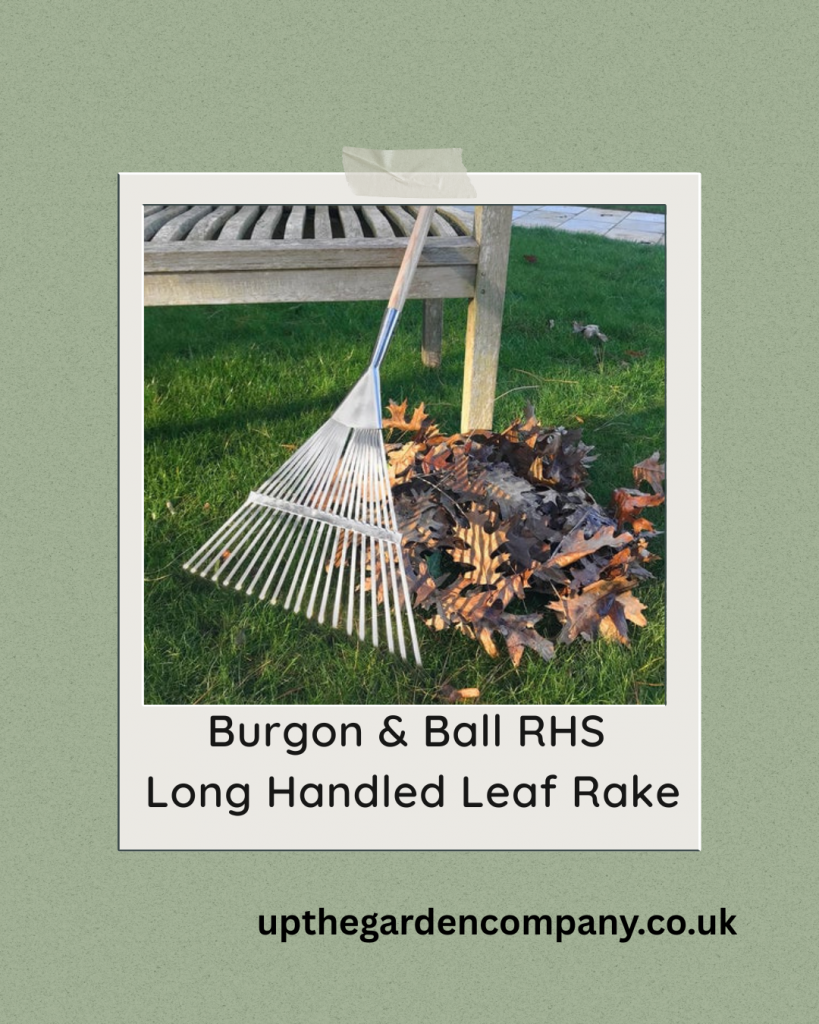
9. Clear Up Fallen Leaves

An autumn garden is defined by its fallen leaves, but letting them accumulate in the wrong places can cause problems.

  • Ponds: Leaves that fall into a pond will sink and decompose, releasing toxic gases that can harm fish and other aquatic life. Use a net to skim them off the surface regularly. If you have a lot of deciduous trees nearby, consider stretching a fine-meshed net over the pond for the peak leaf-fall period.
  • Lawns: A thick blanket of leaves on a lawn will block light and air, suffocating the grass beneath and encouraging diseases. Rake them off the lawn promptly.
  • Beds and Borders: While a light layer of leaves can act as a natural mulch, a thick, wet mat can smother smaller alpine or evergreen plants. Gently remove leaves from the crowns of these plants.
Burgon and Ball RHS Lond Handled Leaf Rake

10. Make Leaf Mould

Don’t let all those collected leaves go to waste! Raking them up provides you with the perfect ingredient for making leaf mould—a superb, free soil conditioner. Unlike compost, which is made from a green/brown mix and breaks down via bacterial action, leaf mould is created through a slow, cool fungal process.

How to Make It

  • Collect Your Leaves: Gather all the leaves you’ve raked from lawns and cleared from ponds and beds. Oak, beech, and hornbeam leaves break down quickly and make the best-quality mould. Thicker leaves like sycamore or horse chestnut will take longer.
  • Create a Cage: The easiest way to store your leaves is in a simple cage made from chicken wire and four wooden posts. This allows for good air circulation.
  • Fill and Wait: Pile the leaves into the cage. If they are very dry, give them a light watering to help the decomposition process begin. And then, you wait. After about a year, you’ll have a partially decomposed mould perfect for mulching. After two years, you’ll have a fine, dark, crumbly material that is an excellent potting mix ingredient or seed-sowing compost.

Ready Your Garden for Spring

By dedicating some time to these November tasks, you are not just tidying up for winter; you are actively investing in the health and beauty of your garden for the year to come. Supporting wildlife, protecting vulnerable plants, and planting for the future are all part of the gentle rhythm of the gardening year. So, pull on your boots and a warm coat, and embrace the quiet satisfaction of preparing your patch of earth for its long winter sleep.

Further Reading: Mast Years: Why They Happen and Their Impact

Inspiration: Follow Us on InstagramThreads, BlueSkyTwitterTikTok and Pinterest.

Christmas Cactus: The Perfect Festive Houseplant

The Christmas cactus (Schlumbergera truncata) stands as one of the most reliable and rewarding houseplants for the festive season. Unlike its desert-dwelling relatives, this Brazilian native thrives in home environments and produces spectacular blooms precisely when most other plants remain dormant.

Understanding the Christmas cactus begins with recognising its unique characteristics and growth patterns. This knowledge forms the foundation for successful cultivation and ensures your plant delivers its stunning winter display year after year.

Plant Description and Characteristics

The Christmas cactus belongs to the Schlumbergera genus and differs significantly from traditional cacti. Its flattened, segmented stems resemble leaves more than typical cactus pads. Each segment measures approximately 3-5 centimetres in length and features distinctive notched edges that give the plant its scientific name “truncata.”

The plant develops as an epiphyte in its natural habitat, growing on trees and rocks rather than in soil. This epiphytic nature influences its care requirements and explains why it thrives in well-draining, organic-rich growing media rather than sandy cactus soil.

Mature Christmas cacti can reach heights of 30-60 centimetres and spread equally wide, creating cascading displays that make them excellent candidates for hanging baskets or elevated positions. The stems arch gracefully downward, particularly when laden with blooms.

The root system remains relatively compact and fibrous, making the plant suitable for container cultivation throughout its lifespan. Most Christmas cacti live for decades with proper care, often becoming family heirlooms passed between generations.

Seasonal Interest and Blooming Patterns

The Christmas cactus earns its name through its remarkable ability to bloom during winter months, typically flowering from November through January in the Northern Hemisphere. This timing makes it particularly valuable as indoor decoration during the festive season.

Flower production requires specific environmental conditions. The plant needs approximately 12-14 hours of darkness daily for 6-8 weeks to initiate bud formation. Temperature plays an equally crucial role, with cooler conditions of 10-15°C encouraging flower development.

Individual flowers measure 6-8 centimetres in length and display a distinctive tubular shape with backward-curving petals. Natural flower colours include pink, red, white, and purple, though modern cultivars offer expanded colour ranges including yellow, orange, and salmon varieties.

Each flowering cycle can last 6-8 weeks, with individual blooms remaining attractive for 7-10 days. Peak flowering typically occurs in December, making the plant an ideal natural Christmas decoration.

The plant may produce a second, smaller flush of blooms in late winter or early spring, extending its ornamental value beyond the initial festive period.

Benefits of Growing Christmas Cactus

Christmas cacti offer numerous advantages that make them exceptional houseplants for both novice and experienced gardeners. Their low-maintenance requirements suit busy lifestyles whilst delivering substantial visual impact.

Air purification represents one significant benefit. Like many houseplants, Christmas cacti remove carbon dioxide and release oxygen, contributing to improved indoor air quality. Their efficient photosynthesis continues throughout winter when outdoor plants remain dormant.

The plant’s longevity provides excellent value for investment. A single Christmas cactus can live for 20-30 years or longer, making it one of the most enduring houseplant choices available. This longevity also creates opportunities for propagation and sharing with friends and family.

Propagation occurs easily through stem cuttings, allowing gardeners to expand their collection or create gifts for others. Each segment contains the potential to develop into a new plant, making Christmas cacti extremely generous for sharing.

The plant’s tolerance for neglect makes it suitable for occasional travellers or those with unpredictable schedules. It can survive several weeks without water and recovers quickly from minor care lapses.

Therapeutic benefits include the satisfaction of successfully triggering blooms through environmental manipulation and the calming presence of living plants during winter months when outdoor gardening opportunities remain limited.

Potential Disadvantages

Despite their many benefits, Christmas cacti present certain challenges that prospective growers should understand. Temperature sensitivity can complicate care, particularly in homes with inconsistent heating or near heat sources.

The plant requires specific conditions to bloom reliably. Failure to provide adequate darkness and cool temperatures results in poor flowering or complete bloom failure, disappointing gardeners who expect seasonal displays.

Overwatering represents the most common cause of plant failure. The succulent stems store water efficiently, making the plant vulnerable to root rot when soil remains consistently moist.

Light requirements can prove challenging in some home environments. The plant needs bright, indirect light but suffers in direct sunlight, limiting placement options in some homes.

Pest susceptibility includes scale insects, mealybugs, and spider mites, particularly in dry indoor environments. These pests can damage the plant’s appearance and vigour if left untreated.

The plant’s relatively short individual bloom period may disappoint those expecting continuous flowering throughout winter. Each flower lasts only 7-10 days, though successive blooms extend the overall display period.

Historical Background and Origins

Christmas cactus originated in the coastal mountains of southeastern Brazil, where it grows as an epiphyte in tropical forests. The plant inhabits areas with filtered sunlight, high humidity and well-draining conditions provided by its perch on trees and rocky surfaces.

European introduction occurred in the 1840s through plant collectors who recognised its ornamental potential. The plant quickly gained popularity in Victorian homes, where it thrived in cooler indoor temperatures typical of that era.

Commercial cultivation began in the early 20th century, with Dutch and American growers developing improved varieties with enhanced flower colours and more reliable blooming characteristics. Modern breeding programmes continue to expand available colour options and improve plant vigour.

The plant’s scientific classification has evolved over time. Originally placed in the Epiphyllum genus, it was later reclassified as Schlumbergera in honour of French cactus collector Frédéric Schlumberger.

Regional variations in naming reflect the plant’s global popularity. Americans commonly call it Christmas cactus, whilst Europeans may use holiday cactus or winter cactus. Some regions refer to closely related species as Thanksgiving cactus, reflecting their earlier blooming schedule.

Cultural Significance and Folklore

Christmas cactus holds limited traditional folklore compared to other holiday plants, primarily due to its relatively recent introduction to cultivation outside its native range. However, it has developed cultural significance in modern contexts.

The plant symbolises renewal and hope during winter months, representing life continuing through the darkest time of year. This symbolism makes it a popular gift during holiday seasons, particularly for those facing difficult circumstances.

Some cultures associate the plant with hospitality and welcoming, as its blooms appear during traditional gathering seasons when families come together for celebrations.

In Brazil, indigenous peoples recognised the plant’s distinctive flowering pattern and associated it with seasonal transitions, though specific traditional uses remain poorly documented in available historical records.

Modern traditions include passing Christmas cacti between generations, creating living family heirlooms that connect relatives across time. Many families maintain plants that originated from cuttings taken decades earlier, creating botanical family trees alongside human genealogies.

The plant’s association with Christmas stems primarily from its blooming schedule rather than religious symbolism, though some interpret its appearance during the Christmas season as representing the star of Bethlehem guiding visitors to important celebrations.

Why Christmas Cactus Deserves a Place in Your Home

The Christmas cactus represents an ideal combination of beauty, reliability, and cultural significance that few other houseplants can match. Its spectacular winter blooms provide natural decoration precisely when outdoor gardens offer little colour, making it an invaluable addition to any plant collection.

The plant’s forgiving nature accommodates various skill levels whilst offering opportunities for learning about plant biology and environmental manipulation. Successfully triggering blooms provides genuine satisfaction and demonstrates the reward of attentive plant care.

Economic value emerges through the plant’s longevity and propagation potential. A single purchase can provide decades of enjoyment whilst generating numerous offspring for gifts or additional displays.

The Christmas cactus bridges the gap between indoor and outdoor gardening, offering horticultural satisfaction during months when outdoor activities remain limited. It provides year-round greenery with the bonus of seasonal flowers, maximising both space and investment.

For those seeking low-maintenance plants with high visual impact, the Christmas cactus delivers exceptional value. Its unique flowering schedule, ease of care, and propagation capabilities make it an outstanding choice for both novice and experienced plant enthusiasts seeking to enhance their homes with living beauty.

Further Reading: Mastering Houseplant Care: Your Top 10 Tips for Indoor Greenery, Guide to Growing and Caring for Poinsettias, Christmas Cactus: The Perfect Festive Houseplant

Take a look at our Indoor Gardening Shop

Follow Us on Instagram for Daily Gardening Inspiration 💚

Amaryllis: The Bold Winter Bloomer

The amaryllis stands as one of gardening’s most rewarding paradoxes. This striking bulbous plant produces magnificent trumpet-shaped flowers during the darkest months of winter, transforming dreary windowsills and conservatories into vibrant displays of colour. Despite its exotic appearance and impressive blooms that can reach up to 20 centimetres across, the amaryllis requires minimal effort to cultivate successfully.

Originally native to South America, the amaryllis has captured gardeners’ attention worldwide through its reliable flowering performance and dramatic visual impact. The plant’s ability to produce multiple stems bearing four to six substantial flowers makes it particularly valuable for indoor cultivation during winter months when few other plants are in bloom.

Understanding the amaryllis’s growth patterns, care requirements, and seasonal behaviour enables gardeners to maximise both flowering potential and longevity. This comprehensive guide examines every aspect of amaryllis cultivation, from botanical characteristics to historical significance, providing the essential knowledge needed for successful growing.

Plant Description and Botanical Characteristics

The amaryllis (Hippeastrum) belongs to the Amaryllidaceae family and comprises approximately 90 species of bulbous perennials. The most commonly cultivated varieties are large-flowered hybrids developed from South American species, particularly those originating from Peru, Brazil, and Bolivia.

The plant develops from substantial bulbs that typically measure 6 to 10 centimetres in diameter. These storage organs contain all the energy required for the plant’s initial flowering cycle. The bulb produces thick, fleshy roots that extend downward whilst supporting broad, strap-shaped leaves that emerge from the bulb’s centre.

Amaryllis flowers appear on hollow stems called scapes that can reach heights of 30 to 75 centimetres. Each scape typically bears an umbel of four to six flowers, though some varieties produce fewer or additional blooms. The flowers themselves are large and trumpet-shaped, measuring 15 to 25 centimetres across when fully opened.

The colour range includes pure white, various shades of pink, deep red, salmon, orange, and yellow. Many cultivars feature striped, picotee, or multicoloured patterns. Some varieties produce double flowers with additional petals, creating an even more dramatic display.

The leaves are thick, glossy, and dark green, measuring 30 to 50 centimetres in length and 2 to 5 centimetres in width. They emerge either before, with, or after the flowers, depending on the variety and growing conditions.

Seasonal Interest and Flowering Patterns

The amaryllis provides peak seasonal interest during winter months, typically flowering between December and March when grown indoors. This timing makes the plant particularly valuable for brightening homes during the darkest period of the year.

The flowering cycle begins when the bulb is planted or brought out of dormancy. Under optimal conditions, flower buds emerge within 6 to 8 weeks of planting. The flower stem elongates rapidly once growth begins, often reaching full height within 2 to 3 weeks.

Individual flowers open sequentially within each umbel, extending the flowering period to 4 to 6 weeks per stem. Many bulbs produce multiple flower stems, either simultaneously or in succession, prolonging the display further.

Following flowering, the plant enters a vegetative growth phase where leaves develop fully and photosynthesis occurs. This period is crucial for bulb development and future flowering success. The leaves remain attractive throughout spring and early summer, providing ongoing ornamental value.

During late summer, the plant naturally enters dormancy as leaves yellow and die back. This rest period typically lasts 8 to 12 weeks and is essential for flower bud formation within the bulb.

Benefits of Growing Amaryllis

The amaryllis offers numerous advantages that make it an excellent choice for both novice and experienced gardeners. The plant’s reliability represents perhaps its greatest benefit, as healthy bulbs consistently produce impressive flowers with minimal intervention.

Winter flowering provides colour and interest when few other plants are blooming, making amaryllis particularly valuable for indoor gardening. The flowers’ substantial size and bold colours create dramatic focal points in any interior setting.

The plant’s compact growth habit suits container cultivation perfectly. A single potted amaryllis can transform a windowsill, table, or conservatory whilst requiring minimal space. This characteristic makes the plant ideal for small gardens, flats or temporary displays.

Long-lasting flowers provide excellent value, with individual blooms remaining attractive for 7 to 10 days. The sequential opening of flowers within each umbel extends the display period significantly, whilst multiple stems can provide colour for several months.

The amaryllis requires no complex growing techniques or specialised equipment. Basic potting compost, adequate drainage, and appropriate watering schedules suffice for successful cultivation. This simplicity makes the plant accessible to gardeners of all experience levels.

Cut flowers from amaryllis plants last well in water, typically remaining fresh for 7 to 14 days. The substantial stems and large flowers make dramatic additions to floral arrangements and bouquets.

Potential Disadvantages and Considerations

Despite its many benefits, the amaryllis presents certain limitations that gardeners should consider before cultivation. The plant’s toxicity represents the most significant concern, as all parts of the amaryllis contain alkaloids that are harmful if ingested by humans or pets.

The bulb’s substantial size requires appropriate container dimensions and adequate growing space. Shallow or narrow pots cannot accommodate the root system properly, potentially limiting flowering performance and plant health.

Dormancy requirements mean the plant provides no ornamental value for several months each year. The dying foliage and bare bulb during dormancy may be considered unsightly in prominent display locations.

Initial bulb costs can be substantial, particularly for premium varieties or large-sized bulbs. Quality bulbs from reputable suppliers typically cost £8 to £25 each, representing a significant investment compared to many other flowering plants.

The plant’s tropical origins mean it cannot survive frost conditions outdoors in most temperate climates. Year-round container cultivation or annual lifting and storage becomes necessary in regions with cold winters.

Storage requirements during dormancy demand appropriate conditions with consistent temperatures between 10 to 15°C and low humidity. Inadequate storage conditions can lead to bulb deterioration or premature sprouting.

Historical Background and Origins

The amaryllis has a complex history that reflects both botanical discovery and horticultural development over several centuries. The confusion surrounding the plant’s common name stems from early taxonomic classifications that placed these South American bulbs in the genus Amaryllis alongside their African relatives.

Swedish botanist Carl Linnaeus first described the genus Amaryllis in 1753, initially including both African and South American species. Later botanical research revealed significant differences between these groups, leading to the reclassification of South American species into the genus Hippeastrum in 1821.

European discovery of South American amaryllis species began during the 18th century as botanical expeditions explored the continent’s diverse flora. The first species to reach Europe was likely Hippeastrum reginae, collected in Peru and introduced to cultivation around 1769.

The development of large-flowered garden amaryllis began in earnest during the 19th century through hybridisation programmes in Europe and North America. Notable breeders including the Veitch nursery in England and various Dutch specialists created many of the fundamental cultivars still grown today.

Commercial production of amaryllis bulbs became established in the Netherlands during the 20th century, with Dutch growers developing sophisticated techniques for bulb forcing and year-round production. The Netherlands remains the world’s primary source of amaryllis bulbs for commercial distribution.

Modern breeding programmes continue to develop new varieties with improved flower forms, extended colour ranges, and enhanced disease resistance. Contemporary cultivars include compact varieties suitable for smaller spaces and specialized forms with unique petal patterns.

Folklore and Cultural Significance

The amaryllis features prominently in various cultural traditions and folklore, though much of this centres on the broader Amaryllis genus rather than the specific Hippeastrum species commonly grown today.

Greek mythology tells of Amaryllis, a shepherdess who fell in love with the shepherd Alteo. To win his affection, she followed the advice of the Oracle at Delphi and pierced her heart with a golden arrow whilst standing before his door for 30 days. Her blood created beautiful red flowers, which finally captured Alteo’s attention and love.

Victorian flower language assigned specific meanings to amaryllis blooms. Red amaryllis symbolised pride and determination, whilst white varieties represented innocence and purity. The plant’s dramatic appearance and bold colours made it popular in formal arrangements and conservatory displays during the Victorian era.

Contemporary Christmas traditions in many countries feature amaryllis as holiday decorations alongside poinsettias and Christmas roses. The plant’s winter flowering period and availability of red and white varieties make it particularly suitable for festive displays.

In South American cultures where the plant occurs naturally, various species hold traditional medicinal significance. However, given the plant’s toxic properties, such applications should not be attempted without proper expertise and guidance.

The amaryllis appears in art and literature as a symbol of beauty emerging from difficult circumstances, reflecting the plant’s ability to produce magnificent flowers from seemingly dormant bulbs.

Why Amaryllis Deserves a Place in Your Garden

The amaryllis merits inclusion in any garden or indoor plant collection for several compelling reasons that extend beyond its obvious ornamental appeal. The plant’s reliability ensures consistent results even for inexperienced gardeners, making it an excellent choice for building confidence in bulb cultivation.

Winter flowering fills a crucial gap in the gardening calendar when colour options are limited. The amaryllis provides vibrant blooms during months when outdoor gardens offer little interest, bringing life and energy to indoor spaces precisely when it is most needed.

The plant’s compact size and container-friendly growth habit make it accessible to gardeners with limited space. A single amaryllis can provide the same visual impact as much larger plants whilst requiring minimal room for cultivation.

Educational value represents another significant benefit, particularly for families with children. Watching an amaryllis bulb develop from dormancy through flowering provides an excellent introduction to plant biology and growth cycles.

The amaryllis offers exceptional longevity when properly maintained. Individual bulbs can continue flowering annually for decades, making them valuable long-term investments. This characteristic also enables gardeners to develop collections of different varieties over time.

Versatility in use allows amaryllis to serve multiple purposes within garden design. The plants work equally well as standalone specimen displays, grouped arrangements, or components within mixed container gardens.

Planting Guidelines and Timing

Successful amaryllis cultivation begins with proper planting techniques and appropriate timing. The planting schedule depends on desired flowering periods and growing conditions.

For winter flowering indoors, plant bulbs between October and December. Earlier planting produces December blooms, whilst later planting delays flowering into February or March. This flexibility allows gardeners to stagger plantings for extended flowering seasons.

Select containers that provide adequate depth and width for root development. The pot should measure at least 2.5 centimetres wider than the bulb diameter and provide 10 to 15 centimetres of depth below the bulb base. Heavy containers help prevent tall flowering stems from becoming top-heavy.

Use well-draining potting compost designed for container cultivation. A mixture of multi-purpose compost with added perlite or grit provides appropriate drainage whilst retaining adequate moisture. Avoid garden soil, which may harbour pests or diseases and often drains poorly in containers.

Plant bulbs with the top third exposed above the compost surface. This positioning prevents water from collecting around the bulb nose, reducing the risk of rot. The bulb should sit firmly in the compost without wobbling.

Water sparingly immediately after planting, providing just enough moisture to settle the compost around the bulb. Excessive watering at this stage can lead to bulb rot before root development begins.

Place planted bulbs in locations with temperatures between 18 to 21°C to encourage rapid growth. Avoid positions with extreme temperature fluctuations or cold draughts that may delay flowering.

Care Instructions for Optimal Blooming

Proper care throughout the growing cycle ensures healthy development and maximum flowering potential. Understanding the plant’s changing needs during different growth phases enables gardeners to provide appropriate conditions consistently.

During the initial growth phase after planting, maintain compost moisture without waterlogging. Water when the top centimetre of compost feels dry, providing enough water to thoroughly moisten the growing medium. Avoid frequent light watering, which can lead to shallow root development.

Once flower buds appear, increase watering frequency to support rapid stem elongation and flower development. The plant’s water requirements peak during active growth and flowering periods.

Provide bright, indirect light throughout the growing season. Direct sunlight may cause flower fading or excessive heat that shortens bloom duration. North or east-facing windows typically provide optimal conditions.

Feed regularly during active growth using balanced liquid fertiliser applied every 2 to 3 weeks. Begin feeding when flower buds emerge and continue throughout the leafy growth period. Stop feeding when leaves begin yellowing naturally.

Support tall flower stems if necessary using thin stakes and soft ties. Position supports before stems reach full height to avoid root damage. Some compact varieties may not require staking.

Remove spent flowers promptly to prevent seed development, which diverts energy from bulb development. Cut flower stems back to the bulb once all blooms have finished, but allow leaves to continue growing.

Maintain steady growing conditions throughout the leafy growth period, typically lasting 4 to 6 months after flowering. This phase is crucial for building bulb reserves for future flowering cycles.

Inducing Dormancy and Annual Maintenance

Managing the dormancy period correctly ensures continued flowering success in subsequent years. The dormancy phase allows the bulb to rest and develop new flower buds for the following season.

Begin reducing watering during late summer as leaves naturally start yellowing. This process typically occurs 6 to 8 months after flowering and should not be rushed artificially.

Stop watering completely once all leaves have died back naturally. Remove dead foliage by cutting it back to the bulb neck, leaving no stub that might harbour disease.

Store dormant bulbs in their pots in cool, dry conditions with temperatures between 10 to 15°C. Suitable locations include unheated garages, cellars, or spare rooms that remain frost-free.

Maintain dormancy for 8 to 12 weeks minimum. Shorter rest periods may result in poor flowering or failure to bloom entirely. Some varieties benefit from extended dormancy periods of up to 16 weeks.

Check stored bulbs periodically for signs of disease or pest damage. Healthy dormant bulbs should remain firm and show no signs of soft rot or unusual discolouration.

Resume watering when new growth appears naturally or after the minimum dormancy period has elapsed. The emergence of new flower buds or leaf tips indicates the plant is ready to begin another growing cycle.

Further Reading: Mastering Houseplant Care: Your Top 10 Tips for Indoor Greenery, Guide to Growing and Caring for Poinsettias, Christmas Cactus: The Perfect Festive Houseplant

Take a look at our Indoor Gardening Shop

Follow Us on Instagram for Daily Gardening Inspiration 💚

Why Sharp Garden Tools Matter

Gardening is an activity that requires precision and care. A crucial, yet often overlooked, aspect of effective garden maintenance is the condition of your tools. Using dull secateurs, shears and loppers can damage plants, increase the physical effort required, and ultimately lead to a less healthy garden. Keeping your tools sharp ensures clean cuts, promotes plant health, and makes your gardening tasks more efficient and enjoyable.

Why Sharp Garden Tools Matter

Using sharp tools is fundamental to good horticultural practice. The benefits extend from the health of your plants to your own physical ease.

  • Promotes Plant Health and Faster Healing: A sharp blade makes a clean, precise cut that damages fewer plant cells. This allows the plant to heal more quickly, much like a surgical incision. A clean cut is less susceptible to diseases and pests, which can easily enter through the ragged wound left by a dull blade. Dull tools crush and tear plant tissues, creating a larger surface area for infection and causing unnecessary stress to the plant.
  • Reduces Physical Strain: Cutting with a sharp tool requires significantly less force. This reduces strain on your hands, wrists and arms, making gardening a more comfortable and less fatiguing activity. For gardeners who spend many hours pruning, this can help prevent repetitive strain injuries.
  • Improves Pruning Accuracy: Sharp tools give you greater control, allowing you to make precise cuts exactly where you intend. This is important when shaping plants, removing specific branches, or deadheading flowers. Dull blades can slip or fail to cut through a branch cleanly, potentially damaging parts of the plant you intended to keep.
  • Extends Tool Lifespan: Regular sharpening and maintenance prevent the formation of rust and nicks on the blades. By keeping the cutting edge in good condition, you reduce the overall wear and tear on the tool, ensuring it remains functional for many years.

What You Need to Sharpen Your Tools

Before you begin, gather the necessary equipment. Having the right supplies will make the sharpening process safer and more effective.

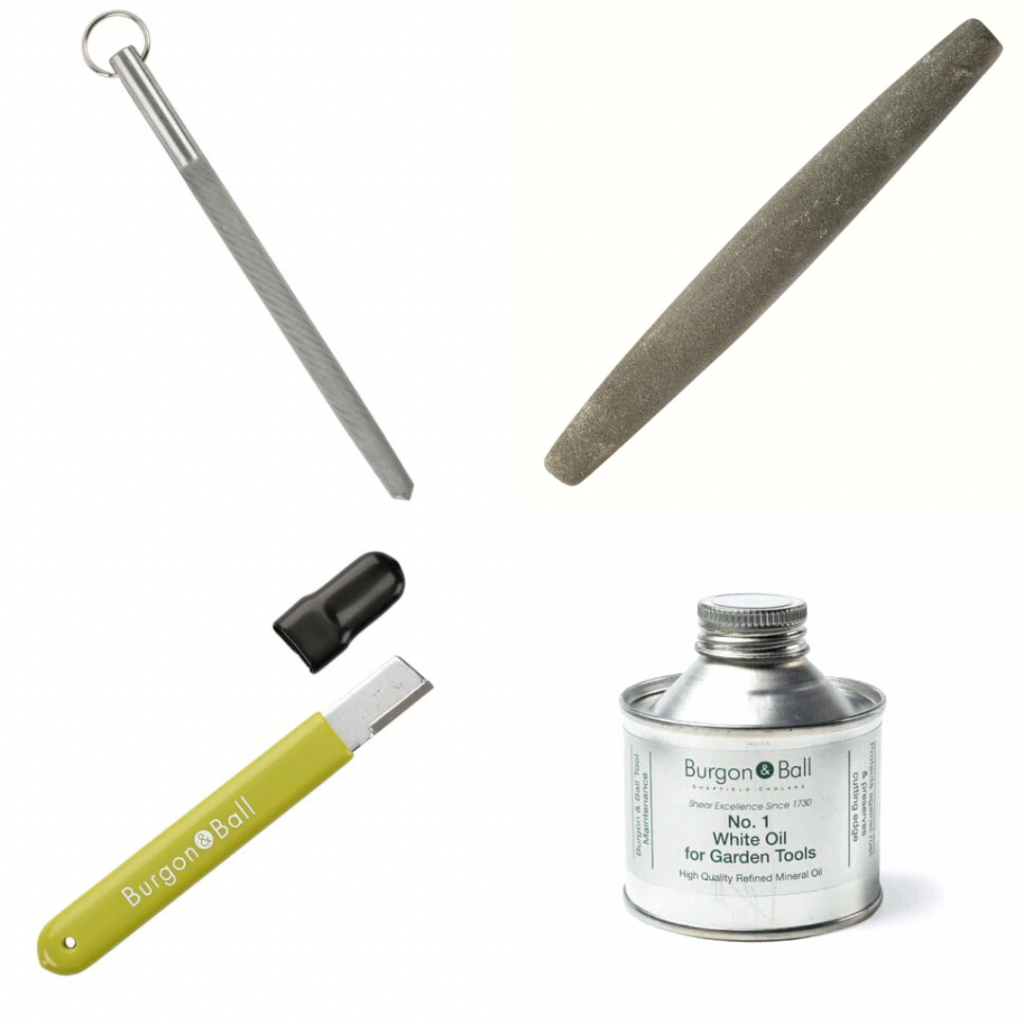
Burgon and Ball Garden Tool Maintenance Equipment.
Sharpening Stone, Oil, Blade Edge Restorer, Sharpening Steel
  • Sharpening Stone (Whetstone) or Diamond File: These are the primary tools for sharpening. A whetstone is a traditional option, available in various grits (coarseness). A medium-grit stone is usually sufficient for garden tools. Diamond files are more aggressive and work faster, making them ideal for very dull or damaged blades.
  • Safety Gloves: Heavy-duty gloves will protect your hands from accidental cuts.
  • Eye Protection: Safety glasses are recommended to shield your eyes from any metal filings.
  • Vice or Clamp: A vice provides a secure way to hold the tool, freeing both of your hands for sharpening. This is particularly useful for larger tools like shears.
  • Cleaning Supplies: You will need a stiff brush, soapy water, and a cloth to clean the tools before sharpening. Methylated spirits can be used to sterilise the blades and remove stubborn sap.
  • Lubricating Oil: A product like WD-40 or a general-purpose lubricating oil is essential for protecting the blades from rust after sharpening.

How to Sharpen Your Garden Tools: A Step-by-Step Guide

The following method can be applied to most single-bladed cutting tools, such as secateurs and loppers, as well as double-bladed shears.

1. Clean the Tool Thoroughly

Before you can sharpen a blade, it must be completely clean. Dirt, sap, and rust can clog your sharpening file and prevent you from achieving a clean edge.

  • Disassemble the tool if possible. This makes it easier to access the blades. Use a spanner or screwdriver to undo the central nut.
  • Use a stiff brush and warm, soapy water to scrub away any dirt and debris.
  • For stubborn sap, soak a cloth in methylated spirits and rub it over the blades until the residue dissolves.
  • Dry the tool completely with a clean cloth to prevent immediate rusting.

2. Secure the Blade

For safety and precision, it is important that the tool is held firmly in place.

  • If you have a bench vice, secure the tool or the individual blade in the vice with the bevelled edge facing upwards.
  • If you do not have a vice, you can hold smaller tools like secateurs firmly in your non-dominant hand, resting your arm on a stable surface. Always ensure the blade is pointing away from your body.

3. Sharpen the Bevelled Edge

Most garden tools, like bypass secateurs, have a single bevelled cutting edge. The other blade is flat and should not be sharpened.

  • Identify the bevel, which is the angled surface of the cutting blade. This is the only part you need to sharpen.
  • Hold your sharpening stone or file at the same angle as the existing bevel (usually between 10-20 degrees). Maintaining this angle is the most critical part of the process.
  • Press the file firmly against the blade and push it in one direction, from the base of the blade to the tip. Follow the curve of the blade.
  • Lift the file and return to the starting position. Do not saw back and forth, as this can damage the edge.
  • Repeat this motion 10-20 times, applying consistent pressure. You should start to see a new, shiny edge forming.
  • For shears with two bevelled blades, repeat this process on the second blade.

4. Remove the Burr

Sharpening creates a small ridge of metal on the flat side of the blade, known as a burr. This needs to be removed to create a truly sharp edge.

  • Turn the blade over.
  • Lay your sharpening stone flat against the back of the blade.
  • Make one or two gentle passes to remove the burr. The back of the blade should be perfectly flat, so do not try to create a new angle.

5. Reassemble and Lubricate

Once you are satisfied with the sharpness, it is time to reassemble and protect the tool.

  • Wipe the blades with a clean cloth to remove any metal filings.
  • Apply a light coat of lubricating oil to all metal parts, including the blades, spring, and pivot joint. This will prevent rust and ensure a smooth cutting action.
  • Reassemble the tool, ensuring the central nut is tight but still allows for free movement.

Maintaining Your Tools

Regular maintenance will keep your tools in good condition and reduce the frequency of major sharpening sessions.

  • How Often to Sharpen: For avid gardeners, sharpening tools once or twice a season is a good rule of thumb. However, if you notice that your tools are crushing stems instead of cutting them cleanly, it is time to sharpen them, regardless of when they were last maintained.
  • Cleaning After Each Use: A quick wipe-down after each use can make a significant difference. Use a cloth to remove any soil and moisture. For sap, use methylated spirits.
  • Proper Storage: Store your tools in a dry place, such as a shed or garage, to protect them from moisture and prevent rust. Do not leave them outside.

Invest in Healthier Plants

Maintaining sharp garden tools is a simple but vital practice for any gardener. It ensures clean, healthy cuts that protect your plants from disease, reduces physical effort and prolongs the life of your equipment. By dedicating a small amount of time to cleaning and sharpening your secateurs and shears, you are making a valuable investment in the long-term health and beauty of your garden.

Further reading: Why Garden Hygiene Matters, Maintaining your Garden ToolsHow to Choose Garden Tools

Follow Us on Instagram for Daily Gardening Inspiration 

Why Garden Hygiene Matters

Poor garden hygiene remains one of the most overlooked causes of plant disease and garden failure. Research conducted by the Royal Horticultural Society indicates that contaminated tools and containers contribute to approximately 40% of preventable plant diseases in domestic gardens. Understanding and implementing proper sanitation practices can significantly reduce plant mortality rates and improve overall garden health.

Garden hygiene encompasses the systematic cleaning and maintenance of all gardening equipment, containers and workspaces to prevent the spread of pathogens. These disease-causing organisms include bacteria, fungi, viruses and pests that can devastate plant populations when allowed to proliferate unchecked.

The economic impact of poor garden hygiene extends beyond plant replacement costs. Contaminated soil, repeated treatment expenses and reduced crop yields create substantial financial burden for gardeners. Implementing proper hygiene protocols represents a cost-effective preventive measure that protects both plant health and garden investment.

The Hidden Dangers of Contaminated Garden Tools

Garden tools serve as primary vectors for disease transmission between plants. Pruning shears, secateurs, and loppers create open wounds on plants, providing direct entry points for pathogens. When tools remain unsterilised between uses, they effectively inoculate healthy plants with disease-causing organisms from previously infected specimens.

Bacterial infections spread particularly rapidly through contaminated cutting tools. Fire blight, a devastating bacterial disease affecting fruit trees, can spread to entire orchards through a single infected pruning tool. The bacteria Erwinia amylovora survives on tool surfaces for extended periods, remaining viable for transmission weeks after initial contact.

Fungal spores present another significant concern. These microscopic reproductive structures adhere to tool surfaces and remain dormant until suitable growing conditions arise. Common fungal diseases such as black spot on roses, canker on fruit trees, and blight on tomatoes spread efficiently through contaminated equipment.

Viral infections transmitted through tools prove particularly problematic because no chemical treatments exist for infected plants. Tobacco mosaic virus, cucumber mosaic virus and various other plant viruses spread through the sap transfer that occurs during cutting and pruning activities.

Essential Tool Sterilisation Methods

Effective tool sterilisation requires systematic approach and appropriate disinfectants. The most reliable method involves using a 10% bleach solution, prepared by mixing one part household bleach with nine parts water. This concentration effectively eliminates bacteria, fungi, and viruses without causing excessive corrosion to metal tools.

Application procedure begins with removing visible debris from tool surfaces using a stiff brush. Organic matter can protect pathogens from disinfectants, reducing treatment effectiveness. Following debris removal, tools should be completely submerged in the bleach solution for a minimum of 30 seconds to ensure thorough sterilisation.

Alternatively, 70% isopropyl alcohol provides rapid sterilisation for immediate use between plants. Alcohol-based disinfectants work quickly, requiring only brief contact time, but may require more frequent application during extended pruning sessions. Pre-soaked cloths or spray bottles facilitate convenient application in garden settings.

For gardeners preferring non-chemical options, flame sterilisation using a small torch effectively eliminates pathogens from metal tool surfaces. This method requires careful handling to prevent tool damage and personal injury. Heat treatment should continue until tool surfaces reach visible red heat, indicating sufficient temperature for pathogen destruction.

Regular maintenance enhances sterilisation effectiveness. Sharp, well-maintained tools create cleaner cuts that heal more rapidly, reducing infection opportunities. Dull blades create ragged wounds that remain vulnerable to pathogen entry for extended periods.

Container Contamination: The Overlooked Threat

Plant containers, including pots, seed trays and planters, harbour pathogens that can persist for multiple growing seasons. Fungi such as Pythium and Phytophthora thrive in moist container environments, causing root rot and damping-off diseases in seedlings and established plants.

Used potting containers often contain residual organic matter that supports pathogen survival. Decomposing root fragments, old growing media and accumulated mineral deposits create ideal conditions for disease organisms to multiply and spread to new plantings.

Seed trays present particular challenges due to their multi-cell design and frequent reuse. Contamination in a single cell can spread throughout the entire tray system, affecting multiple seedlings simultaneously. The confined growing environment accelerates disease development and transmission between adjacent plants.

Commercial greenhouse operations recognise container sanitation as critical for maintaining plant health. Studies conducted by agricultural extension services demonstrate that proper container sterilisation can reduce seedling mortality by up to 75% compared to untreated containers.

Comprehensive Container Cleaning Protocol

Effective container sanitation begins with complete removal of all growing media and plant debris. Stubborn residue requires mechanical removal using brushes or scrapers to ensure complete surface access for disinfectants. Mineral deposits from hard water or fertiliser accumulation should be addressed using appropriate cleaning agents.

The standard cleaning solution consists of one part bleach mixed with nine parts water, identical to tool sterilisation protocols. Containers should be completely submerged or thoroughly sprayed with this solution, ensuring all interior and exterior surfaces receive treatment. Contact time of at least 10 minutes allows for complete pathogen elimination.

Following disinfection, containers require thorough rinsing with clean water to remove bleach residue that could harm plant roots. Multiple rinses ensure complete chemical removal, particularly important for containers used for sensitive plants or edible crops.

Alternative cleaning methods include commercial greenhouse disinfectants specifically formulated for container sanitation. These products often provide broader spectrum pathogen control and may offer longer-lasting residual effects compared to household bleach solutions.

Large containers or permanent planters that cannot be submerged benefit from spray application methods. Garden sprayers or pump bottles facilitate even coverage of disinfectant solutions on oversized containers or fixed installations.

Year-Round Hygiene Maintenance

Seasonal maintenance schedules help maintain garden hygiene throughout the growing year. Spring preparation should include comprehensive tool and container cleaning before the growing season begins. This prevents overwintering pathogens from infecting new growth and plantings.

Summer maintenance focuses on prompt removal of diseased plant material and immediate tool sterilisation following contact with infected specimens. Regular inspection and removal of declining plants prevents disease establishment and spread during peak growing periods.

Autumn cleanup requires particular attention to thorough removal of fallen leaves, fruit, and other organic debris that can harbour overwintering pathogens. Comprehensive tool cleaning and proper storage preparation protects equipment during dormant periods.

Winter storage practices should include clean, dry tool storage in protected environments. Moisture exposure during storage can promote corrosion and provide conditions for pathogen survival on tool surfaces.

Building Long-Term Garden Health

Consistent garden hygiene practices create cumulative benefits that compound over successive growing seasons. Reduced pathogen loads in soil and on equipment lead to healthier plants, improved yields and decreased need for chemical interventions.

Proper hygiene protocols support integrated pest management strategies by reducing disease pressure that can weaken plants and increase susceptibility to insect damage. Healthy plants demonstrate improved resistance to environmental stresses and recover more rapidly from adverse conditions.

Investment in quality cleaning supplies and equipment pays dividends through reduced plant losses and improved garden productivity. Simple tools such as dedicated cleaning brushes, spray bottles and appropriate disinfectants represent minimal costs compared to plant replacement expenses.

Regular hygiene practices also enhance the gardening experience by providing confidence in plant health outcomes and reducing frustration associated with recurring disease problems. Systematic approaches to garden sanitation create more predictable and enjoyable gardening results.

Protecting Your Garden Investment

Garden hygiene represents fundamental plant health management that determines success or failure in gardening endeavours. The systematic cleaning and sterilisation of tools and containers prevents disease transmission, reduces plant mortality, and protects garden investments.

Implementing proper hygiene protocols requires minimal time and expense while providing substantial returns through improved plant health and reduced losses. These preventive measures prove far more cost-effective than treating established disease problems or replacing infected plants.

Gardeners who prioritise hygiene practices position themselves for sustained success across multiple growing seasons. Clean tools, sterile containers, and pathogen-free growing environments create the foundation for thriving gardens and rewarding gardening experiences.

Further Reading: Maintaining your Garden Tools, How to Choose Garden Tools

Follow Us on Instagram for Daily Gardening Inspiration 💚

How to Plant a Natural Dye Garden

Imagine creating vibrant, lasting colours for your fabrics using nothing more than the plants growing in your own back garden. From the fiery oranges of coreopsis to the deep indigos of woad, nature offers a rich palette waiting to be discovered. This ancient practice of using plants for dyeing is not only a sustainable way to colour textiles but also a deeply rewarding way to connect with the seasons and the history of craft.

A dyer’s garden is a space dedicated to cultivating plants specifically for their ability to produce natural dyes. It’s a living library of colour, where each root, leaf and flower holds the potential for transformation.

The Rich History of Dye Gardens

Long before the invention of synthetic dyes in the mid-19th century, humans relied entirely on the natural world for colour. For thousands of years, civilisations across the globe cultivated specific plants to dye their textiles, creating colours that signified everything from royalty and wealth to cultural identity. The knowledge of which plants yielded which hues was a closely guarded secret, passed down through generations of skilled artisans.

In medieval Europe, dyer’s gardens were essential to the textile trade. Woad (Isatis tinctoria) was cultivated extensively for its brilliant blue, while weld (Reseda luteola) provided a vivid yellow and madder (Rubia tinctorum) produced a range of reds. These three plants formed the cornerstone of the European dyer’s palette, capable of creating a full spectrum of colours when over-dyed. Monasteries often maintained their own extensive dye gardens, using the plants to colour vestments and create illuminated manuscripts.

The arrival of synthetic dyes in 1856, starting with William Henry Perkin’s discovery of mauveine, marked a dramatic shift. These new chemical dyes were cheaper, quicker to use, and offered a consistency that natural dyes could not always guarantee. As a result, the cultivation of dye plants dwindled, and much of the traditional knowledge was nearly lost. Today, however, there is a powerful resurgence of interest in natural dyeing, driven by a desire for sustainability, a connection to craft, and the uniquely beautiful, living colours that only plants can provide.

Essential Plants for a Dyer’s Garden

Creating a dyer’s garden is an exciting venture. Many traditional dye plants are well-suited to the British climate and others can be grown easily as annuals.

1. Madder

  • Botanical Name: Rubia tinctorum
  • Description: A sprawling perennial herb with small, star-shaped yellow flowers and whorls of lance-shaped leaves. It can grow quite unruly, so give it a dedicated space where it can spread.
  • History: Madder has been used for over 5,000 years to produce a range of red dyes. It was famously used to dye the “red coats” of the British army and was a vital crop in Europe until the late 19th century.
  • Colour & Part Used: Madder produces a spectrum of reds, oranges, and pinks. The valuable dye comes from the roots, which must be harvested after at least three years of growth for the strongest colour.

2. Weld

  • Botanical Name: Reseda luteola
  • Description: An unassuming biennial plant that forms a rosette of leaves in its first year and sends up a tall, slender spike of greenish-yellow flowers in its second, reaching up to 1.5 metres.
  • History: Weld produces one of the most lightfast natural yellow dyes available. It was highly prized in ancient Rome and medieval Europe and was used to create the beautiful yellows and greens (when over-dyed with woad) seen in historical tapestries.
  • Colour & Part Used: Weld gives a brilliant, clear lemon yellow. The dye is extracted from the entire plant—leaves, stems and flowers—harvested just as it begins to flower.

3. Woad

  • Botanical Name: Isatis tinctoria
  • Description: A biennial from the brassica family. It forms a rosette of long, blue-green leaves in its first year, followed by a tall stalk with clusters of small, bright yellow flowers in the second.
  • History: Woad is Europe’s native source of indigo dye and has a history stretching back to the Iron Age. Ancient Britons, including the Picts, were said to have painted their bodies with woad for battle. It was a cornerstone of the European textile industry until the 17th century.
  • Colour & Part Used: Woad produces a beautiful and classic indigo blue. The pigment is extracted from the leaves harvested in the first year, through a complex fermentation process.

4. Japanese Indigo

  • Botanical Name: Persicaria tinctoria
  • Description: A fast-growing annual that thrives in warm, sunny conditions. It has broad, pointed leaves and produces small, pinkish-white flowers in late summer. It is easier to grow and process for indigo than woad.
  • History: As its name suggests, this plant has been the primary source of indigo in Japan for centuries, used to dye fabrics for everything from samurai garments to peasant workwear.
  • Colour & Part Used: This plant yields a stunning indigo blue from its leaves. Multiple harvests can be taken throughout the summer before the plant flowers.

5. Coreopsis

  • Botanical Name: Coreopsis tinctoria
  • Description: Also known as Dyer’s Coreopsis or Plains Coreopsis, this is a cheerful and easy-to-grow annual. It produces masses of daisy-like flowers with yellow petals and deep red-brown centres.
  • History: Native to North America, Coreopsis was used by various indigenous peoples for dyeing. It is now a popular choice in modern dye gardens for its ease of cultivation and the brilliant colours it produces.
  • Colour & Part Used: The flower heads produce a range of rich colours from golden yellow and bright orange to deep russet and mahogany red.

6. Hollyhock

  • Botanical Name: Alcea rosea
  • Description: A classic cottage garden biennial or short-lived perennial, known for its tall, stately spikes of large, showy flowers in a wide array of colours.
  • History: While primarily grown as an ornamental, the darker varieties of hollyhock have long been used in folk dyeing traditions to create subtle shades.
  • Colour & Part Used: The deep red, purple, and near-black flowers can be used to create shades of mauve, lavender, and soft grey. The colours are beautiful but not always as lightfast as other dye plants.

7. Lady’s Bedstraw

  • Botanical Name: Galium verum
  • Description: A low-growing, sprawling perennial with fine, needle-like leaves and clouds of tiny, honey-scented yellow flowers in summer. It is a common wildflower in the UK.
  • History: A relative of madder, Lady’s Bedstraw was traditionally used to dye textiles red and to curdle milk for cheese-making. Its name comes from its use as a stuffing for mattresses, where its scent helped to repel fleas.
  • Colour & Part Used: Similar to madder, the roots of Lady’s Bedstraw produce a red dye, while the flowering tops can yield a soft yellow.

8. Dahlia

  • Botanical Name: Dahlia spp.
  • Description: A tuberous perennial beloved for its spectacular, varied flower forms and colours. They bloom from mid-summer until the first frosts, providing a late-season source of dye.
  • History: Originating in Mexico, dahlias were primarily grown for their beauty. However, dyers have discovered that their vibrant petals can also impart beautiful colours to fabric.
  • Colour & Part Used: The flower heads (specifically the petals) of yellow, orange, and red varieties can be used to produce shades of yellow and orange.

9. Onion

  • Botanical Name: Allium cepa
  • Description: The humble kitchen onion is a surprisingly potent dye source. It is a biennial plant grown as an annual for its edible bulb.
  • History: Using onion skins for dyeing is a practice rooted in frugality and tradition, found in cultures worldwide. It is one of the most accessible and reliable natural dyes.
  • Colour & Part Used: The papery outer skins of yellow onions produce a range of beautiful golden yellows and rusty oranges. The skins of red onions yield shades of khaki green, amber, and brown.

10. Marigold

  • Botanical Name: Tagetes spp.
  • Description: French and African marigolds are hardy annuals known for their pungent scent and vibrant yellow, orange, and red flowers. They are incredibly easy to grow from seed.
  • History: Marigolds have been used for dyeing for centuries, particularly in India, where they are used to create the brilliant yellows seen in celebratory textiles and are offered in religious ceremonies.
  • Colour & Part Used: The flower heads give a strong and reliable yellow to deep orange dye that is very lightfast, especially on wool.

How to Plant and Maintain Your Dye Garden

Creating your dyer’s garden follows the same principles as any other garden, with a few special considerations.

Planning Your Space

  • Sunlight: Most dye plants, including woad, weld, Japanese indigo and coreopsis, thrive in full sun (at least six hours of direct sunlight per day).
  • Soil: Good drainage is key. Most of these plants are not fussy, but they will not tolerate waterlogged soil. Amending heavy clay soil with compost or horticultural grit will improve its structure.
  • Space: Some plants, like madder, are perennials that will spread and need a permanent, dedicated bed. Annuals like Japanese indigo and coreopsis can be planted in beds or large containers.

Planting and Care

  • Sowing Seeds: Annuals like coreopsis, marigolds, and Japanese indigo are best sown indoors in early spring and planted out after the last frost. Biennials like woad and weld can be sown directly into the garden in late summer to establish before winter.
  • Watering: Water your plants regularly after planting until they are established. Once established, many dye plants are quite drought-tolerant, but they will produce more dye material with consistent watering during dry spells.
  • Feeding: Generally, dye plants do not require heavy feeding. Over-fertilising can lead to lush leaf growth at the expense of dye concentration. A light top-dressing of compost in the spring is usually sufficient.
  • Weeding: Keep your dye beds well-weeded, especially when the plants are young, to reduce competition for light, water, and nutrients.

Harvesting and Storing Your Dye Plants

The timing of your harvest is crucial for achieving the best colours.

  • Flowers (Coreopsis, Marigold, Dahlia): Harvest flower heads when they are fully open. They can be used fresh or dried for later use. To dry, spread them in a single layer on a screen or hang them in bunches in a dark, airy place. Store dried flowers in paper bags or airtight jars away from direct sunlight.
  • Leaves (Woad, Japanese Indigo): Harvest leaves for indigo before the plant starts to flower, as this is when the indican pigment is at its highest concentration. These leaves must be used fresh for the best results.
  • Whole Plants (Weld): Harvest weld just as the flowers begin to open. The entire plant can be hung upside down to dry for later use.
  • Roots (Madder): Madder roots should not be harvested until the plants are at least three years old. Dig them up in the autumn, wash them thoroughly, chop them into small pieces, and dry them completely before storing.

Using Your Plants to Dye Fabric

The final step is to transform your harvest into colour. While each plant has its specific requirements, the general process for most (excluding indigo) involves two key stages: mordanting and dyeing.

1. Mordanting Your Fabric

Mordanting is the process of pre-treating your fabric with a metallic salt, which acts as a binder between the dye and the fibre, ensuring a permanent, lightfast colour. Alum (potassium aluminium sulphate) is the most common and safest mordant.

  • Choose Your Fibres: Natural fibres like wool, silk, cotton and linen work best. Wool and silk (protein fibres) take up dye more readily than cotton and linen (cellulose fibres).
  • Process: Weigh your dry fabric. Use about 15% alum to the weight of your fabric. Dissolve the alum in hot water, then add it to a large pot of water. Add your pre-wetted fabric, heat gently for an hour, and then allow it to cool in the pot. You can use the fabric immediately or dry it for later.

2. Creating the Dyebath

  • Extraction: Chop your plant material (flowers, leaves or roots) and place it in a large, non-reactive pot (stainless steel or enamel). Cover with water and heat gently for about an hour to extract the colour. Avoid boiling, as it can dull the colours.
  • Straining: Strain the liquid through a fine-mesh sieve or cloth to remove all the plant material, leaving you with a clear dyebath.
  • Dyeing: Add your pre-wetted, mordanted fabric to the dyebath. Heat gently for at least an hour, stirring occasionally to ensure even colour. For deeper shades, you can leave the fabric to cool in the dyebath overnight.
  • Rinsing and Drying: Once you are happy with the colour, remove the fabric, rinse it in clean water until the water runs clear and hang it to dry away from direct sunlight.

A Garden of Colourful Possibilities

Planting a dye garden is an act of creation from soil to fabric. It connects you to a rich history of artistry and offers a sustainable alternative to the world of synthetic colour. The journey of watching seeds sprout, flowers bloom, and colours emerge in the dyepot is profoundly satisfying. Start small with a few pots of marigolds or a patch of coreopsis, and you will soon discover the joy of painting your world with the colours of your own garden.

Further Reading: How to Plant, Plan and Create a Witches’ Garden, How to Plan and Create a Forager’s Garden, How to make Natural Dyes

Follow Us on Instagram for Garden Daily Inspiration 🌼

How Deep Do I Plant My Bulbs?

Planting bulbs in your garden is one of the most rewarding ways to bring vibrant colours and seasonal blooms to your outdoor space. Whether you’re a seasoned green thumb or just starting your gardening adventure, knowing how deep to plant your bulbs is essential for their growth, health and success.

Why Does Planting Depth Matter?

Planting bulbs at the correct depth is crucial for several reasons:

  1. Proper Growth: Bulbs planted too shallow may not anchor themselves well, leading to weak stems or deformed flowers. They could also dry out more quickly.
  2. Protection from Elements: Planting at the right depth protects your bulbs from harsh winter frost, helping them thrive through colder weather.
  3. Prevention of Animal Damage: Planting deeper reduces the risk of bulbs being dug up by squirrels, rodents or other wildlife.
  4. Seasonal Timing: Depth determines how well a bulb senses temperature changes, which affects when it will sprout. Correct depth means you’ll get beautiful blooms at just the right time.

Now that you know why depth is important, let’s get into the details. Here’s how to plant your bulbs effectively.

How to Plant Bulbs Correctly

Step 1: Prepare Your Soil

Choose a spot with well-drained soil that gets plenty of sunlight. Most bulbs prefer rich, loose soil, so add compost or manure if needed to improve its structure and nutrient content. Avoid areas with overly compacted or waterlogged soil, as bulbs can rot if they stay too wet.

Step 2: Understand Planting Depth

A general rule of thumb is to plant bulbs at a depth of two to three times their height. For instance, if your bulb is 5 cm tall, plant it in a hole that’s 10 to 15 cm deep. However, specific types of bulbs have recommended depths, which we’ll cover shortly.

Step 3: Use the Right Tools

A garden trowel, bulb planter, or even a dibber works well for digging uniform holes. If planting several bulbs in a group, digging a trench can make the process easier.

Step 4: Point Upright

Most bulbs have a pointed end—that’s the side facing up! If you’re unsure, plant the bulb on its side; the plant will adjust and grow upwards.

Step 5: Cover and Water

Gently fill the hole with soil, tamp it down lightly to eliminate air pockets and water thoroughly. This helps the bulbs settle and activates root growth.

Now, let’s look at the specific depths for various types of bulbs to ensure optimal growth.

Ideal Planting Depths for Popular Bulbs

20 cm – Allium, Lily, Fritillaria

These tall bloomers need to anchor themselves deep into the soil to support their striking flowers. Their dramatic presence in your garden makes the extra depth worth it.

15 cm – Daffodil

A springtime classic, daffodils perform best when planted deeper. This protects them from frost and ensures a steady display of cheerful yellow blooms.

12 cm – Tulip

Tulips benefit from medium-depth planting for solid rooting and to reduce the risk of being disturbed by animals. Planting at 12 cm also helps stagger their growth and blooming time.

10 cm – Hyacinth

Known for their fragrant, compact blooms, hyacinths thrive at 10 cm, where their roots can spread effectively while staying insulated from cold weather.

8 cm – Muscari (Grape Hyacinth), Ranunculus

Muscari and ranunculus are small but mighty, bringing delightful colour to borders or containers. At 8 cm deep, you’ll ensure these bulbs thrive while creating natural drifts of blooms.

7 cm – Anemone

Perfect for adding charm to rockeries and garden edges, anemones require careful placement. Their shallow planting ensures they bloom vibrantly.

5 cm – Galanthus (Snowdrop), Crocus, Iris

The smallest bulbs like snowdrops, crocuses, and dwarf irises need minimal digging. Place them at this shallower depth for early spring bursts of colour.

Bulb Planting Tips for Success

  • Plant in Groups:

Plant bulbs in clusters rather than single rows for a more natural and visually striking display.

  • Mark Your Planting Spots:

Use plant markers to remember where you’ve planted your bulbs, especially in areas of mixed planting.

  • Water Wisely:

While newly planted bulbs need watering to encourage root growth, avoid overwatering as this can cause rot.

  • Time Planting Right:

Most spring bulbs should be planted during autumn, before the first frost sets in. However, double-check the planting schedule for specific bulb types.

Getting Creative with Bulb Planting

You can experiment with layering bulbs for a dynamic display that blooms in succession. This method, sometimes called “lasagne planting,” involves planting bulbs at different depths in the same container or bed. For example:

  1. Plant alliums at the deepest level (20 cm).
  2. Add a middle layer of daffodils (15 cm).
  3. Top it off with crocuses (5 cm) for an early burst of colour.

This technique creates stunning multi-layered arrangements with minimal effort.

Bringing It All Together

When it comes to successfully planting bulbs, depth matters more than you might think. Getting it right ensures healthier plants, vibrant blooms and a garden you can enjoy across the seasons. By following this guide, you’ll be well on your way to creating a thriving, colourful garden.

Now that you know how to plant your bulbs like a pro, it’s time to grab your trowel and start digging. Don’t forget to mark your calendar for the bloom times of each bulb type, so you’re ready for the stunning results!

Happy gardening!

Further Reading: Tulips – Shine Bright like a Tulip, The Snowdrop: A Symbol of Hope and Resilience, The Daffodil: A Symbol of Spring & Renewal, Crocuses: Nature’s Painted Jewels


Inspiration: Follow Us on InstagramThreads, BlueSkyTwitterTikTok and Pinterest.

Growing Wallflowers

Few flowers can match the intoxicating fragrance and cheerful colours of wallflowers. These hardy biennials have graced British gardens for centuries, transforming ordinary walls and borders into spectacular displays of golden yellows, deep purples and vibrant oranges. With their distinctive four-petalled blooms and ability to thrive in challenging conditions, wallflowers offer both novice and experienced gardeners a reliable way to bridge the gap between winter’s end and summer’s arrival.

Whether you’re looking to add early colour to your garden or create a cottage garden atmosphere, wallflowers deserve serious consideration. Their sweet, spicy fragrance alone makes them worthy of a place in any garden, whilst their low-maintenance nature ensures success even for those new to gardening.

What Are Wallflowers?

Wallflowers belong to the Brassicaceae family and carry the botanical name Erysimum cheiri. These compact plants typically grow between 20-60cm tall, producing clusters of four-petalled flowers in shades ranging from pale cream to deep burgundy. Each flower measures approximately 2cm across and contains the characteristic cross-shaped formation typical of the brassica family.

Erysimum cheiri - wallflowers
Erysimum cheiri – wallflowers

The most recognisable feature of wallflowers is their intense fragrance—a sweet, spicy scent that becomes particularly pronounced during warm afternoons and early evenings. The lance-shaped leaves are typically grey-green, providing an attractive backdrop to the vibrant blooms.

A Rich Garden History

Wallflowers have adorned European gardens since medieval times, earning their common name from their tendency to naturalise in the cracks and crevices of old stone walls. Originally native to southern Europe, these resilient plants spread throughout Britain during the Roman occupation, where they found the cool, moist climate particularly suitable.

During the Victorian era, wallflowers became synonymous with faithfulness and fidelity, often planted in memorial gardens and given as tokens of enduring love. The Victorians particularly prized the deep, velvety varieties, which they believed held the strongest fragrance.

Traditional cottage gardens wouldn’t be complete without drifts of wallflowers, where they provided essential early nectar for emerging bees and butterflies. This historical connection continues today, making wallflowers perfect for wildlife-friendly gardens.

Advantages and Disadvantages

Advantages:

  • Early flowering: Bloom from March through June when few other flowers are available
  • Exceptional fragrance: Provide intense, sweet scent throughout their flowering period
  • Low maintenance: Require minimal care once established
  • Drought tolerance: Survive dry conditions better than many other spring flowers
  • Wildlife friendly: Attract bees, butterflies, and other beneficial insects
  • Long flowering period: Continue blooming for several months
  • Excellent cut flowers: Stems last well in vases and fill rooms with fragrance

Disadvantages:

  • Biennial nature: Must be replanted every two years
  • Short lifespan: Individual plants typically last only one growing season
  • Susceptible to clubroot: Can suffer from this soil-borne fungal disease
  • Limited colour range: Fewer colour options compared to other spring flowers
  • Self-seeding tendency: May spread beyond intended areas in suitable conditions

Best Planting Locations

Wallflowers thrive in sunny, well-drained positions with neutral to slightly alkaline soil. They’re particularly effective when planted:

Against south-facing walls: The reflected heat intensifies their fragrance and extends flowering
In raised beds: Improved drainage prevents root rot during wet winters
Along garden paths: Their fragrance can be fully appreciated by passing visitors
In cottage garden borders: Mixed with other spring flowers like forget-me-nots and tulips
In containers: Particularly useful for patios and small gardens
On banks and slopes: Their drought tolerance makes them excellent for challenging sites

Avoid planting wallflowers in heavy, waterlogged soil or deep shade, where they’ll struggle to establish and flower poorly.

Growing from Seed or Plants

Growing from Seed:
Sowing wallflower seeds offers the greatest variety and proves remarkably economical. Seeds can be sown directly in the ground or in seed trays from May through July. Direct sowing works particularly well—simply scatter seeds thinly in prepared soil and rake lightly to cover.

For container sowing, use a good-quality seed compost and maintain temperatures around 15-18°C. Germination typically occurs within 7-14 days. Once seedlings develop their first true leaves, transplant them into individual pots or thin direct-sown seedlings to prevent overcrowding.

Buying Young Plants:
Purchasing young plants from garden centres provides instant results and guarantees specific varieties. Look for sturdy, compact plants with healthy, dark green foliage. Avoid leggy specimens or those showing signs of pest damage.

When to Sow and Plant

Seed Sowing Timeline:

  • May-July: Optimal sowing period for flowering the following spring
  • August: Latest recommended sowing time in most regions
  • September onwards: Too late for reliable establishment before winter

Planting Out Young Plants Schedule:

  • September-October: Ideal time for transplanting seedlings to final positions
  • March-April: Alternative planting time for pot-grown specimens
  • Spacing: Plant 15-20cm apart to allow for mature spread

Early autumn planting allows plants to establish strong root systems before winter, resulting in more vigorous growth and abundant flowering the following spring.

Care and Maintenance

Once planted, wallflowers require minimal attention. Water newly planted specimens during dry spells, but established plants rarely need supplementary watering except during prolonged drought.

Deadheading: Regular removal of spent flowers encourages continued blooming and prevents excessive self-seeding. However, leaving some flowers to set seed provides food for birds and allows natural regeneration.

Fertilising: A light application of general-purpose fertiliser in early spring supports vigorous growth. Avoid high-nitrogen feeds, which promote leafy growth at the expense of flowers.

Winter Protection: Established plants rarely need protection, but newly planted specimens benefit from a light mulch around the base during severe weather.

Best Varieties to Grow

‘Cloth of Gold’: Deep golden-yellow flowers with exceptional fragrance. Compact growth reaches 30cm tall.

‘Blood Red’: Striking deep red blooms create dramatic displays. Slightly taller at 45cm.

‘Ivory White’: Pure white flowers provide elegant contrast. Excellent for moon gardens and evening fragrance.

‘Purple Queen’: Rich purple blooms with velvety texture. Traditional cottage garden variety.

‘Fire King’: Brilliant orange-red flowers create vibrant spring displays. Heat-tolerant variety.

‘Harlequin Mixed’: Blend of colours including yellow, orange, red, and purple. Perfect for informal plantings.

Perennial Wallflowers: Erysimum ‘Bowles’s Mauve’ and ‘Constant Cheer’ offer year-round interest but lack the intense fragrance of traditional varieties.

Making the Most of Your Wallflowers

Wallflowers reward gardeners with months of colour and fragrance in exchange for minimal effort. Their ability to thrive in challenging conditions makes them perfect for novice gardeners, whilst their rich history and cottage garden charm appeal to traditionalists.

Plant wallflowers this autumn for a spectacular spring display that will fill your garden with colour and your home with the sweetest of fragrances. Once you’ve experienced their magical scent drifting across the garden on a warm spring evening, you’ll understand why these humble flowers have remained garden favourites for centuries.

Further Reading: Creating a Cottage GardenPlant Autumn Bulbs Now for a Beautiful Spring Garden, Sowing Sweet Peas in Autumn

Inspiration: Follow Us on InstagramThreads, BlueSkyTwitterTikTok and Pinterest.

Sowing Sweet Peas in Autumn

As the vibrant colours of summer fade and the garden prepares for its winter slumber, a thoughtful gardener knows that now is the time to lay the groundwork for next year’s floral abundance. One of the most rewarding tasks for an autumn afternoon is sowing sweet peas. These quintessentially English cottage garden flowers, with their delicate, butterfly-like blooms and intoxicating fragrance, can get a powerful head start if sown before the winter frosts set in.

What are Sweet Peas?

The sweet pea, known botanically as Lathyrus odoratus, is a climbing annual celebrated for its enchanting scent and clusters of colourful, ruffled flowers. The name Lathyrus comes from the Greek word for ‘pea’ or ‘pulse’, while odoratus is Latin for ‘fragrant’, a perfect description for this beloved bloom.

The flower’s history is just as captivating as its perfume. Native to Sicily and southern Italy, the sweet pea was first discovered in the late 17th century by a Franciscan monk, Brother Franciscus Cupani. He was so taken by its intense fragrance that he sent seeds to Dr Robert Uvedale, a schoolmaster and keen horticulturist in Enfield, England. From these humble beginnings, the sweet pea captured the hearts of British gardeners.

It was the Victorian era, however, that marked the sweet pea’s golden age. Scottish nurseryman Henry Eckford dedicated his life to breeding them, transforming the original, small purple flower into the larger, more varied blooms we recognise today. His work earned him the title “King of Sweet Peas” and introduced a stunning array of colours, from soft pastels to deep, velvety maroons.

Why Sow Sweet Peas in Autumn?

While you can certainly sow sweet peas in the spring, an autumn sowing offers several distinct advantages.

The Benefits of Autumn Sowing

  • Stronger, Healthier Plants: Sowing in autumn allows the seeds to germinate and develop a robust root system throughout the winter. This head start results in sturdier, more vigorous plants that are better equipped to handle the transition to their final growing positions in spring.
  • Earlier Flowering: Autumn-sown plants will almost always flower earlier than their spring-sown counterparts. You can expect your first fragrant blooms to appear as early as May, extending the flowering season by several weeks.
  • More Prolific Blooms: The well-established root system enables the plants to produce a greater abundance of flowers over a longer period. More roots mean more energy for producing those beautiful, scented blossoms.

Potential Drawbacks

Of course, there are a few considerations to keep in mind. Autumn-sown seedlings require protection from the harshest winter weather. They will need a cold frame, an unheated greenhouse, or a sheltered spot to prevent them from succumbing to severe frosts, waterlogged soil or hungry mice who find the seeds a tasty winter snack. Spring sowing avoids these challenges, but the resulting plants often take longer to establish.

For most gardeners, the promise of earlier, more abundant flowers makes the small effort of overwintering seedlings well worth it.

How to Sow Sweet Peas in Autumn

Sowing sweet peas is a simple and deeply satisfying process. Follow these steps to give your seeds the best possible start.

1. Choose Your Seeds

Select high-quality seeds from a reputable supplier. There is a vast range of cultivars to choose from, including the highly-scented heirloom varieties like ‘Cupani’ or the large-flowered Spencer types developed by Eckford.

2. Prepare Your Containers

Sweet peas have long taproots that dislike disturbance. For this reason, deep pots or specialised ‘root trainers’ are the ideal choice. Root trainers are deep, grooved cells that encourage the roots to grow straight down, and they hinge open, allowing you to transplant the seedlings with minimal root disturbance.

Fill your chosen containers with a good-quality, peat-free seed compost. Lightly firm it down and water it well, allowing any excess to drain away before sowing.

3. Sow the Seeds

Place two seeds in each pot or cell, pushing them about 1cm (half an inch) deep into the compost. Sowing two seeds per pot is a good insurance policy in case one fails to germinate. If both grow, you can either pinch out the weaker seedling or carefully separate them when planting out.

Cover the seeds with a little more compost, but do not water them again until you see signs of germination. This helps prevent the seeds from rotting in cold, damp conditions.

4. Overwintering Your Seedlings

Once sown, the seedlings need a bright, cool and protected place to spend the winter. An unheated greenhouse, a cold frame, or even a sheltered, sunny windowsill in a cool room is perfect. The goal is to provide enough light for growth without the warmth that would encourage soft, leggy stems.

Keep an eye out for mice, which are notorious for digging up and eating sweet pea seeds. If they are a problem in your area, cover the pots with a sheet of plastic or mesh until the seedlings have emerged. Once germinated, water the seedlings sparingly throughout the winter, only when the compost feels dry to the touch.

Planting Out Your Sweet Peas

As winter recedes and the first signs of spring appear, your sturdy little sweet pea plants will be ready for their final home in the garden.

When to Plant Out

The best time to plant out your autumn-sown sweet peas is from March to April, once the soil has started to warm up and the risk of hard frost has passed. A week or two before planting, ‘harden them off’ by gradually acclimatising them to outdoor conditions. Place them outside during the day and bring them back under cover at night.

How to Plant Out and Provide Support

Choose a sunny, well-drained spot in your garden. Sweet peas are hungry plants, so enrich the soil beforehand by digging in plenty of well-rotted manure or garden compost.

Space your plants about 20-30cm apart at the base of their support structure. Sweet peas are natural climbers and will need a sturdy frame to scramble up. You can use a wigwam of bamboo canes, a trellis against a wall, or netting stretched between posts.

Gently remove the seedlings from their pots, taking care not to disturb the roots, and plant them at the same depth they were in their containers. Water them in well.

Caring for Your Plants

To encourage bushy growth, pinch out the growing tip of each plant when it has developed three or four pairs of leaves. This prompts the plant to produce side shoots from the base, resulting in more stems and, ultimately, more flowers.

Once they start growing, tie the stems to their supports until they begin to climb on their own. Water them regularly, especially during dry spells, and apply a high-potash liquid feed (like a tomato fertiliser) every couple of weeks once they start flowering.

The most important task is to pick the flowers regularly. The more you pick, the more the plant will produce. If you allow seed pods to develop, the plant will think its job is done and stop flowering.

A Garden Filled with Fragrance

By following these simple steps, you can fill your garden with the unparalleled scent and beauty of sweet peas from late spring right through the summer. The small effort of sowing seeds on a crisp autumn day will be repaid a thousand times over when you are able to gather bunch after bunch of these exquisite, fragrant blooms.

Further Reading: Creating a Cottage Garden, Plant Autumn Bulbs Now for a Beautiful Spring Garden

Follow Us on Instagram for Daily Garden Inspiration 🌼