How to Grow Broad Beans in the Spring

Spring is a magical time for gardeners, and there’s nothing quite like the satisfaction of growing your own vegetables. One of the easiest and most rewarding crops to cultivate during this season is broad beans. Whether you’re a seasoned grower or just starting your gardening adventure, this guide will take you step-by-step through everything you need to know about planting, caring for, and harvesting broad beans this spring.

What Are Broad Beans?

Broad beans, also known as fava beans, are a staple in vegetable gardens and kitchens. These hardy legumes are loved for their nutty flavour, versatility in cooking, and their ability to enrich the soil they grow in. Broad beans typically grow on compact plants with sturdy stems, adorned with vibrant green pods filled with plump seeds. They’re not only delicious but also a joy to grow, making them a perfect option for those eager to “grow their own.”

What is Their Nutritional Content?

Broad beans aren’t just a delight for your garden, but they’re also packed full of nutrition. They are an excellent source of plant-based protein, fibre and essential vitamins such as folate and vitamin B6. They’re also rich in minerals like iron, potassium and magnesium, supporting overall health. Including home-grown broad beans in your diet adds a wholesome, nutrient-packed element to your meals.

Can You Sow Broad Beans in the Spring?

Yes, absolutely! Spring is a wonderful time to sow broad beans. While many gardeners sow their seeds in autumn, spring sowing has its perks. The warmer soil temperatures in spring encourage faster germination, meaning your plants will establish themselves in no time. If you missed the autumn sowing window, don’t worry; you can still enjoy a plentiful harvest by planting as soon as the risk of frost has passed (typically March to May, depending on your location).

Why Do Some People Sow Broad Beans in Autumn?

You might be wondering why some gardeners choose to sow broad beans in the autumn instead of spring. Autumn sowing allows the plants to establish deep roots before entering winter dormancy. This can result in an earlier harvest the following year, sometimes as much as a month ahead of spring-sown crops. However, autumn-sown plants are more exposed to the elements, requiring good winter protection to survive cold snaps. It’s a choice that depends on your gardening goals and climate.

How to Sow Broad Beans in Spring

Step 1: Prepare for Sowing

Start by selecting a hardy, reliable variety such as ‘Aquadulce Claudia’ or ‘Green Windsor.’ If sowing in early spring, try to use larger seeds, as these tend to perform better.

Plant the seeds directly into the ground or begin indoors in small pots. Broad beans like well-drained, fertile soil, so consider enriching your soil with compost or well-rotted manure. Aim to sow seeds around 5cm deep and roughly 20cm apart. If planting in rows, leave 60cm between rows to allow space for growth.

Step 2: Transplanting to the Vegetable Patch

If you started sowing your seeds indoors, seedlings will typically be ready to move outdoors after 3–4 weeks, once they have formed a few sturdy leaves. Choose a sunny, sheltered spot for the best results. Broad beans thrive in soil that has good drainage and is slightly alkaline, so a bit of lime can help if your soil is acidic.

Step 3: Companion Planting

To make the most of your garden space, pair broad beans with companion plants like spinach, marigolds, or lettuce. These plants grow well close together without competing for nutrients, and marigolds, in particular, repel pests like aphids. This combination creates a harmonious mini-ecosystem that benefits all your plants.

How to Care for Broad Beans

General Care

Broad beans are relatively low-maintenance but love a little attention. Keep the soil consistently moist, especially during dry spells, and mulch your plants to retain moisture. Regular weeding is crucial to prevent competition for nutrients.

Protecting Against Pests

Sadly, pests like blackfly and slugs can damage your bean plants. To deter blackfly, pinch out the growing tips of the plants once they’re about 15cm tall. Slugs, on the other hand, can be kept at bay with organic slug pellets or by sprinkling crushed egg shells around the base of your plants.

Supporting Your Plants

Broad beans can grow tall and heavy, so support them with stakes or string to prevent them from toppling over. Insert stakes at both ends of the row and tie string across them to form a boundary for the stems to lean against. This simple step ensures your plants stay strong and upright.

When Will They Be Ready for Harvest?

Broad beans are typically ready to harvest 12–16 weeks after sowing, depending on weather conditions and variety. You’ll know they’re ready when the pods are green and plump but still soft. Start picking the lower pods first and work your way up. Harvesting regularly encourages more pods to grow, so keep an eye out for new growth.

How to Store Broad Beans

To enjoy your beans for as long as possible, you can store them in a few different ways:

  • Fresh: Broad beans will keep in the fridge for 5–7 days. Store them in a breathable bag to maintain freshness.
  • Freezing: If you’re growing a bumper crop, blanch the beans for 2–3 minutes in boiling water, then plunge them into an ice bath before freezing. This method preserves their colour, flavour, and nutrients.
  • Drying: Want long-term storage? Allow the beans to dry completely on the plant, then shell and store them in airtight containers.

Your Spring Broad Bean Adventure Awaits!

Growing your own broad beans in the spring is a rewarding and accessible gardening project that brings joy to both your garden and your dinner table. From sowing seeds and nurturing plants to savouring the final harvest, every step is an opportunity to connect with nature and enjoy the fruits of your labour.

Now that you’re equipped with the knowledge to grow broad beans like a pro, it’s time to get started! Grab some seeds, prep your soil, and watch your garden come to life.

Happy gardening!

Further Reading: The Incredible Benefits of Growing Your Own Food, No-Dig Gardening, The Principles of Organic Gardening

For Daily Inspiration Follow Us on Instagram, Pinterest and Twitter

Edible Flowers: A Feast for the Eyes and the Palate

Edible flowers are transforming the way we think about food, bridging the gap between beauty and flavour. For foodies, home gardeners and those who love natural, healthy ingredients, edible flowers offer a new, colourful way to elevate dishes, drinks and even desserts. These blooms are far more than just decorative – many of them pack surprising health benefits, unique flavours and bring joy to every bite.

Edible Flowers: A Feast for the Eyes and the Palate

What Flowers Are Edible?

When it comes to edible flowers, the variety is astounding. From well-known culinary staples like courgette flowers to elegant lavender, the possibilities are endless. But it’s essential to know which flowers are safe to consume, how to prepare them and what each bloom brings to your plate. Here’s a list of some of the most popular and versatile edible flowers to inspire your culinary adventures.

1. Nasturtiums

Bright, peppery and vibrant, nasturtiums add a splash of colour to salads.

  • Edible Parts: Flowers and leaves.
  • Benefits: Rich in vitamin C and antioxidants, nasturtiums have immune-boosting properties.
  • Preparation: Use raw in salads or as a garnish for soups and savoury dishes.
  • Recipe Idea: Nasturtium Pesto – Blend flowers and leaves into pesto for a peppery twist on the classic.

2. Saffron (Crocus)

Saffron, made from the stigma of the crocus flower, is the world’s most precious spice. Saffron crocus, known scientifically as Crocus sativus, offers the delicate threads of saffron we all know and love—but did you know it takes around 150 flowers to produce just one gram? 🌸✨ These beauties bloom in autumn and are surprisingly easy to grow.

But here’s a gentle reminder—Crocus sativus isn’t to be confused with the autumn crocus (Colchicum autumnale), a different plant that’s toxic. Always double-check names before planting!

  • Edible Parts: Stigma (threads).
  • Benefits: Contains antioxidants and is thought to lift mood and support heart health.
  • Preparation: Safely use the dried threads by steeping in warm water or milk before adding to recipes.
  • Recipe Idea: Saffron Risotto – Infuse saffron in broth for a rich golden hue and luxurious flavour.

3. Sunflowers

Beyond their seeds, sunflower petals are edible and offer a mild nutty flavour.

  • Edible Parts: Petals and buds (unopened).
  • Benefits: High in vitamins like E and a great source of antioxidants.
  • Preparation: Steam the buds like artichokes, or sprinkle petals over salads.
  • Recipe Idea: Sunflower Bud Caprese – Use steamed sunflower buds in place of mozzarella for a unique twist.

4. Lavender

Lavender’s distinctive aroma makes it a standout in desserts and drinks.

  • Edible Parts: Flowers.
  • Benefits: Known for its calming effects and stress relief properties.
  • Preparation: Use sparingly to avoid an overpowering flavour; great dried or fresh in recipes.
  • Recipe Idea: Lavender Lemonade – Infuse lavender flowers into a simple syrup for a fragrant summer drink.

5. Violets

These charming blooms bring a sweet, floral note to your creations.

  • Edible Parts: Flowers.
  • Benefits: High in vitamins C and A, violets can help support immunity.
  • Preparation: Use fresh on cakes or crystallise them with sugar for decoration.
  • Recipe Idea: Violet-Infused Honey – Steep violets in honey to drizzle over yoghurt or toast.

6. Hibiscus

Vivid red hibiscus flowers are tart and tangy, perfect for beverages and desserts.

  • Edible Parts: Petals.
  • Benefits: Rich in antioxidants and known for lowering blood pressure.
  • Preparation: Brew dried flowers into tea or use fresh petals in salads.
  • Recipe Idea: Hibiscus Iced Tea – Brew petals with mint and lime for a refreshing cooler.

7. Courgette Flowers

Stubby and bright, courgette flowers are a culinary favourite.

  • Edible Parts: Flowers.
  • Benefits: Low in calories, high in nutritional value, and a great source of fibre.
  • Preparation: Stuff and fry for best results.
  • Recipe Idea: Ricotta-Stuffed Courgette Flowers – Fill with ricotta, batter and lightly fry.

8. Lilac

Lilacs offer a delicate, slightly bitter floral note to food and drinks.

  • Edible Parts: Flowers.
  • Benefits: High in antioxidants and a subtle aroma that promotes relaxation.
  • Preparation: Add to salads, sprinkle on desserts, or infuse into syrups.
  • Recipe Idea: Lilac Sugar Cookies – Infuse sugar with lilac blossoms for floral sweetness.

9. Dandelions

Often overlooked as a weed, dandelions are packed with nutrients and flavour.

  • Edible Parts: Flowers, leaves, and roots.
  • Benefits: Known to support digestion and liver health.
  • Preparation: Use fresh flowers in salads, or fry for a crispy snack.
  • Recipe Idea: Dandelion Fritters – Dip flowers in batter and fry for a tasty treat.

10. Elderflowers

Famous for its use in cordials and syrups, elderflower delivers subtle, sweet floral notes.

  • Edible Parts: Flowers.
  • Benefits: Contains antioxidants and immune-boosting properties.
  • Preparation: Infuse in syrups, cordials, or desserts.
  • Recipe Idea: Elderflower Cordial – Combine the blossoms with sugar, lemons and water for a refreshing syrup.

11. Rose

Rose petals are not only beautiful but add a sweet, floral taste to your dishes.

  • Edible Parts: Petals.
  • Benefits: High in vitamins C and A, along with calming properties.
  • Preparation: Use to make rosewater or add fresh petals directly to your recipes.
  • Recipe Idea:
    • Rose-infused Cream – Add rose petals to cream for a fragrant dessert topping.

How to Use Edible Flowers Safely

Before using edible flowers, keep these tips in mind:

  • Know What’s Safe: Not all flowers are edible; research thoroughly or consult a reliable source. Only consume flowers that are clearly marked for culinary use.
  • Avoid Chemicals: Use flowers that are organic and free of pesticides or chemicals.
  • Prepare Properly: Rinse gently with water to remove any dirt, bugs or residue, and trim away non-edible parts like stems or pistils.

Bring Nature to Your Table

Edible flowers are more than just decorative—they’re an invitation to experiment, taste, and explore. Whether you’re surprising dinner guests with nasturtium-studded salads, infusing syrups with lavender, or topping cakes with sugared violets, these blossoms bring a feast for both the eyes and the palate.

Take the plunge into this delightful culinary world. Start small, try growing some of your favourites at home, and discover just how much edible flowers can elevate your table.

Which flower will you try first? Share your culinary creations and kitchen adventures with us! ☀️

Further Reading: The Incredible Benefits of Growing Your Own Food, Why Growing Your Own Food Has Never Been More Important

Inspiration: Follow Us on InstagramThreads, BlueSkyTwitterTikTok and Pinterest.

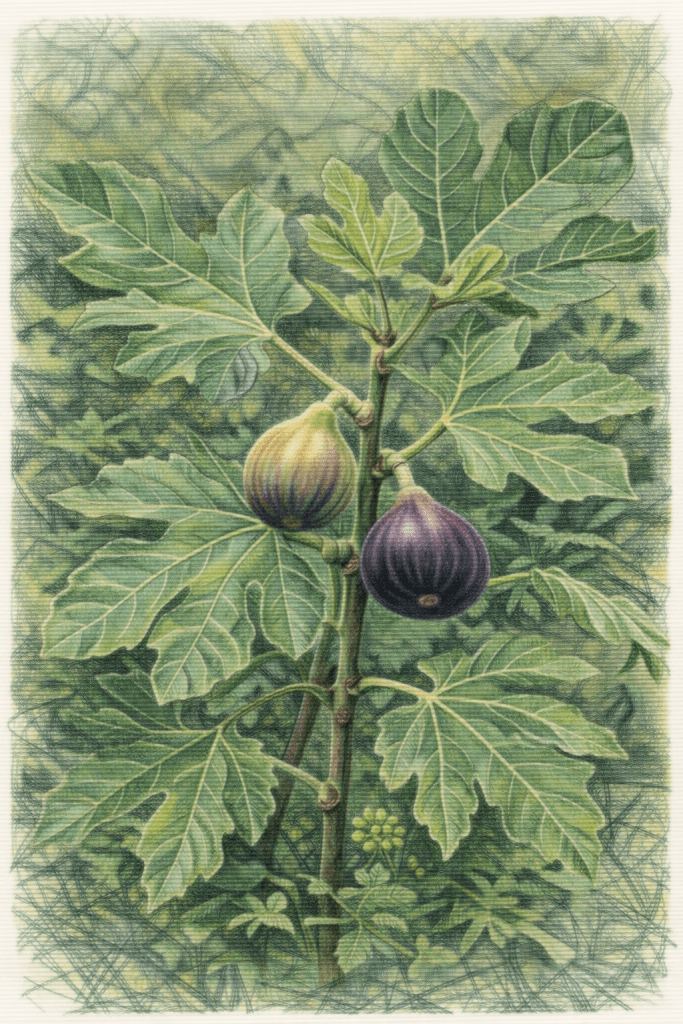
A Guide to Growing Figs

Picture this—a quiet moment in your garden, the sun kissing your skin, and the sweet scent of ripe figs wafting through the air. Growing figs in the UK might sound like a Mediterranean daydream, but with the right know-how, you can bring this vision to life in your own garden.

Ficus carica

How to Grow Figs in the UK

Figs are surprisingly hardy and can thrive in many corners of the UK with a bit of TLC. Start by choosing a sunny, south-facing spot in your garden or patio—figs love warmth. Plant them in well-draining soil mixed with compost to ensure their roots don’t sit in water. If you’re tight on space, don’t worry! Figs grow beautifully in large containers, making them ideal for courtyards or balconies.

A key tip for UK growers is to restrict their root growth, which encourages better fruit production. You can achieve this by planting your fig tree in a pot that sits in the ground or by using brick rubble or slate to line the planting pit, limiting root spread.

Selecting the Best Fig Variety

Not all figs are created equal—some varieties are better suited to Britain’s climate than others. Look for types like ‘Brown Turkey’, celebrated for its hardiness and deliciously sweet fruit, or ‘Brunswick’, which copes well with cooler conditions. For those with smaller gardens, the compact ‘Little Miss Figgy’ is an excellent choice. Whichever variety you choose, ensure it has been bred for cooler climates to maximise your success.

Caring for Your Fig Plant

Figs reward attentive care with their abundant harvest. Regular watering is essential during dry spells, especially for potted plants, but beware of overwatering, as it can lead to root rot. Feed your fig with a balanced fertiliser in early spring and again in midsummer to boost growth.

Pruning will keep your fig tree in tip-top shape. Cut back any damaged branches in winter, once the tree is dormant. Aim to maintain an open structure, which helps sunlight reach the fruits and prevents fungal diseases.

How Figs Develop and When They Ripen

Watching figs develop is a gardener’s joy. It begins with tiny green buds that gradually swell into plump fruit. Be patient—figs can take months to mature! Depending on your variety, you can expect to start harvesting from late summer to early autumn.

The fruit only ripens on the tree, so don’t pick them too early. A ripe fig will be soft to the touch, have a sweet aroma and may ooze a drop of nectar from its base.

The Fascinating World of Fig Pollination

Here’s where it gets really interesting—figs are pollinated in a way that feels closer to science fiction than gardening. Tiny wasps called fig wasps play a crucial role in pollination, but most UK-friendly varieties like ‘Brown Turkey’ are self-pollinating, so you won’t need to worry about wasps. However, their development is still fascinating and reminds us of nature’s ingenious complexities.

Common Fig Diseases and How to Prevent Them

Unfortunately, fig trees can sometimes fall victim to pests and diseases. Keep an eye out for fig rust, which causes yellowing leaves or scale insects, which can sap your tree’s vitality. Regularly inspect your plant, prune any diseased sections, and ensure good airflow around the branches to reduce the risk of infection. Potted figs are less susceptible to soil-borne diseases but should still be monitored for signs of stress.

Propagating Your Fig Tree

Want to grow even more figs? It’s easier than you might think! Figs can be propagated through cuttings. Simply take a 20–30cm hardwood cutting from your tree in winter, plant it in a container with moist compost, and keep it in a sheltered spot. Before long, you’ll have a new fig tree to expand your garden—or gift to a fellow fig lover!

Getting Creative With Figs and Their Leaves

The possibilities are endless with your fig harvest. From fresh figs paired with goat cheese or prosciutto to homemade fig jams and tarts, their versatile sweetness makes them a favourite in the kitchen. You can even use fig leaves to infuse stews, soups, or syrups for a subtle, nutty flavour.

Your fig leaves can also be used as eco-friendly wraps for grilling fish or meat, adding aroma and reducing waste. Talk about making the most of your plant!

Why Grow Figs?

Figs are more than just a beautiful addition to your garden. By growing them, you’re getting closer to nature, reducing the carbon footprint of imported fresh fruit, and enjoying the unbeatable taste of homegrown produce. Their ornamental beauty and luscious fruit will make your garden feel that little bit more Mediterranean, right here in the UK.

Are You Feeling Inspired?

Now’s the perfect time to plant your first fig tree and kickstart your fig-growing adventure! Picture picking your very own fresh figs and tasting the results of your dedication. What are you waiting for? Happy gardening, and may your fig trees flourish! 🌱

Further Reading: RHS Growing Figs, The Incredible Benefits of Growing Your Own Food, How to Plan and Create a Forager’s Garden

Inspiration: Follow Us on InstagramThreads, BlueSkyTwitterTikTok and Pinterest.

Gives Chillies Their Kick

If you’re a spice lover, you’ve probably felt the fiery heat of a chilli. Whether it’s the satisfying tingle on your tongue or the beads of sweat forming on your forehead, chillies are undeniably exciting. But have you ever wondered what makes them so spicy? What’s the science behind that irresistible kick? Let’s peel back the layers of this fascinating fruit (yes, chillies are technically fruits!) and explore what sets your taste buds alight.

What is it about chillies?

Chillies derive their heat from a compound called capsaicin, which is predominantly found in the white membranes holding the seeds rather than the seeds themselves. Capsaicin is a natural defence mechanism for the plant—while mammals, including us, find it spicy, birds are immune to the heat, allowing them to eat chillies and disperse the seeds far and wide. Clever, right?

Not all chillies are created equal, though. The heat level of a chilli is measured on the Scoville Scale, ranging from mild bell peppers to the tear-jerking Carolina Reaper. Capsaicin tricks your brain into believing your mouth is on fire, triggering a unique sensory experience.

Why are chillies good for us?

Beyond their fiery charm, chillies pack a ton of health benefits. Capsaicin is celebrated for its anti-inflammatory and pain-relieving properties. It also boosts metabolism, making it a popular choice for those looking to spice up their meals and their fitness goals.

Research has shown that diets rich in spicy foods may improve heart health, reduce cholesterol, and even extend your lifespan. Chillies are also loaded with essential vitamins like Vitamin C and Vitamin A, keeping your immune system in top shape. It’s not just about the kick—it’s about kicking your health up a notch too!

The Burning Sensation – What’s Really Happening?

If you’ve ever eaten a fiery chilli and felt like your mouth was under attack, you’re not alone. Capsaicin binds to receptors in your mouth called TRPV1 receptors, which are responsible for detecting heat and pain. The result? Your brain thinks your tongue and lips are literally burning, even though no physical harm is being done.

But it doesn’t stop there. Capsaicin doesn’t just stay in your mouth—it can trigger a whole-body response. You might experience stinging lips, watery eyes, a runny nose and even a sweat-drenched forehead. These are all symptoms of your body trying to cool itself down from what it perceives as a “threat”. It’s biological drama at its finest.

Why Does Our Body React Like This?

Your body’s reaction to chillies is a primal defence mechanism. When capsaicin hits your TRPV1 receptors, your brain sends out warning signals. Adrenaline is released into your system, dilating blood vessels and kicking your sweat glands into overdrive.

But there’s good news for spice lovers—this chilli-induced chaos also triggers a release of endorphins and dopamine, your body’s “happy” chemicals. This is why some people find eating spicy food addictive; you’re chasing that euphoric, adrenaline-fuelled high.

How to Overcome the Heat

Got a little too ambitious with your chilli intake? Don’t worry—we’ve got you covered with these foolproof remedies to tame the spice!

  1. Dairy to the Rescue

Capsaicin is oil-based and water won’t wash it away. Instead, reach for a glass of milk, a dollop of yoghurt or even some cheese. The protein casein in dairy binds to capsaicin molecules, helping you cool down.

  1. Bread or Rice

Starches like bread, rice or crackers can absorb some of the capsaicin, taking the heat off your tongue. Plus, a bite of bread is a far gentler way to recover than frantically chugging water!

  1. Sweet Relief

Sugar and honey can help counteract the fiery attack by offering a sweet contrast to capsaicin’s heat. Drizzle some honey or munch on a sugar cube for quick relief.

  1. Acidic Foods

Squeeze a bit of lemon or lime juice onto your tongue. The acidity helps neutralise capsicum oil and dials down the burn.

  1. Know Your Limits

If you’re still building up your spice tolerance, start small. Work your way up the Scoville Scale as your taste buds acclimate to the heat.

Chillies—More Than Just Heat

Love them or fear them, chillies are more than just a fiery thrill. They hold a fascinating blend of science, health benefits and culinary possibilities. Next time you dice up a fiery jalapeño or sprinkle a pinch of cayenne into your dish, remember you’re not just spicing up your meal—you’re indulging in a botanical marvel.

Inspired to experiment with your own chilli plants? Why not try growing them yourself? Not only will you get the freshest heat possible, but you’ll also gain a deeper appreciation for these fiery fruits. Happy cooking, and more importantly—happy spicing!

Grow Chillies with SowItGrowItandFeast!

Further Reading: Spicy Evolution: A Dive into Chilli’s History 🌶️, Troubleshooting Chilli Problems

Spicy Evolution: A Dive into Chilli’s History 🌶️

Introduction

Chilli—the fiery little fruit that has revolutionised cuisines across continents. From its humble origins to its global dominance, the chilli has a history as fascinating as its heat is legendary. But where did it all begin? How did this tiny plant become an icon of flavour, spice and even medicine? Whether you’re a food enthusiast, history buff, culinary adventurer or a gardener, prepare to be captivated by the remarkable tale of the chilli’s spicy evolution.

The Origins of Heat – Where it all began

Imagine a time before chillies arrived on global plates—a world without the fiery heat that defines so many dishes today. The story of the chilli begins in Latin America, around 7,000 years ago. Archaeological evidence points to the domestication of chillies by ancient Mesoamerican civilizations, including the Aztecs and the Mayans. For these cultures, chillies weren’t just food—they were medicine, spice and even currency.

For the Mayans, the chilli was sacred, often mixed into cacao to make a spicy, invigorating drink. The Aztecs referred to the chilli as “chīlli,” and it featured prominently in religious ceremonies and trade. Picture bustling markets filled with the aroma of freshly dried chillies, a sensory feast of heat and colour!

The Great Exploration – Crossing Oceans

The world owes its introduction to chillies largely to one man—Christopher Columbus. While searching for an alternative route to India, Columbus stumbled upon the Americas. It was here he encountered the chilli and mistakenly thought it was a relative of black pepper, dubbing it “peppers” (a misnomer we still use today).

Columbus and other explorers brought chilli seeds back to Europe during the late 15th and early 16th centuries. From there, chillies embarked on a whirlwind tour of the globe, becoming one of the first truly global foods. Think of it as an ancient version of “going viral.”

A Global Transformation – Entering New Cultures

Once chillies left the Americas, they were quick to adapt to their new homes. Traders introduced chillies to Asia, Africa and the Middle East, where they seamlessly integrated into local cuisines and cultures.

  • India embraced the chilli with gusto. The spice combined flawlessly with traditional curries, becoming a staple so significant it’s hard to imagine Indian cuisine without it.
  • China fell in love with the heat. Sichuan cooking, in particular, became renowned for using chillies to create tongue-numbing, flavour-packed dishes.
  • Africa saw a fusion of chillies into local recipes, birthing vibrant dishes like peri-peri sauce.
  • Even Europe was captivated, particularly nations like Hungary, where chillies are the backbone of iconic dishes such as goulash, made with paprika.

Consider how swiftly this unassuming fruit conquered the world, from the scorching deserts of Africa to the cool hills of Hungary. It was as though chillies were destined for greatness.

Chillies as Medicine and More 🌱

Food aside, chillies have long been prized for their medicinal properties. Capsaicin, the compound responsible for the chilli’s heat, boasts anti-inflammatory and pain-relief properties. Throughout history, chillies have been used to treat everything from headaches to digestion problems.

Beyond medicine, chillies even became a symbol of power and wealth. Farmers cultivated specific chilli crops to trade, demanding high prices for the spiciest, most vibrant varieties. Chillies transitioned from humble plants to economic commodities, fuelling global trade networks.

The Modern Chilli Revolution

Fast forward to today—chillies are more popular than ever. From fiery hot sauces on supermarket shelves to chilli-eating contests pushing heat tolerance to the limit, chillies continue to capture imaginations and taste buds alike. There’s even a global “heat leaderboard” for chillies, led by heavyweights like the Carolina Reaper, Ghost Pepper and Trinidad Moruga Scorpion.

Chillies are also championed in gardening circles, not just for their culinary applications but for the joy of growing something so versatile and vibrant. Ever planted your own chilli? There’s something magical about nurturing seeds into fruit-bearing plants with fiery rewards.

Why We Can’t Get Enough

What is it about a chilli that keeps us coming back for more—despite the tears and fiery burn? Perhaps it’s the endorphin rush caused by capsaicin, often described as a natural high. Maybe it’s the sheer range of flavour chillies offer, from smoky chipotle to sweet bell peppers and blazing habaneros. Or maybe, just maybe, it’s the challenge of conquering the heat.

For centuries, the chilli has been more than just an ingredient—it’s been a symbol of passion, adventure, and resilience.

Your Chilli Adventure Awaits

Now, it’s your turn. Whether you’re crafting a fiery curry, experimenting with homemade hot sauce or planting your own chilli garden, the world of chilli is ripe with possibilities. Which part of this incredible global adventure will you explore next? There’s no better way to connect with history, flavour and your inner adventurer than by getting hands-on with chillies.

Feeling inspired? If you’re ready to take it one step further, why not plant your own chilli seeds today and become part of this ongoing spicy evolution?

Closing Thoughts

Chillies aren’t just a food—they’re a testament to the ingenuity and connection of humankind. From ancient Mesoamerican markets to today’s global food cultures, they remind us of the power of exchange, adaptation and spice.

The next time you add a sprinkle of chilli flakes to your meal or savour a steaming bowl of spicy Sichuan noodles, take a moment to appreciate the long, fiery history that brought these flavours to your plate. It’s a story of survival, exploration, and evolution—one that’s as bold and vibrant as the fruit itself.

Further Reading: Chilli Plant Care: From Sowing Seeds to Overwintering

Grow Chillies with SowItGrowItandFeast here

Troubleshooting Chilli Problems

Chilli peppers—fiery, vibrant and bursting with flavour. They’re the gems of any spice lover’s kitchen and a gardener’s pride! But growing and maintaining healthy chilli plants? It can be as challenging as the heat level of a Carolina Reaper. Fear not! Whether you’re a home cook dreaming of fresh, homegrown peppers or a gardener nurturing your fiery crop, we’ve got you covered. 🌶️

Chillies can be temperamental, but with the right knowledge, you can tackle even the most stubborn problems. From flower and leaf drop to aphids and mildew, let’s take a deep dive into the most common chilli woes and how to fix them.

1. Flower Drop

The Problem

Ever noticed flowers falling off your chilli plant before fruit forms? Frustrating, isn’t it? This often happens due to extreme temperatures, inconsistent watering or high humidity levels.

The Fix

Keep your chilies happy by maintaining stable conditions.

  • Ensure consistent watering—never too dry or waterlogged.
  • Place plants where they’ll enjoy plenty of light but are shielded from scorching midday heat.
  • If growing indoors, consider a fan to simulate natural pollination and airflow.

2. Leaf Drop

The Problem

Your chilli plant may shed leaves due to stress from overwatering, pests or sudden environmental change. It’s like their silent way of saying, “I’m not okay!”

The Fix

  • Check soil moisture—water only when the top 2–3 cm feels dry.
  • Inspect plants for pests like aphids (we’ll talk more about those pesky intruders later).
  • Be gentle with relocation—gradually acclimatise plants to new environments if needed.

3. Corking

The Problem

Those small, brownish cracks on chilli skin might alarm you, but guess what? Corking is your chilli’s badge of honour! It indicates maturity and adds rustic charm.

The Fix

No fix needed! Corking isn’t a problem—it’s a sign of well-loved chillies. Lean into the natural look and enjoy the rich flavour!

4. Damping Off

The Problem

If seedlings collapse at their base, you’ve fallen victim to damping off—a fungal issue caused by excess moisture.

The Fix

  • Always use sterile soil and clean pots when sowing seeds.
  • Water carefully to avoid soggy soil.
  • Get a head start with seedlings indoors in a controlled environment.

5. Grey Mould and Powdery Mildew

The Problem

These unsightly fungal problems can spread fast, clouding your chilli plant’s leaves with grey fuzz or white powder-like spots.

The Fix

  • Trim affected foliage and dispose of it (don’t compost it!).
  • Create space between plants for better airflow.
  • Use a natural fungicide like neem oil to prevent further spread.

6. Viruses

The Problem

Yellow patches, twisted leaves and stunted fruit growth could point to a virus infection. Unfortunately, this is often spread by pests or infected soil.

The Fix

  • Remove infected plants to protect healthy ones.
  • Regularly check for pests and dispose of any infected soil.
  • Always sterilise gardening tools between uses.

7. Bacterial Spot

The Problem

You’ll notice small, water-soaked dark spots on the leaves when chilli plants encounter bacterial infections.

The Fix

  • Avoid wetting the leaves during watering—focus on the base of the plant.
  • Use copper-based sprays to help control infection.

8. Slugs & Snails

The Problem

It’s disheartening to wake up to holes in your leaves, courtesy of these slimy invaders.

The Fix

  • Lay down barriers like crushed eggshells, coffee grounds or diatomaceous earth.
  • Use organic slug pellets or beer traps to keep these munchers at bay.

9. Aphids

The Problem

Tiny but mighty, aphids attack in clusters, sucking the life out of your plant and causing leaf curling and yellowing. They’re the ultimate nemesis for any gardener.

The Fix

  • Spray them off with water or wipe leaves with soapy water.
  • Release natural predators like ladybirds into your garden.
  • Treat infestations with neem oil or insecticidal soap.

Pro Tips for Healthy Chillies

  • Fertilise Wisely: Feed your chilli plants regularly with a balanced fertiliser, but don’t overdo the nitrogen—too much encourages foliage at the expense of fruit.
  • Sunlight is Key: 6–8 hours of sunlight daily is ideal for their growth and fruiting.
  • Rotate Crops: Avoid planting chillies in the same place every year to reduce pest and disease build-up.

Keep Growing, Spice Lovers!

There’s no denying that chilli problems can feel like a challenge, but with patience and the tips above, you’ll grow healthy, vibrant plants that reward you with fiery flavours and colourful delights.

Have a chilli success story or question? Drop a comment below or connect with fellow spicy gardeners in our online community! You don’t have to tackle these challenges alone. 🌱

Happy gardening—and here’s to hotter, healthier harvests!

Further Reading: How to Choose Which Chilli Plants to Grow, Chilli Plant Care: From Sowing Seeds to Overwintering

Take a look at SowItGrowItandFeast – Chillies

The Incredible Benefits of Growing Your Own Food

Picture this: the warm sun on your back, the scent of fresh soil in the air, and the incredible satisfaction of plucking a vibrant tomato or crisp cucumber fresh from your garden—knowing you grew it yourself. Growing your own food is more than a hobby; it’s a lifestyle filled with rewards for your health, your wallet and the planet. Whether you’re a dedicated health enthusiast, an eco-conscious warrior or simply someone who loves getting their hands dirty in the garden, cultivating a homegrown haven of vegetables and herbs has something amazing to offer.

Here’s why growing your own food is a life-changing experience.

A Healthier You—Body and Mind

Gardening isn’t just good for the body; it’s a balm for the mind too.

Physical Activity & Fresh Air

When you’re tending your garden, pulling weeds, digging soil or harvesting your crops, you’re not just “working” —you’re exercising. Gardening keeps you on the move and burns calories, giving you a full-body workout without the monotony of a treadmill. Plus, you’re soaking up all that lovely fresh air and natural Vitamin D from the sunshine.

Mental Health & Wellbeing

Did you know that spending time in nature reduces stress and boosts mental clarity? Gardening has been scientifically proven to lower cortisol levels and instil a calming sense of mindfulness. The act of tending to your plants, nurturing them from tiny seeds to full-grown wonders, is invigorating and grounding in equal measure. Gardening offers a sense of purpose, achievement and joy – a wonderful antidote to the hustle and bustle of daily life.

Taste the Difference

There’s no comparison between the taste of food grown in your backyard and what’s bought from the supermarket.

Unbeatable Flavour

Vegetables and fruits harvested straight from your garden are fresher, more aromatic, and undeniably delicious. That homegrown carrot? It’s sweeter and more flavour-packed than anything you’ll find in a store. Why? Because it’s picked at peak ripeness, not weeks before to endure transport.

Nutrient Powerhouse

Freshness isn’t just about taste; it’s about nutrition too. Homegrown produce retains more vitamins and minerals since it doesn’t sit for days (or weeks!) on shelves or in transport. You’re eating food at its peak, offering your body the best nourishment possible.

Save More Than Just Money

Growing your own food is a win for your wallet, but the benefits go far beyond savings.

Cut That Grocery Bill

Seeds cost pennies. Think of all the money you’ll save when you harvest tomatoes, cucumbers, peppers or leafy greens instead of buying them each week. The upfront work may require effort, but your garden will quickly pay for itself.

No Supermarket, No Stress

Say goodbye to relying on supermarket supplies. No more panic-buying vegetables or racing to the store last minute. You’ll have a bounty ready in your garden whenever you need it. Plus, you’ll never have to second-guess whether pesticides or harsh chemicals were used—you’ll know exactly how your food was grown because you did it yourself!

A Small Step, A Big Impact

Growing your own food isn’t just good for you; it’s good for the planet.

Eco-Friendly Eating

By growing produce at home, you’re cutting down on the environmental impact of packaged foods—the resources used in transportation, refrigeration and packaging simply vanish. Your contribution may seem small, but every step towards reducing our carbon footprint matters.

A Connection to Nature

Tending to a garden brings you closer to the rhythm of the earth. It’s a reminder of where your food truly comes from—not a plastic-wrapped shelf but soil, sun, and water. It’s a return to the basics, a reconnection to nature’s cycles.

How to Start Growing Your Own Food

Not sure where to begin? Start small! Grow herbs like basil, mint, or thyme in pots on a windowsill or balcony. If you’ve got the space, plant a small plot with easy-to-grow veggies like lettuce, beans, or courgettes. Even a few plants can transform how you eat and think about food.

Remember, gardening is as much about the process as the result. Enjoy the dirt on your hands, the patience it takes to watch your plants grow, and most importantly, the joy of your first harvest!

Take the First Step Today

Imagine a world where every meal is enhanced by food you lovingly grew yourself. It’s fresh, chemical-free, and bursting with flavour—and it all starts with a single seed. There’s no better time than now to roll up your sleeves and begin.

Are you ready to experience the joy of growing your own food? Start small, dream big, and relish the rewards that come from your very own garden oasis. Your health, wallet and the planet will thank you. Get planting today! 🌱 🌞 🍅

Unlock the Joy of Growing Your Own Food

Have you ever thought about stepping outside, breathing in the crisp morning air and harvesting vibrant, fresh vegetables straight from your garden? If not, it’s time to discover the incredible benefits of growing your own food! Whether you’re a health enthusiast, an environmentalist or simply curious about home gardening, cultivating your own produce offers a world of rewards.

Here’s why you should start digging into this fulfilling lifestyle:

A Health Boost—Body and Mind

Physical Activity and Fresh Air

Gardening isn’t just about the end result; it’s about the process. Digging, planting, watering and weeding — these activities get your body moving, offering the kind of physical workout that feels less like a chore and more like a rewarding hobby. Plus, spending time outdoors ensures a generous dose of fresh air and sunlight, boosting your vitamin D levels and improving your overall health.

Mental Wellbeing

Gardening nurtures more than just plants—it nurtures your soul. Studies consistently show that spending time outdoors, immersed in nature, reduces stress, promotes mindfulness and uplifts your mood. Picture yourself surrounded by thriving greenery you’ve lovingly grown—a daily reminder of your patience and care. It’s like therapy but with the added bonus of delicious, homegrown food!

Taste the Difference

When it comes to fruits and vegetables, freshness is key. Growing your own food means each harvest is at its flavourful peak. Picture biting into a sun-warmed tomato straight off the vine, bursting with sweetness and vibrant juices—an experience supermarket produce simply can’t replicate.

Not only does homegrown food taste better, but it’s also more nutritious. The vitamins and minerals in vegetables begin to degrade as soon as they’re picked. Supermarket produce often travels long distances, losing nutrients along the way. By growing and harvesting your own food, you ensure maximum freshness, flavour, and nutritional value with every bite.

Save Money and Gain Independence

Supermarkets may seem convenient, but those weekly grocery bills can quickly add up. By growing your own food, you can cut down on expenses significantly. Seeds, soil and a little TLC can yield an abundance of produce for a fraction of the price.

And here’s an added bonus—when you grow your own vegetables, you’re no longer solely reliant on supermarket supply chains. No more stressing over empty shelves or worrying about harmful pesticides and chemical residues. Your garden is a clean, safe and reliable source of food that you control entirely.

Better for the Environment

Growing your own food isn’t just good for you—it’s a win for the planet. By reducing your reliance on store-bought produce, you’re cutting down on the carbon footprint associated with transporting and packaging food. If you’re an environmentalist, there’s no better way to align your actions with your values.

You can also compost kitchen scraps and garden clippings, turning “waste” into nutrient-rich soil that will fuel future harvests. It’s a sustainable, closed-loop system that’s as kind to the earth as it is to your wallet.

How to Get Started

Begin Small

You don’t need an entire garden to reap the rewards of growing your own food. Start with something manageable like herbs in pots, a small salad patch or climbing tomatoes in containers.

Choose Easy Crops

If you’re new to gardening, opt for beginner-friendly crops like lettuce, radishes, courgettes or peas. They’re quick to grow, rewarding and easy to cultivate.

Be Consistent

Your garden needs regular care to thrive. Water your plants, check for pests and ensure they get plenty of sunlight. A little daily effort will bring you bountiful rewards.

Don’t Overthink It

Every seasoned gardener started somewhere. Mistakes are part of the learning process and your thumbs will get greener with time!

The Takeaway

Imagine the pride and joy of preparing a meal with vegetables you’ve grown yourself—each bite packed with love, flavour and nourishment. Growing your own food is a rewarding experience for your body, mind, wallet and the planet. Why not get started today?

If you’re ready to transform your garden into a lush landscape brimming with fresh produce, there’s no better time to begin. Whether you have a sprawling garden or a modest windowsill, the tools and resources to grow your own food are within reach. Start small, stay curious and watch your garden grow alongside your confidence.

Your homegrown adventure awaits—grab your spade and start digging into a healthier, happier lifestyle! 🌱🍅

Further Reading: How to Plan and Design Your Dream Vegetable Patch The Principles of Organic Gardening

Take a look at our Beginners Seed Starter Packs – more than just seeds – they come with a step by step guide and access to support from us!

How to Grow Potatoes: A Guide to a Rewarding Harvest

There are few pleasures in the garden quite like lifting the first potatoes of the season from the soil. Beneath the leaves and stems lies a hidden harvest – earthy, nourishing and wonderfully satisfying to grow yourself.

Potatoes are among the easiest and most reliable crops for home gardeners, thriving in vegetable beds, allotments and even large containers on a patio. With a little preparation and care, they reward you with generous yields and flavours far fresher than anything found on a supermarket shelf.

Whether you are new to gardening, keen to grow more of your own food, or simply curious about where your meals begin, growing potatoes offers a gentle and practical way to reconnect with the land.

This guide will walk you through everything you need to know about growing potatoes at home, from choosing the right varieties to planting, caring for your plants and enjoying a successful harvest.


Why Grow Your Own Potatoes?

Potatoes have been a staple of British kitchens for centuries, appearing in everything from comforting stews to crisp roast dinners. Yet growing your own offers rewards that go well beyond the plate.

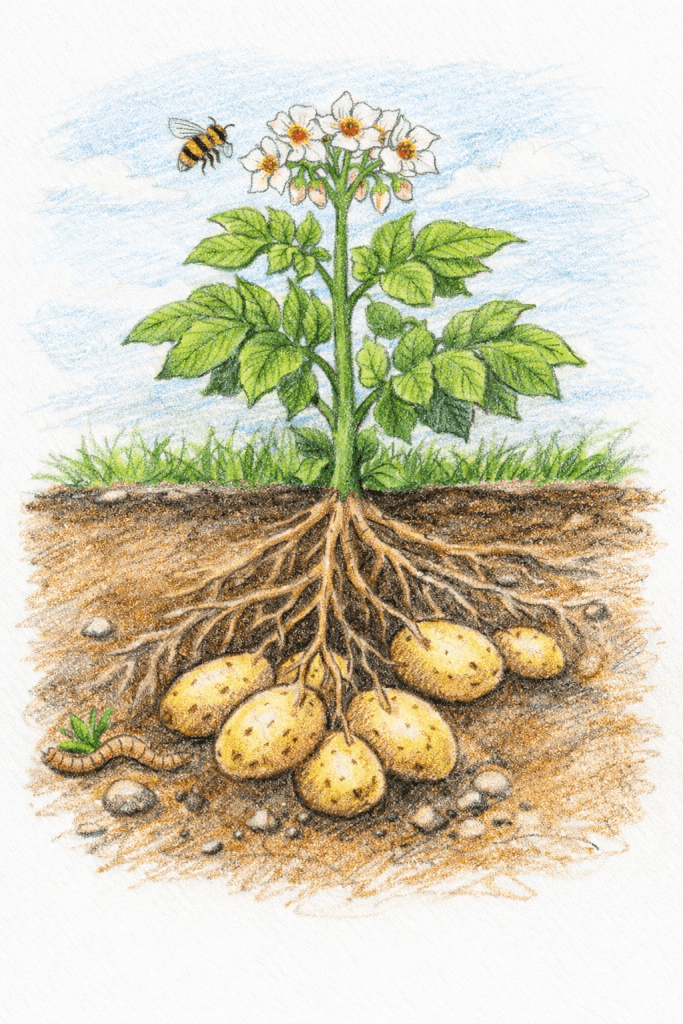
Potato Plant: Solanum tuberosum

Fresh flavour straight from the soil

Freshly lifted potatoes have a delicate sweetness and texture that is difficult to replicate with shop-bought produce. When cooked soon after harvesting, their flavour is noticeably richer and more vibrant.

An abundant crop for little effort

Potatoes are famously generous plants. A small number of seed potatoes can produce a surprisingly large harvest, making them one of the most productive crops for home gardens.

A sustainable choice

Growing your own potatoes helps reduce food miles, plastic packaging and waste. It is a simple step towards a more sustainable kitchen and garden.

A perfect crop for beginners

Potatoes are forgiving plants that tolerate a range of growing conditions. Their reliable nature makes them an excellent choice for anyone learning the basics of gardening.

A wonderful way to engage children

Few gardening tasks delight children more than digging for hidden potatoes in the soil. It offers a hands-on way to learn where food comes from and to appreciate the rhythms of the seasons.


Choosing the Right Potatoes to Grow

When growing potatoes at home, it is important to begin with seed potatoes rather than ordinary supermarket potatoes.

Seed potatoes are specially grown for planting and are carefully inspected to ensure they are free from disease. They are widely available in garden centres and from specialist suppliers in late winter and early spring.

Potatoes are typically divided into three main groups depending on how quickly they mature.

First Early Potatoes

First early potatoes are the quickest to grow and are often planted in March.

They usually mature within around ten weeks, producing small, tender potatoes that are perfect for boiling or steaming.

These are often enjoyed as new potatoes, lifted fresh from the soil and served with butter and herbs.

Popular first early varieties include:

  • Rocket
  • Pentland Javelin
  • Swift

Second Early Potatoes

Second earlies take slightly longer to mature and are typically harvested between July and August.

They produce slightly larger tubers and are well suited to salads and light summer dishes.

Common second early varieties include:

  • Charlotte
  • Maris Peer
  • Kestrel

Maincrop Potatoes

Maincrop potatoes are planted later and take 16–20 weeks to mature, but they produce the largest harvest.

These varieties are ideal for roasting, baking and storing through the colder months.

Well-known maincrop varieties include:

  • King Edward
  • Maris Piper
  • Desiree

Planting a mix of early and maincrop potatoes allows you to enjoy a steady harvest from early summer into autumn.


Chitting Potatoes: Giving Them a Head Start

Before planting, many gardeners choose to chit their seed potatoes.

Chitting simply means allowing the potatoes to sprout before they go into the soil. This gives them a helpful head start and can lead to earlier harvests.

To chit potatoes:

  1. Place them in a shallow tray or egg carton.
  2. Position them with the small buds (known as “eyes”) facing upwards.
  3. Keep them somewhere cool and bright, such as a windowsill or greenhouse.

After a few weeks, short green shoots will begin to develop. Once these shoots reach around 2–3 centimetres long, the potatoes are ready to plant.


Preparing the Soil for Potatoes

Potatoes grow best in fertile, well-drained soil that retains moisture without becoming waterlogged.

Before planting, take time to prepare the ground properly.

Improve the soil with organic matter

Dig in well-rotted compost or manure to enrich the soil. This provides essential nutrients and improves soil structure.

Ensure good drainage

Heavy soils can be improved by adding compost or planting in raised beds to prevent waterlogging.

Aim for slightly acidic soil

Potatoes prefer soil with a pH between 5.5 and 6.5, which also helps reduce the risk of certain diseases.

Taking a little care at this stage will help create the ideal environment for strong, healthy plants.


How to Plant Potatoes

Once the soil has warmed and the risk of hard frost has passed, it is time to plant.

Follow these simple steps for success.

Dig planting trenches

Create shallow trenches around 10–15 centimetres deep.

Space the potatoes

Place seed potatoes roughly 30 centimetres apart, with rows spaced about 60 centimetres apart.

Position the sprouts upwards

Always plant with the shoots facing upward so they can grow towards the surface.

Cover with soil

Gently cover the potatoes with soil and lightly firm the ground.

With warmth and moisture, shoots will begin to emerge within a few weeks.


Growing Potatoes in Containers

If you do not have a large garden, potatoes grow beautifully in containers, bags or raised beds.

Large pots, buckets or specialised potato grow bags all work well.

To grow potatoes in containers:

  1. Fill the container with around 10 centimetres of compost.
  2. Place a few seed potatoes on top.
  3. Cover with more compost.
  4. Continue adding compost as the shoots grow.

This method allows you to grow potatoes even on a balcony, patio or small garden space.


Caring for Potato Plants

Once established, potato plants require only modest care to thrive.

Earthing up

One of the most important tasks when growing potatoes is earthing up.

As shoots reach around 15 centimetres tall, mound soil around the base of the plant.

This serves several purposes:

  • Protects young plants from frost
  • Prevents potatoes from turning green in sunlight
  • Encourages the plant to produce more tubers

Repeat this process as the plant continues to grow.

Watering

Potatoes prefer consistent moisture, particularly when the plants begin to flower.

Water deeply during dry periods, but avoid waterlogged soil.

Feeding

An occasional application of organic fertiliser or liquid feed can help support healthy growth, especially in containers where nutrients are limited.


How to Encourage a Bigger Potato Harvest

A few simple practices can help maximise your crop.

Mulch the soil

Applying mulch around plants helps retain moisture and suppress weeds.

Rotate crops

Avoid growing potatoes in the same location each year. Crop rotation helps prevent soil-borne diseases.

Protect plants from frost

Young potato plants are vulnerable to frost, so covering them with soil or fleece during cold nights can protect the crop.

Maintain healthy soil

Good soil structure and organic matter support stronger plant growth and better yields.


Common Potato Pests and Problems

Like all crops, potatoes can occasionally face pests or diseases. Fortunately, many problems can be prevented through good gardening habits.

Slugs

Slugs may feed on developing tubers. Keeping beds tidy and encouraging natural predators can help manage them.

Aphids

These small insects feed on leaves and can weaken plants. A strong spray of water or natural predators often keeps them under control.

Potato blight

Blight is a fungal disease encouraged by warm, humid weather. Ensuring good air circulation and removing affected foliage quickly can help limit its spread.

Potato scab

This condition causes rough patches on potato skins. Maintaining slightly acidic soil reduces the risk.

Healthy soil and regular observation are often the best defence against most problems.


When and How to Harvest Potatoes

The most satisfying moment of potato growing arrives when it is time to lift the crop.

Harvesting first and second earlies

Early potatoes are ready when the plants begin to flower.

Carefully loosen the soil with a fork and gently lift the tubers from beneath the plant.

These potatoes are best enjoyed fresh rather than stored.

Harvesting maincrop potatoes

Maincrop varieties should remain in the ground until the foliage begins to yellow and die back.

Two weeks before harvesting, cut the stems down to allow the skins to toughen. This helps the potatoes store more successfully.

Lift the crop carefully and allow the potatoes to dry briefly before storage.


Storing Your Homegrown Potatoes

Proper storage ensures your harvest lasts well into the colder months.

For best results:

  • Store potatoes in a cool, dark and well-ventilated place
  • Keep them in paper sacks, wooden crates or hessian bags
  • Avoid exposure to light, which can cause greening

Under the right conditions, maincrop potatoes can keep for several months.


A Simple Step Towards Sustainable Living

Growing potatoes at home offers more than a plentiful harvest. It is a quiet reminder of how food begins – beneath the soil, shaped by seasons and patience.

Even a small garden can produce an impressive yield, and the process of planting, tending and harvesting brings a deeper appreciation for the meals we enjoy each day.

With their reliability, versatility and generous harvests, potatoes remain one of the most rewarding crops a gardener can grow.

Plant a few this spring, and by summer you may find yourself lifting your own basket of fresh, earthy potatoes from the ground – a simple pleasure that never loses its charm.

Further Reading: The Benefits of Growing your Own Food ,

Inspiration: Follow Us on InstagramThreads, BlueSkyTwitterTikTok and Pinterest.

How to Plan and Create a Forager’s Garden

What is a Forager’s Garden?

A forager’s garden is a thoughtfully designed space that allows you to grow and forage your own food, herbs and natural resources in your garden. Inspired by the practice of wild foraging, this type of garden blends edible plants, medicinal herbs and even wildlife-friendly foliage into one harmonious ecosystem. It’s all about cultivating a sustainable, self-sufficient garden that mimics nature while providing an abundance of benefits for you and local wildlife.

How to Plant and Create a Foragers Garden

The Benefits of Creating a Forager’s Garden

Creating a forager’s garden is about much more than just having fresh ingredients at your fingertips. Here’s why it’s worth the effort:

  • Sustainable Living: Reduce reliance on commercial crops and engage in eco-friendly practices.
  • Nutrient-Rich Food: Freshly foraged produce packs more nutrients and flavour compared to shop-bought alternatives.
  • Support Local Ecosystems: Attract and nurture bees, butterflies, and birds by planting native and wildlife-friendly flora.
  • Cost Efficiency: Save on groceries and herbs you’d otherwise need to buy.
  • A Deeper Connection to Nature: Tend your garden and experience the rewarding cycle of planting, growing, and harvesting.

Sound good? Now, let’s explore how to plan, create, and maintain your very own forager’s garden.


Planning Your Forager’s Garden

Before you dig in, planning is essential for creating a thriving and sustainable space. Here are the steps:

Assess Your Space

Look at your available area (garden, allotment, balcony or even a community plot) and note factors like sunlight, shade and soil type. Forager’s gardens can be adapted to almost any size or location.

Choose a Design Style

Decide between a structured layout (e.g., raised beds) or a more natural, free-growing look that imitates the wild. Either works—but be mindful of accessible pathways for harvesting.

Set Clear Goals

Do you want to focus on edible plants? Pollinator-friendly blooms? Medicinal herbs? Defining your goals will help you prioritise what to grow.

Research Plant Types

Learn about native plants suitable for your local climate, as they will require less maintenance and better contribute to the ecosystem.

Companion Planting

Research plant pairings that naturally grow well together. For example, plant strawberries alongside borage for better pest management and growth.


Creating Your Forager’s Garden

Here’s how to turn your vision into a verdant reality:

Start with Healthy Soil

Enrich your soil with compost and organic matter to create a nutrient-dense foundation. Healthy soil is the secret ingredient to thriving plants.

Build Diverse Layers

Use a layered gardening approach to mimic nature:

  • Ground cover (e.g. creeping thyme, clover).
  • Low-growing plants (e.g. herbs like oregano or chamomile).
  • Shrubs (e.g. raspberry bushes or elderberries).
  • Trees (e.g. hazel, apple).
  • Climbing plants (e.g. passionfruit, vines).

Maintaining Your Forager’s Garden

To ensure your garden thrives year-round, regular maintenance is key. Here’s how to keep it flourishing:

Mulching and Weeding

Use mulch to suppress weeds, retain moisture and nourish the soil. Remove invasive weeds regularly to protect your plants.

Rotate Crops

For annuals, rotate planting locations seasonally to prevent soil depletion and discourage pests.

Pruning and Trimming

Keep bushes and trees healthy by trimming excess growth. This encourages better fruit production.

Encourage Pollinators

Grow flowers like lavender or marigold to attract bees and butterflies.

Harvest Smartly

Forage leaves, fruits and herbs selectively to encourage regrowth. Avoid over-harvesting to maintain plant health.

Monitor for Pests

Prevent pest damage by using natural methods such as companion plants, neem oil, or introducing ladybirds.

Compost Waste Keep the cycle sustainable—return unused plant materials to the earth as compost.


What to Plant and Where to Plant It

Here’s a handy guide of what to include and their specific benefits:

Edible Plants:

  • Wild Garlic – Easy to grow, perfect for pesto or soups.
  • Raspberry and Blackberries – High-yield fruits, rich in antioxidants.
  • Leafy Greens (Spinach, Kale) – Highly nutritious and versatile.

Medicinal Herbs:

  • Echinacea – Boosts immunity.
  • Calendula – Great for skincare remedies.
  • Chamomile – Perfect for soothing teas.

Pollinator-Friendly Plants:

  • Lavender – Attracts bees and smells delightful.
  • Thyme & Sage – Beneficial to pollinators and your cooking.

Companion Plants:

  • Marigold – Protects nearby crops from pests.
  • Nasturtium – Attracts aphids away from other plants.

Wildlife Havens:

  • Hazel Trees – Provide nuts while serving as shelter for birds.
  • Honeysuckle or Ivy – Climbing plants that create habitats.

Shade-Loving Options:

  • Ferns – Perfect for shaded corners.
  • Wild strawberries – Do well underneath trees or shaded patches.

Remember, planting in layers (using vertical space with trellises when necessary) maximises your available area while creating a lush, multi-functional garden space.


Create a Garden That Gives Back

A forager’s garden is more than a collection of plants—it’s an investment in sustainability, self-sufficiency and your connection to the natural world. Whether you’re passionate about growing your own food, protecting the environment or simply finding a way to relax outdoors, building a forager’s garden is a rewarding experience.

Not sure where to start? Begin with a small corner, plant a few hardy perennials and expand from there—it’s all part of the process. Happy foraging and gardening! 🌱

Further reading: The Ultimate Guide to Garden Seed Ordering for your Vegetable Garden

Try our site; www.sowitgrowitandfeast.co.uk

Homegrown Christmas Lunch: Harvesting the Perfect Vegetables for a Memorable Feast

The Christmas season is fast approaching, and what better way to celebrate than with a delicious, homegrown Christmas lunch? As gardeners we have a unique opportunity to cultivate our own vegetables for this special occasion. Not only does it add a personal touch to our feast, but it also ensures that our dishes are made with the freshest ingredients possible.

Planning Your Vegetable Garden

Before diving into the specific vegetables you can grow, it’s important to plan your garden accordingly. Consider factors such as available space, sunlight exposure, and the time required for each crop to mature. Start by assessing your garden area and determining which vegetables will thrive in your specific conditions. Remember that some crops may require a longer growing season or protection from frost if you’re planning a winter harvest.

Root Vegetables: The Foundation of Your Feast

Root vegetables are not only versatile but also an essential component of any Christmas meal. Here are some popular options that can be successfully grown in the UK:

1. Potatoes

No Christmas dinner is complete without perfectly roasted potatoes. Varieties like Maris Piper or King Edward are well-suited for roasting due to their floury texture and ability to crisp up nicely on the outside whilst remaining fluffy on the inside.

2. Carrots

Roasted carrots add vibrant colour and natural sweetness to your festive spread. Choose varieties like Chantenay or Autumn King for their excellent flavour and ability to thrive in cooler temperatures.

3. Parsnips

Parsnips offer a delightful earthy taste and pair wonderfully with roasted meats or vegetarian alternatives. Consider growing Gladiator or Hollow Crown parsnips for their tender, sweet roots.

4. Beetroot

Don’t overlook the rich and vibrant beetroot when planning your Christmas menu. This versatile vegetable can be used in salads, roasted as a side dish, or even incorporated into dips and spreads.

Leafy Greens: Freshness and Flavour Galore

Leafy greens are not only nutritious, but also provide a burst of freshness to your festive feast. Here are some varieties that are well-suited for a winter harvest:

1. Kale

Kale is a robust green that thrives in cooler temperatures, making it an ideal choice for a homegrown Christmas lunch. Its deep green leaves offer a slightly bitter taste that pairs well with roasted meats or can be enjoyed on their own as a sautéed side dish.

2. Brussels Sprouts

Brussels sprouts have long been associated with holiday meals, and growing them at home allows you to experience their true flavour potential. Choose varieties such as Bosworth or Trafalgar for tender sprouts that will melt in your mouth.

3. Spinach

Spinach is an excellent addition to any Christmas menu due to its versatility and nutritional benefits. Whether used as a base for salads or sautéed as a side dish, freshly harvested spinach adds vibrancy to your plate.

Cruciferous Delights: Cabbage and Cauliflower

Cabbage and cauliflower are two vegetables that can elevate your Christmas lunch to new heights with their unique flavours and textures:

1. Savoy Cabbage

Savoy cabbage offers beautiful crinkled leaves and a mild yet distinctive flavour profile. It can be enjoyed raw in salads or cooked alongside other vegetables for added depth of flavour.

2. Romanesco Cauliflower

For an eye-catching addition to your festive table, consider growing Romanesco cauliflower—a mesmerising vegetable with intricate fractal patterns. Its nutty flavour and stunning appearance make it a memorable centrepiece.

Festive Herbs: Adding Flavour and Aroma

No Christmas lunch is complete without the aromatic presence of herbs. Growing these herbs in your garden ensures that you have an abundant supply for all your culinary endeavours:

1. Rosemary

Rosemary’s woody fragrance and robust flavour complement roasted meats, potatoes, and vegetables perfectly. It can also be used to infuse oils or vinegars for added depth.

2. Thyme

Thyme is another herb that pairs beautifully with a variety of dishes, particularly those featuring root vegetables or poultry. Its delicate leaves add a subtle earthy flavour to your creations.

Harvesting Joy and Flavour

Growing your own vegetables for a homegrown Christmas lunch adds an extra layer of joy and satisfaction to the holiday season. Not only do you have the opportunity to taste the freshness and quality of your homegrown produce, but you also have full control over the varieties you choose to cultivate. From hearty root vegetables to vibrant greens, each element of your feast will bear the mark of your green thumb. So roll up your sleeves, plan your vegetable garden, and prepare for a truly memorable Christmas meal that showcases the bounties of nature right at your doorstep.

Our Christmas Shop is now open🎅🎉!

Further reading: BBC Good Food – Christmas Food